Creamy Tomato Soup with Basil and Thyme 30 Minute Recipe
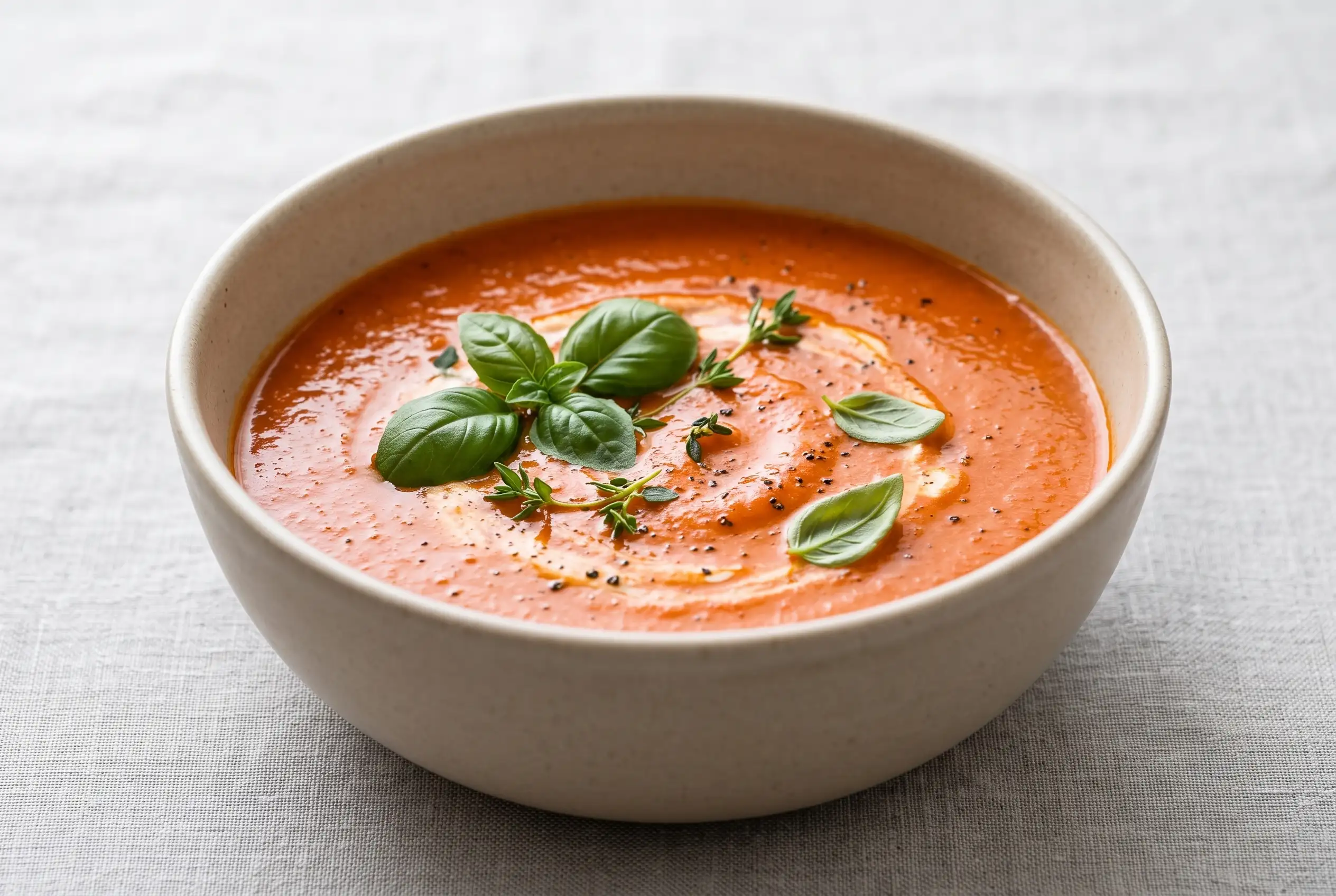
Creamy tomato soup brings together sweet tomatoes, garlic, onions, fresh basil, thyme, and a velvety broth for a cold-weather meal that feels both comforting and vibrant. This homemade creamy tomato soup creates deep flavor from simple pantry staples while keeping the texture smooth and satisfying.
Rich tomato flavor develops through careful cooking choices, from softening the vegetables to blending the finished soup into a silky bowl. The result is a 30 minute creamy tomato soup that pairs naturally with grilled cheese, crusty bread, or a simple salad.
Creamy Tomato Soup Builds Deep Flavor in a Short Cook
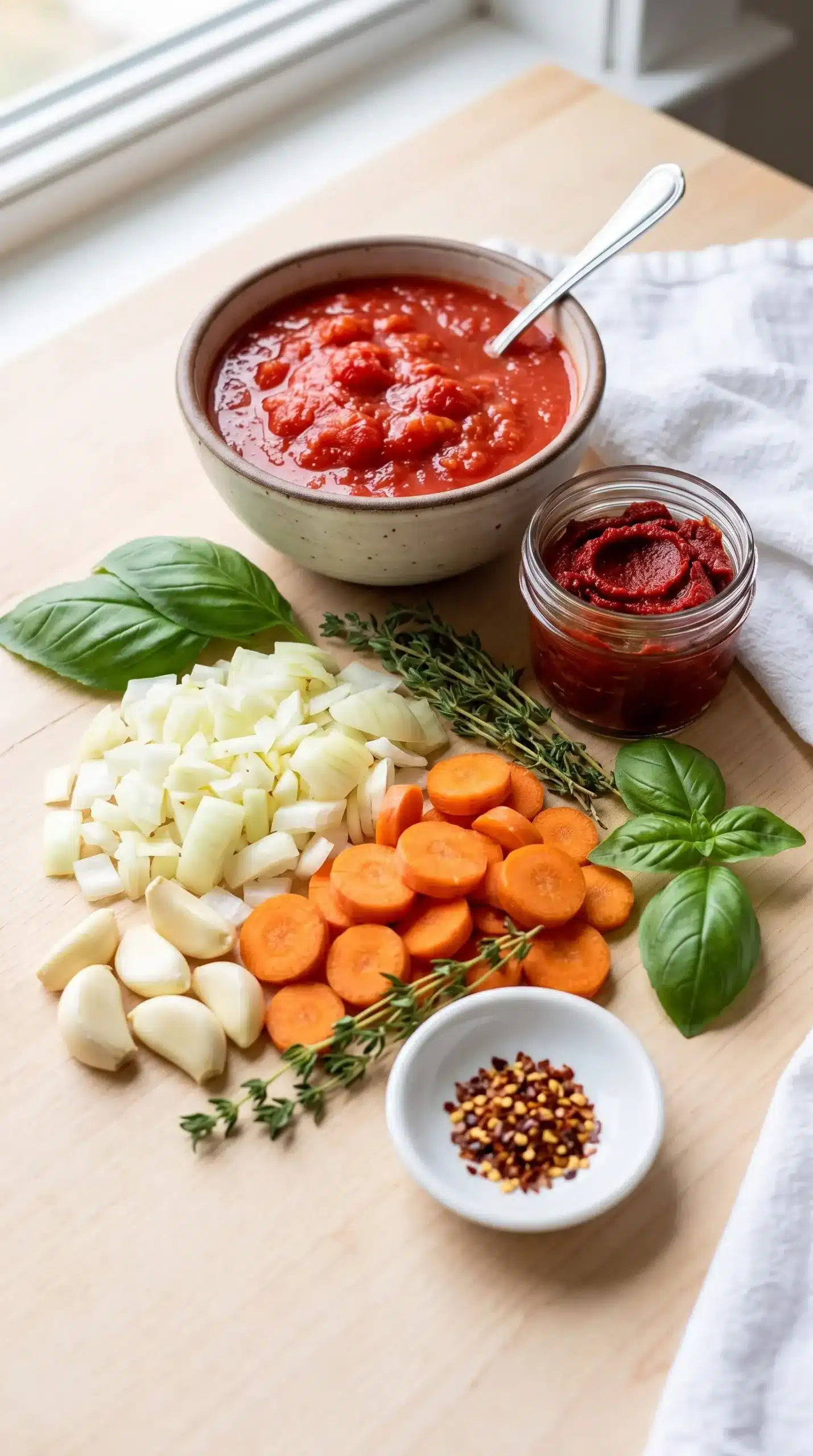
Balanced flavor starts with the combination of aromatic vegetables, concentrated tomato paste, and herbs. Onions and carrots soften together to create a naturally sweet foundation that supports the bright acidity of crushed tomatoes.
Tomato paste receives extra attention during preparation because a brief period of cooking helps deepen its savory character. Garlic and red pepper flakes join the base with warmth, while basil and thyme provide fresh herbal notes that keep the soup lively.
The smooth finish comes from blending the softened vegetables and tomatoes together before adding the creamy element. This approach creates a comforting texture that feels rich without relying on complicated techniques.
The Tomato Base Choices Shape the Soup’s Character
Crushed tomatoes provide the main flavor identity of this easy tomato soup recipe. Their consistent texture makes them especially useful when fresh tomatoes are less available, giving the soup dependable sweetness and body.
Carrots play an important role beyond adding vegetables to the pot. Once blended, they contribute natural thickness and help soften the sharper edges of tomato acidity. The vegetable combination allows the broth to stay smooth and balanced.
Cream, milk, or unsweetened plant milk changes the character of the finished bowl. Heavy cream creates a classic luxurious texture, while oat milk, almond milk, or coconut milk offer dairy-free options that maintain a creamy consistency.
A Smooth Texture Comes From Careful Blending
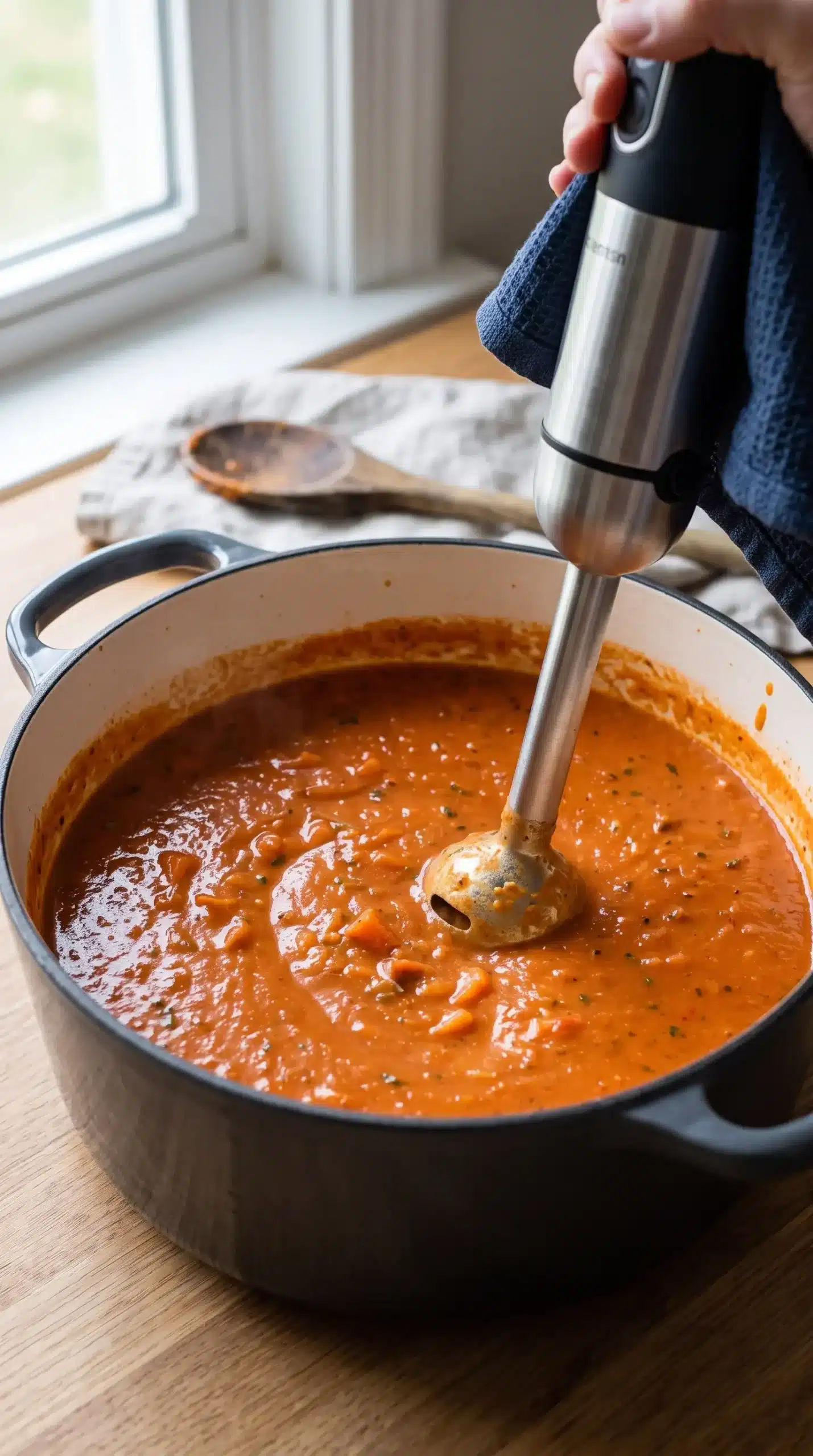
Texture is one of the defining features of Middle-of-Winter Creamy Tomato Soup. Blending the cooked carrots, tomatoes, and aromatics creates a unified texture where each ingredient becomes part of the silky broth.
An immersion blender allows the soup to be processed directly in the pot, making it convenient for everyday cooking. A standard blender also works well when handled carefully with hot liquids and smaller batches.
- Silky finish: Blend thoroughly until the vegetables disappear into the tomato base.
- Rustic texture: Leave some of the soup partially blended for a more homemade feel.
- Creamy balance: Add the cream after blending so the texture stays smooth.
Cooking Controls That Keep Creamy Tomato Soup Silky
Gentle heat management makes a major difference throughout preparation. Softening the onions and carrots slowly helps develop sweetness, while moderate cooking prevents garlic from becoming bitter.
The tomato paste should become slightly darker before liquids are introduced. This small adjustment builds complexity and helps the soup taste as though it has been simmering much longer.
After the creamy ingredient is added, gentle warming keeps the broth smooth. Avoiding aggressive boiling protects the texture and helps prevent separation.
Creamy Tomato Soup Mistakes That Dull Flavor and Texture
Several small cooking errors can affect the character of Middle-of-Winter Creamy Tomato Soup. Paying attention to these details helps preserve the balanced flavor and smooth consistency.
- Burning garlic: Keep sautéing heat controlled because darkened garlic can introduce bitterness.
- Skipping tomato paste browning: Allow the paste to cook briefly so the soup develops deeper savory notes.
- Adding cream too early: Wait until blending is complete to maintain a stable creamy texture.
- Overdiluting the broth: Add extra liquid carefully because too much can weaken the tomato flavor.
Serving Pairings Balance the Rich Tomato Flavor

Classic pairings highlight the comforting nature of this soup. A grilled cheese sandwich provides crisp texture against the creamy broth, while sourdough or garlic bread works well for dipping.
Storage Methods Protect the Creamy Tomato Soup Finish
Proper storage helps preserve the smooth quality of leftover soup. Cooling the soup completely before storing supports better texture when it is reheated later.
For safe storage after serving, refrigerate leftovers within 2 hours to help protect the quality of the soup before reheating.
| Storage method | Best handling approach |
|---|---|
| Refrigerator | Keep in an airtight container and warm gently when serving again. |
| Freezer | Transfer cooled soup into freezer-safe containers before freezing. |
| Reheating | Use medium-low heat and add a small splash of liquid if needed. |
Frozen portions of creamy tomato soup can be useful for quick meals because the flavors continue to work well after storage. Slow reheating helps maintain the velvety texture, especially when dairy or plant milk is included.
Simple Variations Expand the Comforting Soup
Flavor adjustments allow the soup to fit different preferences without changing its comforting foundation. Extra crushed red pepper flakes or chili oil can increase heat, while cooked pasta shapes create a heartier bowl. Adding pasta to a tomato-based soup creates a satisfying texture, and tomato orzo soup uses this style of ingredient pairing for a cozy meal.
Family-Friendly Adjustments Keep Bowls Approachable
The mild tomato flavor and smooth texture make this soup easy to adapt for different ages. Reducing the crushed red pepper flakes keeps the flavor gentle, and familiar pairings like toast or grilled cheese can make the meal more inviting.
Budget-Friendly Choices Preserve Homemade Creamy Tomato Soup
Affordable ingredients can still create a rich homemade creamy tomato soup experience. Canned crushed tomatoes provide dependable flavor without requiring seasonal fresh produce, making the soup practical throughout colder months.
Onions and carrots are inexpensive ingredients that contribute sweetness and body. Choosing store-brand tomatoes, broth, or milk alternatives can also reduce cost while keeping the essential character of the dish intact.
Meal stretching options make the soup even more useful for everyday cooking. Serving it with bread, adding pasta, or pairing it with simple vegetables can turn a modest ingredient list into a satisfying meal.
Kitchen Tools Improve Blending and Preparation
A heavy soup pot provides steady heat during cooking, while a sharp knife and cutting board make vegetable preparation easier. An immersion blender is especially helpful because it simplifies the process of creating a smooth finished texture.
Creamy Tomato Soup Brings Pantry Ingredients Together
Sweet tomatoes, softened vegetables, herbs, and a carefully blended broth create a soup where simple ingredients achieve a layered result. The cooking decisions that matter most are developing the vegetable base, concentrating tomato flavor, and protecting the creamy texture during finishing.
Middle-of-Winter Creamy Tomato Soup succeeds because each stage supports the next, creating a warm bowl with smooth consistency and balanced flavor from familiar ingredients.
Creamy Tomato Soup Questions About Storage and Preparation
Can creamy tomato soup be made ahead?
Yes. Preparing the soup ahead allows the flavors to settle together, and gentle reheating helps restore its smooth consistency before serving.
How can the soup stay creamy without heavy cream?
Unsweetened plant milk can provide a creamy texture while keeping the soup dairy-free. Blended carrots also contribute natural body to the broth.
Why does tomato soup sometimes taste too acidic?
Tomato acidity can vary, so balancing the soup with properly softened vegetables, cream, and careful seasoning helps create a smoother flavor.
Can the soup be served with more texture?
Yes. Blending only part of the soup leaves some vegetable texture while keeping the comforting tomato base.
What makes the soup smooth after blending?
Thorough blending combines the tomatoes, carrots, and aromatics into a unified texture that gives the soup its signature silky finish.
Creamy Tomato Soup with Basil and Thyme
Ingredients
Method
- Warm olive oil in a heavy soup pot over medium heat, then add diced onion and carrots with salt and black pepper; cook for 5–6 minutes until the vegetables soften.
- Add garlic, tomato paste, and crushed red pepper flakes, stirring for 1–2 minutes until fragrant and the tomato paste becomes slightly darker.
- Mix in fresh basil leaves and tender stems, fresh thyme leaves, crushed tomatoes, vegetable broth, and white wine if using; bring the soup to a gentle boil.
- Lower the heat, partially cover the pot, and simmer for about 15 minutes until the carrots are very tender.
- Blend the soup with an immersion blender or carefully transfer it to a standard blender and process until smooth.
- Return the blended soup to low heat and stir in heavy cream, milk, or unsweetened plant milk, warming gently without boiling.
- Taste and adjust the seasoning with salt and black pepper, then serve with fresh basil, cracked black pepper, or red pepper flakes if desired.