Roasted Tomato Ricotta Pasta with Creamy Garlic Sauce
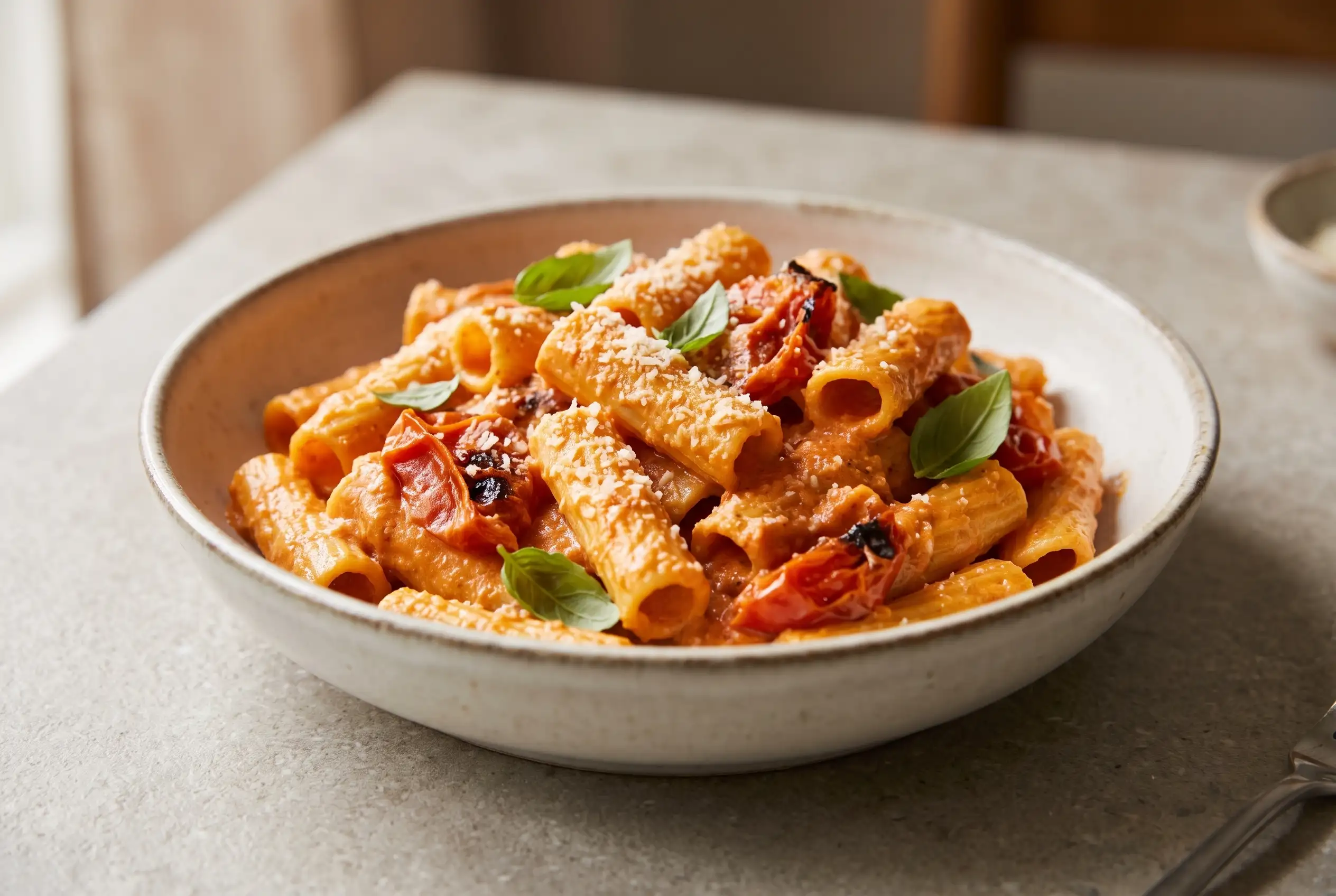
Roasted tomato ricotta pasta brings together sweet roasted tomatoes, mellow garlic, creamy ricotta, and tender pasta for a comforting meal with Mediterranean character. The combination creates a creamy ricotta pasta recipe that feels special while relying on straightforward cooking techniques and familiar ingredients.
The appeal of this dish comes from how simple ingredients change during cooking. Roasting concentrates the tomato flavor, softens the garlic, and creates a sauce base that blends smoothly with ricotta and basil. A well-balanced sauce texture is the key difference between an ordinary pasta dinner and a satisfying 30 minute tomato ricotta pasta.
Roasted Tomato Ricotta Pasta Builds Flavor Through Roasting
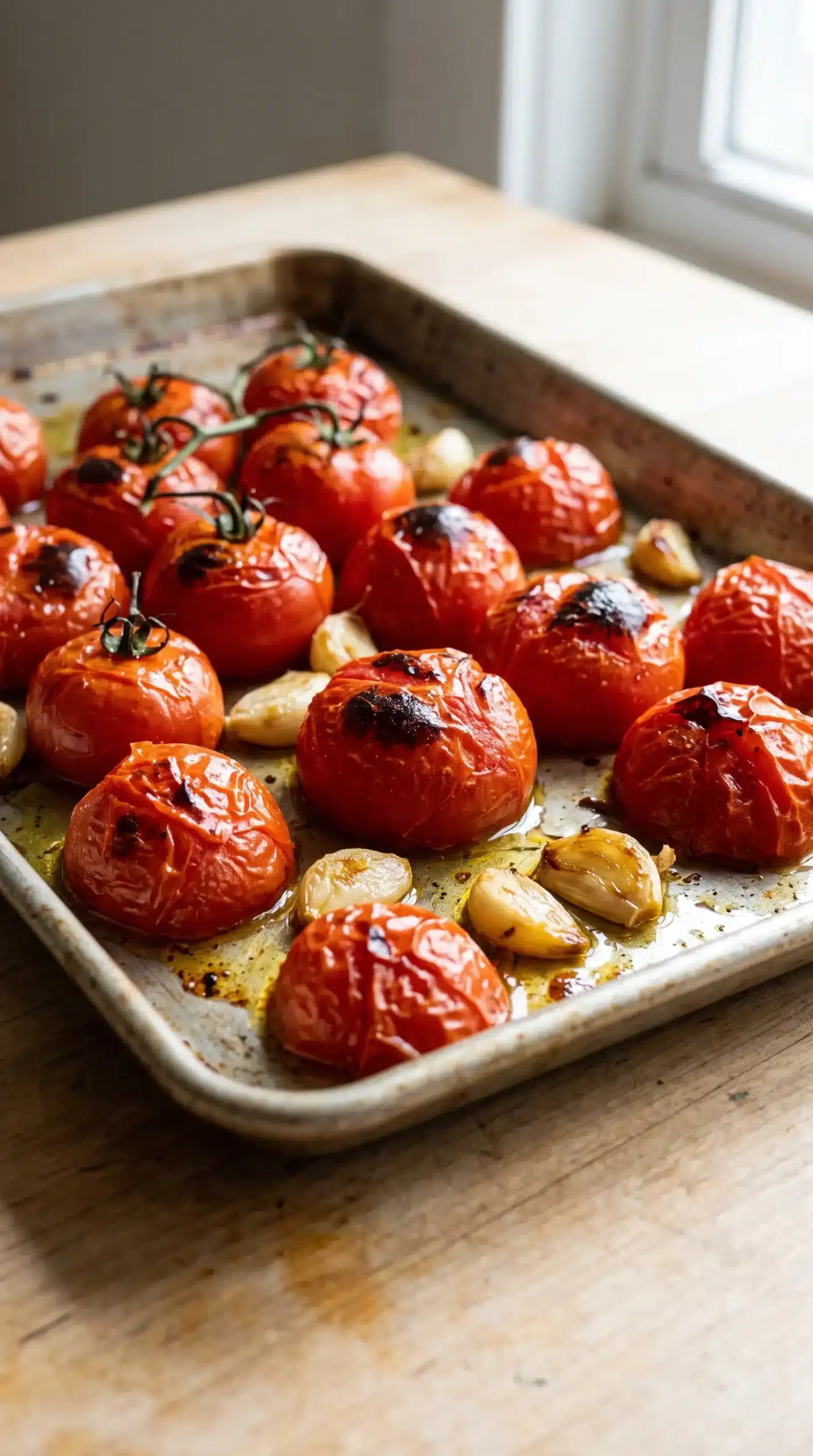
Roasting is the defining step that gives roasted tomato ricotta pasta its deep flavor. Fresh tomatoes contain natural sweetness and acidity, but heat transforms their character by concentrating their juices and encouraging gentle caramelization. The result is a richer tomato base that blends naturally with creamy ingredients.
Garlic changes just as dramatically during roasting. The sharpness of raw garlic fades, leaving behind a softer, sweeter flavor that works especially well with ricotta. When the roasted garlic is blended into the sauce, it creates a smooth background note instead of overpowering the tomatoes.
The creamy texture comes from combining the roasted vegetables with ricotta and a small amount of reserved pasta water. The starch in the water helps the sauce coat the pasta evenly, creating a glossy finish. This approach keeps the dish rich while allowing the tomato and basil flavors to remain noticeable.
The Tomato and Garlic Choices Shape the Sauce
The ingredient decisions behind roasted tomato ricotta pasta have a direct effect on the finished sauce. Ripe vine tomatoes provide the foundation because their natural sweetness becomes more pronounced during roasting. Roma or cherry tomatoes can also work well, with cherry tomatoes creating a sweeter roasted flavor because of their smaller size.
Whole garlic creates a particularly mellow result because the cloves soften gradually while roasting. Individual large cloves are a practical alternative when preparing the dish with ingredients already available. The important factor is achieving a completely soft texture so the garlic blends smoothly.
Ricotta determines the character of the sauce. Whole milk ricotta produces a smooth, creamy consistency, while part-skim ricotta can still create a balanced result. Unlike heavier cream-based sauces, ricotta keeps the pasta feeling lighter while adding protein and a velvety texture.
Fresh basil provides contrast against the sweetness and richness of the sauce. Olive oil also plays an important role by helping the tomatoes roast properly and contributing its own flavor to the finished pasta.
A Silky Sauce Depends on Pasta Water Control
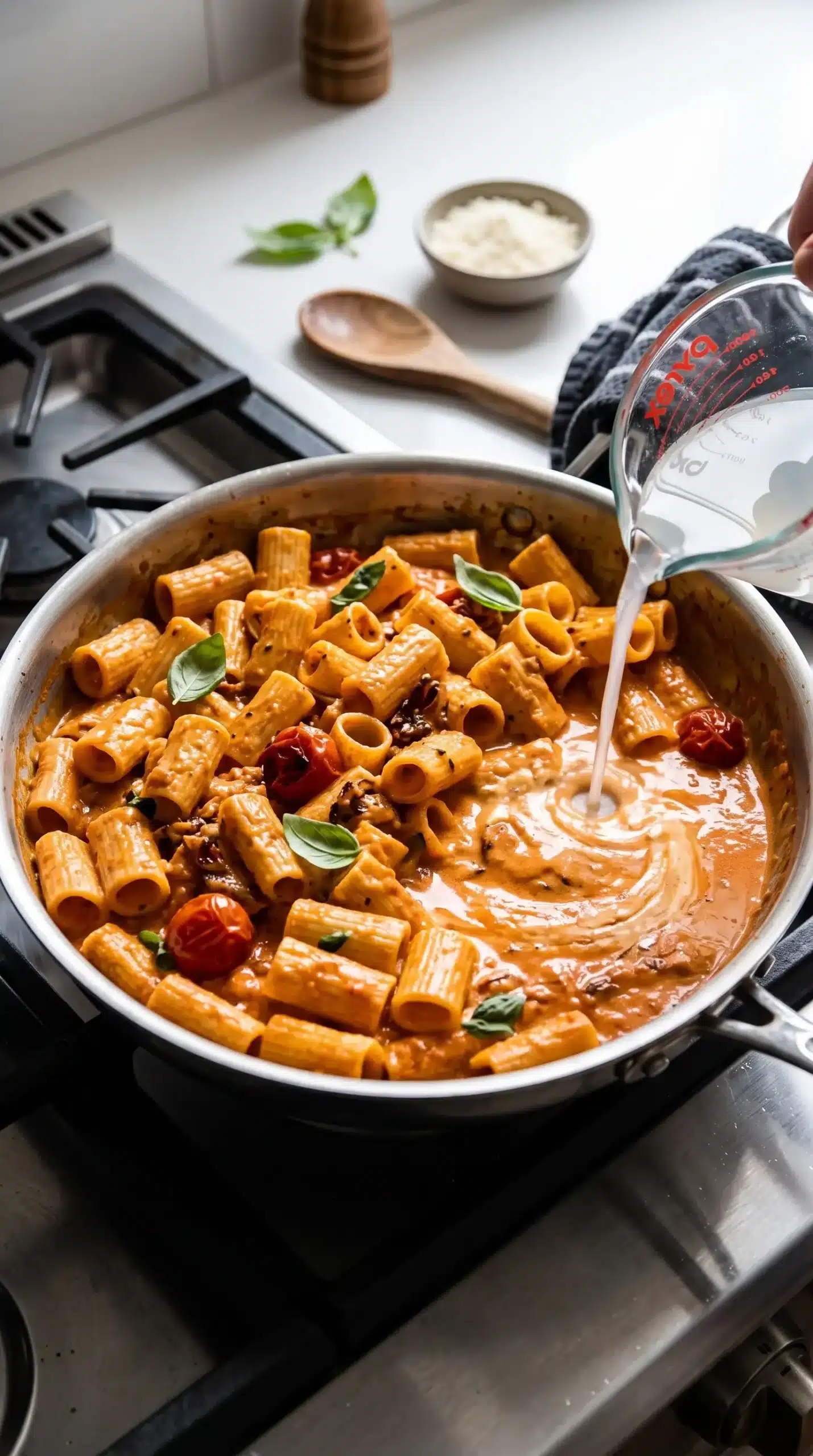
Reserved pasta water is one of the most important controls when finishing roasted tomato ricotta pasta. Adding it gradually after blending helps loosen the sauce and allows the ricotta mixture to become smooth enough to cling to every piece of pasta without becoming thin.
Roasted Tomato Ricotta Pasta Mistakes That Change the Finish
Small preparation choices can greatly affect the final texture and flavor of roasted tomato ricotta pasta. Avoiding a few common problems helps maintain the balance between creamy, fresh, and deeply roasted flavors.
- Under-roasted tomatoes: Tomatoes that have not softened and concentrated enough can create a watery sauce with less sweetness. Continue roasting until the tomatoes blister and their juices become more concentrated.
- Skipping pasta water: Without starchy pasta water, the sauce may feel too thick or fail to blend smoothly with the pasta. Reserve enough before draining so the texture can be adjusted.
- High heat after blending: Excessive heat can affect the ricotta texture. Keep the sauce at gentle heat while combining it with pasta.
- Unripe tomatoes: Tomatoes with limited flavor cannot develop the same sweetness during roasting. Choose ripe tomatoes whenever possible.
Another mistake is adding too much salt before tasting the blended sauce. Roasting concentrates flavors, so seasoning is easier to judge after the sauce comes together.
Pasta Shapes and Add-Ins Keep the Dish Flexible
Roasted tomato ricotta pasta works with several pasta shapes because the creamy sauce can coat different surfaces effectively. Spaghetti, penne, rigatoni, and fettuccine are all suitable options depending on the texture and serving style you prefer.
| Pasta shape | Texture advantage | Best use in the dish |
|---|---|---|
| Spaghetti | Long strands carry the smooth sauce evenly | A classic creamy pasta presentation |
| Penne | Tubular shape holds sauce inside | Easy serving for family meals |
| Rigatoni | Larger tubes provide a hearty bite | Pairs well with thicker sauce texture |
Additional vegetables can expand the meal without changing its main character. Spinach, zucchini, mushrooms, and roasted red peppers can complement the tomato and ricotta combination. For extra protein, grilled chicken or shrimp fit naturally with the creamy sauce, while a dish like creamy chicken pasta shows how chicken can pair with a rich pasta sauce.
Serving Pairings Balance the Creamy Tomato Sauce
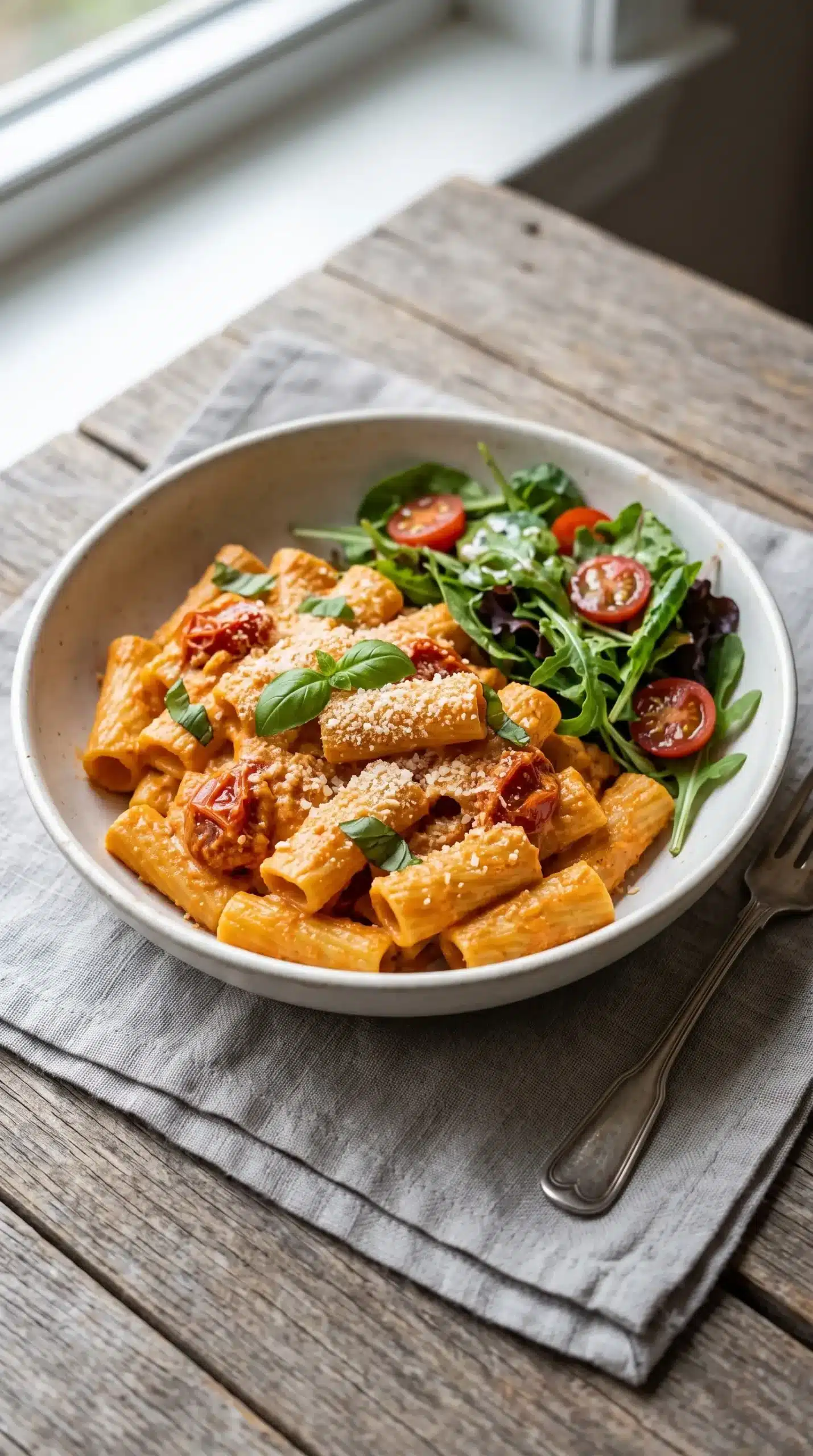
The richness of roasted tomato and garlic pasta pairs well with lighter sides that add freshness and contrast. A crisp green salad, roasted vegetables, or sautéed spinach can balance the creamy texture while keeping the meal focused.
Storage Choices Protect the Ricotta Texture
Leftover roasted tomato ricotta pasta can be stored in an airtight container, but the sauce will naturally become thicker as it cools. A small amount of moisture added during reheating helps restore its smooth consistency.
Gentle reheating works best because strong heat can change the texture of ricotta-based sauces. Adding a splash of milk, olive oil, or pasta water while warming helps loosen the sauce and bring back its silky appearance.
The sauce can also be prepared separately ahead of time and stored before combining it with freshly cooked pasta. Freezing is possible, although the ricotta texture may become slightly softer after thawing.
- Freeze portions: Individual servings make reheating easier.
- Thaw slowly: Refrigerator thawing helps maintain texture.
- Warm gently: Low heat helps protect the creamy sauce.
Prep Strategies Make Weeknight Cooking Smoother
Several preparation choices make roasted tomato ricotta pasta easier to manage on busy evenings. Roasting the tomatoes and garlic ahead of time allows the sauce preparation to move quickly later, while pre-grated parmesan and prepared basil reduce last-minute tasks.
Family-Friendly Adjustments Keep Flavors Approachable
The mild sweetness of roasted tomatoes and the smooth texture of ricotta make this pasta adaptable for different preferences. Reducing or removing chilli flakes creates a gentler version while keeping the roasted flavor intact.
Blending the sauce thoroughly can also make the dish more appealing to diners who prefer smooth textures. The creamy consistency allows the tomatoes and garlic to become part of the sauce without noticeable pieces.
Smaller pasta shapes such as penne or other compact varieties can make serving easier for families. Extra parmesan served separately also allows each person to adjust the final bowl to their liking.
Budget Decisions Preserve the Flavor
Roasted tomato ricotta pasta does not require expensive ingredients to deliver strong flavor. Seasonal tomatoes, standard pasta, and accessible ricotta can create a satisfying meal while keeping the focus on roasting technique and sauce balance.
Kitchen Tools That Support the Roasted Tomato Sauce
A few basic tools make preparing roasted tomato and garlic pasta more efficient. A baking dish or sheet pan supports even roasting, while a large pot ensures the pasta cooks properly.
| Tool | Main purpose | Cooking benefit |
|---|---|---|
| Blender or food processor | Creates the creamy sauce | Produces a smooth ricotta and tomato mixture |
| Large skillet | Combines pasta and sauce | Allows gradual texture adjustment with pasta water |
| Fine grater | Prepares parmesan | Helps fresh cheese blend more smoothly |
Tongs, a pasta spoon, and a measuring cup for reserved pasta water are also useful additions. The most important equipment choice is the tool that helps achieve the correct sauce consistency after blending.
Roasted Tomato Ricotta Pasta Comes Together Through Balance
Roasted tomatoes develop their deepest flavor when they have enough time to soften and how roasting concentrates tomato flavor, while ricotta creates the creamy texture that defines the dish. The combination works because each part is handled with care: vegetables are roasted, the sauce is blended smoothly, and pasta water adjusts the finish.
The finished roasted tomato ricotta pasta depends less on complicated techniques and more on controlling texture and flavor at each stage. When the garlic is mellow, the tomatoes are concentrated, and the sauce remains silky, the dish delivers a comforting result from simple ingredients.
Roasted Tomato Ricotta Pasta Texture Questions and Answers
How do I keep the sauce silky after blending?
Add reserved pasta water gradually while combining the sauce with pasta. Gentle heat and slow adjustment help maintain a smooth ricotta-based texture.
Can I use a different cheese instead of ricotta?
Goat cheese can create a tangier sauce, mascarpone adds extra richness, and cottage cheese can replace ricotta when blended until smooth.
What makes the roasted tomatoes important for this pasta?
Roasting concentrates the tomatoes’ natural sweetness and reduces excess moisture, creating a deeper sauce flavor than lightly cooked tomatoes provide.
Can I make roasted tomato ricotta pasta gluten-free?
Yes. Using a favorite gluten-free pasta allows the same roasted tomato and ricotta sauce to be enjoyed with a different pasta base.
How can I add more heat to the dish?
Increase the chilli flakes or add a spicy chilli ingredient to bring more warmth while keeping the creamy tomato sauce balanced.
Roasted Tomato and Garlic Ricotta Pasta
Ingredients
Method
- Preheat the oven to 400°F / 200°C and place the halved tomatoes and garlic in a baking dish.
- Coat the tomatoes and garlic with olive oil, then season with salt and black pepper.
- Roast the tomatoes and garlic for 20 minutes, loosely cover with foil, and continue roasting for another 10 minutes until the tomatoes are blistered and the garlic is tender.
- Boil the pasta in salted water until al dente, then reserve 1 cup of pasta water before draining.
- Remove the roasted garlic from its skins and blend it with the roasted tomatoes, basil leaves, ricotta cheese, chilli flakes, and 1/4 cup reserved pasta water until smooth.
- Combine the roasted tomato ricotta sauce with the cooked pasta in a skillet over medium heat, adding more reserved pasta water as needed until the sauce coats the pasta smoothly.
- Serve the pasta topped with Parmesan cheese and fresh basil.