Gyoza Soup with Dumplings and Vegetables Easy Recipe
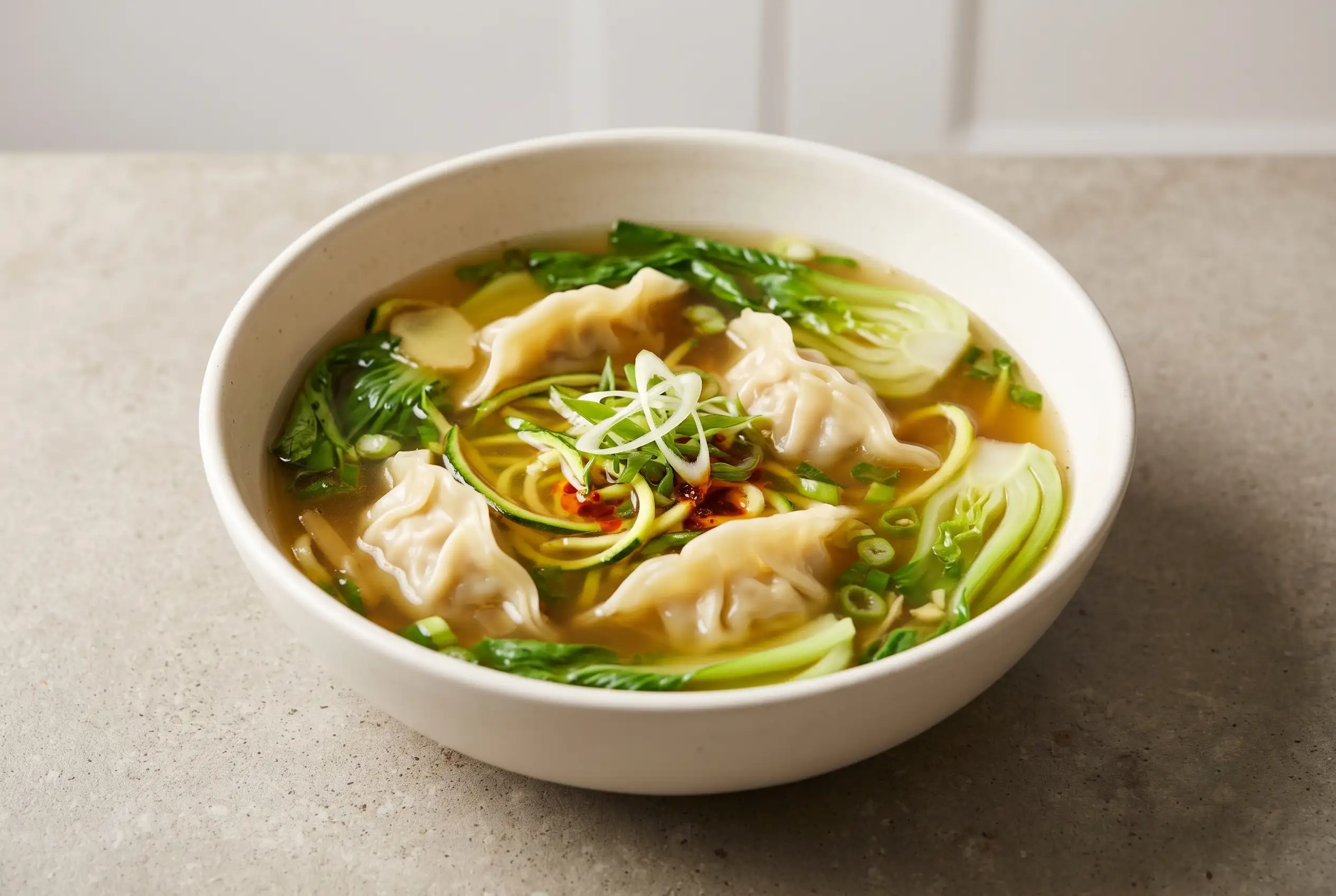
Gyoza Soup brings together tender dumplings, aromatic broth, fresh vegetables, ginger, garlic, and soy sauce in a comforting bowl designed for busy evenings and cozy meals. The combination creates a Japanese-inspired dumpling soup recipe with a light texture, deep savory flavor, and enough flexibility to suit different tastes.
Warm broth surrounds soft vegetable gyozas while spring onions, pak choi, courgette, and fragrant aromatics create layers of flavor. The dish feels satisfying because each spoonful combines silky soup, delicate dumplings, and fresh vegetables without requiring complicated preparation.
Gyoza Soup Creates Comfort Through Simple Layers
Every element in the bowl has a clear purpose. The vegetable stock provides the base, while soy sauce builds savory depth and chili oil adds gentle warmth. Ginger and garlic develop the aroma that makes the soup feel especially inviting from the first taste.
Small details shape the overall experience. Cooking the aromatics carefully allows their flavors to blend into the broth, while adding dumplings and vegetables at the right stage helps maintain their texture. The result is a balanced bowl that feels both nourishing and comforting.
The Broth Foundation Shapes the Entire Bowl
Strong flavor starts with the broth because it carries every other ingredient throughout the soup. Vegetable stock works with soy sauce, ginger, garlic, and chili oil to create a savory liquid that supports the softer dumplings.
Fresh aromatics make a noticeable difference because they introduce warmth and fragrance without making the soup heavy. Ginger brings a bright spicy note, garlic adds richness, and spring onions provide a fresh finish that complements the dumplings.
| Element | Role in the soup | Cooking consideration |
|---|---|---|
| Vegetable stock | Creates the savory base | Choose a flavorful stock for deeper results |
| Soy sauce | Adds salty umami character | Taste before adding extra seasoning |
| Chili oil | Provides warmth and spice | Adjust amount for preferred heat |
Gyoza Soup Ingredient Choices Improve Every Bowl
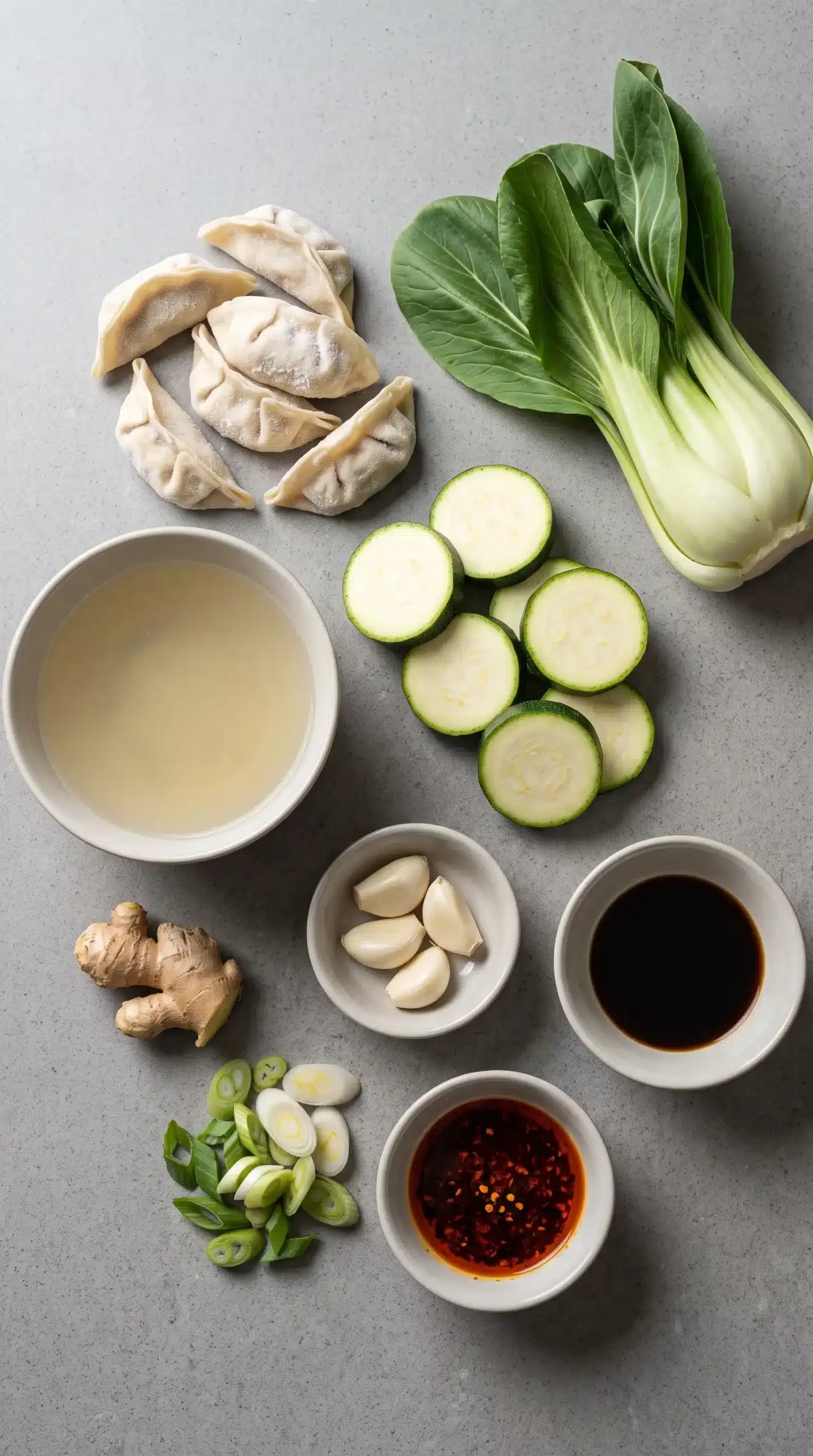
The dumplings remain the centerpiece of this dish, and frozen vegetable gyozas work especially well because they can cook directly in the broth. Their soft wrappers absorb surrounding flavors while keeping the filling enclosed.
Vegetable choices influence the final texture. Pak choi adds freshness and gentle structure, while courgette contributes a softer vegetable element that blends naturally with the broth. Spinach or kale can replace the greens when a different texture is preferred.
Optional additions allow the bowl to become more filling without changing its character. Mushrooms, tofu, sesame seeds, chili flakes, and rice noodles can all complement the existing flavors when added thoughtfully.
- Frozen gyozas: A convenient choice that keeps preparation simple.
- Fresh ginger: Brings the strongest aromatic warmth.
- Extra greens: Add color and freshness near serving time.
Flavor Balance Makes Japanese Gyoza Soup Stand Out
Good seasoning depends on harmony between savory, spicy, and fresh notes. Soy sauce gives the broth its umami character, while chili oil introduces heat that can be adjusted according to preference.
Balanced bowls avoid letting one flavor dominate. Too much spice can cover the delicate dumplings, while too little seasoning can make the broth feel flat. Tasting before serving helps maintain the right balance.
Simple toppings can also change the finished presentation. Spring onions and chili flakes add freshness and visual contrast, while sesame seeds provide a small amount of texture when included.
Gentle Simmering Protects Dumpling Texture
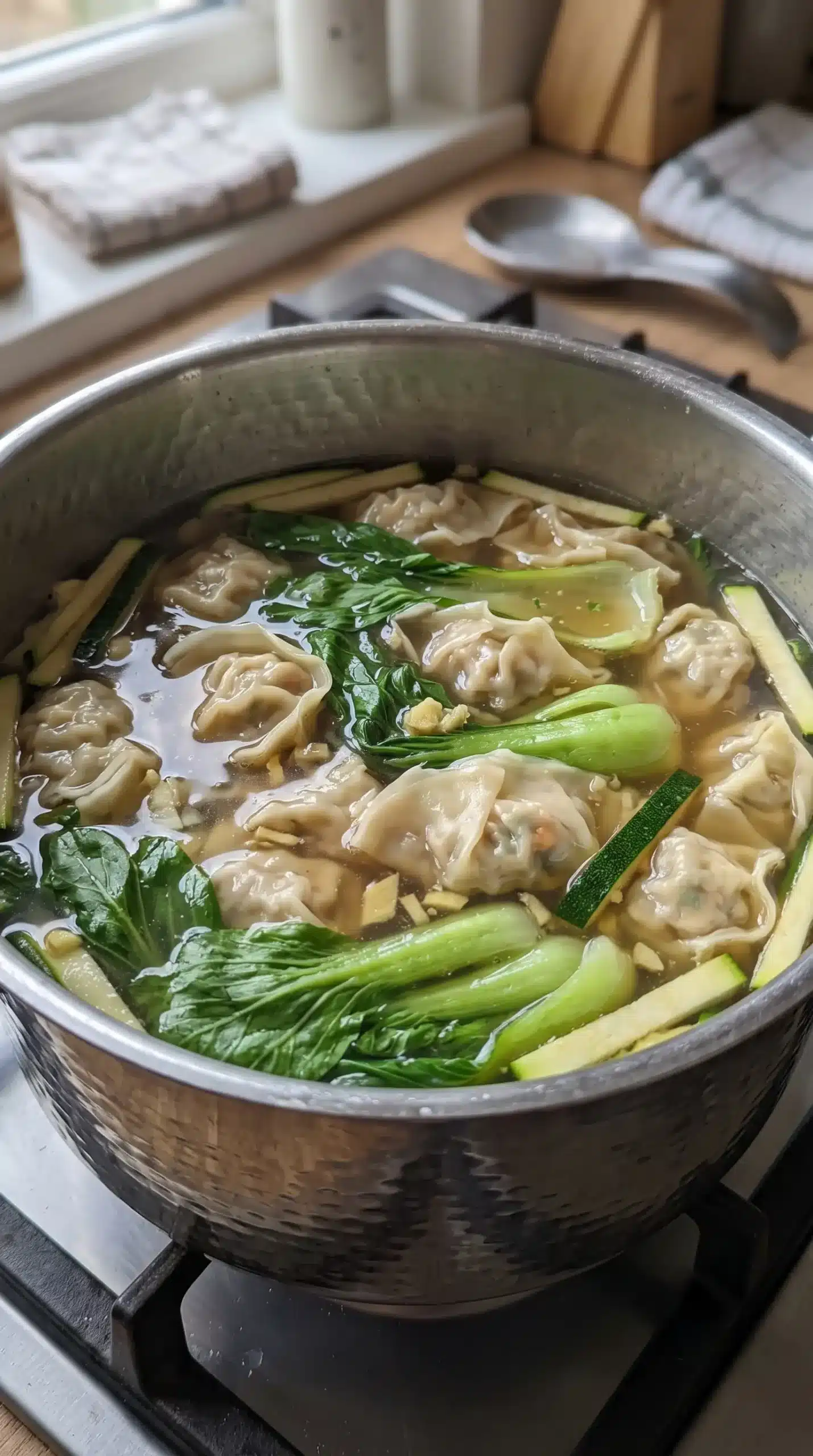
Cooking control matters most once the dumplings enter the broth. A gentle simmer allows gyozas to heat through while helping their wrappers stay intact and tender, a key detail when preparing dumpling soup with filled wrappers in a flavorful broth.
Strong boiling creates unnecessary movement in the pot, which can damage delicate dumplings. Keeping the heat controlled also helps vegetables maintain a pleasant texture instead of becoming overly soft.
- Prepare vegetables and aromatics evenly so they cook consistently.
- Add ingredients carefully to protect the dumplings.
- Maintain a soft simmer while flavors combine.
- Adjust seasoning after the broth has developed.
Gyoza Soup Mistakes That Affect the Finished Bowl
Several common mistakes can change the texture and flavor of this dumpling soup. Understanding what causes problems makes it easier to create a better bowl every time.
Boiling the dumplings too aggressively
High heat can cause wrappers to split and release filling into the broth. A gentle simmer keeps the gyozas intact and preserves their soft texture.
Adding too many vegetables
Extra vegetables can overwhelm the broth balance if added without considering the soup’s proportions. Keeping additions controlled allows the dumplings and seasoning to remain noticeable.
Cooking greens for too long
Extended cooking can remove the fresh texture that greens bring to the soup. Adding delicate vegetables at the appropriate point helps maintain their quality.
Custom Bowls Expand Easy Gyoza Soup Recipe Options
One advantage of this meal is how easily it adapts to different preferences. The original combination of vegetable gyozas and broth creates a complete bowl, while additional ingredients can shift the style.
| Variation | Addition | Result |
|---|---|---|
| Spicy bowl | Extra chili oil or chili flakes | More pronounced heat |
| Noodle bowl | Rice noodles or ramen | A more filling meal |
| Protein version | Tofu, shrimp, or shredded chicken | Additional richness |
Vegetarian preparation remains simple because vegetable broth and vegetable dumplings already create a flavorful combination. Family members can also customize individual bowls with different toppings or spice levels.
Serving Ideas Match the Soup’s Light Comfort
Gyoza Soup pairs naturally with simple sides that complement the broth without competing with it. Steamed rice can absorb extra broth, while fresh salads add contrast.
Additional dumplings create a heartier meal, and stir-fried vegetables bring extra color and crunch. A warm cup of green tea also fits well with the savory flavors of the dish.
- Rice: Helps soak up flavorful broth.
- Cucumber salad: Adds refreshing contrast.
- Stir-fried vegetables: Introduce extra texture.
Storage Choices Preserve Gyoza Soup Quality
Proper storage helps maintain the best experience after cooking. Keeping the soup in airtight containers allows leftovers to stay convenient for later meals.
Separating broth and dumplings can help protect texture when storing portions ahead. Dumplings may soften slightly after reheating, so gentle warming works best.
Refrigerating leftovers
Store the soup in airtight containers and store cooked leftovers in the refrigerator within a few days for the best quality. Reheat gently over low heat to warm the broth without damaging the dumplings.
Freezing portions
Freezing the broth separately can help maintain better dumpling texture when the soup is served again.
Quick Preparation Habits Make Weeknight Cooking Easier
Small preparation choices can make this meal even more convenient. Chopping vegetables ahead of time, preparing aromatics early, and keeping frozen gyozas available can shorten the cooking process on busy days.
Pre-portioned ingredients also simplify assembly because the main components are ready when needed. The broth can be prepared with minimal effort while still developing rich flavor from ginger, garlic, soy sauce, and vegetables.
Frozen dumplings are especially useful for quick meals because they remove the need for making wrappers or fillings from scratch. That convenience makes the soup a practical option whenever a warm homemade dinner is needed.
Texture Contrast Defines the Dumpling Soup Experience
The appeal of the soup comes from the way different textures work together. Soft dumpling wrappers, tender fillings, silky broth, and fresh vegetables create variety in every bite.
Pak choi contributes a gentle vegetable texture, while courgette adds lightness to the bowl. The broth ties everything together by carrying the flavors of the aromatics and seasonings throughout each serving.
Careful cooking preserves these differences. Maintaining moderate heat protects the dumplings while allowing the vegetables to soften naturally and remain enjoyable.
Gyoza Soup Brings Together Comfort and Careful Cooking
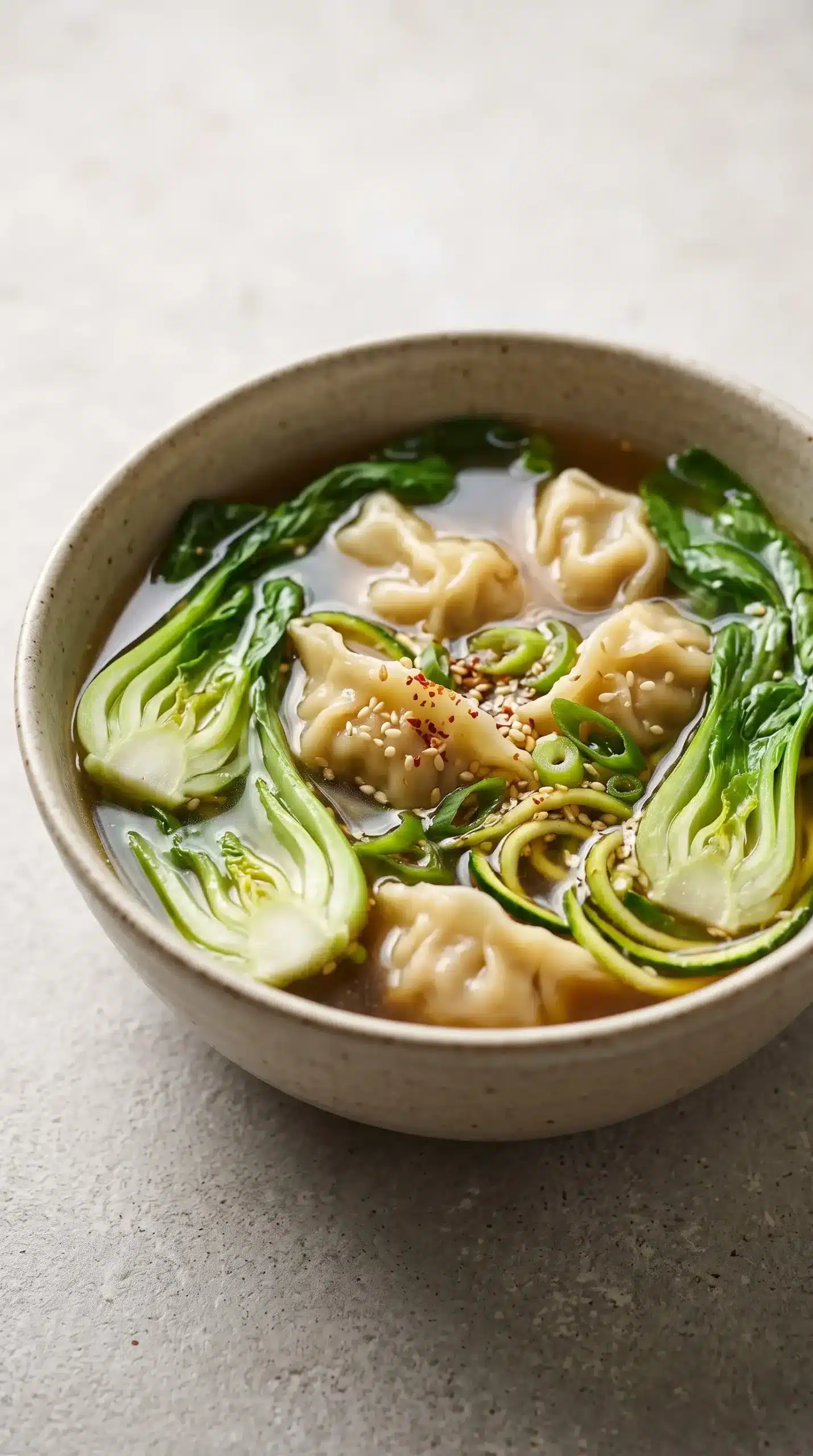
Gyoza Soup succeeds because the dish depends on thoughtful balance. Tender dumplings need gentle handling, aromatic broth needs careful seasoning, and vegetables need enough cooking to soften while keeping their character.
The combination of savory broth, warming ginger and garlic, delicate gyozas, and fresh vegetables creates a meal that feels comforting without unnecessary complexity. Attention to heat and seasoning is what transforms simple ingredients into a satisfying homemade bowl.
Gyoza Soup Questions About Texture and Storage
Can frozen gyozas be used in the soup?
Yes, frozen gyozas work well because they can cook directly in the broth. They provide convenience while still absorbing the surrounding flavors as they warm through.
How can dumplings stay intact during cooking?
Keeping the broth at a gentle simmer helps protect the wrappers. Aggressive boiling creates too much movement and can cause dumplings to break apart.
Can the spice level be adjusted?
Yes, the amount of chili oil controls much of the heat. Reducing it creates a milder bowl, while adding extra chili oil or flakes increases the spicy flavor.
What vegetables work well with gyoza soup?
Pak choi and courgette fit naturally with the broth, while spinach, kale, mushrooms, and other suitable vegetables can provide different textures and flavors.
Can noodles be added to the soup?
Rice noodles or ramen can be added when a more filling bowl is desired. They pair well with the savory broth and dumplings.
Is Gyoza Soup suitable for vegetarian meals?
Using vegetable broth and vegetable dumplings keeps the soup vegetarian while maintaining the aromatic flavors from ginger, garlic, soy sauce, and chili oil.
Gyoza Soup with Dumplings and Vegetables
Ingredients
Method
- Warm the chilli oil in a saucepan over low heat.
- Add the spring onions, garlic, and fresh ginger to the saucepan and cook until aromatic.
- Pour in the vegetable stock and add the soy sauce, pak choi, courgette, and vegetable gyozas.
- Cover the saucepan and gently simmer the soup until the vegetables are tender and the gyozas are fully cooked.
- Season the soup with salt and black pepper to taste.
- Serve the gyoza soup hot and garnish with spring onions or chili flakes if desired.