Balsamic Chicken Orzo with Spinach One-Pan Dinner Recipe
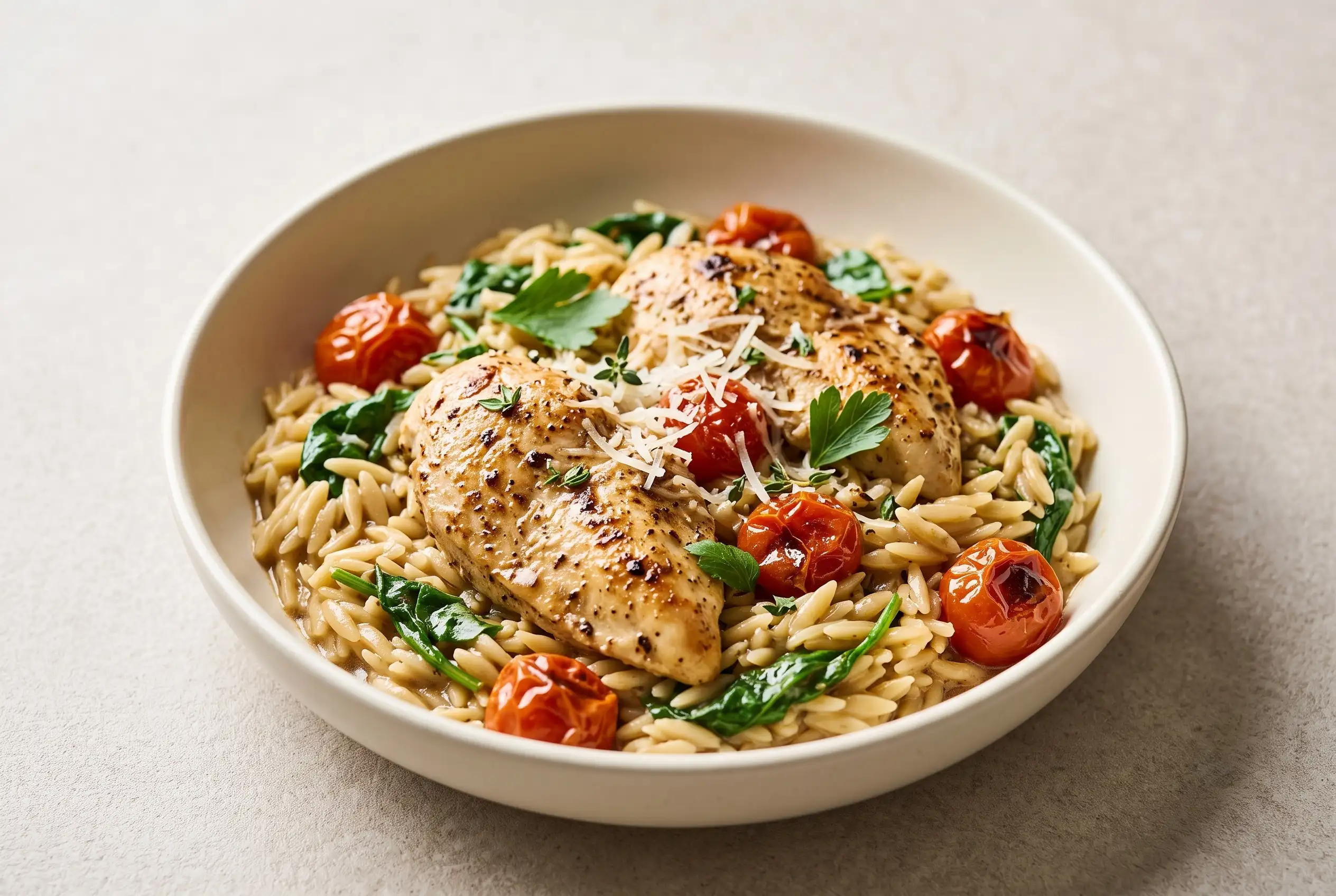
Balsamic chicken orzo brings together tender chicken, savory broth, sweet tomatoes, fresh spinach, and tangy balsamic flavor in a single skillet. The small pasta absorbs the surrounding flavors as it cooks, creating a comforting dinner with a creamy texture and a simple cleanup routine.
Designed for busy evenings, this one pan balsamic chicken orzo combines familiar ingredients into a balanced chicken orzo skillet dinner. The combination of juicy chicken, soft vegetables, and flavorful orzo creates a satisfying meal without relying on heavy sauces or complicated cooking techniques.
Balsamic Chicken Orzo for Busy Skillet Dinners
Weeknight cooking becomes easier when the main components share one pan. The chicken develops a golden exterior before joining the orzo, allowing the pasta to absorb the savory notes left behind in the skillet. Broth, balsamic vinegar, tomatoes, and garlic create a flavorful cooking base that carries through every serving.
Unlike separate pasta dishes that require multiple pots, this 30 minute chicken orzo recipe keeps the process streamlined. The orzo cooks directly in the broth, giving the finished dish a naturally silky consistency while the spinach adds a fresh element that balances the richness.
Families looking for a dependable dinner can adjust the finishing touches easily. Parmesan and fresh herbs add extra flavor at the table, while the skillet format makes serving and storing leftovers straightforward.
The Balsamic Chicken Orzo Flavor Balance
Balsamic vinegar is the defining flavor in this skillet meal. Its tangy character and slight sweetness blend with the savory broth, creating depth without overwhelming the chicken or pasta.
| Component | Role in the dish | Cooking effect |
|---|---|---|
| Balsamic vinegar | Adds tangy richness | Creates a deeper finishing flavor |
| Chicken broth | Builds the cooking base | Allows orzo to absorb flavor |
| Cherry tomatoes | Brings sweetness | Softens and releases juices |
| Spinach | Adds freshness | Wilts quickly into the skillet |
Ingredient Choices That Shape Balsamic Chicken Orzo
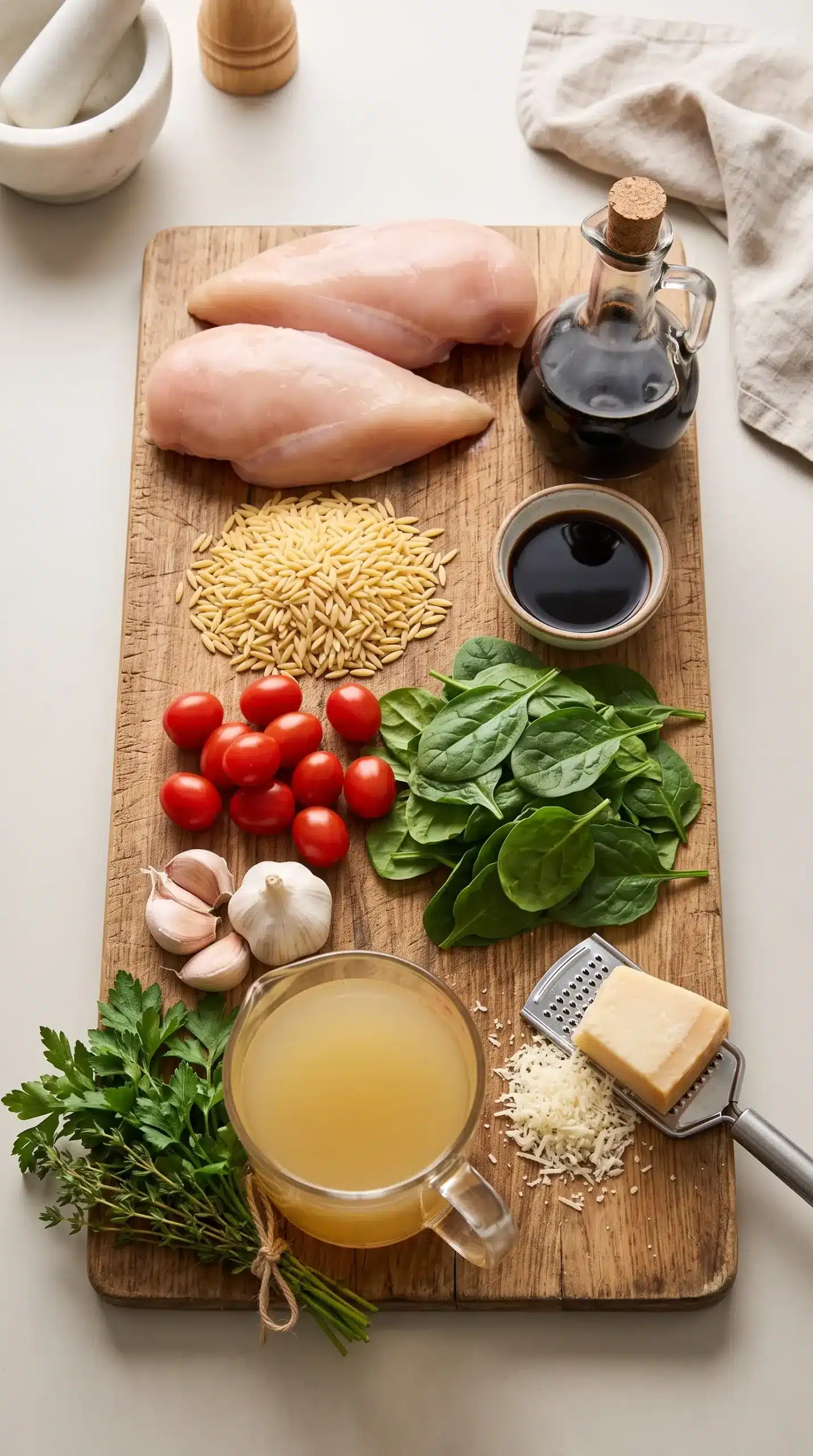
Chicken breasts provide a lean protein foundation, and careful browning plus proper timing help preserve moisture in a baked chicken breast recipe. Chicken thighs can replace them when a richer flavor and juicier texture are preferred.
Orzo determines much of the finished texture because the small pasta absorbs liquid efficiently. Alternatives such as pearl couscous or small pasta shapes can provide a similar comforting feel while changing the final bite slightly.
Quality balsamic vinegar has an important impact because only a few tablespoons influence the entire skillet. A balanced vinegar brings the characteristic tangy finish that makes balsamic chicken orzo recognizable.
Fresh vegetables also shape the result. Spinach blends into the pasta while maintaining a bright element, and cherry tomatoes soften during cooking to create sweet pockets throughout the dish.
- Protein swap: Chicken thighs can replace chicken breasts for a richer result.
- Vegetable change: Kale, zucchini, asparagus, mushrooms, or peppers can add variety.
- Broth option: Vegetable broth works when a non-chicken base is preferred.
Chicken Orzo Skillet Dinner Pairings
The skillet already combines protein, pasta, and vegetables, but simple sides can make the meal feel more complete. Garlic bread, Caesar salad, roasted asparagus, steamed broccoli, green beans, or cucumber salad all complement the flavors without competing with the balsamic finish.
Storage and Reheating Balsamic Chicken Orzo
Leftover balsamic chicken orzo stores well when placed in airtight containers. The pasta continues absorbing moisture during storage, so the texture may become thicker after chilling.
Gentle reheating helps preserve the tender chicken and soft orzo. Adding extra broth during reheating can restore the loose, comforting consistency of the freshly cooked skillet.
Freezing is also possible, although the pasta texture can become softer after thawing. For the best results, reheat gradually and stir carefully to distribute the flavors evenly.
| Storage method | Recommended handling | Texture note |
|---|---|---|
| Refrigerator | Use airtight containers | Orzo absorbs more liquid over time |
| Freezer | Freeze portions for later use | Pasta may soften after thawing |
| Stovetop reheating | Warm gently with added broth if needed | Helps refresh the creamy texture |
Meal Prep with Balsamic Chicken Orzo
Planning ahead works especially well because the flavors continue blending after cooking. Preparing vegetables, measuring broth, and organizing seasonings before cooking can shorten the work needed during a busy evening.
Cooking Control Points for Balsamic Chicken Orzo
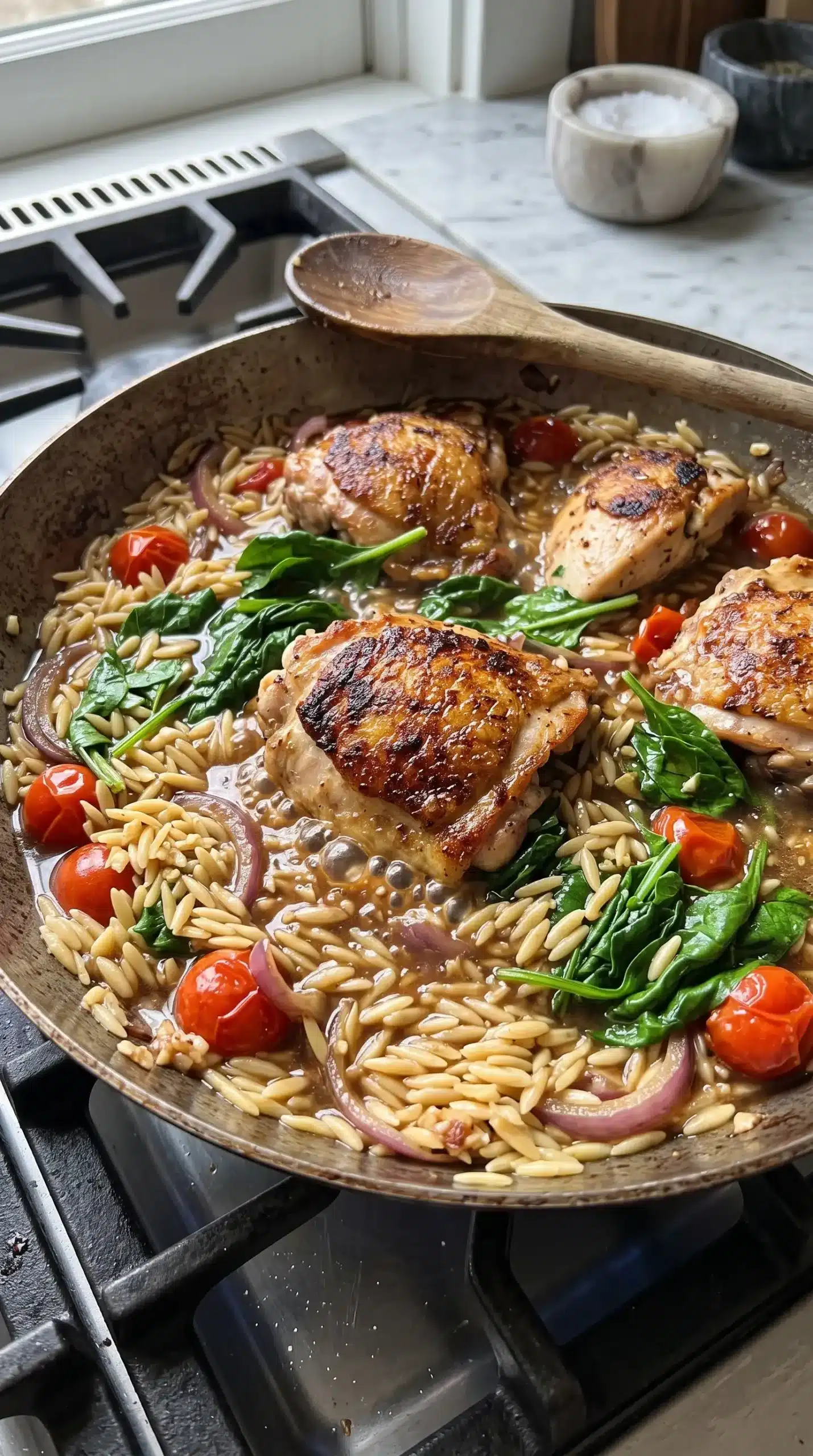
Successful results depend on managing a few important cooking details. Proper browning on the chicken creates a stronger flavor foundation because the Maillard reaction develops savory browned notes when proteins and sugars are heated. Allowing the chicken to cook undisturbed helps develop color before moving it aside.
Orzo requires attention because the small pasta pieces can stick as they absorb liquid. Stirring occasionally keeps the texture even and helps prevent dry areas from forming in the skillet.
Spinach should enter near the end of cooking because it wilts quickly. Adding it too early can reduce its fresh appearance and delicate texture.
A short resting period after cooking allows the ingredients to settle together. Finishing with Parmesan and herbs adds a final layer of savory flavor and freshness.
Mistakes That Affect Balsamic Chicken Orzo Texture
Small cooking errors can change the balance of this skillet meal. Avoiding a few common problems helps maintain juicy chicken and properly textured orzo.
- Dry chicken: Avoid cooking chicken breasts beyond doneness because they can lose moisture quickly.
- Sticking orzo: Stir during simmering so the pasta cooks evenly.
- Flat flavor: Use the measured balsamic amount carefully because too much can dominate the dish.
- Overcooked spinach: Add greens late so they keep their fresh quality.
Extra broth can correct orzo that becomes too dry during cooking or reheating. Careful attention to liquid levels keeps the pasta soft and cohesive.
Variations for Balsamic Chicken Orzo
Different additions can create new versions while keeping the core skillet approach. A creamy variation can include a small amount of heavy cream or cream cheese near the end, while a spicy version can include red pepper flakes or chili oil.
Family-Friendly Balsamic Chicken Orzo Adjustments
Chicken, pasta, and mild vegetables make this meal approachable for many family tables. Small changes can soften stronger flavors while keeping the overall character of the dish.
Younger eaters may prefer a gentler balsamic presence, so reducing the amount slightly creates a milder flavor profile. Smaller tomato pieces or finely chopped spinach can also make the vegetables easier to enjoy.
Slicing chicken into smaller serving pieces can make portions easier to handle. Extra Parmesan or another familiar cheese topping can create a more familiar pasta-style finish for families who enjoy cheesy meals.
Serving optional toppings separately allows each person to customize the skillet. Herbs, cheese, or additional vegetables can be added according to individual preferences.
Budget Choices for Balsamic Chicken Orzo
Simple pantry staples help keep balsamic chicken orzo affordable while maintaining a satisfying flavor. Choosing seasonal vegetables, using practical broth options, and preparing leftovers for later meals can increase value.
Balsamic Chicken Orzo Creates a Complete Skillet Meal
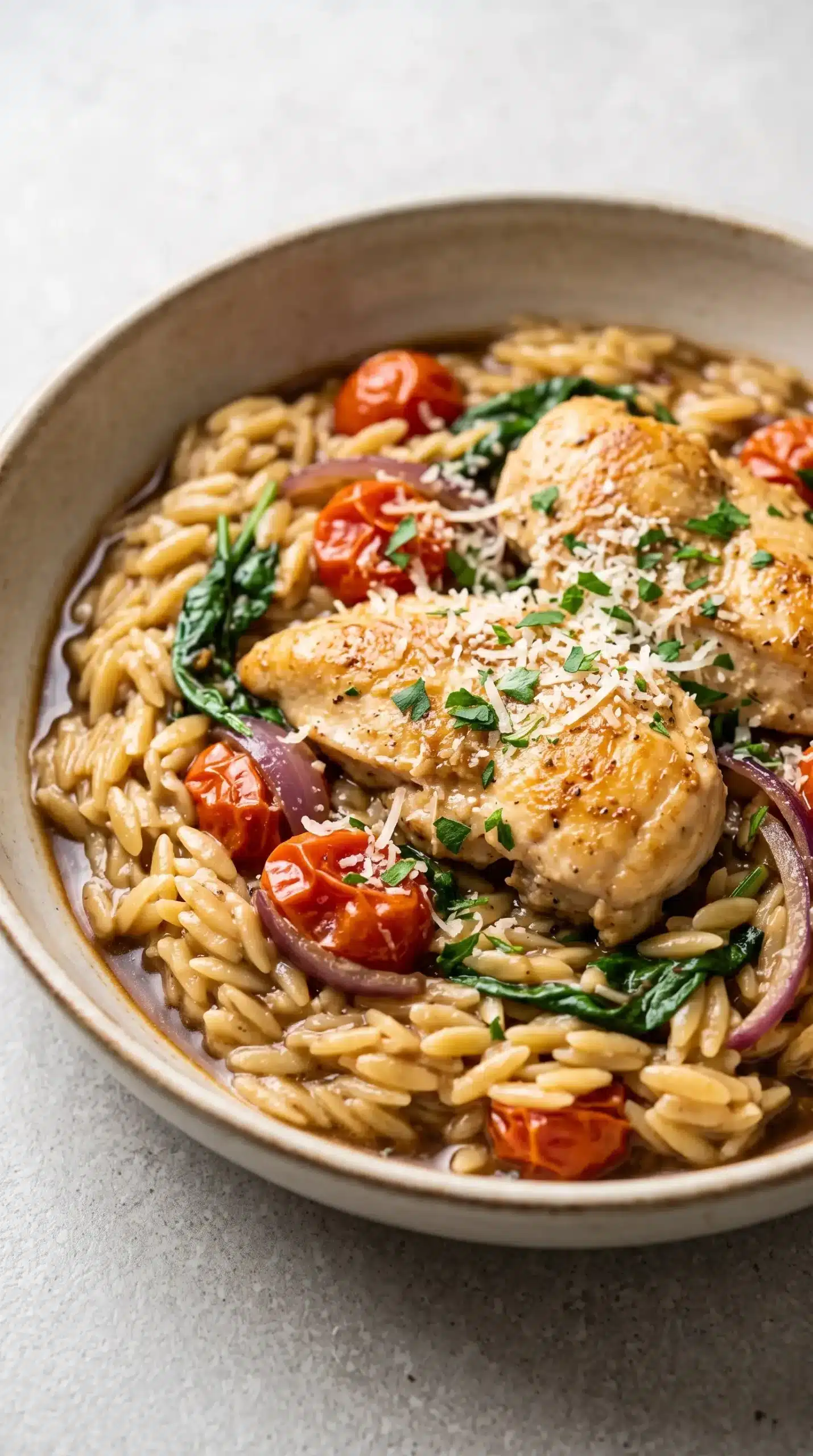
The tender chicken, flavorful orzo, softened tomatoes, and wilted spinach create a balanced skillet where each part supports the others. The pasta absorbs the savory cooking liquid while balsamic vinegar adds the distinctive contrast that keeps the dish lively.
A successful balsamic chicken orzo dinner depends on preserving the texture of each element: juicy chicken, creamy orzo, and vegetables that retain freshness. When those details are handled carefully, one skillet delivers a comforting meal built around simple ingredients.
Balsamic Chicken Orzo Questions and Answers About Leftovers
Can leftovers become dry after refrigeration?
Yes. Orzo naturally absorbs liquid as it sits, so reheated portions may need a splash of broth to bring back a softer consistency.
Can chicken orzo skillet dinner be made with another pasta?
Small pasta shapes or pearl couscous can replace orzo while still providing a similar compact texture and ability to absorb flavorful liquid.
Does balsamic chicken orzo need cream for a creamy texture?
No. The orzo develops a naturally comforting texture as it cooks in broth and releases starch into the skillet.
How can the chicken stay tender in this dish?
Cooking the chicken carefully and avoiding overcooking helps maintain moisture and keeps the meat pleasant alongside the pasta.
What vegetables work well beyond spinach and tomatoes?
Mushrooms, kale, zucchini, asparagus, and peppers are suitable additions that can change the vegetable profile while matching the skillet flavors.
Balsamic Chicken Orzo with Spinach One-Pan Dinner Recipe
Ingredients
Method
- Warm olive oil in a large skillet over medium heat. Season the chicken breasts with salt and black pepper, then cook for 5–7 minutes per side until golden and the chicken reaches 165°F / 74°C. Transfer the chicken out of the skillet and set aside.
- Cook the minced garlic in the same skillet for about 30 seconds until fragrant.
- Add the orzo pasta and chicken broth to the skillet. Bring the mixture to a boil, then lower the heat and simmer for about 10 minutes, stirring occasionally until the orzo is tender and has absorbed the broth.
- Mix in the cherry tomatoes and spinach, cooking until the spinach wilts and the tomatoes soften.
- Stir the balsamic vinegar into the orzo mixture until evenly combined.
- Place the chicken breasts back into the skillet and simmer for 2–3 minutes until heated through.
- Finish the balsamic chicken orzo with Parmesan cheese and fresh basil or parsley before serving.