Gyoza Soup with Dumplings and Vegetables in Savory Broth
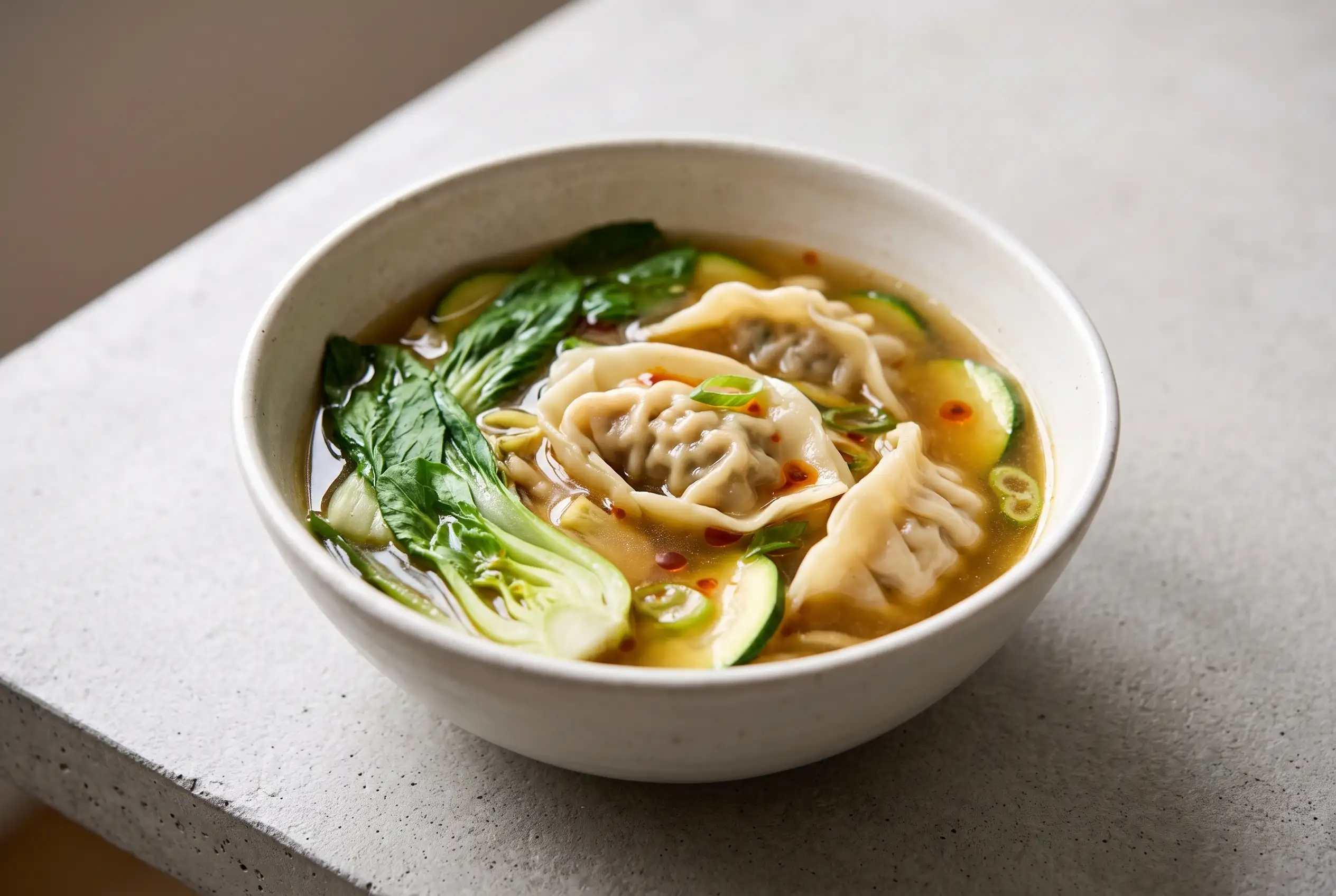
Gyoza soup brings together tender dumplings, fragrant aromatics, fresh vegetables, and a savory broth in a bowl designed for busy evenings. This easy gyoza soup recipe creates restaurant-style comfort at home by using simple ingredients and a straightforward cooking approach.
Warm ginger, garlic, soy sauce, and chili oil give the broth a layered taste, while pak choi and courgette keep each spoonful fresh. The combination makes this 30 minute gyoza soup a practical choice for lunch, dinner, or a comforting meal when cooler weather calls for something soothing.
Why Gyoza Soup Works for Busy Comfort Meals
Simple preparation is one of the biggest strengths of gyoza soup. Store-bought dumplings remove lengthy shaping work, allowing the focus to stay on building flavor through the broth, vegetables, and aromatic ingredients.
The Aromatic Choices That Shape Gyoza Soup
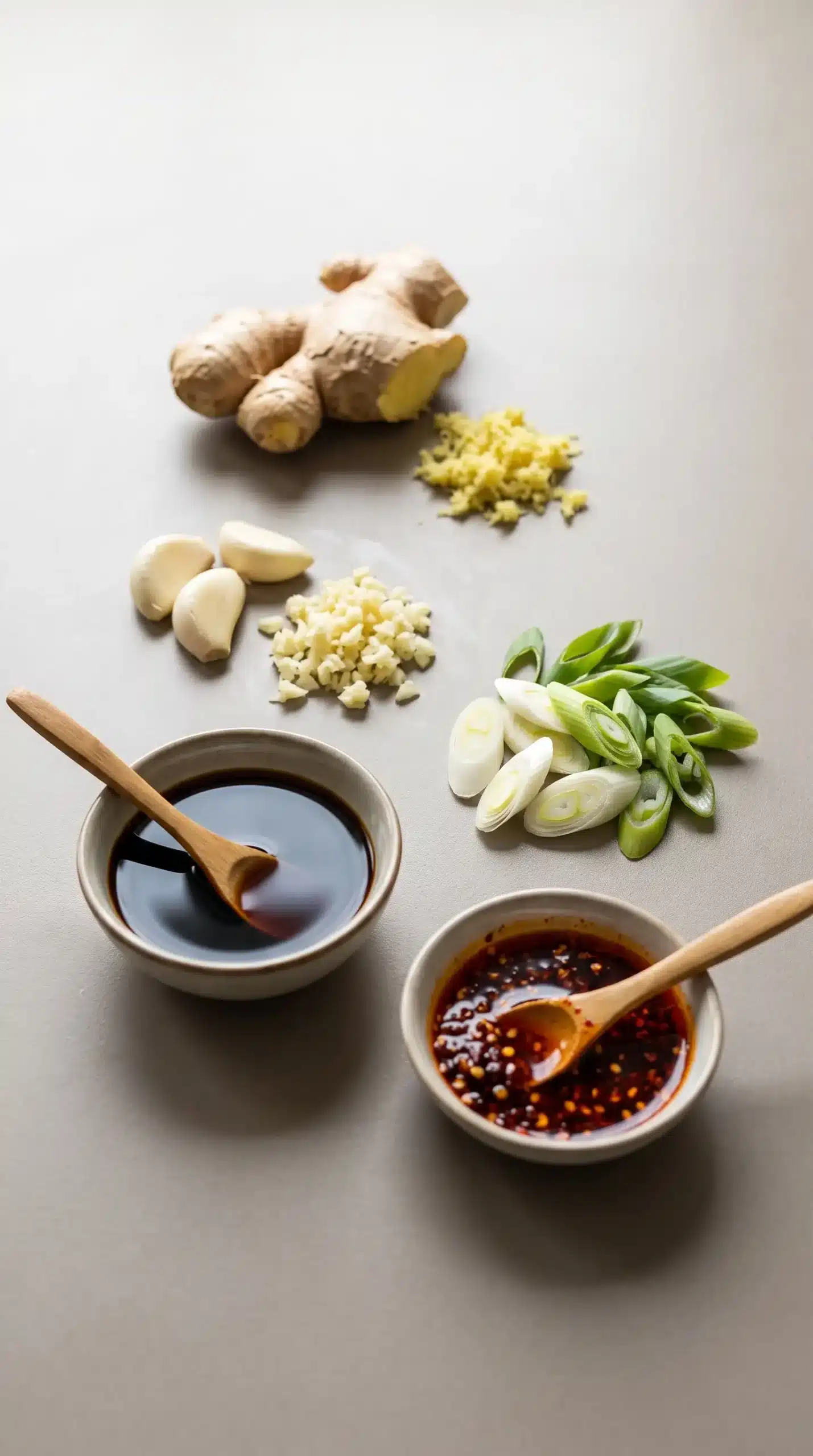
Fresh ginger and garlic create the foundation of the broth’s character. Grated ginger spreads warmth throughout the soup, while minced garlic brings a savory depth that supports the dumplings without hiding their flavor.
Spring onions play two roles during cooking. The white parts soften in chili oil to create an aromatic base, while the greener portions work well as a fresh topping that adds brightness at serving time.
Soy sauce and chili oil require balance because they influence both seasoning and aroma. Soy sauce brings umami richness, while chili oil adds gentle heat that can be adjusted depending on personal preference.
A Gentle Simmer Keeps Dumplings Intact
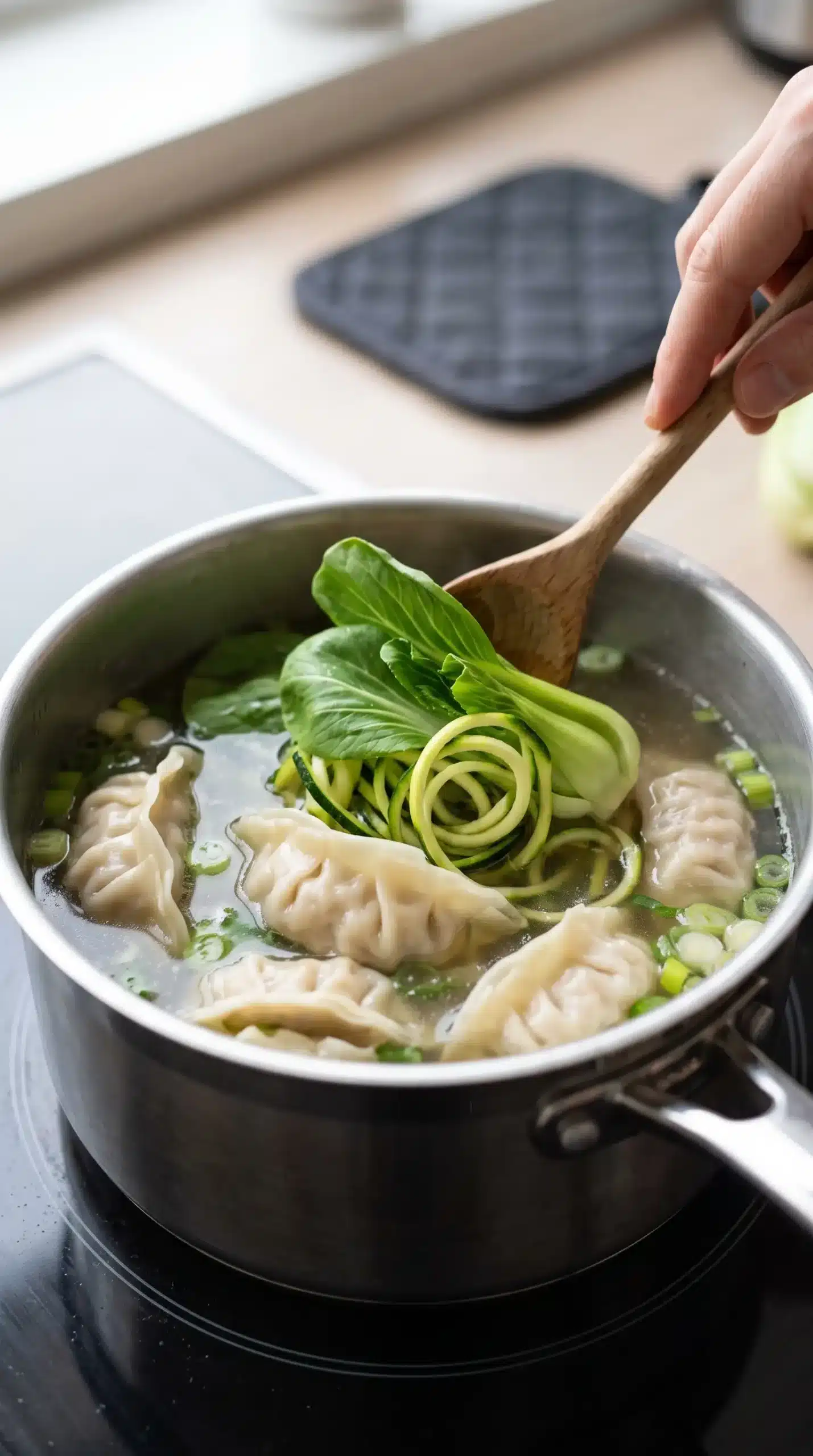
Careful heat control has a major impact on the finished bowl. Gyozas need a gentle simmer so their wrappers stay tender and the fillings cook through without the dumplings breaking apart.
Adding frozen dumplings directly into the broth is one of the easiest ways to prepare the dish. Avoiding vigorous stirring protects their delicate shape while allowing them to absorb the surrounding flavors.
Vegetables benefit from thoughtful timing too. Pak choi and spiralised courgette cook quickly, so keeping them from prolonged heat helps maintain a pleasant contrast between soft dumplings and fresher textures.
| Cooking choice | Better approach | Reason |
|---|---|---|
| Dumpling handling | Simmer gently and stir carefully | Helps keep wrappers intact |
| Aromatic cooking | Warm garlic and ginger briefly | Builds flavor without bitterness |
| Vegetable timing | Add quick-cooking vegetables appropriately | Preserves texture and freshness |
Common Gyoza Soup Mistakes That Ruin Texture
Overcooking dumplings can change the entire experience of the bowl. Extended cooking may leave gyozas fragile, so gentle heat and attention to texture are important during simmering.
Rapid boiling creates another problem because strong bubbling can damage dumpling wrappers and soften vegetables too much. A calmer simmer allows the broth to stay clear and the ingredients to remain distinct.
Excessive seasoning early in the process can also make adjustments difficult. Since stock and soy sauce already contribute salt, tasting near the end helps achieve a balanced result.
Smart Additions for Vegetable Gyoza Soup Variations
Vegetable gyoza soup can easily shift to match different preferences while keeping its comforting base. Extra vegetables such as mushrooms, spinach, carrots, bean sprouts, or snow peas can add new textures and colors, while a bowl of vegetable soup keeps the focus on a satisfying mix of produce and rich, comforting flavors.
Heartier versions can include noodles, tofu, shredded chicken, or shrimp. These additions create a more substantial bowl while preserving the savory broth and dumpling combination.
Spice levels are simple to customize. More chili oil, sriracha, or fresh chilies can intensify the warmth, while reducing chili oil creates a milder version suitable for a wider range of eaters.
- Milder bowl: Reduce chili oil and highlight the ginger, garlic, and soy flavors.
- Fuller meal: Add noodles or extra protein for more substance.
- Fresh variation: Include additional vegetables for more texture.
Serving Pairings That Complete the Bowl
Gyoza soup works well as a complete meal, but simple sides can add variety. Steamed jasmine rice, seaweed salad, cucumber salad, garlic edamame, kimchi, spring rolls, and stir-fried vegetables all complement the savory broth.
Storage Decisions Preserve Gyoza Soup Quality
Leftovers can be stored in airtight containers in the refrigerator, although dumplings naturally continue absorbing broth over time. The texture may become softer as the soup rests.
Reheating works best with gentle warming on the stovetop. Adding a small splash of broth or water can help restore the consistency if the liquid has thickened during storage.
Freezing is most successful when the broth is stored separately from the dumplings. Keeping components apart helps protect the dumpling texture when the soup is prepared again later.
Meal Prep Shortcuts for Faster Weeknight Cooking
Preparation becomes easier when vegetables are cleaned and chopped ahead of time. Frozen dumplings are especially useful because they can move directly from freezer to simmering broth without additional preparation.
Texture Details That Make Gyoza Soup Satisfying
Tender wrappers, smooth broth, crisp pak choi, and delicate courgette create the layered texture that makes this bowl memorable. Each element contributes a different sensation without making the soup feel heavy.
Kitchen Tools That Support Smooth Cooking
A medium saucepan or soup pot provides enough room for broth, dumplings, and vegetables to cook comfortably. A heavy-bottomed pot can help maintain steady heat, although a standard saucepan also works well.
A sharp knife makes preparing ginger, garlic, and vegetables easier, while a wooden spoon or silicone utensil allows gentle stirring that protects delicate dumplings.
Serving tools also influence the experience. A ladle helps distribute broth and ingredients evenly, while deep bowls help keep the soup warm from the first spoonful to the last.
Gyoza Soup Brings Broth and Dumplings Into Balance
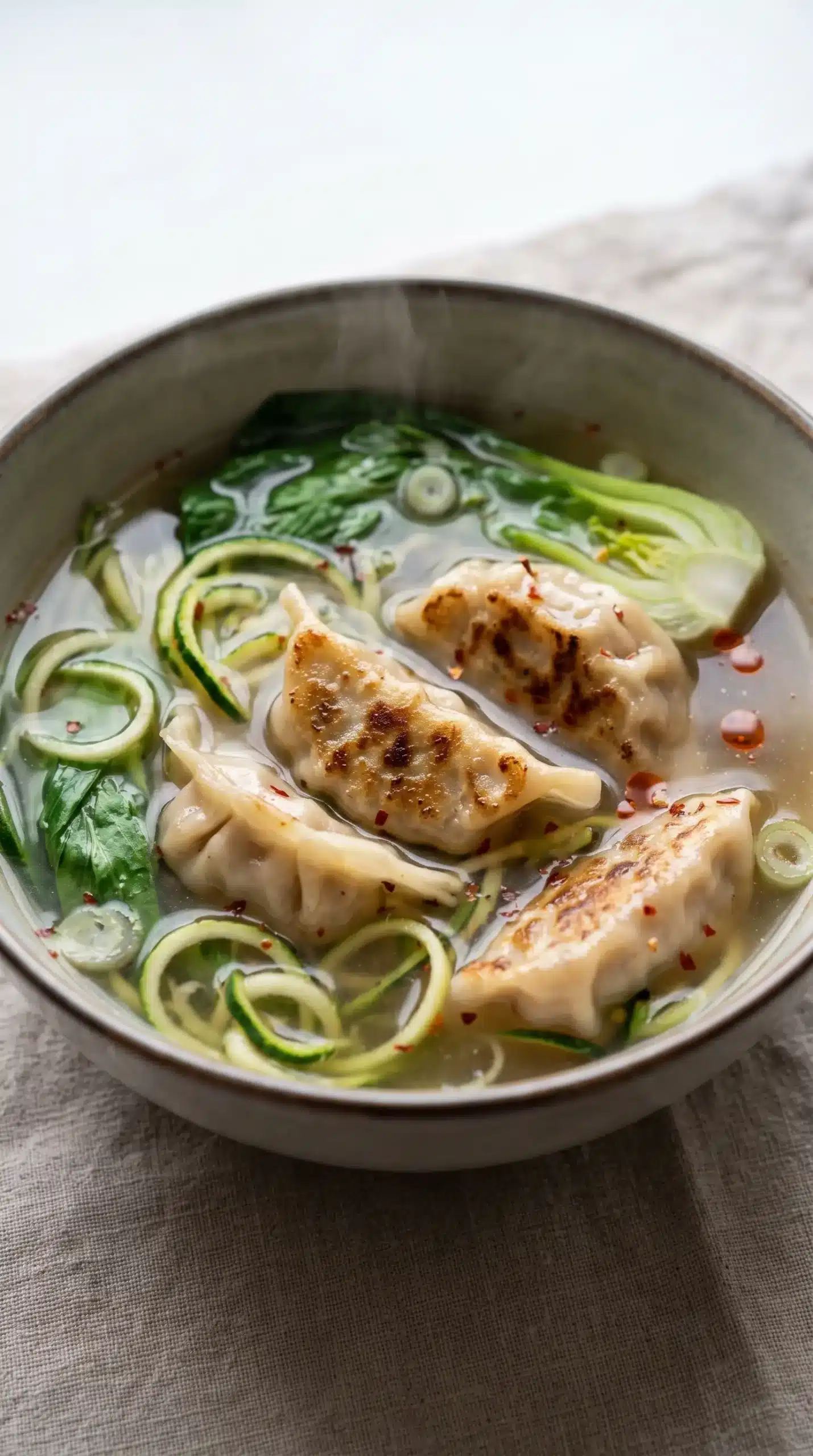
Gyoza soup succeeds because each cooking decision supports the balance between comforting broth, tender dumplings, and fresh vegetables. The aromatic base creates depth quickly, while careful simmering protects the textures that make the bowl enjoyable.
The most important choice is keeping the process gentle and flexible. When the dumplings remain tender and the vegetables retain their character, the result is a satisfying meal that delivers warmth without unnecessary complexity.
Gyoza Soup Questions About Dumplings and Storage
Can frozen dumplings go directly into gyoza soup?
Yes, frozen dumplings can be added directly to the simmering broth. Keeping them frozen until cooking makes preparation convenient and helps turn the dish into a quick homemade meal.
How can gyoza soup stay mild for children?
Reducing or removing chili oil creates a gentler flavor while keeping the garlic, ginger, and soy sauce notes that make the broth appealing. Smaller vegetable pieces can also make the texture easier for younger eaters.
Which vegetables work well with gyoza soup?
Pak choi, mushrooms, spinach, carrots, zucchini, bean sprouts, and napa cabbage are suitable choices. They can be mixed and matched while keeping the soup’s vegetable-forward character.
How can the broth develop deeper flavor?
Fresh aromatics, soy sauce, chili oil, sesame oil, or white miso can contribute additional savory notes. Building flavor through the aromatics before adding broth helps create a richer tasting base.
White miso is a fermented soybean paste that can be stirred into broths to bring extra savory depth and complexity to the soup.
Can gyoza soup be prepared ahead?
Yes, the broth and prepared vegetables can be organized ahead of cooking. Keeping dumplings separate until reheating helps maintain their texture and keeps the finished bowl more enjoyable.
Gyoza Soup with Dumplings and Vegetables in Savory Broth
Ingredients
Method
- Warm the chili oil in a medium saucepan over low heat.
- Add the white parts of the spring onions and cook for 2 minutes until softened.
- Mix in the minced garlic and grated ginger, then cook for 1 minute until aromatic.
- Add the vegetable stock and soy sauce, followed by the pak choi, spiralised courgette, and vegetable gyozas.
- Cover the saucepan and gently simmer for 7–8 minutes until the dumplings are cooked through and the vegetables are tender.
- Season the broth with salt and pepper as needed, then serve hot with optional sesame seeds, chili flakes, extra spring onions, sesame oil, or fresh cilantro.