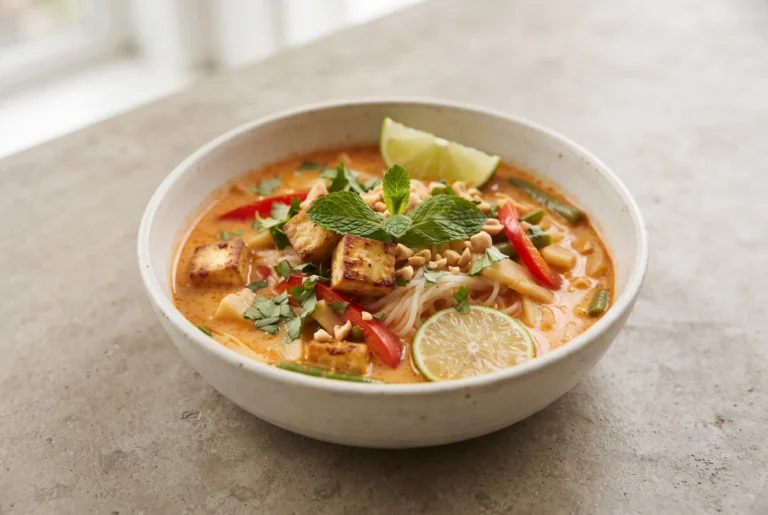
Red Curry Noodle Soup with Coconut Milk and Herbs Recipe
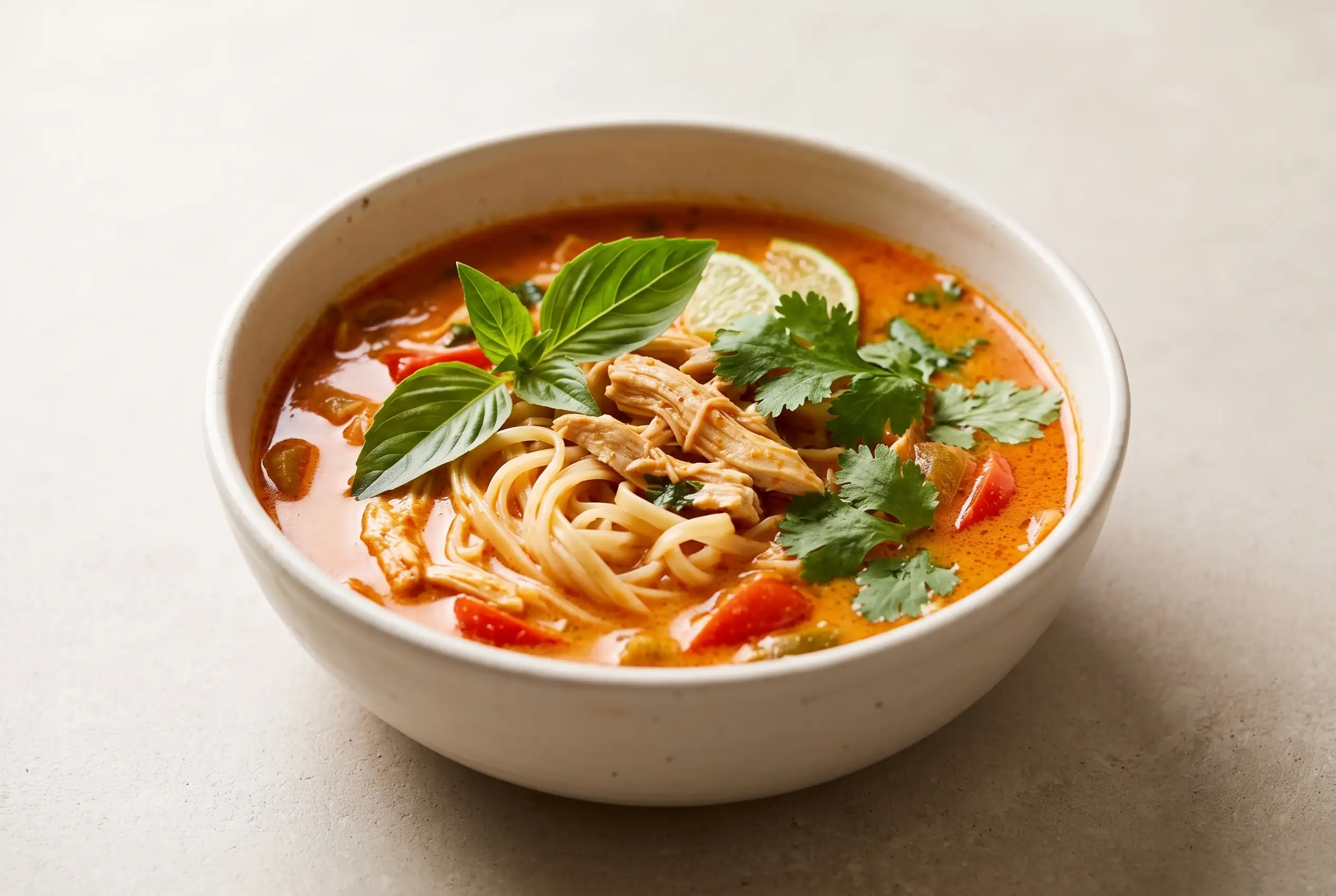
Red curry noodle soup brings together creamy coconut broth, tender rice noodles, bold Thai-inspired curry flavor, and fresh herbs in a comforting bowl that feels satisfying without complicated preparation. The combination of coconut milk, red curry paste, lime juice, basil, and cilantro creates a balanced soup with warmth, brightness, and a smooth texture.
Busy evenings are a perfect match for this 30 minute red curry noodle soup because the flavor develops quickly from a few powerful ingredients. The curry paste builds depth in the pot, while the coconut broth softens the spice and creates the silky base that makes each spoonful memorable.
Red Curry Noodle Soup Builds a Silky Coconut Broth
The heart of red curry noodle soup comes from the contrast between creamy coconut milk and fragrant curry paste. Heating the curry paste before adding liquids helps release its aromatic oils, allowing the broth to develop a deeper flavor profile from the beginning.
Coconut milk gives the soup its smooth texture and helps balance the heat from the curry paste. Full-fat coconut milk creates the richest finish, while lighter versions can still work when a thinner broth is preferred. The gentle simmer keeps the coconut base cohesive and prevents the texture from becoming separated.
Rice noodles absorb the seasoned broth while staying light enough to keep the bowl from feeling too heavy. Fresh basil, cilantro, and lime juice added near the end bring freshness that cuts through the creamy base and keeps the flavors lively.
Curry Paste and Coconut Milk Shape the Flavor
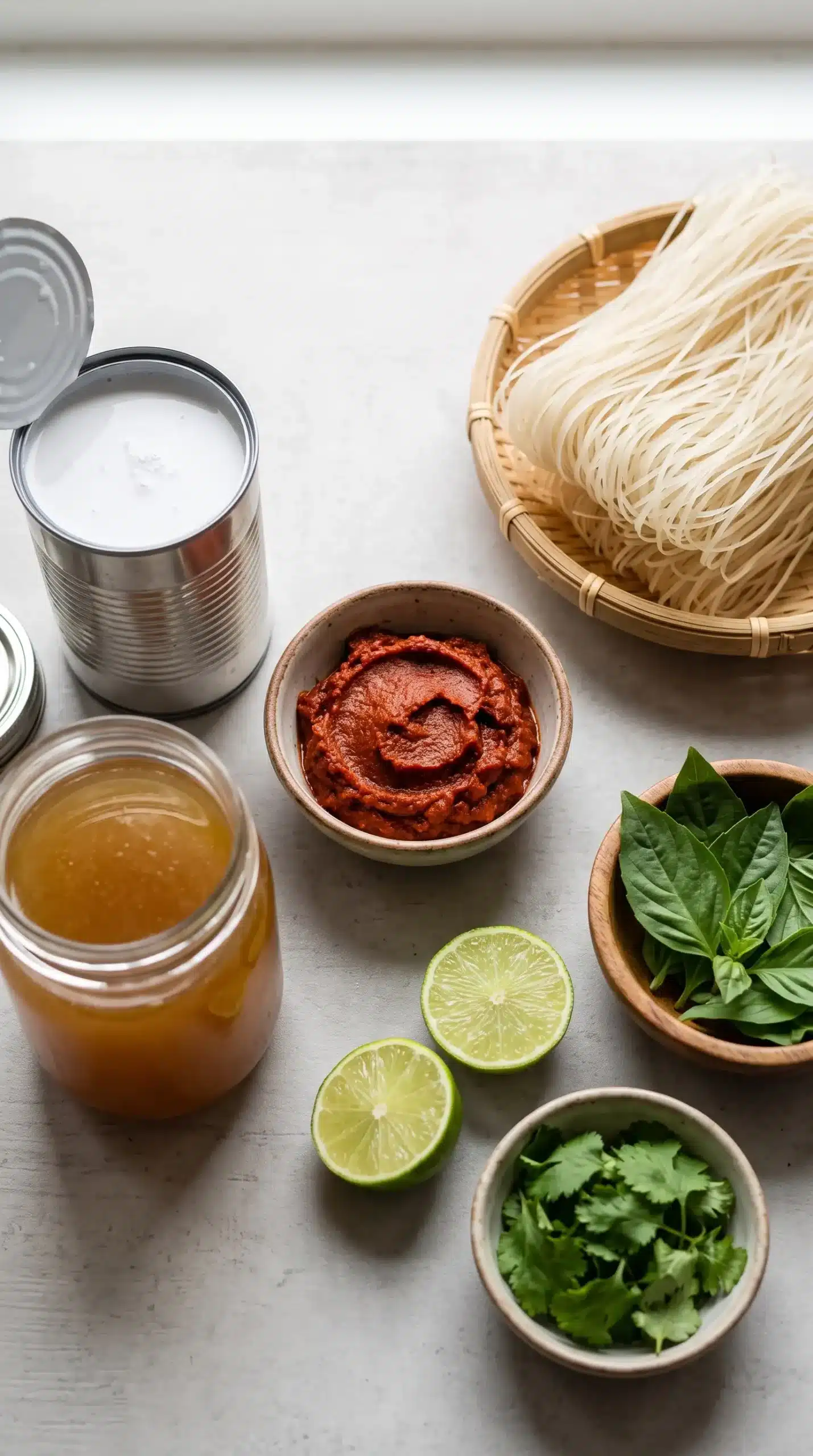
The most important ingredient decisions in a Thai red curry noodle soup recipe involve the curry paste, coconut milk, and broth. These elements determine the soup’s spice level, richness, and overall balance before vegetables or proteins are added.
| Ingredient choice | Effect on the soup | Useful adjustment |
|---|---|---|
| Thai red curry paste | Creates bold spice and aromatic flavor | Reduce the amount for a milder bowl |
| Full-fat coconut milk | Adds creamy texture and richness | Use light coconut milk for a thinner broth |
| Vegetable or chicken broth | Builds the savory liquid base | Select vegetable broth for a plant-based version |
| Lime juice and fresh herbs | Brightens the finished flavor | Add after cooking for freshness |
The curry paste brand can make a noticeable difference because spice intensity varies between products. Tasting the broth before serving allows the seasoning to be adjusted based on the specific paste and broth combination used.
Rice Noodles and Add-Ins Keep Bowls Flexible
Rice noodles make red curry noodle soup especially adaptable because they pair naturally with the creamy broth while leaving room for vegetables and proteins. Their soft texture works well with the smooth coconut base and absorbs the surrounding flavors.
Optional additions can transform the soup depending on what is available in the kitchen. Useful choices include:
- Vegetable options: Bell peppers, carrots, bok choy, mushrooms, spinach, and other tender vegetables.
- Protein choices: Tofu, chicken, or shrimp added near the end to maintain texture.
- Noodle swaps: Ramen, udon, or egg noodles when rice noodles are unavailable.
These additions allow the same flavorful foundation to create different meals without changing the core cooking approach. The soup remains centered around the creamy curry broth while ingredients provide variety.
Cooking Controls That Protect the Soup’s Texture
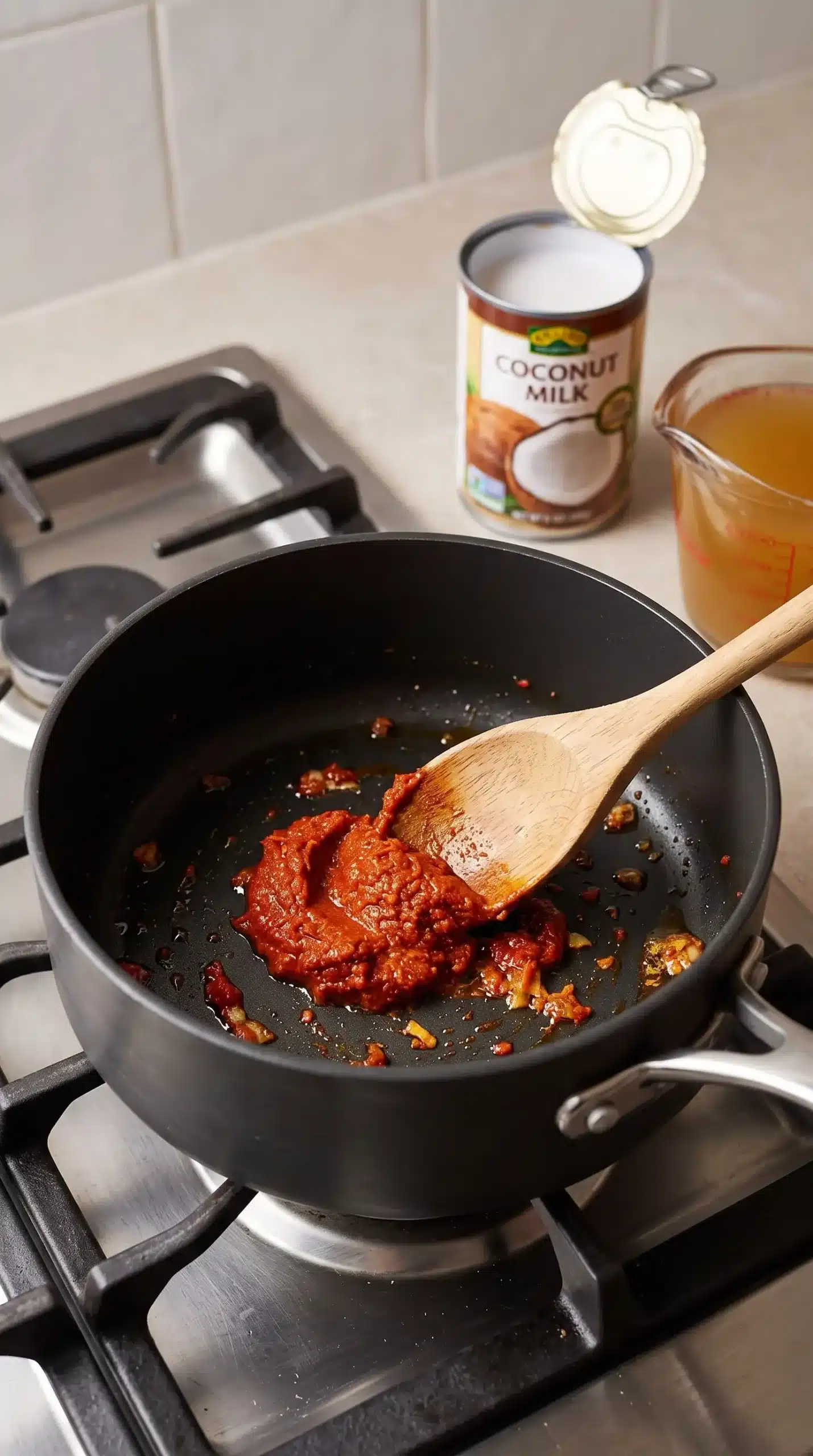
Good results depend on a few simple cooking decisions. Briefly heating the curry paste first creates stronger flavor, while choosing full-fat coconut milk helps create the rich texture expected from this soup. Gentle simmering helps maintain the smooth consistency of the coconut broth.
- Heat management: Keep the coconut milk at a gentle simmer instead of aggressively boiling it.
- Noodle timing: Cook rice noodles until tender and avoid leaving them in hot broth too long.
- Herb timing: Add basil and cilantro after removing the soup from heat.
Vegetables should join the pot near the end of cooking so they keep their texture and freshness. Proteins such as cooked shrimp, chicken, or tofu also benefit from being added later to prevent them from becoming overdone.
Flavor Balancing Choices Make the Broth Shine
The best bowls of red curry noodle soup rely on balance between spice, richness, acidity, and freshness. Coconut milk provides a creamy foundation, but lime juice prevents the broth from tasting too heavy.
A final taste before serving helps identify what the soup needs. More lime can brighten a rich broth, while additional coconut milk can soften stronger spice. Fresh herbs provide another layer of contrast that keeps the creamy texture feeling vibrant.
Red Curry Noodle Soup Mistakes That Ruin Texture
Several common errors can change the character of this soup. Paying attention to heat, noodles, and finishing ingredients helps preserve the creamy consistency and fresh flavor that define the dish.
| Mistake | What happens | Better approach |
|---|---|---|
| Boiling coconut milk too strongly | The broth may separate or become less smooth | Maintain a gentle simmer |
| Cooking noodles too long | Rice noodles become overly soft | Stop cooking when just tender |
| Adding herbs too early | Fresh flavors become weaker | Stir herbs in after heat is off |
| Skipping lime juice | The broth may taste overly rich | Finish with fresh citrus |
Careful timing matters because each element contributes a different texture and flavor. Small adjustments during cooking can make the finished bowl feel much more balanced.
Serving Pairings Complete the Thai-Inspired Meal
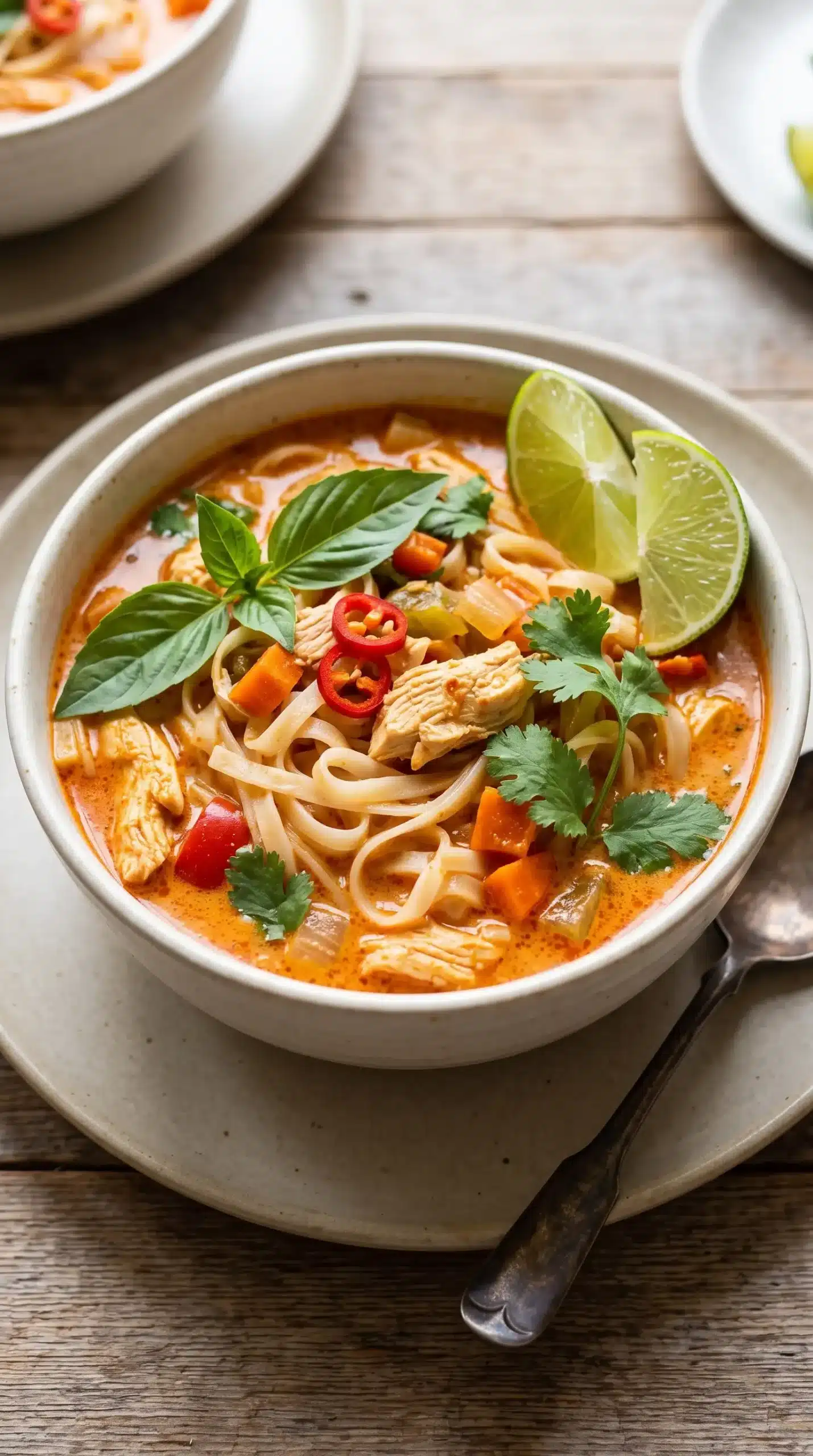
Red curry noodle soup works well as a complete meal, but simple sides can add extra variety. Fresh, crisp, or lightly seasoned accompaniments complement the creamy broth without competing with its curry flavor.
Serving a variety of comforting bowls throughout the week can make meal planning easier, especially when keeping homemade meals centered around seasonal ingredients and satisfying textures. Browse Soup Recipes for more warm, spoonable meals that fit everyday cooking.
- Spring rolls for a crisp contrast.
- Cucumber salad for a refreshing side.
- Jasmine rice for an additional comforting option.
- Fresh lime wedges for extra brightness.
- Thai-style slaw for added crunch.
Storage Choices Preserve Noodle Quality
Leftover red curry noodle soup can be stored in an airtight container in the refrigerator for up to 3 days. Keeping noodles separate when possible helps prevent them from absorbing too much broth and becoming overly soft.
Meal Prep Approaches Simplify Busy Evenings
The broth base can be prepared ahead and refrigerated, making future servings easier to assemble. Cooking fresh noodles separately keeps the texture closer to freshly made soup.
Prepared vegetables and herbs can also reduce cooking time during busy periods. Keeping lime and herbs separate until serving helps preserve their bright flavors.
Larger batches are practical because the creamy curry broth reheats well with a gentle warming method. Adding a little extra broth can restore the consistency if it thickens after storage.
Family-Friendly Adjustments Soften the Spice
Red curry noodle soup can be adapted for different spice preferences by adjusting the amount of Thai red curry paste. Coconut milk naturally creates a smoother flavor, while milder portions can be prepared for younger diners.
Rice noodles often appeal to children because of their soft texture and mild taste. Familiar additions such as carrots, spinach, or chicken can make the soup easier for selective eaters to enjoy.
Budget-Friendly Ways Stretch the Soup
Affordable pantry ingredients make this soup practical for regular meals. Rice noodles, broth, coconut milk, and curry paste create a flavorful foundation without requiring many specialty items.
Vegetables can increase the volume of each serving, while tofu offers a budget-friendly protein option. Frozen vegetables may also provide convenience when fresh produce is unavailable.
Fresh herbs and lime add important brightness, but the soup can still remain flavorful when adjustments are made based on availability and budget. The strongest flavor investment is usually a good curry paste because it shapes the entire broth.
Red Curry Noodle Soup Delivers Balanced Comfort
Red curry noodle soup succeeds because the creamy coconut broth, tender noodles, aromatic curry paste, and fresh finishing touches work together without overwhelming one another. The cooking choices that matter most are gentle heat, properly timed noodles, and adding bright ingredients at the right moment.
A bowl prepared with attention to those details delivers a comforting meal with warming spice, silky texture, and fresh flavor in every bite.
Red Curry Noodle Soup Spicy Questions and Answers
How spicy is red curry noodle soup?
The spice level depends on the Thai red curry paste brand and the amount used. Reducing the paste creates a milder soup, while additional chili ingredients can increase the heat.
Can red curry noodle soup be made vegan?
Yes. Using vegetable broth and plant-based additions such as tofu creates a vegan-friendly version while keeping the creamy coconut broth.
Can I freeze red curry noodle soup?
Freezing works best when the broth is stored separately from the noodles. Fresh noodles added after reheating will maintain better texture.
What noodles work best for this soup?
Rice noodles are a natural choice because they stay light and absorb the curry broth well. Ramen, udon, or egg noodles can also be used when needed.
Can chicken or shrimp be added?
Chicken and shrimp both pair well with the curry flavors. Adding cooked proteins near the end of preparation helps maintain their texture.
Red Curry Noodle Soup with Coconut Milk and Herbs
Ingredients
Method
- Warm a large soup pot over medium heat, add Thai red curry paste, and stir for about 1 minute until fragrant and slightly darker in color.
- Pour in coconut milk and vegetable or chicken broth, stirring until the curry paste is fully incorporated, then bring the soup to a gentle simmer.
- Add rice noodles and cook following package instructions until tender while keeping their texture intact.
- Add optional vegetables such as bok choy, bell peppers, or carrots during the last few minutes of cooking and simmer until they are just tender.
- Remove the pot from the heat and mix in fresh cilantro, fresh basil, lime juice, and salt to taste.
- Serve the red curry noodle soup in bowls with additional herbs, lime wedges, or chili flakes if desired.