Loaded Baked Potato Soup with Cheddar Cheese and Bacon

Loaded baked potato soup brings the familiar comfort of a classic baked potato into a creamy bowl filled with tender potatoes, cheddar cheese, smoky bacon, sour cream, and green onions. Russet potatoes simmer in savory broth before becoming a smooth, hearty soup with the rich flavors people expect from a fully loaded potato.
This cozy bowl works well for busy evenings because simple ingredients create a deeply satisfying meal. The combination of creamy potatoes, sharp cheddar, and crisp bacon makes a comforting potato soup that feels special while remaining approachable for home cooks.
Loaded Baked Potato Soup Builds Creamy Comfort
The foundation of loaded baked potato soup comes from the way potatoes naturally transform during cooking. Russet potatoes release starch as they simmer, helping create a thick, velvety texture without relying on complicated techniques. Blending the cooked potatoes gives the soup a smooth body while keeping a few pieces intact adds a rustic bite.
Cheddar cheese, sour cream, and heavy cream bring richness to the potato base. The dairy ingredients soften the savory flavors of the broth and seasonings while creating the familiar taste of a loaded baked potato. Crispy bacon and green onions finish the bowl with contrast, adding smoky flavor and fresh crunch. A bowl of creamy potato soup with bacon and sour cream provides another way to enjoy the combination of smooth potatoes, rich dairy, and savory toppings.
Unlike a simple blended potato soup, this version focuses on layers. The creamy base carries the comforting potato flavor, while toppings provide the finishing details that make each spoonful feel complete.
Russet Potatoes Shape the Soup’s Silky Texture
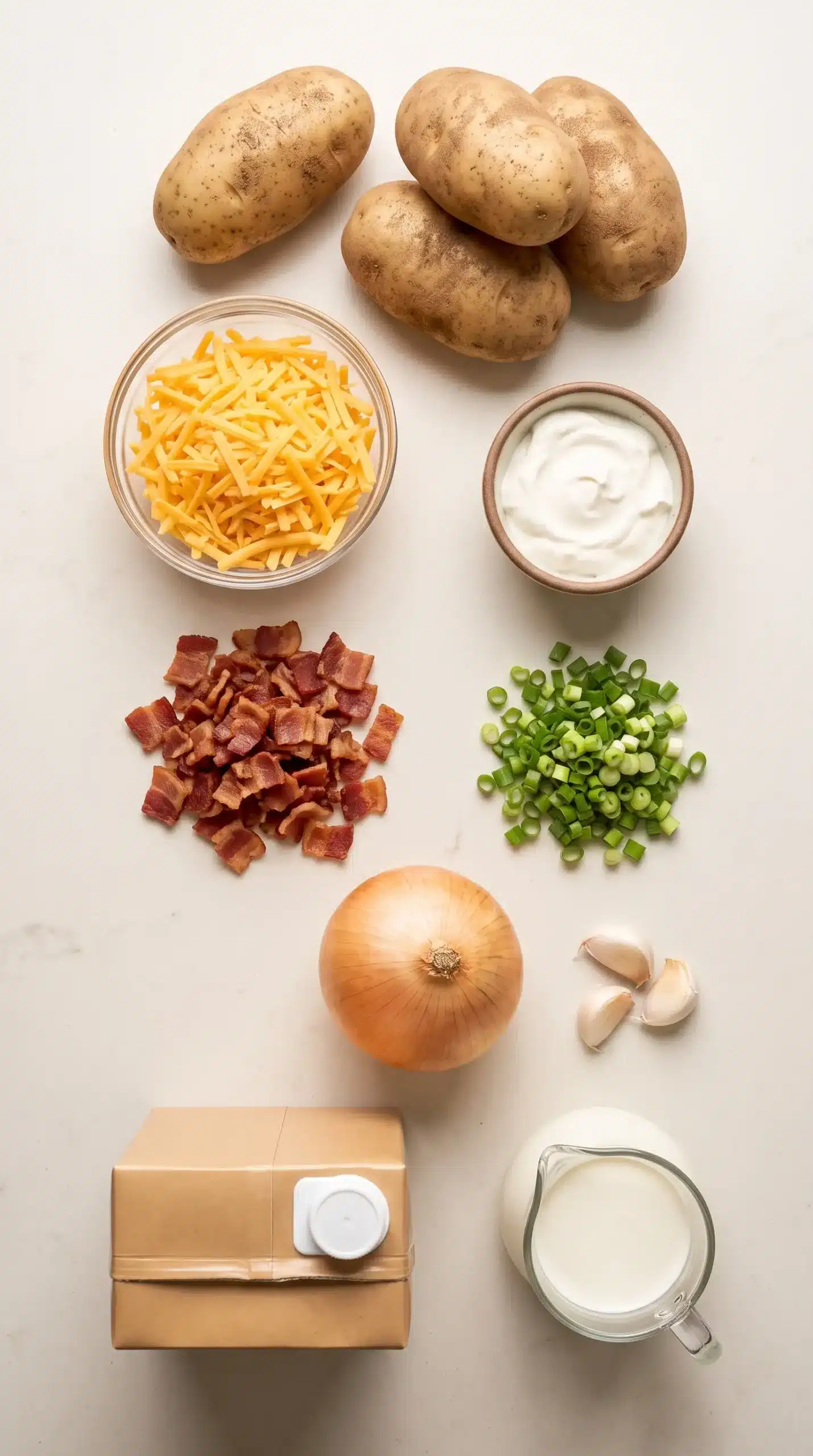
The potato choice has a major impact on the finished texture. Russet potatoes contain plenty of starch, which helps create the thick consistency expected from a creamy potato soup recipe. Their soft interior also blends easily after simmering.
Yukon Gold potatoes can be used when a denser, buttery texture is preferred, but russets remain the best match for a traditional loaded baked potato soup. Cutting the potatoes into even pieces also helps them cook consistently, preventing a mixture of firm and overly soft chunks.
- Russet potatoes: Create the creamiest texture through their natural starch.
- Sharp cheddar: Provides stronger flavor that remains noticeable in the rich broth.
- Sour cream: Adds a gentle tang that balances cheese and cream.
- Green onions: Bring freshness and mild crunch to the finished bowl.
Flavor Layers Keep This Cheesy Potato Soup with Bacon Balanced
A satisfying bowl depends on balancing rich ingredients with brighter finishing touches. Onion and garlic create the savory base, while thyme and smoked paprika add depth throughout the broth. These flavors support the potatoes without hiding their natural taste.
The bacon topping contributes smoky saltiness that pairs naturally with cheddar cheese. Sour cream helps soften the richness, and green onions provide a fresh contrast that keeps the soup from feeling too heavy.
For a stronger smoky character, the bacon flavor can be emphasized with a small amount of reserved bacon grease stirred into the finished soup. Careful additions like this enhance the overall balance without overpowering the creamy potato foundation.
Broth and Dairy Choices Change the Creamy Finish
Chicken broth creates a deeper savory background, while vegetable broth works well for a vegetarian adaptation when bacon is omitted or replaced. The broth becomes the flavor base that potatoes absorb as they cook.
| Choice | Result in Soup | Best Use |
|---|---|---|
| Chicken broth | More savory depth | Classic loaded potato flavor |
| Vegetable broth | Lighter savory profile | Vegetarian versions |
| Heavy cream | Rich and smooth texture | Traditional creamy finish |
| Whole milk or half-and-half | Thinner consistency | Lighter bowls |
Freshly shredded cheddar melts more smoothly because it does not contain the same anti-caking ingredients often found in packaged shredded cheese. This small preparation choice helps the soup maintain a creamy texture when the cheese is added.
Cooking Control Preserves a Smooth Potato Texture
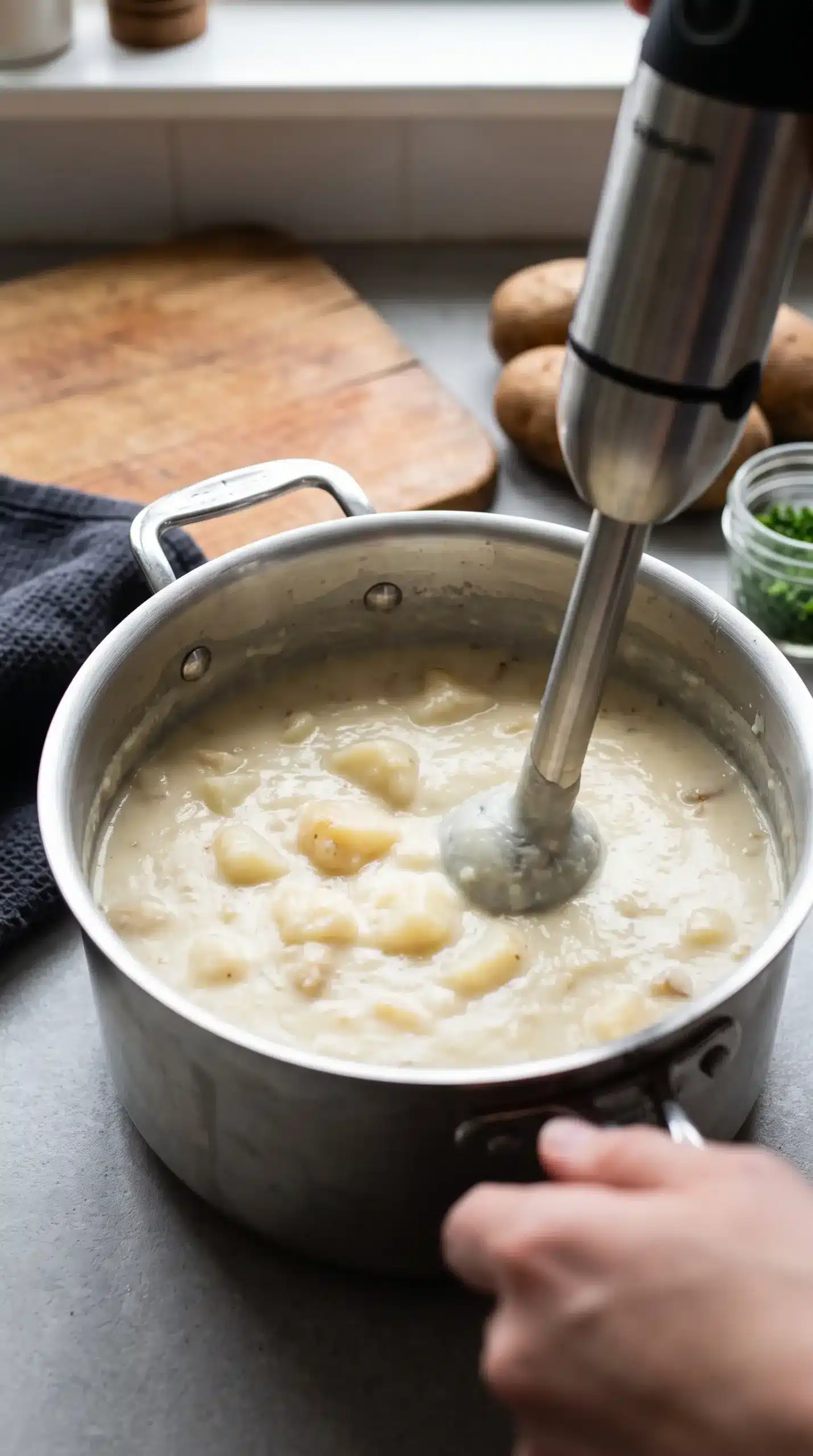
The most important cooking decisions for loaded baked potato soup involve heat control and blending. Potatoes should become fork-tender during a gentle simmer so they soften evenly while absorbing the seasoned broth.
Blending requires attention because potatoes release starch quickly. A smooth texture comes from blending carefully, while leaving some pieces behind creates a more rustic soup. Too much blending can push the texture toward gummy instead of creamy.
Dairy ingredients need gentle handling once added. Lower heat helps the cream, cheese, and sour cream combine smoothly without creating separation. Slow stirring allows the cheddar to melt evenly into the soup base.
Common Mistakes That Affect Loaded Baked Potato Soup
Several small mistakes can change the texture and flavor of this comforting bowl. Understanding the cause behind each issue makes it easier to adjust while cooking.
- Over-blending: Can release too much starch and create a gluey texture. Blend only until the desired consistency is reached.
- High heat after dairy: May cause cream and cheese to separate. Keep the temperature low once dairy is added.
- Uneven potato pieces: Can lead to inconsistent cooking. Cut potatoes into similar sizes before simmering.
- Missing toppings: Leaves the soup without the crisp contrast that defines a loaded potato.
Toppings Create the Signature Loaded Potato Finish

The toppings transform a creamy potato base into a true loaded baked potato experience. Crumbled bacon adds crisp texture, extra cheddar reinforces the cheesy flavor, and chopped green onions brighten every serving.
Keeping toppings separate until serving helps maintain their texture. Soft toppings can blend into the soup, but freshly added bacon and onions create the contrast that makes the bowl more satisfying.
Simple Variations Expand the Soup Bowl
The creamy potato base provides plenty of room for customization. Broccoli can be added for extra vegetables, while roasted garlic can create a deeper savory flavor throughout the soup.
Spicy additions such as cayenne pepper or diced jalapeños introduce heat that pairs well with the creamy ingredients. Ham can also replace or accompany bacon when a different smoky flavor is desired.
Storage Keeps Loaded Baked Potato Soup Ready Later
Proper storage helps preserve the texture of this creamy soup. Leftovers should be kept in an airtight container and reheated gently to prevent the dairy from separating.
Because potato soup thickens as it cools, a small splash of broth or milk can help restore the consistency when warming leftovers. Freezing is possible, although dairy-based soups may become slightly grainier after thawing.
For the smoothest freezer results, prepare the soup base without cream and cheese, then add those ingredients after reheating.
Serving Pairings Balance the Rich Soup Base
A bowl of loaded baked potato soup pairs especially well with sides that add freshness or texture. Crusty bread, garlic bread, salads, and roasted vegetables create contrast against the creamy soup.
Grilled cheese also complements the cheddar-rich flavor, while a simple green salad with a bright dressing helps balance the richness of the meal.
Meal Prep Makes Busy Evenings Easier
Preparing ingredients ahead can shorten the work needed at dinner time. Chopped potatoes and onions can be ready in advance, and cooked bacon can be stored separately until serving.
The soup base can also be prepared ahead and finished with cream, cheese, and sour cream when reheated. This approach helps maintain a smoother texture and keeps the toppings fresh.
Loaded Baked Potato Soup Offers Comforting Nutrition
Potatoes provide potassium, vitamin C, and fiber, while onions and garlic contribute additional nutrients and flavor. The combination of cheese and sour cream adds protein and calcium, making the soup feel satisfying.
Adjusting the toppings or adding vegetables such as broccoli, cauliflower, or spinach can create a lighter version while keeping the creamy character of the dish.
Loaded Baked Potato Soup Delivers Comfort Through Texture
Loaded baked potato soup succeeds because every element serves a purpose. Tender potatoes create the creamy foundation, cheddar and sour cream provide richness, and bacon with green onions adds the contrast needed for a balanced bowl.
The most important result comes from protecting the texture during cooking. Gentle simmering, careful blending, and low heat when adding dairy create the smooth, hearty consistency that makes this soup a dependable comfort meal.
Potato Soup Texture Questions and Answers
Why does my potato soup become gluey?
Potato soup can become gluey when the potatoes are blended too aggressively because extra starch is released. Blending only until creamy while keeping some potato pieces intact helps maintain a smoother texture.
Can I make loaded baked potato soup without bacon?
Yes, the soup can be made without bacon by using vegetable broth and adding other toppings or vegetables for extra texture and flavor.
What makes russet potatoes better for this soup?
Russets are high-starch potatoes, which helps explain why they naturally thicken the soup and create the creamy consistency associated with a loaded baked potato soup.
Can I use milk instead of heavy cream?
Milk or half-and-half can replace heavy cream, but the soup will have a lighter body and less richness than the original version.
How should I reheat leftover potato soup?
Reheat leftover soup gently over medium-low heat while stirring occasionally. Avoid boiling because high temperatures can cause dairy ingredients to separate.
Loaded Baked Potato Soup with Cheddar Cheese and Bacon
Ingredients
Method
- Warm olive oil in a large soup pot over medium heat, then cook the diced onion for 5–7 minutes until softened and translucent.
- Add minced garlic and cook for 1 minute until fragrant.
- Add diced potatoes, chicken broth or vegetable broth, dried thyme, smoked paprika, salt, and pepper, then bring the mixture to a boil.
- Lower the heat and simmer the potato mixture for 15–20 minutes until the potatoes are fork-tender.
- Blend the soup with an immersion blender until smooth or slightly chunky, keeping some potato pieces if desired.
- Reduce the heat to low and mix in heavy cream, shredded cheddar cheese, and sour cream until the cheese melts and the soup is creamy.
- Serve the soup in bowls and top with crumbled bacon, extra cheddar cheese, and chopped green onions.