One Pot Lasagna Soup with Ground Beef, Spinach and Cheese
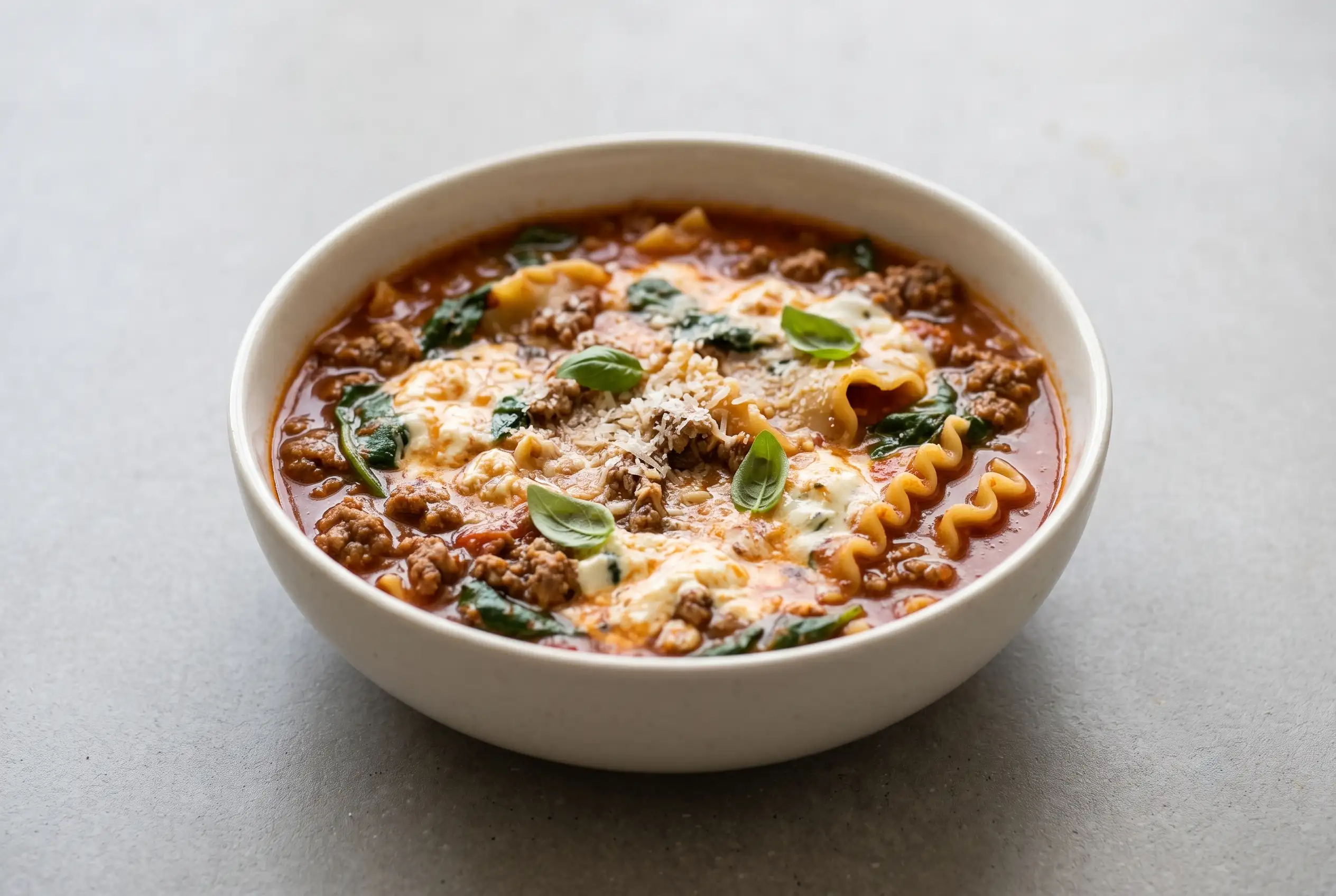
One pot lasagna soup turns the familiar comfort of layered lasagna into a rich tomato broth filled with savory ground beef, tender pasta, spinach, and creamy cheese. Broken noodles cook directly in the pot, absorbing the seasoned liquid while releasing enough starch to create a hearty, spoonable texture.
Busy evenings suit this 30 minute lasagna soup because the meat, sauce, pasta, and vegetables come together in one cooking vessel. Ricotta, mozzarella, and optional Parmesan are added at serving time, giving every bowl the creamy finish of classic lasagna without assembling layers or waiting for a casserole to bake.
Classic Lasagna Comfort in a Spoonable Dinner
Traditional lasagna depends on contrasts between tomato sauce, seasoned meat, pasta, and creamy cheese. Those same elements remain recognizable here, but the broth carries them through every spoonful instead of separating them into layers.
Uneven noodle pieces make the soup feel especially hearty. Some pieces curl, others lie flat, and each one catches bits of beef, spinach, and melted cheese differently. That varied texture keeps the meal from feeling like ordinary tomato soup with pasta added.
Because the noodles simmer in the seasoned liquid, they take on more flavor than pasta cooked separately. Their starch also enriches the broth, creating the naturally thick consistency that distinguishes one pot lasagna soup from a thinner Italian-style soup.
Ground Beef Browning Builds the Savory Base
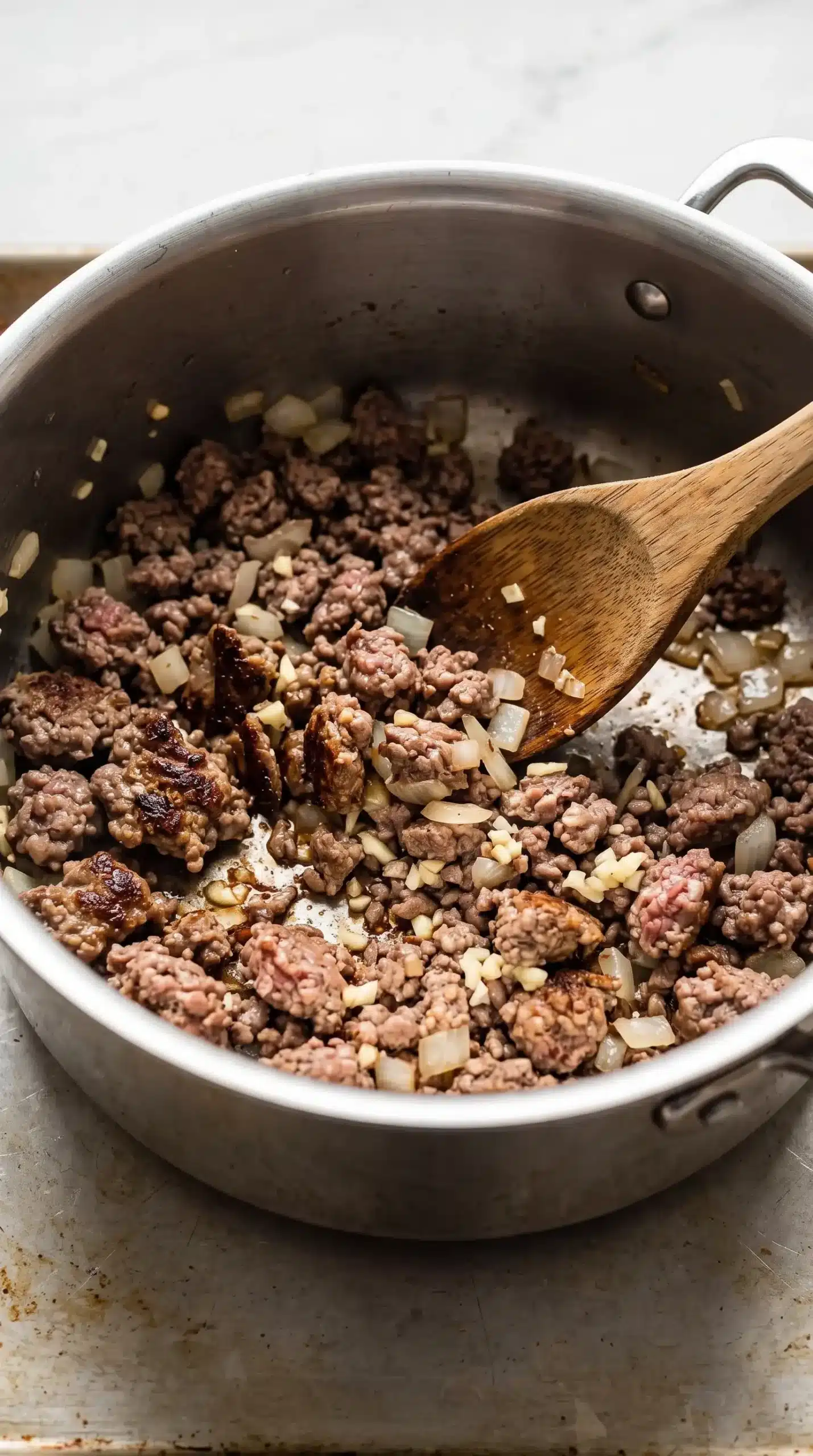
Deep browning gives lasagna soup with ground beef much of its satisfying flavor. Let portions of the meat remain against the hot surface briefly before stirring so caramelized edges can develop. Constant movement can steam the beef and leave it pale.
Excess grease may be drained after browning when necessary. Leaving too much can make the finished broth feel oily, while removing every trace of fat may reduce richness. The ideal pot has browned meat with only enough fat remaining to soften the onion and carry the seasonings.
Diced onion, minced garlic, basil, oregano, garlic powder, and onion powder should cook with the browned beef before liquid enters the pot. This short sauté softens the onion and helps the dried herbs release their aroma into the meat mixture.
Tomato Broth Needs Richness and Balance
Crushed tomatoes form the body of the broth, while tomato paste adds concentrated depth. Stirring the paste thoroughly into the broth prevents dense pockets and distributes its flavor across the entire pot.
Chicken broth supplies savory character, and water provides enough cooking liquid for the pasta. Salt and black pepper should be adjusted with the noodles in mind because pasta absorbs seasoning as it softens.
A gentle simmer works better than an aggressive boil once the tomato mixture is combined. Moderate heat keeps the broth from reducing too quickly and gives the noodles time to cook evenly without breaking apart.
Lasagna Noodles Control the Final Consistency
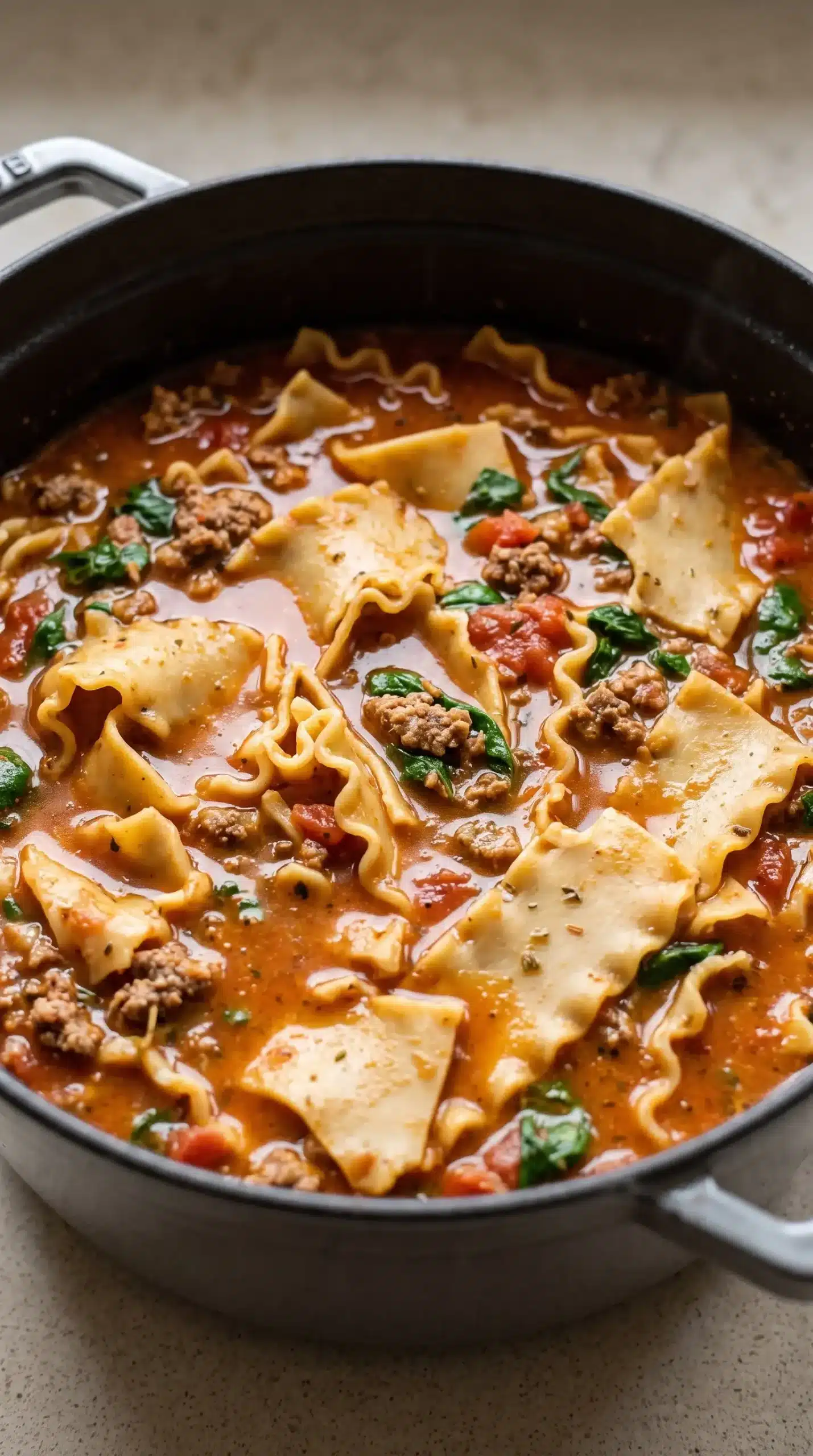
Broken lasagna sheets create the most recognizable texture for an easy lasagna soup recipe. Rustic pieces are preferable to perfectly matched squares because the varied shapes make each bowl resemble loosely layered lasagna.
Pasta continues absorbing liquid after the heat is turned off. For a bowl that will be served immediately, cook until the noodles are tender. When leftovers are expected, stop slightly earlier so the pieces retain more structure during storage and reheating.
| Situation | Noodle Decision | Broth Adjustment |
|---|---|---|
| Serving immediately | Cook until tender | Keep the broth hearty and spoonable |
| Planning leftovers | Leave the noodles slightly firm | Reserve extra broth for reheating |
| Soup becomes too thick | Avoid additional cooking | Stir in broth or water gradually |
| Using smaller pasta | Watch closely for earlier tenderness | Maintain enough liquid for expansion |
Ricotta and Mozzarella Create the Lasagna Finish
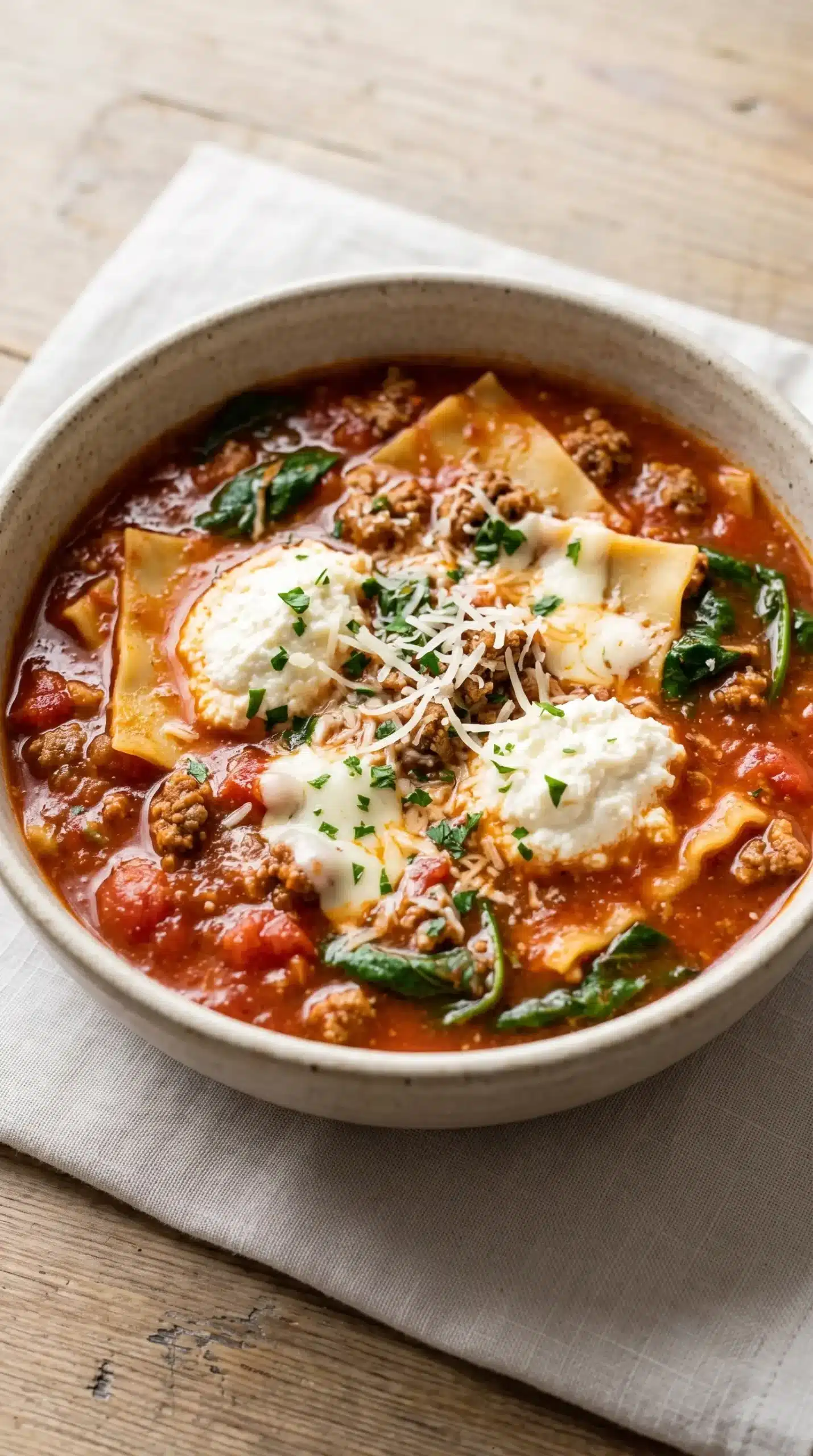
Cheese is most effective when it remains distinct from the tomato broth. Mozzarella slices placed in serving bowls soften beneath the hot soup, forming stretchy pockets without clumping in the pot.
Ricotta should be spooned over each serving so its creamy texture remains visible and concentrated. Stirring it completely into the soup would create a uniform creamy broth but remove the contrast associated with traditional lasagna.
Freshly grated Parmesan can provide a sharper finish, although it remains optional. A small amount adds savory depth without overpowering the mild ricotta or melted mozzarella.
Spinach and Cream Soften the Tomato Base
Frozen chopped spinach is convenient because it requires no washing or cutting and blends easily among the beef and noodles. Adding it near the end keeps the cooking process simple while ensuring it becomes fully heated.
Heavy cream rounds out the acidity of the tomatoes and gives one pot lasagna soup a smoother finish. It should enter the pot after the pasta has softened, when the heat can remain gentle.
Vigorous boiling after dairy is added can weaken the silky texture. A brief low simmer is enough to warm the spinach and cream without reducing the broth excessively.
Cooking Controls That Keep the Soup Balanced
Several small decisions determine whether the finished bowl feels rich and fluid or heavy and crowded. The most important control is maintaining enough liquid as the noodles expand.
- Use moderate heat: A gentle simmer cooks pasta more evenly than a rolling boil.
- Stir with care: Occasional stirring prevents sticking without tearing softened noodle pieces.
- Delay the dairy: Cream belongs near the end, after the tomato broth and pasta are established.
- Check before serving: Taste the broth after the noodles cook because they absorb salt and seasoning.
- Serve cheese separately: Bowl-by-bowl additions preserve creamy and stretchy textures.
Resting the pot briefly before serving allows the broth to settle around the noodles. A long rest, however, encourages further absorption, so bowls should be ladled while the consistency is still comfortably soupy.
One Pot Lasagna Soup Mistakes That Affect Texture
Overcooked noodles are the most noticeable problem because they become too soft and continue swelling after the pot leaves the stove. Reducing the heat once the soup reaches a gentle boil gives the pasta a wider window between firm and overdone.
Adding cheese directly to vigorously bubbling broth can create clumps or stringy masses that are difficult to distribute. Place mozzarella and ricotta in individual bowls, then use the soup’s heat to melt and soften them.
Under-browned beef leaves the tomato broth without enough savory depth. Browning should happen before the onion, seasonings, or liquids are added so the meat contacts the hot pot directly.
Direct contact with the hot pot promotes the Maillard reaction, the heat-driven browning process that creates deeper color and distinct savory flavor before liquid is added.
Insufficient liquid may not be obvious at first. As the soup sits, the noodles absorb more broth and can turn the pot into a dense pasta mixture. Additional broth or water restores a spoonable consistency without changing the core flavor.
Practical Variations for Different Preferences
Italian sausage can replace the ground beef when a richer or slightly spicier version is preferred. Brown and drain it before adding the onion so the broth stays balanced; a sausage-and-pasta soup benefits from fennel, oregano, and a pinch of red pepper without needing extra cream. Ground turkey or chicken offers a lighter option while keeping the basic preparation unchanged.
Vegetable additions should complement the tomato broth without overwhelming the noodles. Mushrooms, zucchini, kale, bell peppers, or fresh spinach can fit naturally into the pot, although their moisture and cooking time should be considered.
Meat-free bowls can use mushrooms or lentils in place of beef and vegetable broth instead of chicken broth. Cottage cheese may stand in for ricotta, while half-and-half or whole milk can replace heavy cream for a lighter, somewhat thinner finish.
- For gentle heat: Add crushed red pepper flakes or choose hot Italian sausage.
- For smaller noodles: Use rotini, bowties, shells, or mafalda and begin checking tenderness sooner.
- For mild family meals: Reduce black pepper and oregano, and chop the spinach more finely.
- For extra vegetables: Add mushrooms, zucchini, kale, or bell peppers in amounts that preserve enough broth.
Simple Sides Complete the Bowl
Crusty Italian bread, garlic bread, or cheesy breadsticks pair naturally with one pot lasagna soup because they can soak up the tomato broth. Their crisp edges also contrast with the tender noodles and soft cheese.
Fresh salad brings balance to the meal. Caesar salad or mixed greens provide a lighter element beside the beef, cream, and mozzarella, while roasted broccoli or asparagus can add a warm vegetable side.
Larger gatherings can include bruschetta, antipasto, or roasted vegetables. Keep the accompaniments straightforward so the soup remains the central, filling dish.
Storage Changes the Pasta and Broth
Cool leftovers before transferring them to airtight containers. Refrigerated one pot lasagna soup keeps for up to four days, but its texture will become thicker as the noodles continue absorbing broth.
During reheating, warm the soup gently over medium-low heat and stir occasionally. Add broth or water in small amounts until the original consistency returns, allowing each addition to heat before deciding whether more is needed.
Freezing is possible for up to three months. Slightly undercooked noodles hold their shape better after thawing, and cheese toppings are best added when the soup is reheated and ready to serve.
Weeknight Shortcuts Without Losing Flavor
Pre-minced garlic, frozen diced onion, frozen spinach, boxed broth, and canned crushed tomatoes can reduce preparation work. Their convenience fits the rich tomato base, where the flavors cook together and become well integrated.
Oven-ready lasagna noodles soften quickly and can be broken directly over the pot. Smaller pasta shapes also simplify serving for children, though they may reach tenderness sooner than broad lasagna pieces.
Cooked Italian sausage or rotisserie chicken can replace raw beef when speed matters. Add already-cooked meat after the onion and seasonings have softened so it heats through without becoming dry.
Proper browning remains the shortcut that should not be skipped when raw ground beef is used. Those caramelized bits provide the depth that helps a fast soup taste fully developed.
Family-Friendly Bowls Stay Flexible
Younger diners may prefer smaller noodle pieces, a thinner broth, and milder seasoning. Breaking the pasta into compact shapes before cooking makes each spoonful easier to manage and reduces long, slippery pieces.
Individual cheese toppings turn dinner into a customizable meal. Each person can choose mozzarella, ricotta, Parmesan, or a combination, which helps accommodate different preferences without changing the whole pot.
Visible spinach can be finely chopped when texture is a concern. Extra broth may also be stirred into a child’s portion to create a lighter consistency while preserving the familiar tomato, pasta, and cheese flavors.
Balanced Broth Makes One Pot Lasagna Soup Work
Tender noodles should sit in enough seasoned tomato broth to remain spoonable, even after the pot rests briefly. That balance allows the beef, pasta, spinach, and cheese to feel connected without turning the meal into a dense bowl of sauced noodles.
Careful browning, moderate simmering, late dairy additions, and bowl-by-bowl cheese create the strongest version of one pot lasagna soup. Each choice protects a different texture, producing a comforting dinner that captures lasagna’s richness while keeping the ease of a single pot.
One Pot Lasagna Soup Storage and Noodle Questions
Why does the soup become thicker after cooking?
Lasagna noodles continue drawing in liquid as they rest. Stir in warm broth or water before serving later portions, and avoid prolonged simmering once the pasta is tender.
Can the noodles be cooked separately?
They can, although the broth will be less naturally thick because it will not receive as much pasta starch. Separately cooked noodles are useful when storing the soup base for several meals.
Which cheese should be added first?
Place mozzarella in the bowl before ladling in the hot soup so it begins melting underneath. Add ricotta and optional Parmesan on top to preserve their individual textures.
How can the soup be made less rich?
Use lean ground meat, replace heavy cream with whole milk or half-and-half, and reduce the amount of cheese added to each bowl. Expect a slightly thinner, lighter broth.
What can replace broken lasagna noodles?
Mafalda, rotini, bowties, or shells can provide a similar hearty bite. Since smaller shapes may cook faster, check them before the original simmering period has finished.
How should frozen lasagna soup be thawed?
Thaw it in the refrigerator, then reheat gently on the stovetop. Loosen the broth gradually and add fresh ricotta, mozzarella, or Parmesan only after the soup is hot.
One Pot Lasagna Soup with Ground Beef, Spinach and Cheese
Ingredients
Method
- Heat a large soup pot over medium-high heat, add the ground beef, and cook while crumbling it until browned; drain excess grease if needed.
- Add minced garlic, diced onion, garlic powder, onion powder, dried basil, dried oregano, kosher salt, and black pepper to the browned beef. Cook for about 5 minutes until the onion becomes soft.
- Mix in crushed tomatoes, chicken broth, water, and tomato paste until well combined.
- Add the broken lasagna noodles, bring the soup to a gentle boil, then lower the heat and simmer for 10 minutes until the noodles are tender.
- Stir in frozen chopped spinach and heavy cream, then continue simmering for 5 minutes until the spinach is warmed through and the soup has a creamy texture.
- Add sliced mozzarella cheese to serving bowls, pour the hot soup over the cheese to melt it, then finish with ricotta cheese and Parmesan before serving.