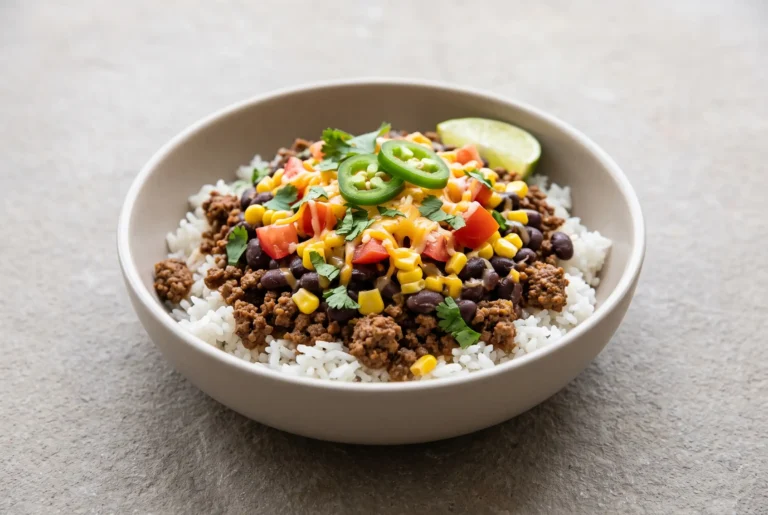
Korean Ground Beef Bowl with Garlic and Sesame Oil
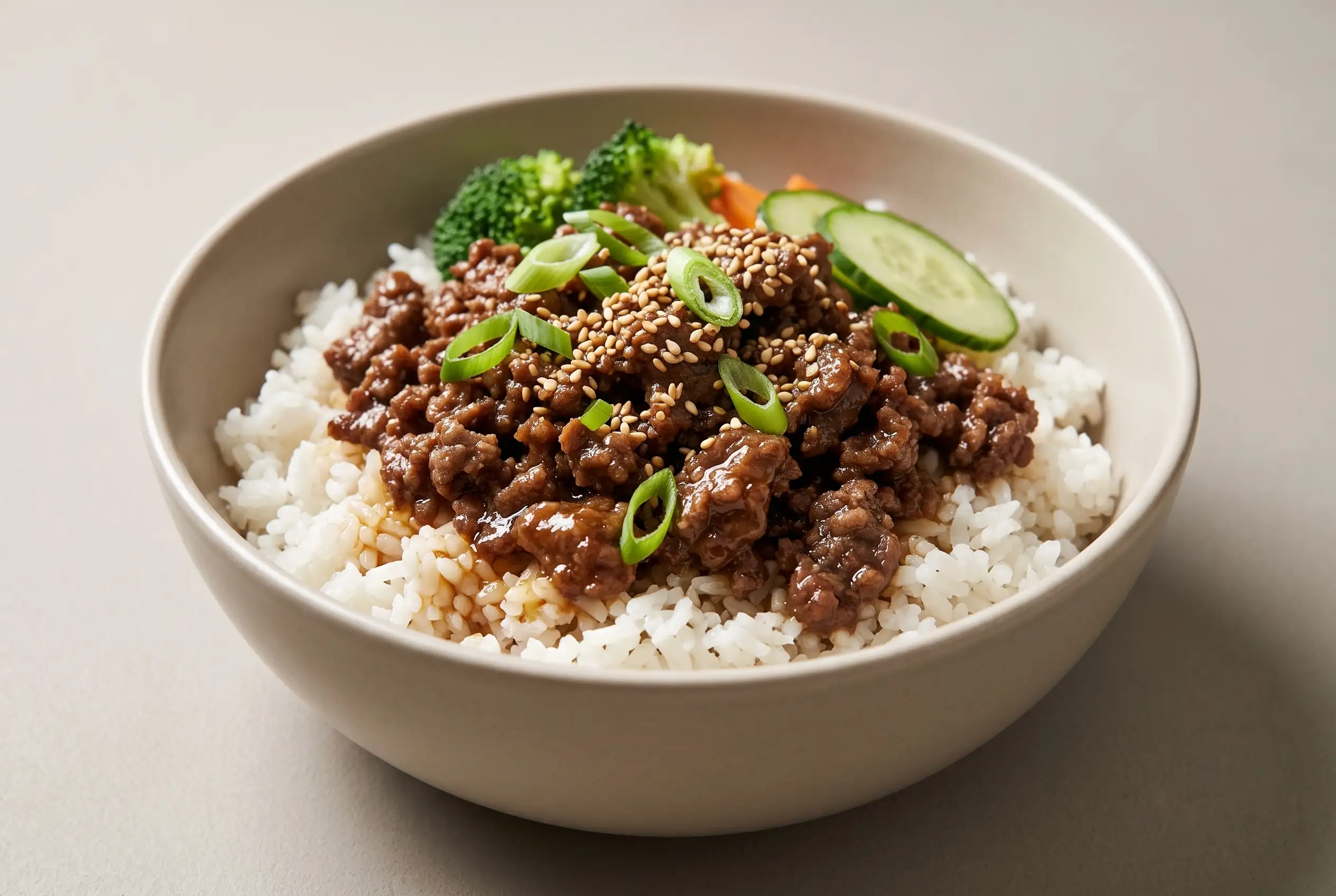
Korean ground beef bowl brings savory garlic, soy sauce, sesame oil, and gently sweetened beef together over warm rice for a fast dinner with bold Korean-inspired flavor. The ground beef cooks quickly, absorbs the glossy sauce, and creates a comforting meal from familiar pantry ingredients.
Busy evenings benefit from a dish that needs only one skillet for the main filling. Fresh green onions brighten the rich beef, while optional cucumbers, broccoli, kimchi, sesame seeds, or a fried egg let each serving take on a different texture and level of heat.
Sweet-Savory Flavor Defines the Beef Bowl
Balanced seasoning makes an easy Korean ground beef bowl taste satisfying without becoming overly salty or sugary. Soy sauce establishes the savory base, brown sugar or honey softens its intensity, and sesame oil provides a nutty aroma that becomes noticeable as soon as the warm beef reaches the rice.
Fresh garlic gives the sauce its strongest aromatic note. Cooking it briefly after the beef has browned allows its flavor to spread through the skillet without turning bitter, while black pepper adds warmth and optional red pepper flakes introduce a clean, adjustable heat.
Warm rice performs an important practical role beyond filling the bowl. Its mild flavor absorbs the seasoned juices and balances the concentrated beef, making each spoonful feel complete even before extra toppings are added.
Deep Browning Creates Better Ground Beef
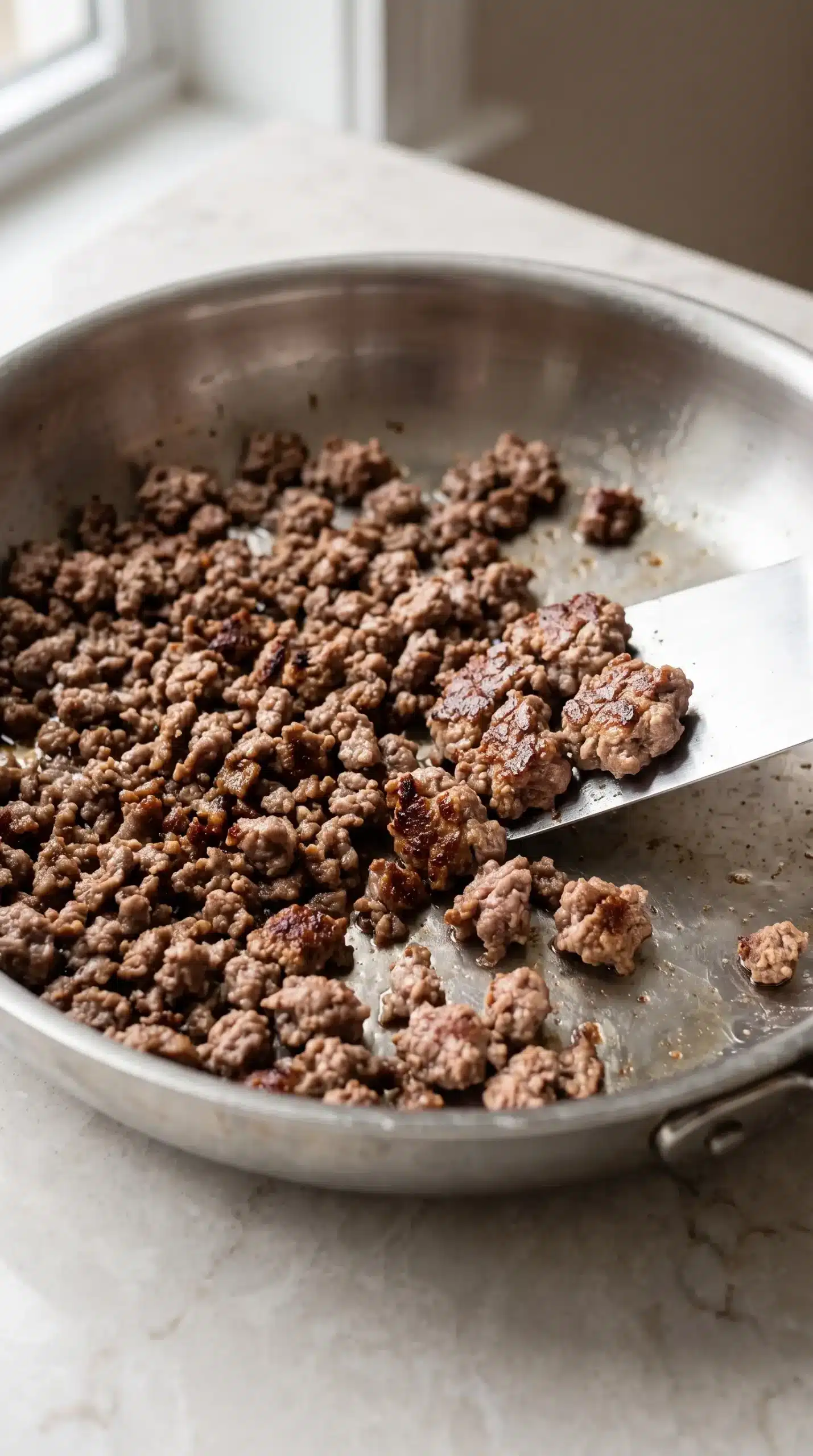
Proper skillet contact is the most consequential cooking decision in a Korean ground beef rice bowl. A wide pan gives the meat room to release moisture and develop browned edges, while a crowded pan traps steam and leaves the crumbles pale and softer.
After adding the beef, let portions remain against the hot surface briefly before breaking and stirring everything continuously. That short period of undisturbed cooking encourages caramelized spots that produce more savory depth than meat that is moved from the moment it enters the skillet.
Once browned, excess grease can be drained when necessary, but the pan does not need to be completely dry. A small amount of fat helps distribute the garlic and seasonings, preserving richness without leaving the finished bowl oily.
- Use a wide skillet: More surface area helps moisture escape and encourages browning.
- Break up large pieces: Small crumbles receive a more even coating of sauce.
- Watch the heat: Medium heat supports browning while reducing the chance of scorching garlic or sugar.
- Drain selectively: Remove obvious excess grease while retaining enough moisture for a flavorful finish.
Brief Simmering Keeps the Sauce Glossy
Once soy sauce, sesame oil, sweetener, pepper, and optional red pepper flakes enter the skillet, the mixture needs only a brief simmer until it lightly clings to the beef. Extended cooking can reduce the liquid too far, concentrate the salt, and leave the meat dry instead of juicy.
Rice and Toppings Shape Every Serving
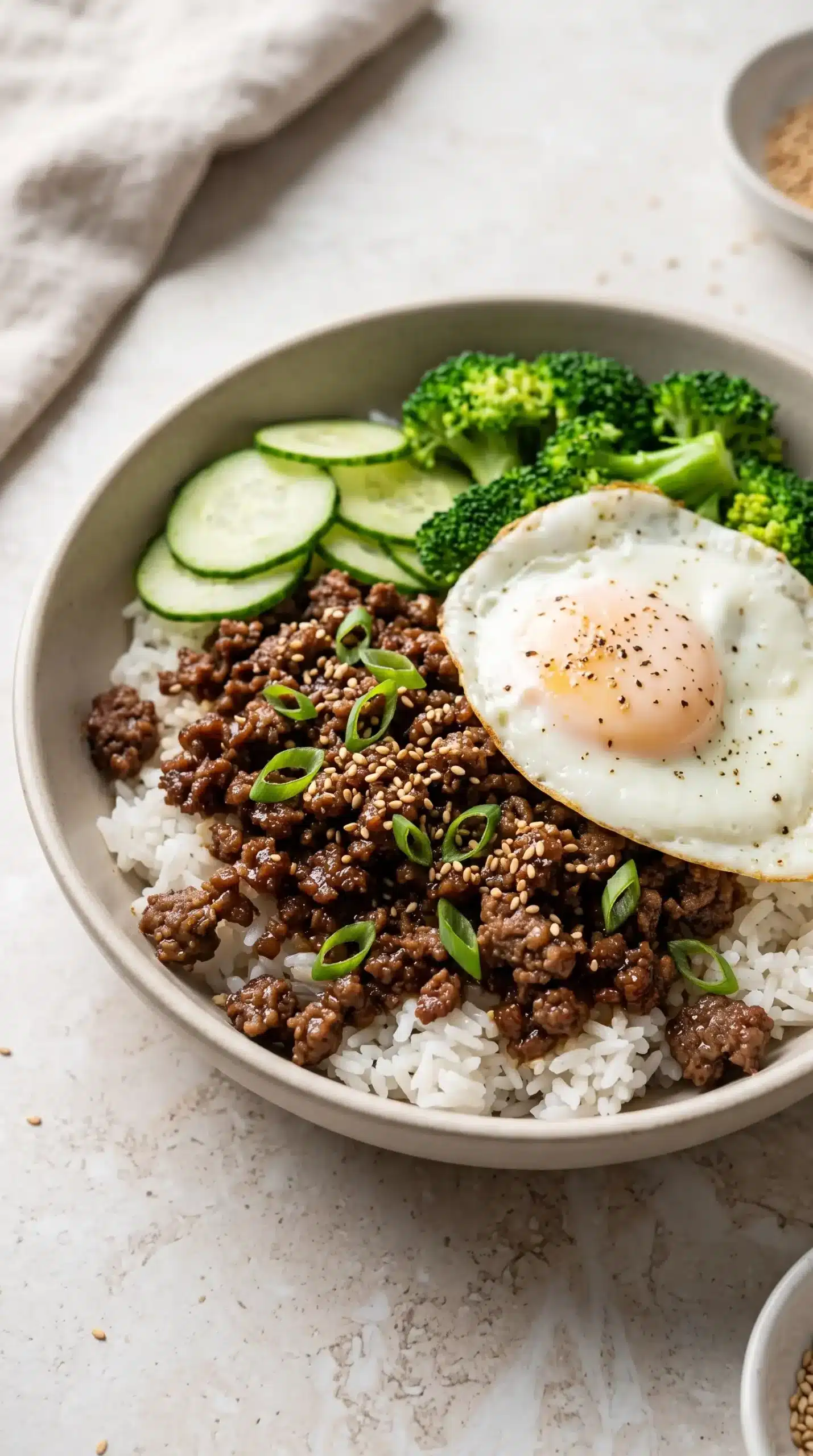
Fluffy rice provides the soft foundation for a 30 minute Korean beef bowl. White rice or jasmine rice offers a light texture, brown rice adds extra chewiness, and cauliflower rice creates a lower-carbohydrate base that still catches the savory sauce.
Cool or crisp toppings help contrast the warm beef. Sliced cucumbers bring freshness, green onions supply a sharp bite, sesame seeds add a small amount of crunch, and steamed broccoli creates a more substantial bowl without competing with the sauce.
| Serving Addition | Texture | Best Use |
|---|---|---|
| Sliced cucumbers | Cool and crisp | Balances rich, warm beef |
| Steamed broccoli | Tender with light bite | Adds a simple vegetable component |
| Fried egg | Soft with creamy yolk | Creates a richer, more filling bowl |
| Kimchi | Crunchy and juicy | Adds tangy heat and contrast |
| Sesame seeds | Lightly crunchy | Finishes the bowl without extra preparation |
Ingredient Choices That Improve Korean Ground Beef Bowl
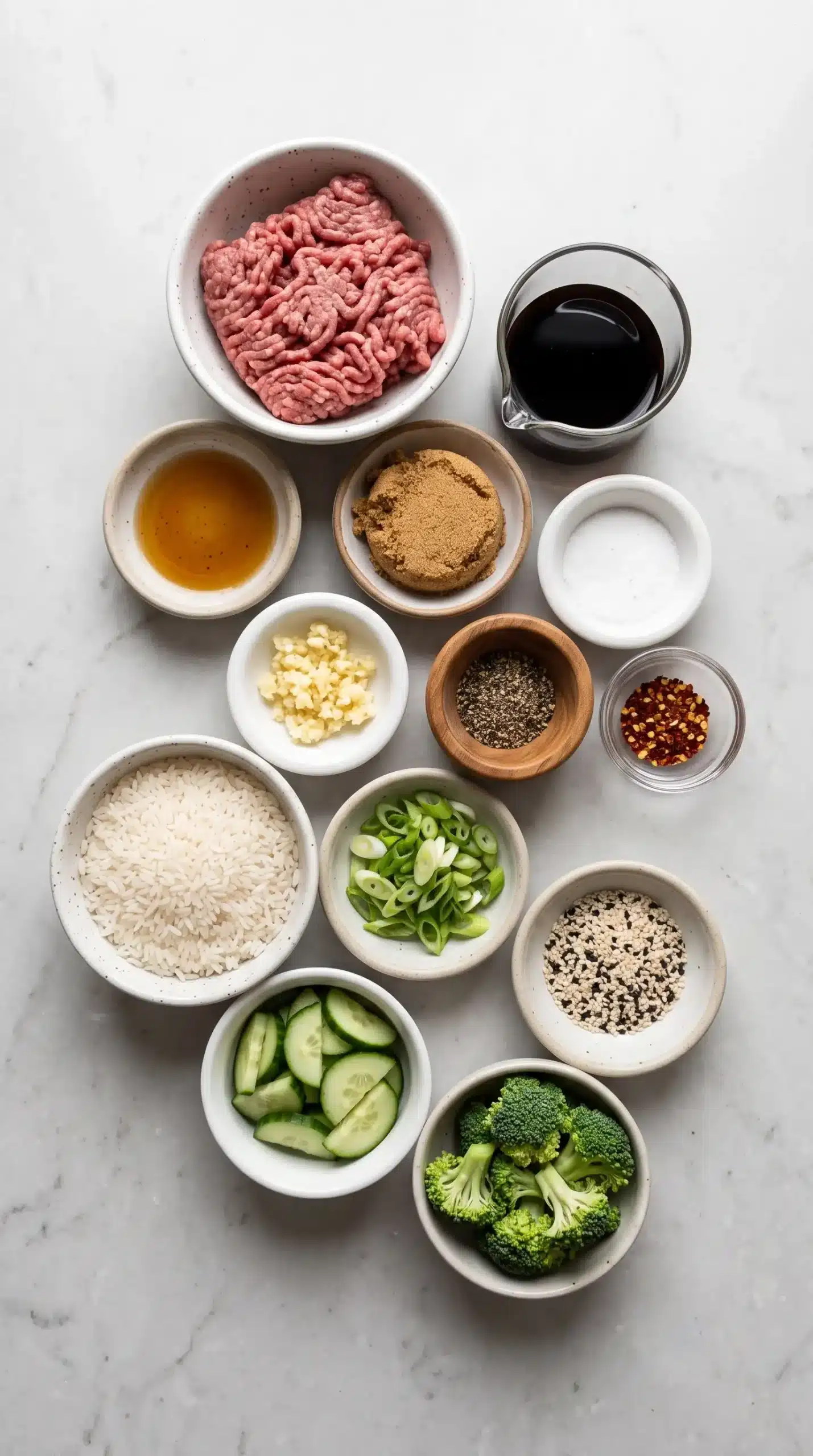
Lean ground beef provides rich flavor while limiting excess grease, though standard ground beef also works when the skillet is drained after browning. Ground turkey or ground chicken can replace the beef when a lighter variation is preferred, but they may need careful cooking to remain tender.
For safe doneness, use a food thermometer and cook the meat to 160°F for ground beef and 165°F for ground poultry, since browned color alone does not confirm that ground meat is fully cooked.
Low-sodium soy sauce offers more control over seasoning, particularly because the liquid reduces slightly as it simmers. Tamari or gluten-free soy sauce can serve the same purpose when gluten must be avoided.
Brown sugar produces a deeper caramel note, whereas honey gives the sauce a smoother sweetness. Either option should support the soy sauce instead of dominating it, allowing the beef to remain primarily savory.
Toasted sesame oil is powerful in a small quantity. Adding only the stated amount keeps its nutty character distinct, and an optional tiny drizzle at serving time preserves more aroma than increasing the amount cooked in the skillet.
Korean Ground Beef Bowl Mistakes to Avoid
Overcrowding the skillet is the most visible cause of weak browning. When liquid gathers around the meat and the beef looks gray instead of developing darker spots, spreading it into a larger pan can improve evaporation and flavor.
Burned garlic creates another preventable problem. Minced garlic should cook only until fragrant before the liquid ingredients are stirred in, since prolonged contact with the hot pan can make its flavor harsh.
Too much sesame oil can make the entire bowl taste heavy and one-dimensional. Its aroma should sit behind the garlic and soy sauce, not cover them, so additional sesame flavor is better introduced with a restrained finishing drizzle.
Long sauce reduction changes both texture and seasoning. If the mixture becomes sticky or starts catching on the skillet, a small splash of water can loosen it before serving, though stopping the simmer earlier is the better prevention.
- Brown before seasoning: Let the beef develop color before adding the liquid sauce.
- Add garlic briefly: Stir only until fragrant so it stays savory instead of bitter.
- Reduce gently: Stop when the sauce coats the crumbles and still looks moist.
- Serve promptly: Spoon the beef over warm rice while the glaze remains loose and glossy.
Adjustable Heat Keeps the Bowl Flexible
Red pepper flakes can be omitted for a mild dinner or increased carefully for more warmth, while sriracha, chili oil, or gochujang may be stirred into individual servings so one skillet can suit different preferences at the table.
Vegetables Add Contrast Without Hiding the Beef
Broccoli, carrots, mushrooms, zucchini, spinach, bok choy, and snap peas all fit the sweet-savory profile. Broccoli creates a particularly satisfying Chinese beef and broccoli pairing when cooked until crisp-tender and arranged beside the rice, while the remaining vegetables should stay lightly cooked to preserve their color and bite.
Skillet vegetables should be chosen with moisture in mind. Mushrooms and zucchini release liquid as they cook, which can slow browning if added before the beef has developed color, while spinach wilts quickly and works best near the end.
Separately steamed vegetables provide the greatest control. They can be portioned around the rice, allowing the glossy beef to remain concentrated while each person chooses how much produce to include.
Meal Prep Works Best With Separate Components
A Korean ground beef bowl is particularly useful for planned lunches because the seasoned meat reheats without requiring a new sauce. Dividing the beef, rice, and vegetables into individual portions also makes it easier to assemble a complete meal during a busy week.
Keeping green onions, cucumbers, kimchi, and sesame seeds away from the warm components preserves their texture. Fresh garnishes can be packed in a small separate container and added after reheating.
Cooked rice benefits from separate storage whenever possible. The beef can release additional liquid as it rests, and storing the two components apart prevents the rice from absorbing too much sauce before serving.
Storage and Reheating Protect Moisture
Leftover beef can be cooled and stored in an airtight container in the refrigerator for up to four days. For longer storage, cooled portions may be frozen in freezer-safe containers for up to two months and thawed overnight before reheating.
Gentle reheating helps the crumbles stay tender. A small splash of water or soy sauce can loosen a mixture that has thickened in storage, while stirring occasionally distributes moisture throughout the meat.
Family Bowls Benefit From Simple Choices
For children or spice-sensitive diners, omit the red pepper flakes and offer toppings separately. Finely crumbled beef mixed directly into the rice creates softer, familiar bites, while a build-your-own arrangement lets everyone choose cucumbers, broccoli, green onions, sesame seeds, kimchi, or a fried egg.
A Wide Skillet Is the Essential Tool
A large skillet or sauté pan gives the ground beef enough surface area to brown efficiently, while a sturdy spoon or spatula breaks it into even crumbles. Beyond a pot or rice cooker for the rice, a knife, cutting board, and basic measuring tools are sufficient for preparing the Korean ground beef bowl.
Caramelized Beef Makes the Simple Sauce Matter
Browned crumbles give the soy, garlic, sesame oil, and sweetener something substantial to coat. When the meat develops color first and the sauce simmers only until glossy, the finished bowl retains both savory depth and tenderness.
Warm rice then catches the seasoned juices while fresh toppings provide contrast. That combination turns a small group of pantry staples into a cohesive dinner without requiring complicated preparation or an overloaded sauce.
Korean Ground Beef Bowl Storage and Spice Questions
Can ground turkey replace the beef?
Ground turkey or ground chicken can be substituted, though careful cooking is important because lean poultry can dry more quickly. Brown it just until cooked, then use the same brief sauce simmer.
How can I make the bowl gluten-free?
Use tamari or a soy sauce specifically labeled gluten-free, then confirm that any bottled chili sauce, kimchi, or other prepared topping also meets your dietary needs.
Can the beef be served without rice?
Cauliflower rice, shredded cabbage, or lettuce leaves can replace traditional rice. Lettuce creates a lighter wrap-style meal, while cabbage provides a crisp base that holds up well under the warm filling.
What should I do if the sauce tastes too salty?
Serve the beef with additional plain rice and unseasoned vegetables to spread the seasoning across a larger portion. A small splash of water can also loosen concentrated sauce before the beef leaves the skillet.
Why did the beef steam instead of brown?
The skillet may have been too small, insufficiently heated, or stirred too frequently. Use a wider pan, allow moisture to evaporate, and leave portions of meat undisturbed long enough to develop darker edges.
Can I prepare the toppings ahead of time?
Green onions, cucumbers, shredded carrots, and sesame seeds can be prepared in advance and refrigerated separately. Keeping them away from the hot beef preserves their freshness and crisp texture.
Korean Ground Beef Bowl with Garlic and Sesame Oil
Ingredients
Method
- Place a large skillet over medium heat. Add the ground beef and cook, breaking it into small pieces, until browned and the center reaches 160°F (71°C).
- Drain off excess grease if necessary, keeping a small amount in the skillet. Add the garlic and cook for 1 minute.
- Stir in the soy sauce, sesame oil, brown sugar or honey, black pepper, and red pepper flakes, if using, until the beef is thoroughly coated.
- Cook at a simmer for 2 to 3 minutes, stirring occasionally, until the sauce lightly thickens and coats the beef.
- Divide the warm rice among four bowls. Top with the beef mixture and sliced green onions.