Creamy Outback Potato Soup with Bacon and Sour Cream
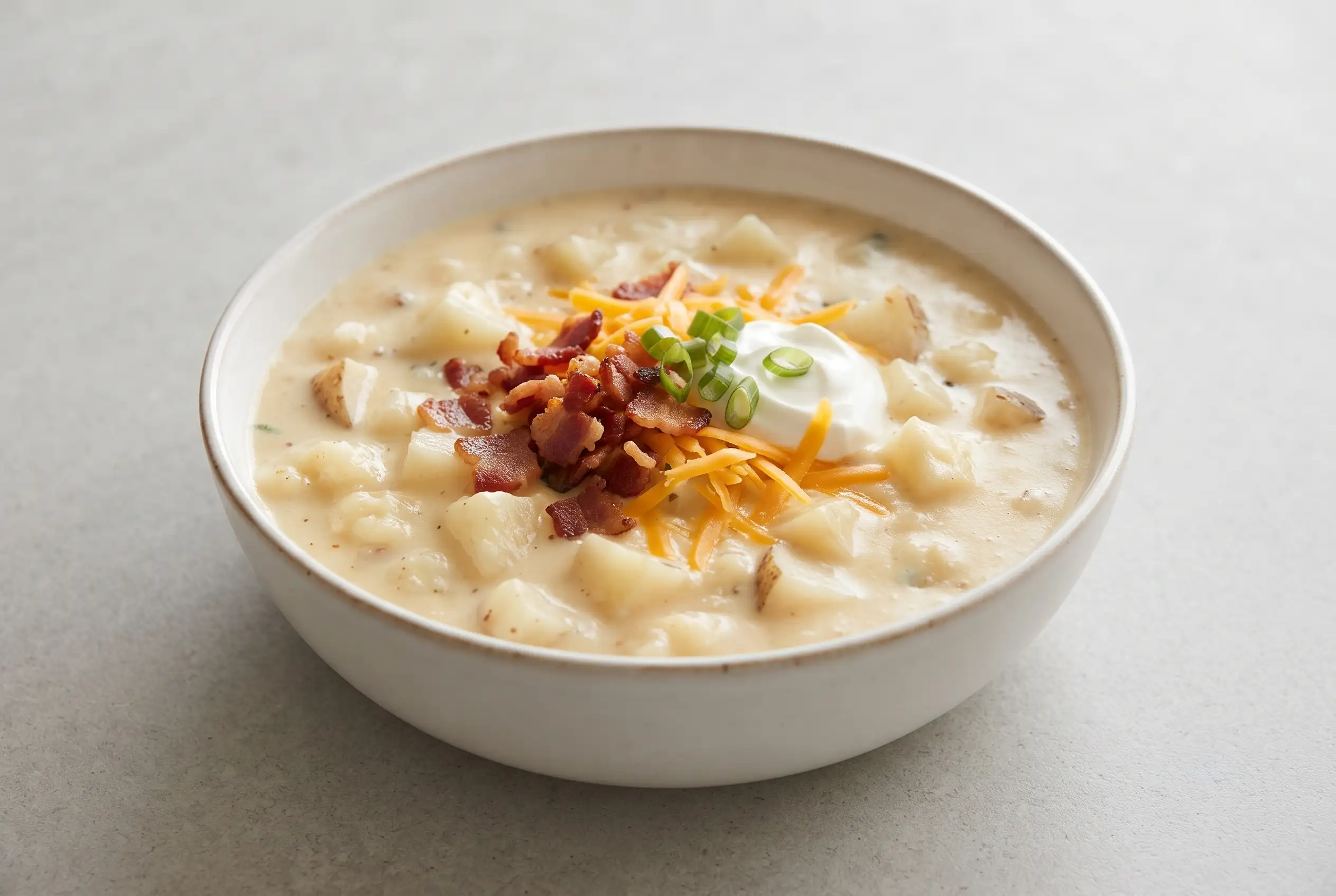
Creamy potato soup turns russet potatoes, bacon, cheddar, and a smooth dairy base into a thick, savory bowl with the familiar character of a loaded baked potato. The 30-Minute Ultimate Creamy Outback Potato Soup That’s Rich and Cozy title points to a steakhouse-style soup, but the useful appeal is practical: tender potato pieces, a lightly smoky broth, and toppings that add contrast without complicating the pot.
Why Russets Build Better Creamy Potato Soup
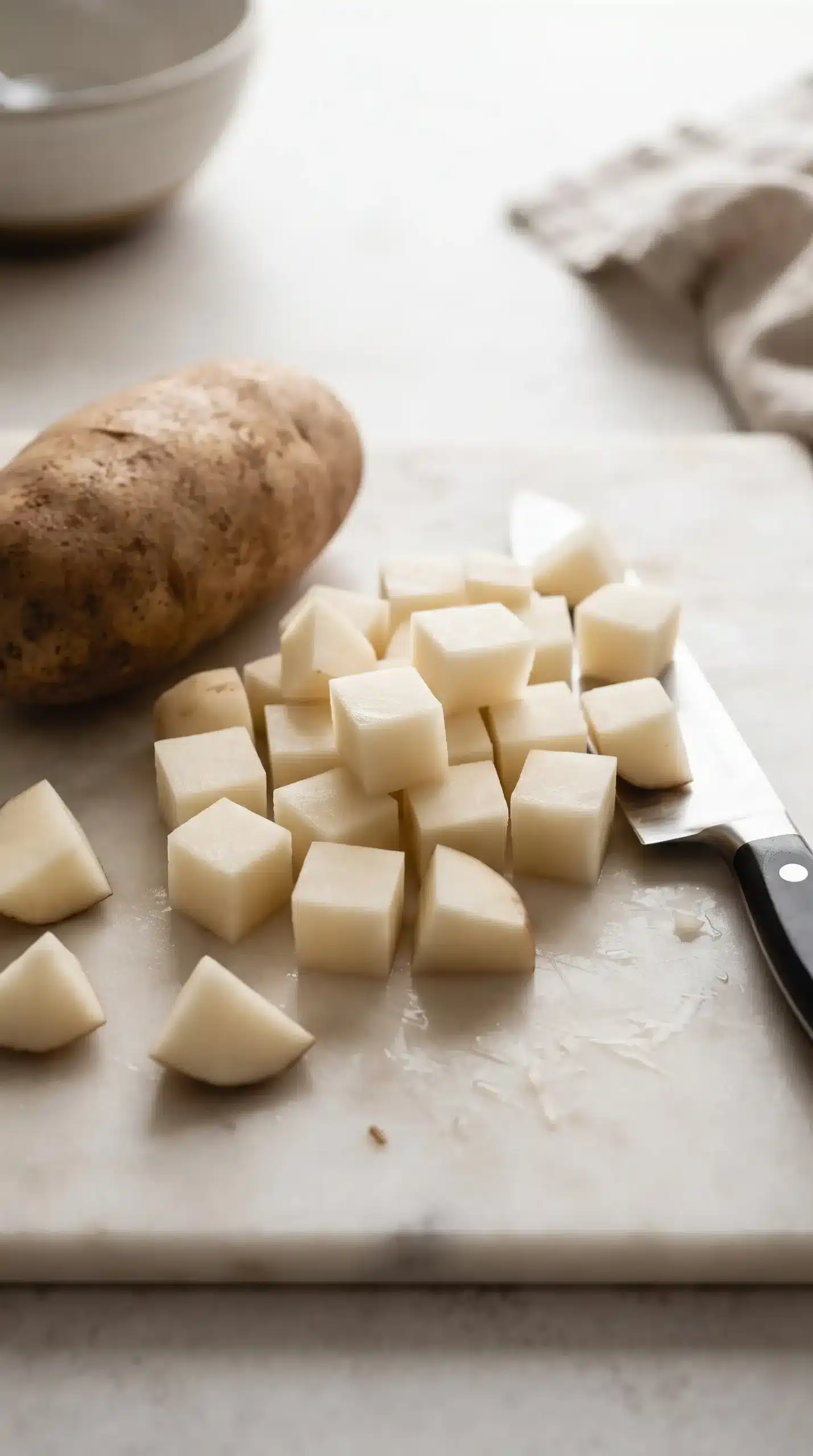
Russet potatoes suit creamy potato soup because they soften readily and release enough starch to give the broth body. Their texture allows part of the pot to be mashed while the remaining cubes stay tender, creating thickness without turning every spoonful into purée.
Yukon Gold potatoes can produce a smoother, slightly denser result, but they do not break down in quite the same way. Red potatoes hold their shape more firmly, so they are less useful when the desired finish is a steakhouse potato soup with both creamy broth and soft, irregular potato pieces.
Cut size affects the outcome as much as variety. Even cubes cook at a similar pace, while mixed sizes leave some pieces firm and others nearly dissolved. Uniform pieces also make partial mashing easier to control.
The Roux Sets the Soup’s Structure
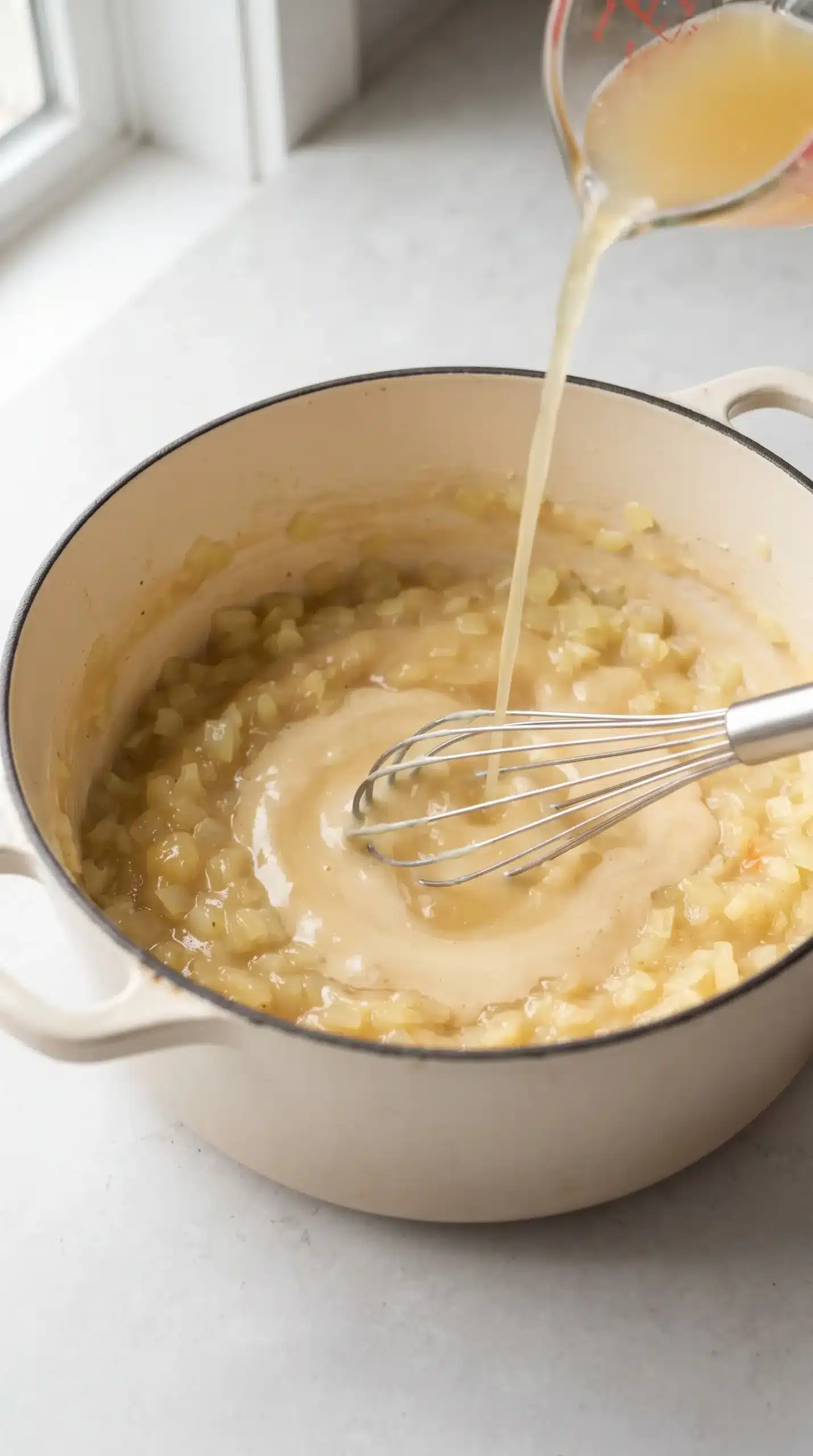
Butter and flour form the base that keeps the broth from feeling thin once cream and sour cream are added. Brief cooking removes the raw flour taste, while steady stirring prevents dry pockets from collecting around the onions.
Gradual broth addition matters because flour thickens most evenly when liquid is incorporated in stages. Whisk until the base looks smooth before the potatoes begin simmering; lumps become harder to correct after the pot fills with solids.
A light roux is enough here. Browning it deeply would change the flavor and reduce some thickening power, while undercooking it can leave a floury finish.
Flavor Choices That Keep Richness Balanced
Smoked paprika, black pepper, and a restrained amount of cayenne cut through the dairy without overpowering the potatoes. Sour cream adds tang, bacon contributes salt and smoke, and sharp cheddar supplies a concentrated savory note.
- For deeper smoke: increase smoked paprika modestly before adding extra bacon.
- For gentler heat: omit cayenne and let black pepper provide the only sharpness.
- For cleaner cheese flavor: grate cheddar from a block so it melts with fewer clumps.
- For a milder bowl: use half-and-half in place of heavy cream, accepting a slightly lighter body.
Gentle Heat Controls the Creamy Finish
Once the potatoes are tender, lower heat becomes the most important control. Heavy cream, sour cream, and cheddar should warm through slowly because vigorous boiling can separate the dairy and make the surface look oily or grainy.
Partial mashing should happen before the dairy goes in. Pressing about half of the potatoes against the pot creates a thick base while leaving enough cubes intact for a loaded potato soup texture.
Cheese melts more smoothly when added in small handfuls over low heat. Stir until each portion disappears before adding more, then stop cooking as soon as the soup is hot and cohesive.
Common Creamy Potato Soup Mistakes to Avoid
Most creamy potato soup failures come from excess heat, uncontrolled starch, or seasoning before the bacon and cheddar have contributed their salt. Each problem leaves a visible clue that can be corrected or prevented.
| Mistake | Visible result | Better move |
|---|---|---|
| Boiling after dairy is added | Grainy broth or oily patches | Keep the pot at a gentle heat and stir often |
| Mashing every potato | Heavy or gummy texture | Leave a portion of the cubes intact |
| Adding cheese over high heat | Clumps or stringy pockets | Lower the heat and add cheese gradually |
| Salting too early | An overly salty finish after bacon and cheese | Adjust seasoning near the end |
| Cutting uneven cubes | Firm centers beside broken-down pieces | Keep potato pieces similar in size |
Texture Should Be Thick but Still Spoonable
A properly finished creamy potato soup coats the spoon yet still settles back into the bowl. The broth should hold soft potato chunks, melted cheese, and bacon without becoming stiff.
If the pot becomes too thick, loosen it with a small amount of broth or milk while stirring over low heat. When it seems too thin, mash a few more potato pieces instead of adding uncooked flour directly.
Over-blending releases excess starch and can create a gluey consistency. A potato masher gives better control than prolonged blending, though a brief pulse with an immersion blender can help when a smoother family-style bowl is preferred.
Bacon and Cheddar Work Best in Two Stages
Stirring some bacon and cheddar into the soup seasons the base, while reserving the rest protects contrast at serving time. Bacon added too early loses its crisp edge, and all the cheese mixed into the pot can make the topping feel flat.
Toppings Turn It Into Loaded Potato Soup

Sliced green onions, crumbled bacon, shredded cheddar, and a small spoonful of sour cream add freshness, crunch, salt, and tang, turning the creamy base into loaded baked potato soup at serving time. Set the toppings out individually when serving people with different preferences.
A modest topping layer works better than burying the soup. Too much cheese cools the surface quickly, while excessive bacon can make the bowl taste saltier than intended.
For children, keep cayenne out of the pot and place stronger seasonings on the table. Crackers or extra cheese can make the texture more familiar without changing the base.
Useful Substitutions Without Losing the Style
| Original choice | Practical substitute | Expected change |
|---|---|---|
| Russet potatoes | Yukon Gold potatoes | Smoother body with fewer broken-down edges |
| Chicken broth | Vegetable broth | A meat-free base with less bacon-style depth |
| Heavy cream | Half-and-half | Lighter texture and slightly less richness |
| Sour cream | Greek yogurt | Similar tang with a different dairy finish |
| All-purpose flour | Gluten-free flour blend | Comparable thickening when the blend is suitable for roux |
| Bacon | Turkey bacon or smoked sea salt | Less pork fat while retaining a smoky note |
Serving Choices That Offset the Rich Broth
Crusty bread and grilled cheese match the soup’s comfort-food character, but crisp salad or roasted broccoli gives the meal a fresher contrast. Crackers are useful when only a small amount of crunch is needed.
Sandwiches make the bowl more substantial without changing the soup itself. Turkey or ham works especially well with the cheddar and bacon profile already present.
Portion size should reflect the side. A larger bowl can stand alone, while a smaller serving pairs better with bread, salad, or a sandwich.
Storage Preserves Flavor Better Than Texture
Refrigerate cooled soup in an airtight container for up to three days. The potatoes continue absorbing liquid, so the chilled soup will usually look thicker than it did on the stove.
Freezing is possible for up to three months, although dairy may separate slightly after thawing. Gentle stirring during reheating helps bring the base back together.
Divide leftovers into smaller containers before chilling when convenient. Individual portions cool and reheat more evenly, and they reduce repeated warming of the full batch.
Low Heat Makes Reheating More Reliable
Warm creamy potato soup slowly over medium-low heat, adding broth or milk a little at a time if the consistency has tightened. In a microwave, use short intervals and stir between each one so the edges do not overheat before the center is hot.
Prep Shortcuts That Keep the Main Texture
- Cube ahead: hold peeled potatoes in cold water until cooking time.
- Cook bacon early: refrigerate it separately so it stays ready for the pot and garnish.
- Use frozen onion: skip chopping when speed matters more than a perfectly fresh texture.
- Pre-cook potatoes briefly: microwave the cubes for several minutes to shorten stovetop simmering.
- Choose pre-shredded cheese carefully: it saves time, though block cheese generally melts more smoothly.
Budget Decisions That Matter Most
Potatoes provide most of the volume, so adding another russet stretches the pot more economically than increasing bacon or cheese. Store-brand broth, sour cream, and dairy can keep costs down without changing the basic cooking approach.
Bacon ends, turkey bacon, or a smaller amount of crisp bacon can preserve smoky contrast at lower cost. Using the reserved pieces as garnish makes a modest quantity feel more noticeable.
Block cheddar is the place where quality affects handling as well as flavor. Freshly grated cheese tends to melt more evenly, so a smaller amount can still distribute well through the soup.
Equipment That Helps Prevent Scorching
A heavy-bottomed pot or Dutch oven spreads heat evenly and reduces hot spots once cream and cheese enter the pot. A whisk keeps the roux smooth, while a potato masher controls how much of the soup becomes thickened.
An immersion blender is optional and should be used briefly. A sharp knife, stable cutting board, ladle, and cheese grater cover the remaining work without specialized equipment.
Why the Outback Potato Soup Recipe Style Works
The outback potato soup recipe style depends on one central judgment: build thickness from both roux and softened russets, then protect that structure with low heat. Bacon, cheddar, and sour cream can enrich the bowl only after the potato base has reached the right consistency.
Tender chunks suspended in smooth broth are the clearest sign that the balance is right. Keeping the dairy below a hard boil preserves that contrast and gives creamy potato soup its steakhouse character.
Creaminess, Freezing, and Potato Choice Questions
Can milk replace the heavy cream?
Milk can be used, but the soup will be thinner and less rich. Add it over low heat and rely on partially mashed potatoes to restore some body.
Why did the cheddar turn grainy?
High heat or adding too much cheese at once can prevent a smooth melt. Remove the pot from strong heat, stir gradually, and avoid boiling after the cheese enters.
Can red potatoes be used for creamy potato soup?
Red potatoes will cook through, but they hold their shape and contribute less starch. Expect a brothier soup with firmer pieces unless more of the potatoes are mashed.
How can the soup be made vegetarian?
Use vegetable broth, omit the bacon, and add smoked sea salt for a similar smoky direction. Keep the cheddar and sour cream unless a fully dairy-free version is needed.
What is the safest way to thaw frozen soup?
Thaw it in the refrigerator, then reheat gently while stirring. Add a small amount of broth or milk if the dairy base looks separated or unusually thick.
Creamy Outback Potato Soup with Bacon and Sour Cream
Ingredients
Method
- Melt the butter in a large heavy-bottomed pot over medium heat. Add the onion and garlic and cook for 3 to 5 minutes, until softened.
- Sprinkle the flour over the onion mixture and stir constantly for 1 minute.
- Slowly whisk in the chicken broth until the mixture is smooth and no lumps remain.
- Add the potatoes, smoked paprika, cayenne pepper, salt, and black pepper. Bring to a gentle simmer and cook for 15 to 20 minutes, stirring occasionally, until the potatoes are fork-tender.
- Mash about half of the potatoes in the pot, leaving the rest intact to maintain a thick, chunky texture.
- Lower the heat and stir in the heavy cream and sour cream until fully combined. Do not allow the soup to boil.
- Add 1/2 cup of the cheddar cheese and half of the crumbled bacon, stirring until the cheese has melted.
- Adjust the seasoning to taste. Ladle the soup into bowls and garnish with the remaining cheddar cheese, remaining bacon, and sliced green onions.