Tanghulu Recipe with Strawberries, Grapes, and Kiwi
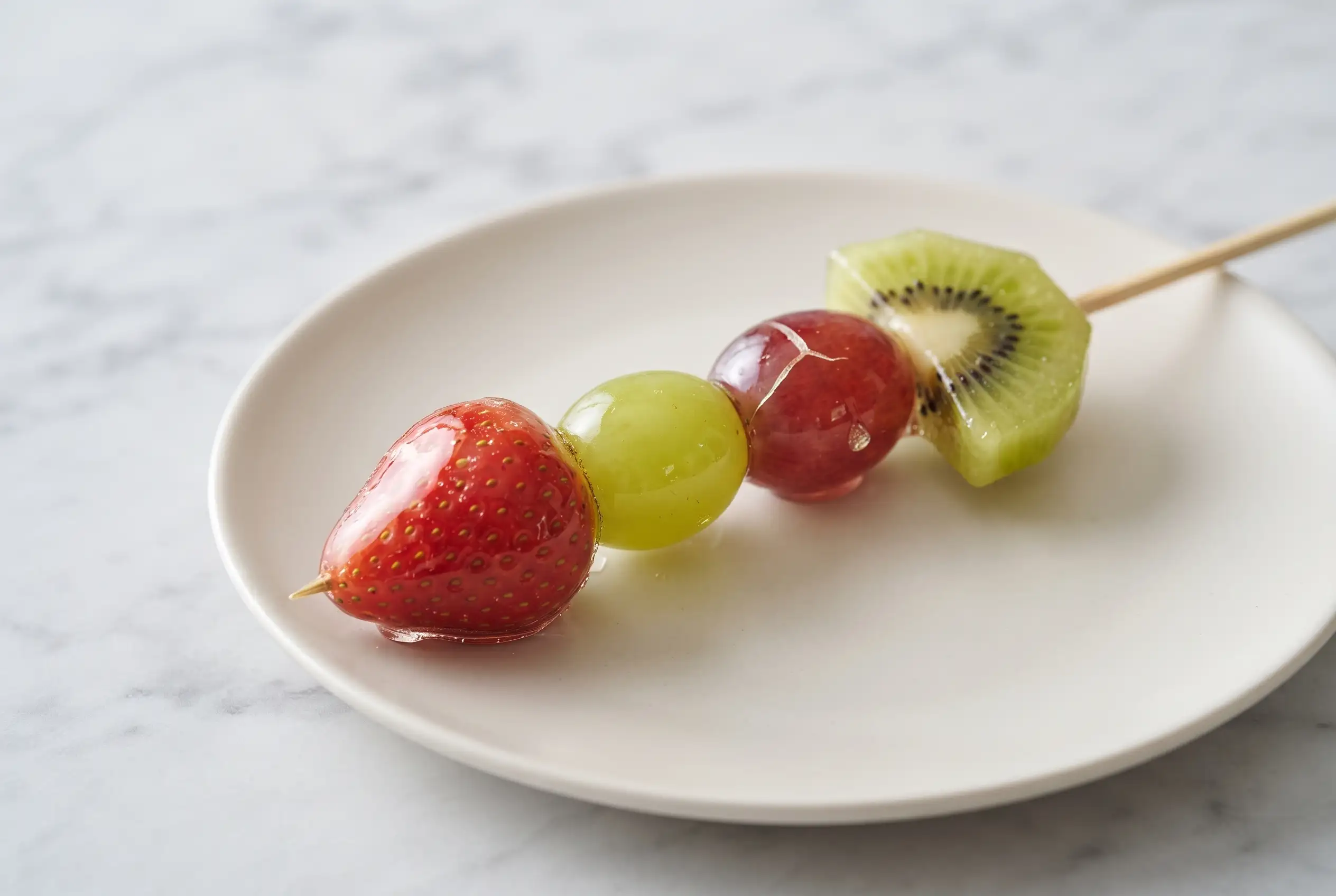
Tanghulu recipe turns fresh fruit into a glossy candy treat with a thin shell that cracks cleanly around a juicy center. Strawberries and grapes are especially well suited to the technique, although firm pieces of kiwi, pineapple, apple, and mandarin orange can create a colorful mixed-fruit display.
Only sugar, water, and carefully dried fruit are needed for the basic coating. The challenge lies in controlling moisture and cooking the syrup to hard crack stage, where it can cool into crisp candy instead of remaining soft or sticky.
Once the dipping station is organized, the process moves quickly. A candy thermometer offers the most reliable guide, while an ice-water test provides a practical way to check the syrup without one.
Choosing Fruit That Holds a Crisp Shell
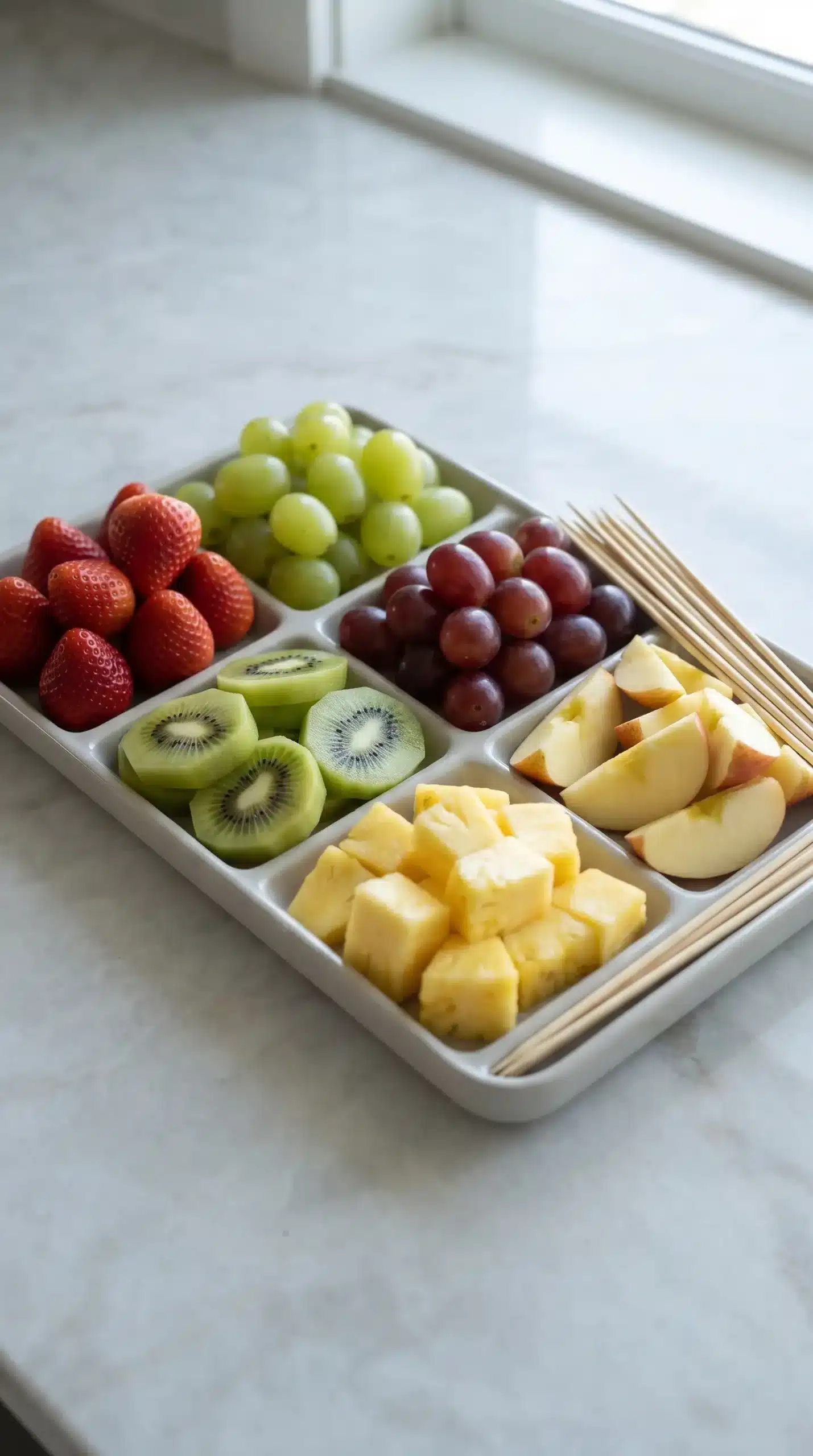
Firm, fresh fruit gives a tanghulu recipe the strongest contrast between brittle sugar and a juicy interior. Strawberries should hold their shape, grapes should feel plump, and cut fruit should be dense enough to stay secure on a skewer during dipping.
Soft or overripe pieces can release juice, slide from the skewer, or collapse beneath the hardened coating. Frozen fruit is also unsuitable because thawing brings moisture to the surface and weakens candy adhesion.
Fruit size affects both dipping and eating. Smaller pieces are easier to coat thinly, while oversized pieces may collect a heavier layer of syrup before the excess can drip away.
| Fruit | Texture Under the Shell | Preparation Consideration |
|---|---|---|
| Strawberries | Soft and juicy | Remove leaves and dry around the stem area |
| Grapes | Firm with a crisp pop | Use seedless grapes and keep their skins intact |
| Apples | Dense and crunchy | Cut into secure pieces that sit firmly on skewers |
| Kiwi | Soft with tart contrast | Choose firm fruit and avoid overly thin slices |
| Pineapple | Juicy and fibrous | Use compact chunks that will not split while dipping |
Sugar Syrup Creates the Glass-Like Crack
White granulated sugar produces the clearest, most traditional shell for an easy tanghulu recipe. Water allows the sugar to dissolve and heat evenly before the mixture reaches the temperature needed for brittle candy.
At approximately 300°F, the syrup reaches hard crack stage. A coating made at this point cools into a thin, rigid layer that snaps instead of bending or clinging to the teeth.
Color gives another useful signal near the end of cooking. The liquid should become lightly golden, but a rapidly darkening syrup indicates that the sugar is moving toward a bitter, overcooked flavor.
Dry Fruit Is the Foundation of Tanghulu
After washing, every piece must be dried thoroughly with paper towels because even small droplets can make syrup slide away, bubble unevenly, or form a rough coating; pay close attention to creases, stem cavities, and freshly cut surfaces.
Heat Control Keeps the Candy Smooth
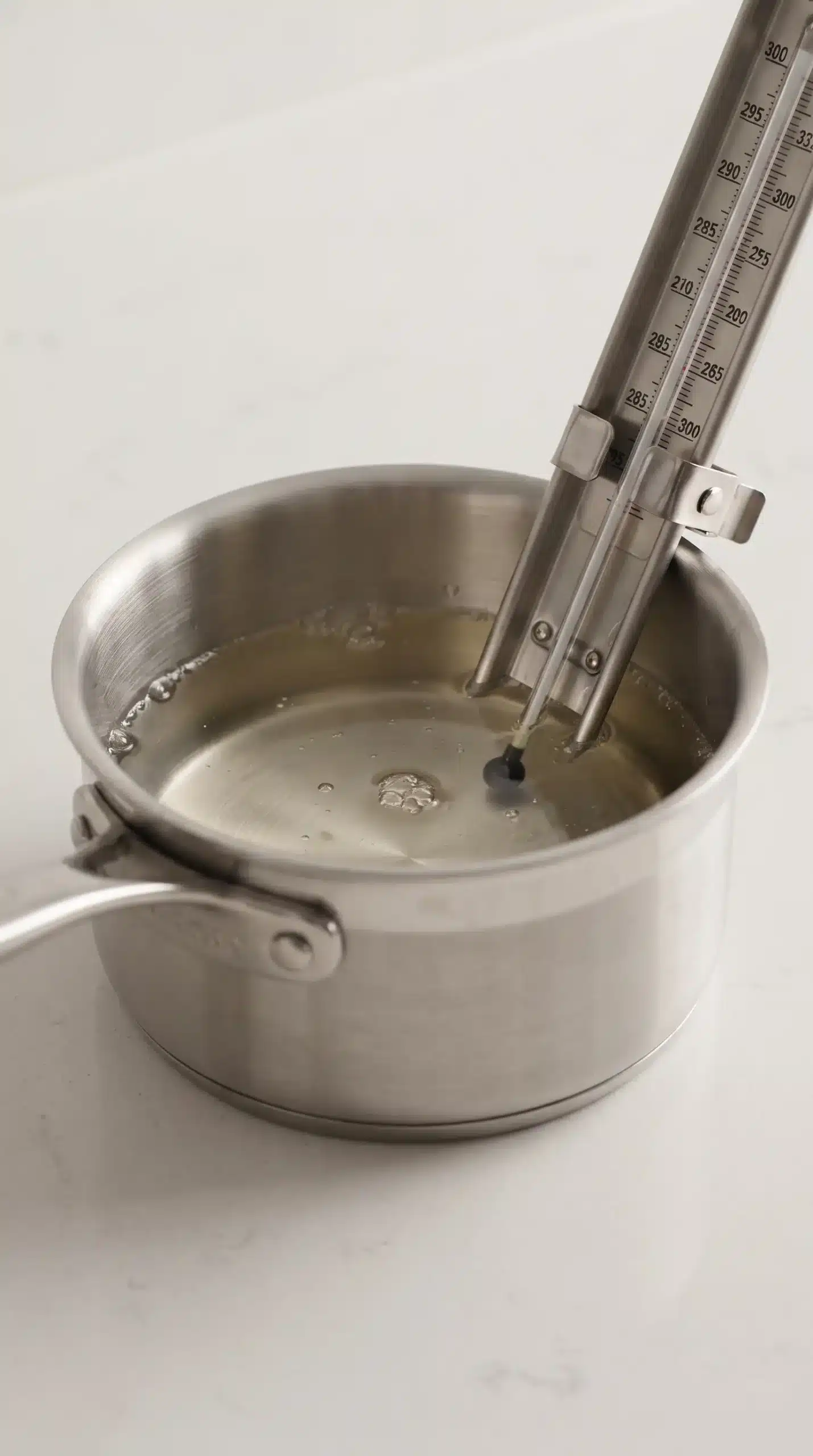
Medium heat gives the sugar time to dissolve and progress toward hard crack stage without darkening too abruptly. Once heating begins, leave the syrup undisturbed because additional stirring can encourage crystallization and produce a grainy coating.
A candy thermometer should sit in the syrup without resting against the bottom of the saucepan. Monitoring the temperature closely becomes especially important near 300°F because the sugar can change quickly once most of the water has cooked away.
Preparation must be complete before the syrup is ready. Skewered fruit, parchment paper, ice water, toppings, and the serving tray should all be within easy reach so the coating can be applied while it remains fluid.
For a smooth tanghulu recipe, use quick visual and temperature checks instead of repeatedly moving the pan or stirring the liquid.
- Stable heat: Keep the burner at medium so the syrup cooks steadily.
- No stirring: Leave the mixture alone while it heats to help prevent crystallization.
- Close monitoring: Watch both the thermometer and the syrup’s color near hard crack stage.
- Ready workspace: Arrange every skewer and cooling surface before dipping begins.
Ice Water Confirms Hard Crack Stage
Without a thermometer, drizzle a small amount of syrup into ice water and examine it after it cools; the sugar is ready when it hardens immediately and breaks with a clean snap instead of bending or feeling chewy.
Common Tanghulu Errors and Their Warning Signs
Most failures in a candied fruit recipe can be traced to moisture, temperature, or slow handling. A sticky shell usually means the syrup did not reach hard crack stage, while a grainy appearance can follow unnecessary stirring during cooking.
Overcooked syrup becomes darker and develops bitterness, so dipping should begin as soon as the correct temperature and texture are reached. Waiting too long allows the coating to thicken in the pan, creating bulky layers that overpower the fruit.
Careful setup gives a tanghulu recipe a wider margin for success because each skewer can be coated and cooled before the remaining syrup loses its ideal consistency.
| Problem | Likely Cause | Practical Response |
|---|---|---|
| Syrup slides off | Fruit surface is damp | Dry the fruit again before coating |
| Shell stays sticky | Syrup is undercooked | Continue cooking until hard crack stage |
| Coating looks grainy | Syrup was stirred while heating | Begin a fresh batch and leave it undisturbed |
| Candy tastes bitter | Sugar became too dark | Remove the next batch from heat sooner |
| Shell is too thick | Fruit was dipped slowly or syrup cooled | Rotate quickly and allow excess syrup to drip |
A Thin Coating Gives the Best Crunch
Quickly dip each skewer, rotate it gently, and lift it out as soon as the fruit is covered, allowing extra syrup to fall back into the saucepan so the hardened layer stays delicate and the natural fruit flavor remains noticeable.
Fruit Combinations Change the Eating Experience
Different fruits make the tanghulu recipe feel noticeably different. Strawberry tanghulu has a soft, juicy center, grapes create a firmer pop, apples add a second layer of crunch, and kiwi supplies a tart contrast to the sweet shell. Keep softer, high-moisture pieces in a colorful rainbow fruit salad, while reserving firm strawberries, grapes, apples, and compact kiwi pieces for skewers that need to remain secure during dipping.
Optional toppings must be applied while the coating is still wet enough to hold them. Crushed nuts and sesame seeds add crispness, coconut flakes introduce chewiness, and a chocolate drizzle can be added after the shell has cooled.
- Bright mixed skewers: Combine strawberries, grapes, kiwi, and pineapple for varied color and texture.
- Citrus-forward pieces: Use mandarin segments for a sweet-tart center.
- Nut-crusted fruit: Roll freshly coated pieces in crushed nuts before the shell sets.
- Chocolate finish: Drizzle cooled skewers with melted dark or white chocolate.
Fresh Serving Preserves the Loudest Snap
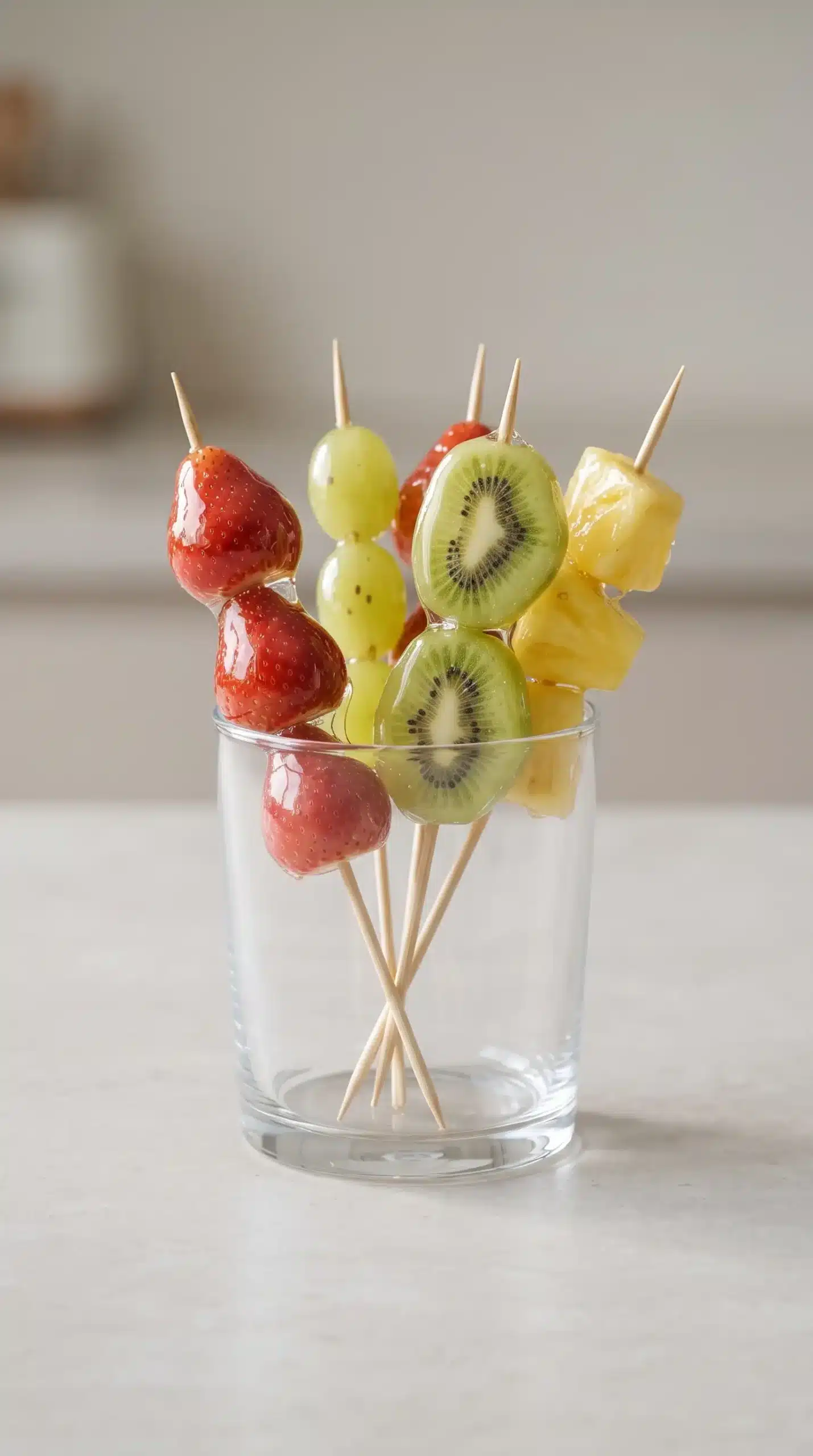
Humidity gradually softens hardened sugar, so the strongest crack is found shortly after dipping and cooling. Serving the skewers within several hours protects the contrast that makes a tanghulu recipe distinctive.
Brief contact with ice water helps the coating harden immediately and creates a glossy finish. Afterward, the skewers can rest on parchment paper until the surface feels firm and no longer clings.
For parties, upright cups or a flat dessert board keep the colorful fruit visible. The skewers also pair naturally with fruit platters, yogurt bowls, ice cream, chilled drinks, or softer desserts that contrast with the brittle shell.
Room Conditions Matter More Than Containers
Keep finished skewers in a cool, dry place and serve them as soon as practical; refrigeration introduces humidity that softens the candy, while freezing damages both the shell and the fruit texture after thawing.
Tools Make Fast Sugar Work Safer
A medium, sufficiently deep saucepan allows the fruit to enter the syrup without forcing the pan to tilt sharply. A heavy-bottomed pan can also distribute heat more evenly while the sugar approaches its critical temperature.
Essential equipment includes skewers, parchment paper, paper towels, a bowl of ice water, and preferably a candy thermometer. A silicone baking mat can replace parchment, and a small dipping cup may help coat shorter skewers when the syrup level becomes low.
Hot sugar can cause serious burns, so adults should control the saucepan and dipping process. Heat-resistant gloves may provide added protection during larger batches, although careful movement and an uncluttered workspace remain essential.
Safer Family Portions Start With Smaller Pieces
For younger eaters, seedless grapes, blueberries, small kiwi chunks, mandarin segments, or bite-sized apple pieces are easier to manage than oversized fruit. Short skewers can reduce awkward handling, and candy-coated fruit bites may be set directly on parchment when skewers are not appropriate.
A quick dip creates a thinner shell that is easier to bite through. Adults should still supervise children because hardened sugar is firm and pointed skewers require careful handling.
A Precise Sugar Stage Defines Great Tanghulu
Dry fruit and syrup at hard crack stage work together to produce the defining result: a clean, glossy shell that holds securely and breaks with a sharp snap. Missing either condition changes the coating from brittle candy into something uneven, soft, or slippery.
Efficient dipping completes the tanghulu recipe by keeping that shell thin enough to highlight the fruit underneath. Once the syrup is ready, confident movement matters more than decorative perfection.
Tanghulu Sticky Coating and Storage Answers
Why does tanghulu turn sticky after it sets?
Warm or humid air can pull moisture toward the sugar shell, gradually making it tacky even when the syrup was cooked correctly. Serve the fruit promptly and keep it away from steam, damp counters, and covered containers that trap moisture.
Can cut fruit be used for tanghulu?
Firm cut pieces such as pineapple chunks, apple pieces, or sturdy kiwi slices can work when their surfaces are carefully dried and the pieces are thick enough to remain secure during dipping.
What can I do when the syrup thickens before all the fruit is coated?
Work with fewer skewers at a time and prepare smaller batches when coating a large amount of fruit. Thickened syrup produces heavier shells and becomes harder to spread evenly.
Can toppings be added after the candy hardens?
Dry toppings such as nuts, sesame seeds, or coconut need to be added immediately after dipping so they adhere. Chocolate can be drizzled over the cooled shell because it does not depend on the wet syrup for attachment.
Which fruit is easiest for a first attempt?
Seedless grapes and firm strawberries require little cutting, sit securely on skewers, and make it easy to judge whether the coating is thin and evenly distributed.
How can leftover hardened sugar be removed from the saucepan?
Add water to the cooled pan and allow the hardened coating to dissolve before washing. Avoid scraping forcefully while the sugar is hot or handling sharp pieces of hardened candy.
Tanghulu Recipe with Strawberries, Grapes, and Kiwi
Ingredients
Method
- Wash the strawberries, grapes, and kiwi if using, then dry the fruit thoroughly with paper towels and remove any stems or leaves.
- Place 2–3 prepared fruit pieces onto each skewer, arranging them close together to make dipping easier.
- Add white granulated sugar and water to a saucepan and cook over medium heat without stirring until the syrup reaches 300°F / 149°C and becomes light golden.
- Check the syrup by dropping a small amount into ice water; it is ready when it hardens right away and breaks with a clean crack.
- Dip each fruit skewer quickly into the hot sugar syrup, turning gently to coat the fruit with a thin, even candy layer.
- Briefly dip the coated skewers into ice water, then set them on parchment paper until the candy shell becomes firm.
- Serve the tanghulu immediately for the best crisp sugar coating.