Lentil Pancake with Red Lentils and Green Chilies Recipe
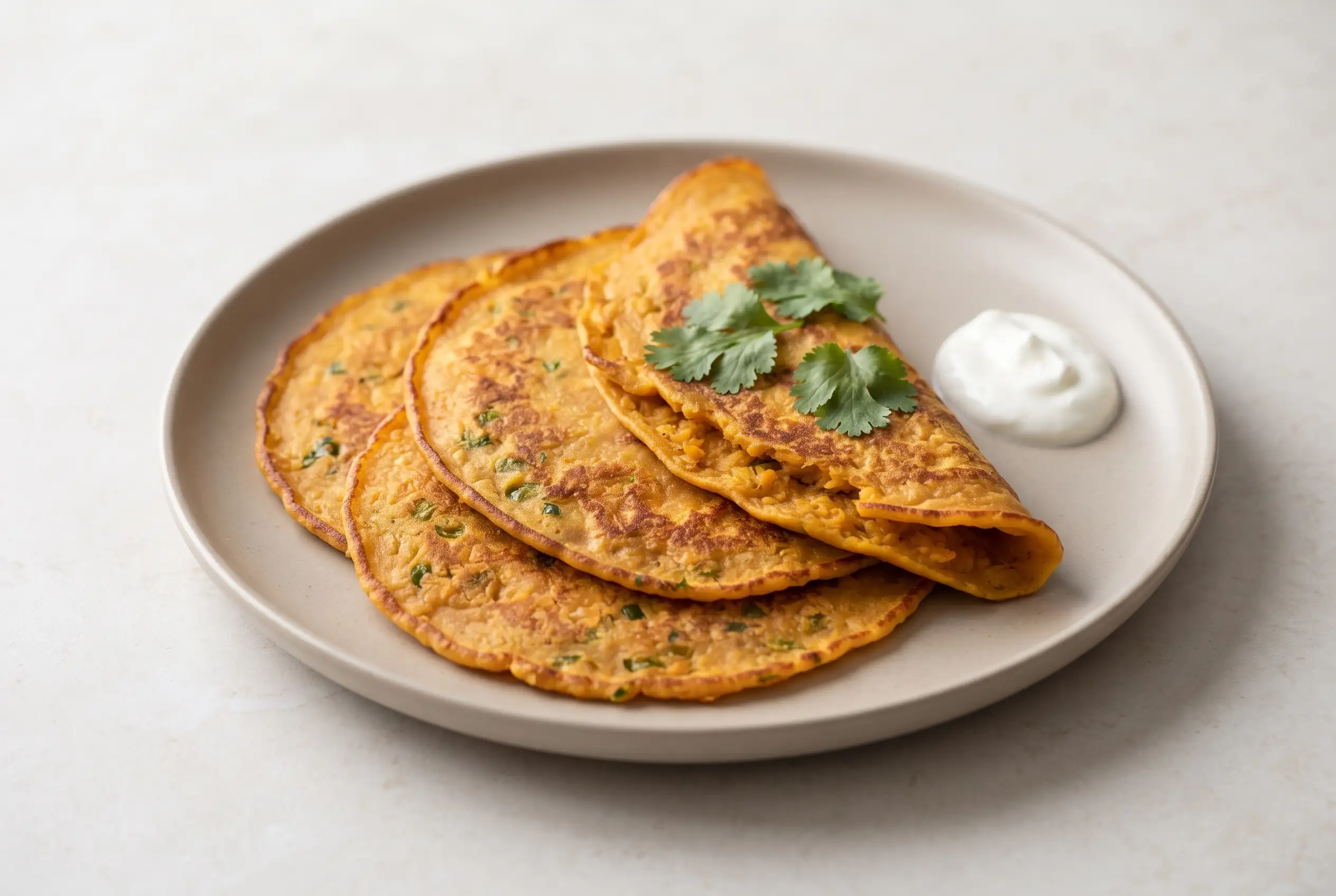
Lentil pancake turns soaked red lentils, ginger, cumin, turmeric, and green chilies into a savory meal with crisp golden edges and a tender center. The batter contains no flour or complicated binder, making the pancakes naturally gluten-free, filling, and adaptable for breakfast, lunch, dinner, or meal prep.
Unlike flour-based pancakes, the structure comes from lentils softened in water and blended until smooth. A lightly greased skillet supplies enough surface heat for browning, while medium heat gives the center time to cook without scorching the outside.
Simple pantry ingredients make these savory lentil pancakes especially useful when a quick plant-based meal needs to feel substantial. Vegetables, herbs, cheese, and different spice levels can change the character of each batch without changing the essential cooking technique.
Red Lentils Build a Smooth, Flourless Batter
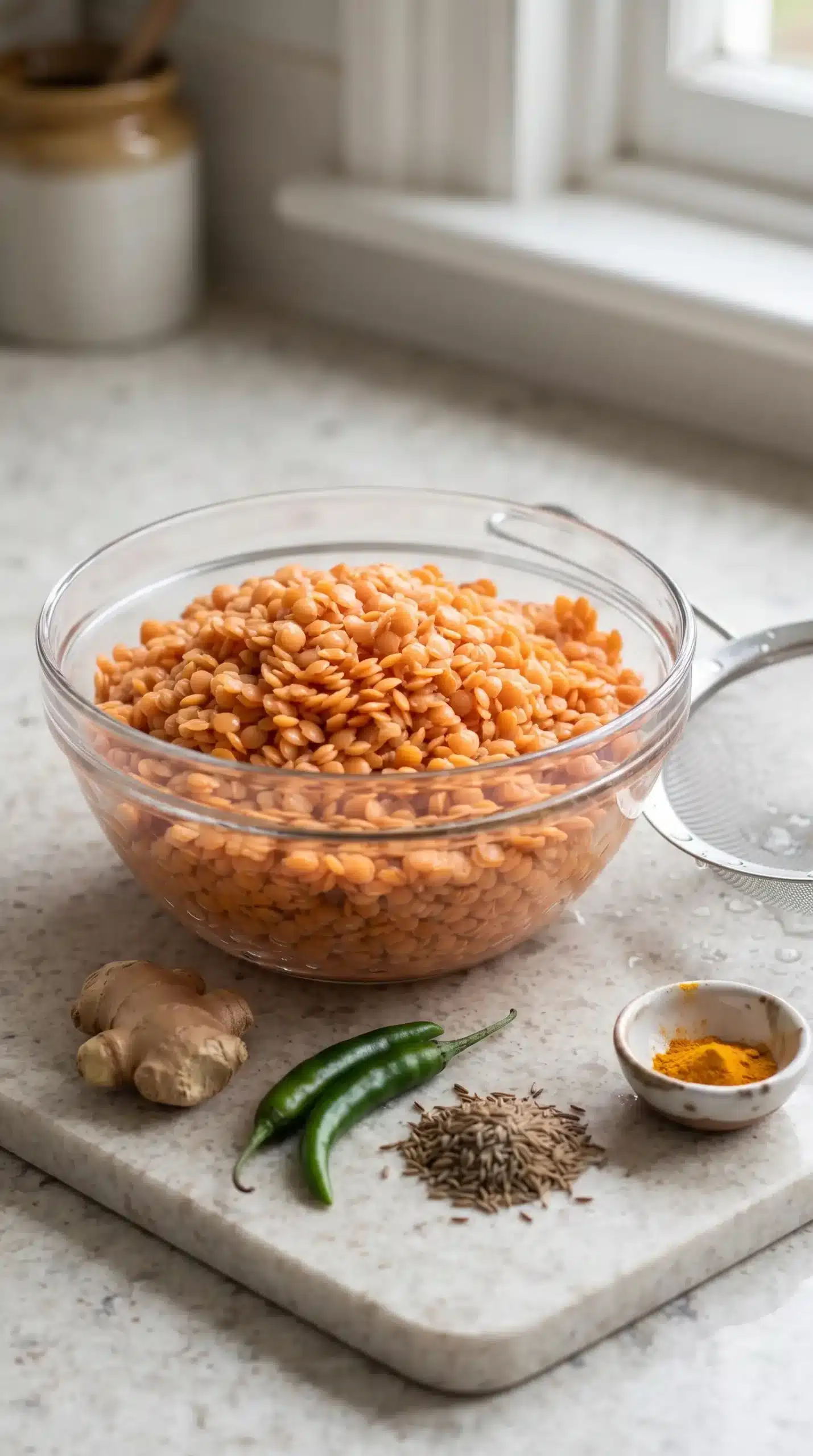
Soaked masoor dal is particularly suitable because red lentils break down more quickly than other common varieties and blend into a pourable mixture. Complete draining prevents excess soaking water from weakening the batter, while gradual additions of fresh water make it easier to stop at the correct consistency.
Batter Consistency Determines the Pancake Style
A medium-thick batter produces a soft interior with enough structure to flip cleanly. It should pour from a ladle and spread with gentle pressure, but it should not run across the skillet like water.
Thicker mixtures create smaller, softer pancakes with a more substantial center. When the batter sits heavily on the pan or resists spreading, a little water can loosen it before the next pancake is cooked.
Thinner mixtures form wider red lentil pancakes with delicate, crisp edges and an almost crepe-like finish. Excessive water, however, can make the surface fragile and cause tearing during flipping.
Optional vegetables also affect thickness. Grated carrots, chopped spinach, onions, and zucchini may contribute moisture, so add them after blending and reassess the batter before cooking.
| Batter appearance | Likely result | Useful adjustment |
|---|---|---|
| Falls slowly and spreads with help | Soft center with crisp edges | Cook as prepared |
| Stays in a thick mound | Dense, difficult-to-spread pancake | Add water gradually |
| Runs quickly across the skillet | Thin pancake with weak structure | Let the mixture rest or blend in more soaked lentils |
| Becomes looser after vegetables | Softer surface and slower browning | Use smaller portions and spread carefully |
Medium Skillet Heat Creates Crisp Edges
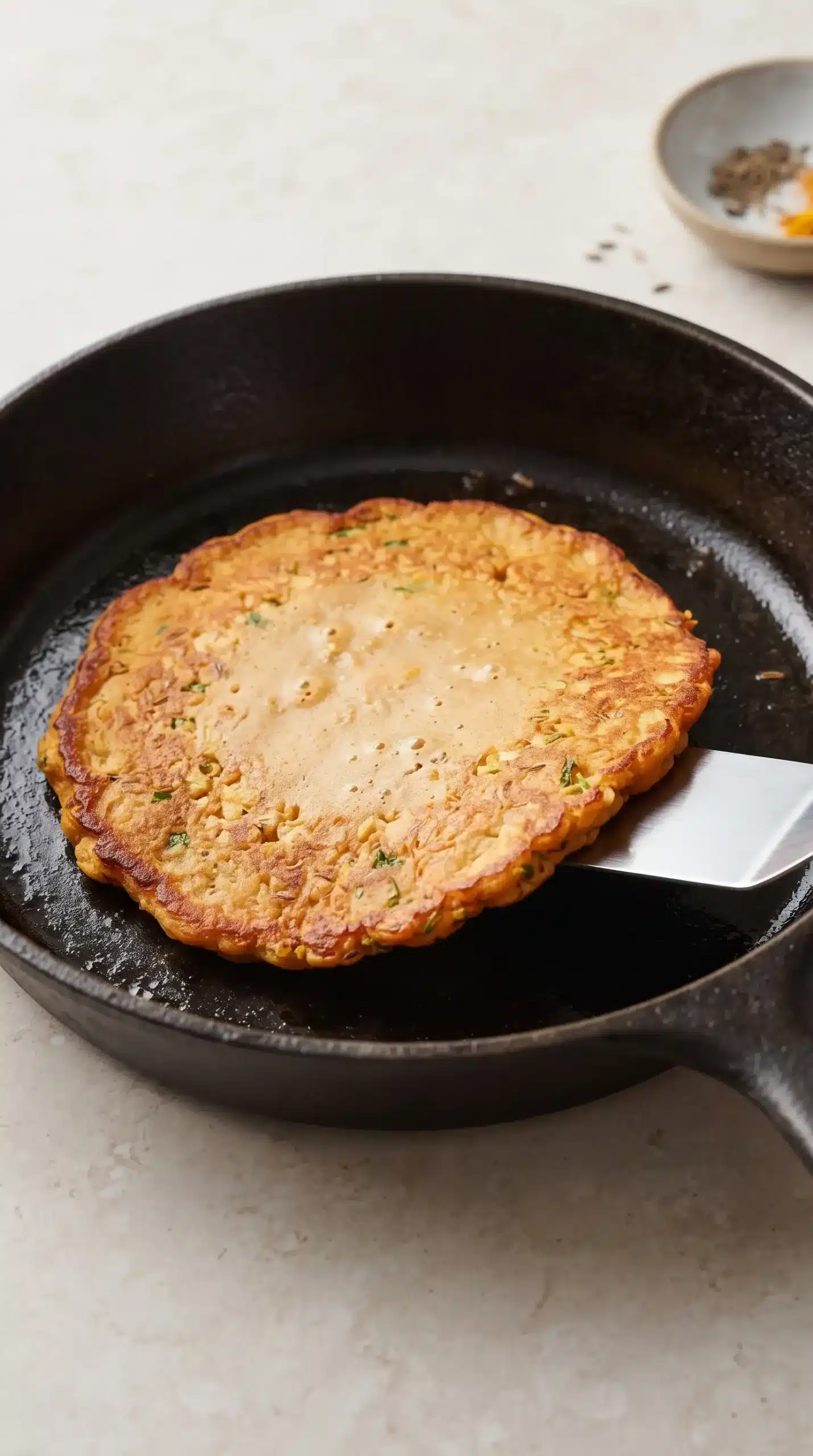
Proper preheating allows a lentil pancake to begin setting as soon as the batter reaches the skillet. A pan that is still cool encourages sticking and leaves the surface pale before the center firms.
Medium heat offers the best balance between browning and internal cooking. High heat can darken the underside before the top loses its wet appearance, creating burnt edges around an undercooked middle.
A light film of oil supports even contact with the pan and promotes a golden crust. Large pools of oil make the surface greasy and can prevent the clean, lightly crisp finish that suits the lentil batter.
Visual cues are more reliable than constant checking. The underside should release easily, the edges should look set, and the top should no longer appear completely wet before the pancake is turned.
Ginger, Cumin, and Chilies Shape the Savory Flavor
Fresh ginger brings warmth, cumin seeds provide an earthy aroma, turmeric adds mild seasoning, and green chilies supply adjustable heat. Blending these seasonings directly with the lentils distributes their flavor evenly instead of leaving concentrated pockets in the finished pancakes.
Add-Ins That Keep Lentil Pancakes Balanced
Vegetables and herbs can make a lentil pancake more colorful and varied, but finely prepared additions are easier to spread and flip than large pieces. Moist vegetables should be used with restraint because heavy additions can weaken the batter’s structure.
- For gentle sweetness: Fold in finely chopped onions or grated carrots.
- For leafy freshness: Use chopped spinach, cilantro, mint, or parsley.
- For stronger heat: Increase green chilies or add chili flakes or garam masala.
- For a softer finish: Mix in a modest amount of shredded cheese.
- For extra aroma: Add garlic alongside the ginger.
Lentil Pancake Mistakes That Weaken Texture
Under-soaked lentils remain firm enough to create a grainy mixture. Extending the soak until they are fully softened makes blending easier and produces a more cohesive pancake.
Excess blending water often causes spreading, tearing, and difficulty turning the pancake. Adding liquid in small amounts provides much better control than trying to correct an overly thin batter later.
Insufficient pan heat leads to sticking because the exterior does not set promptly. Allow the skillet to warm before adding oil and batter, then maintain steady medium heat between batches.
Frequent flipping interrupts crust development and can break the soft center. Waiting until the first side is golden and structurally firm allows the pancake to be turned once and finished cleanly.
Uneven spreading creates thin, overcooked edges around a thick, undercooked middle. Gentle circular spreading with the back of a ladle gives the crispy lentil pancake recipe a more consistent thickness.
Thickness Changes the Finished Texture
Thin pancakes emphasize crispness, browned edges, and a lighter bite, while thicker portions retain more moisture and chewiness. Neither style requires a different base mixture; small changes in water, portion size, spreading pressure, and cooking time create the distinction.
A crisp version benefits from a thinner layer and slightly longer contact with the skillet. Watch the color closely because a thin edge can move from golden to overdone faster than the center.
Softer pancakes should be kept modest in diameter so they remain easy to turn. Their tops need enough time to set before flipping, especially when vegetables or cheese are included.
Serving Pairings Add Contrast and Freshness
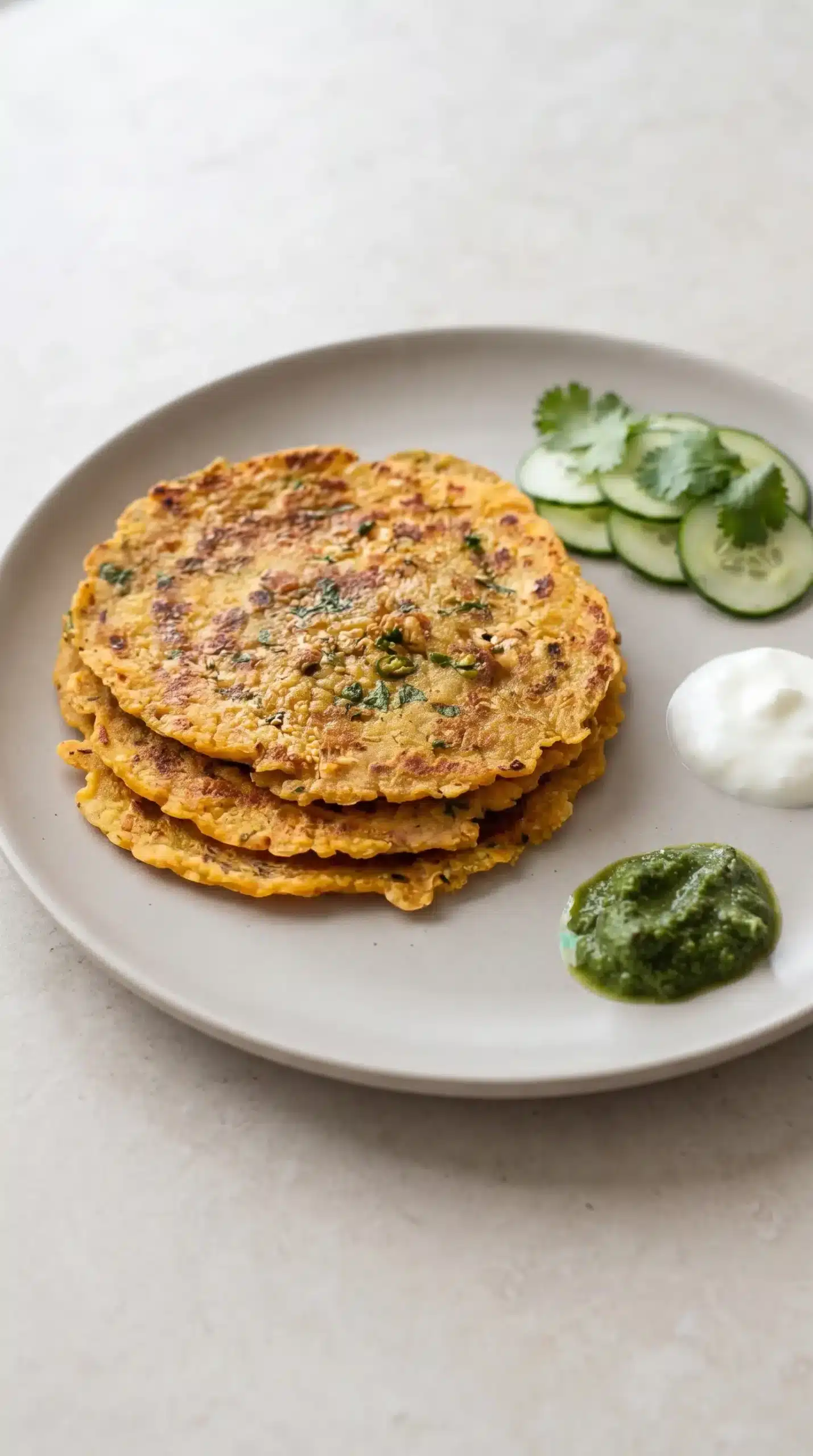
Cool, creamy, tangy, or crunchy accompaniments balance the warmth and earthiness of a lentil pancake. Yogurt and chutney soften the spice, while pickles and cucumber salad add acidity and crispness; a warming lentil soup can turn the pancakes into a more substantial plant-based meal.
- Mint chutney or tomato chutney
- Plain yogurt or mild garlic yogurt sauce
- Pickles, hummus, or cream cheese spread
- Fresh cucumber salad or a simple vegetable side
- A warming lentil, vegetable, or garbanzo bean soup
For a family-style meal, place sauces and toppings on the table separately. Mild pancakes can serve as the shared base while chili oil, hot sauce, extra herbs, and stronger chutneys remain available for diners who prefer more intensity.
Meal Prep Begins Before the Skillet Heats
Overnight soaking removes the longest passive step from the following day’s cooking. Rinsed lentils can be covered with water before bed, drained when needed, and blended with the seasonings shortly before the meal.
Prepared batter may be refrigerated for up to 24 hours. Stir it before cooking because the mixture can thicken as it rests, then add a small amount of water only when the consistency no longer spreads properly.
Pre-cut vegetables offer another practical shortcut. Shredded carrots, chopped spinach, diced onions, and prepared herbs can be folded into individual portions, allowing one basic batter to produce several variations.
Batch cooking works best when finished pancakes are allowed to cool without being tightly stacked while hot. Trapped steam softens their crust, so separate them until the surface heat has dissipated.
Storage and Reheating Preserve More Crispness
Cooked pancakes keep in an airtight container in the refrigerator for up to three days. Cooling them first reduces condensation, which helps prevent the surfaces from becoming unnecessarily damp.
Freezer storage is suitable for up to two months when parchment paper separates the layers. Individual separation makes it possible to remove only the amount needed without thawing an entire stack.
Skillet reheating restores the exterior most effectively because the pancake returns to direct dry heat. An oven or air fryer also works well when several portions need warming at once.
Long microwave heating softens the browned edges by creating steam. When speed is essential, brief microwave warming followed by a short skillet finish can improve the texture.
Family Adaptations Keep One Batch Flexible
Mild batter can be prepared without green chilies for children or spice-sensitive diners. Ginger and cumin still provide savory flavor, while shredded cheese can make the interior softer and more familiar.
Mini pancakes are easier for small hands, quicker to turn, and useful for lunchboxes or snack plates. Cutting larger pancakes into strips or triangles also makes them convenient for dipping into yogurt, hummus, or mild sauces.
Smooth vegetable additions may be more appealing to selective eaters. Spinach, carrots, or onions can be blended into the lentil mixture so their flavor and color remain without noticeable pieces.
Budget Cooking Favors Flexible Vegetables
Dry lentils, small amounts of pantry spices, and minimal cooking oil keep the main batter economical. Leftover spinach, carrots, zucchini, onions, or herbs can be incorporated in small quantities, helping turn odds and ends into a complete meal instead of requiring specialty purchases.
Simple Equipment Supports Reliable Results
A blender, fine-mesh strainer, ladle, spatula, and evenly heating skillet cover the essential work. Non-stick cookware simplifies release, while a well-seasoned cast-iron pan or griddle can provide strong browning for larger batches once properly preheated.
A Smooth Batter and Steady Heat Define the Best Lentil Pancake
Fully softened lentils create the cohesive foundation that allows the pancake to cook without flour, while controlled water determines whether the result is tender, crisp, or somewhere between the two. The skillet then completes the structure through steady medium heat and a light coating of oil.
Golden edges, a set surface, and easy release are the clearest signs that the balance is working. Once those cues become familiar, the same batter can support mild family portions, vegetable-packed meals, thin crispy rounds, or thicker savory lentil pancakes without losing its dependable character.
Lentil Pancake Batter, Sticking, and Freezing Questions
Can brown lentils or split peas replace red lentils?
They may be used as substitutes, but red lentils are the easiest option for creating a smooth batter quickly. Other varieties may need more soaking and may produce a different color or slightly coarser texture.
Why does the batter become thicker in the refrigerator?
The blended lentils continue absorbing moisture while the batter rests. Stir thoroughly before cooking and add water gradually until it returns to a smooth, pourable consistency.
Can the pancakes be cooked without oil?
A reliable non-stick skillet can cook them without added oil, although a light coating noticeably improves browning, release, and edge crispness.
Why does a lentil pancake stick even in a non-stick pan?
The skillet may not be fully preheated, the surface may need light greasing, or the pancake may be turned before its underside has set and released naturally.
Should frozen pancakes be thawed before reheating?
Thawing is not essential when the pancakes are separated individually. They can be warmed from frozen in a skillet, oven, or air fryer until the center is hot and the exterior regains some crispness.
Can the batter be made completely mild?
Green chilies and chili flakes can be omitted while ginger, cumin, turmeric, and salt remain in place. Mild toppings can then be served alongside stronger condiments for anyone who wants additional heat.
Lentil Pancake with Red Lentils and Green Chilies Recipe
Ingredients
Method
- Rinse the red lentils thoroughly, then soak them in water for at least 2 hours until softened.
- Drain the soaked lentils and blend with green chilies, ginger, turmeric powder, cumin seeds, and salt, adding water gradually to create a smooth, pourable batter.
- Warm a non-stick skillet over medium heat and lightly coat the surface with oil.
- Pour the lentil batter onto the skillet and spread it into round pancakes.
- Cook for 2–3 minutes until the first side is golden, then turn the pancakes carefully.
- Cook the other side for another 2–3 minutes until fully set and crisp at the edges.
- Serve the lentil pancakes hot with yogurt, chutney, pickles, or fresh salad.