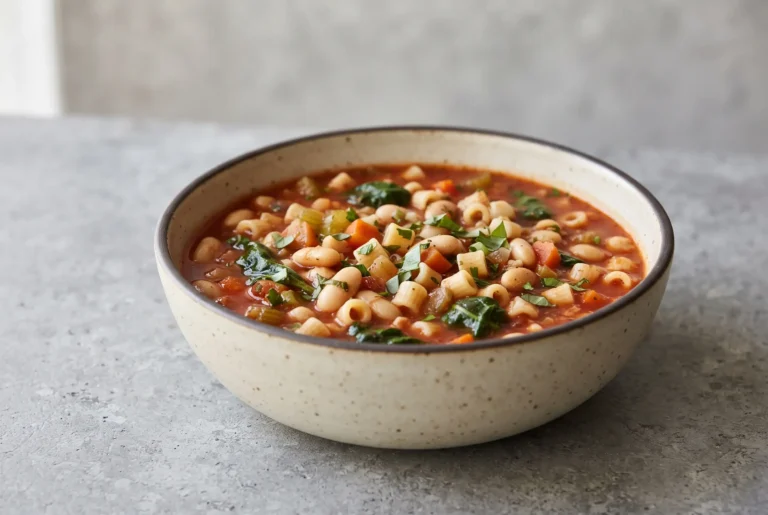
French Onion Short Rib Soup with Toasted Sourdough
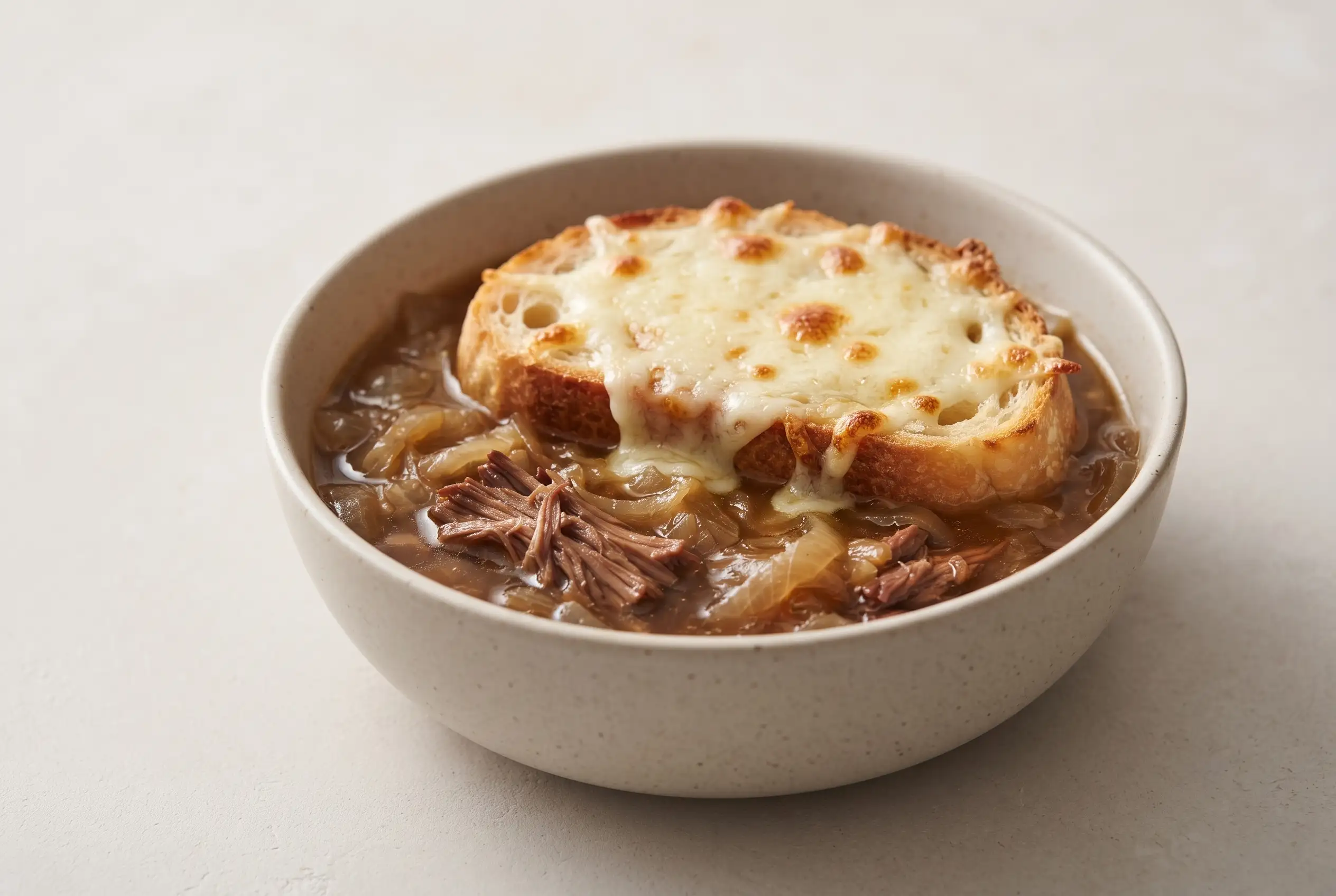
French onion short rib soup combines deeply caramelized yellow onions, fork-tender beef, savory broth, toasted sourdough, and melted Gruyère in one substantial bowl. The familiar sweetness and cheesy finish of French onion soup become even richer when short ribs simmer directly in the broth.
Careful heat control drives the best results. The onions need enough time to soften and turn golden without scorching, while the beef benefits from firm browning followed by a gentle simmer. Once the meat is tender, sturdy bread and freshly grated cheese create the crisp, bubbling finish that makes the soup feel complete.
Short Ribs Turn French Onion Soup Into a Full Meal
Traditional onion soup often depends on bread and cheese for much of its substance. Short ribs change that balance by adding tender meat and a naturally fuller broth, so each serving feels closer to a slow-cooked beef dinner than a light starter.
As the ribs cook, their connective tissue softens and the meat becomes easy to pull apart. The broth develops a silky quality without flour, starch, or a heavy cream base. That body supports the sweet onions while keeping the soup spoonable instead of turning it into a thick stew.
The contrast is especially important. Soft onions and shredded beef sit beneath bread that remains crisp around the edges, while Gruyère melts across the top. A well-made french onion short rib soup should deliver several textures in each spoonful without allowing any one element to overwhelm the others.
Onion Color Determines the Broth’s Character
Three large yellow onions provide the central flavor foundation. Even slices cook more predictably, so a sharp chef’s knife or mandoline helps prevent thin pieces from burning before thicker pieces soften.
Butter and moderate heat allow the onions to lose moisture gradually. They should progress from firm and pale to soft, golden, and lightly jammy. Stirring occasionally gives them time to remain in contact with the pot, which encourages browning while still letting the cook monitor the bottom.
Very dark onions can bring welcome intensity, but scorched edges introduce bitterness that spreads through the entire pot. A small splash of broth or water loosens any areas that begin sticking too firmly and buys additional cooking time without adding more fat.
Choosing Beef, Broth, Bread, and Cheese
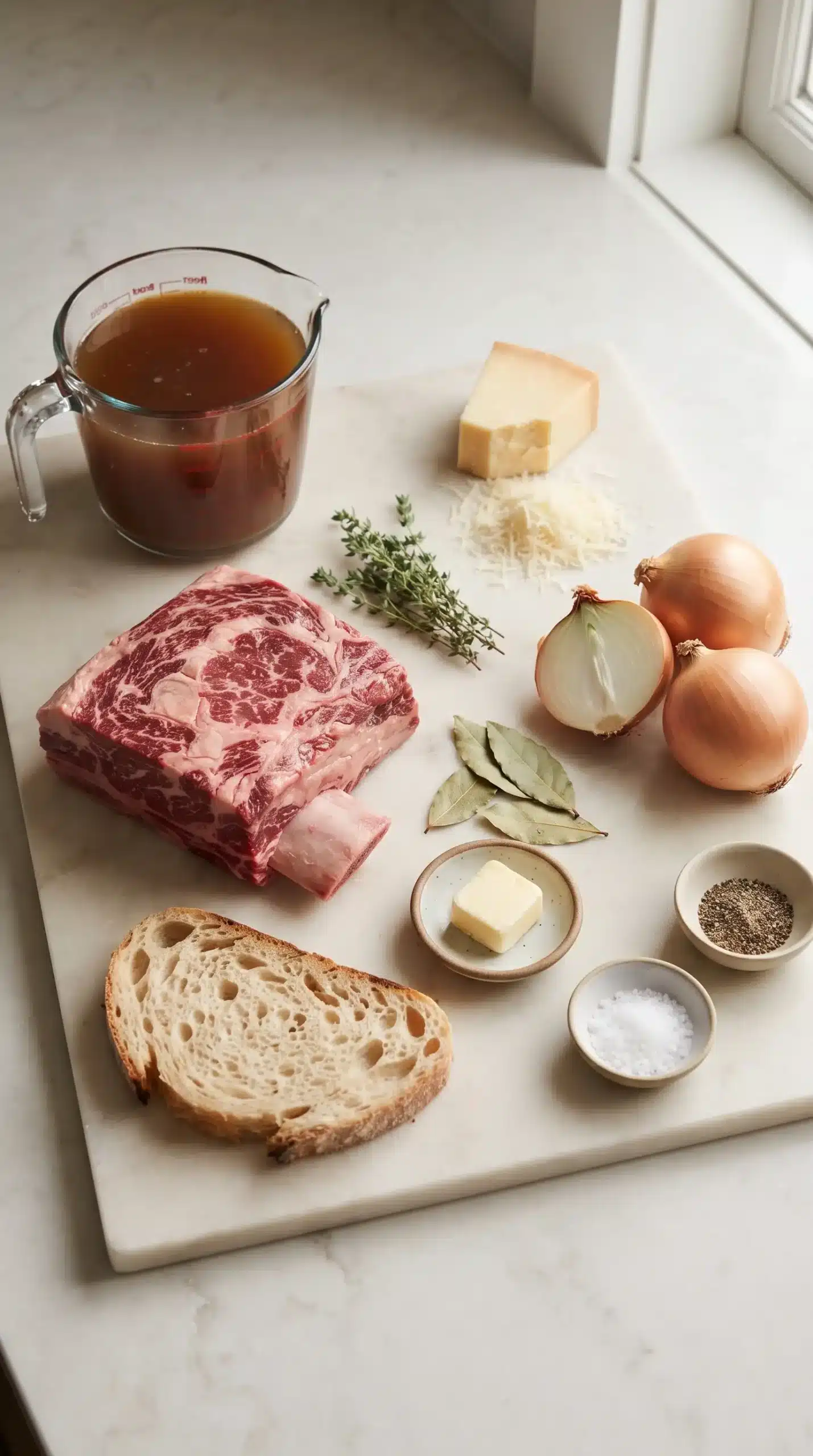
Bone-in or boneless short ribs can both suit french onion short rib soup, provided the meat has enough marbling to remain succulent during simmering. Beef chuck roast offers a practical substitute because it also becomes shreddable with slow, moist cooking, while ordinary stew meat may vary more in tenderness.
| Component | Best Choice | Useful Alternative | Effect on the Bowl |
|---|---|---|---|
| Beef | Short ribs | Chuck roast | Short ribs create greater richness; chuck keeps the soup hearty at a lower cost |
| Cheese | Gruyère | Swiss or provolone | Gruyère adds nutty depth; substitutes provide a milder finish |
| Bread | Sourdough | Baguette or French bread | Sturdy slices absorb broth slowly and retain structure |
| Broth | Flavorful beef broth | Low-sodium beef broth | Low-sodium broth gives greater control over the finished seasoning |
Freshly grated cheese generally melts more evenly across the bread than pre-shredded cheese. Thick slices of sourdough or baguette also perform better than soft sandwich bread, which can collapse quickly once it touches the hot broth.
A Deep Sear Builds the Savory Base
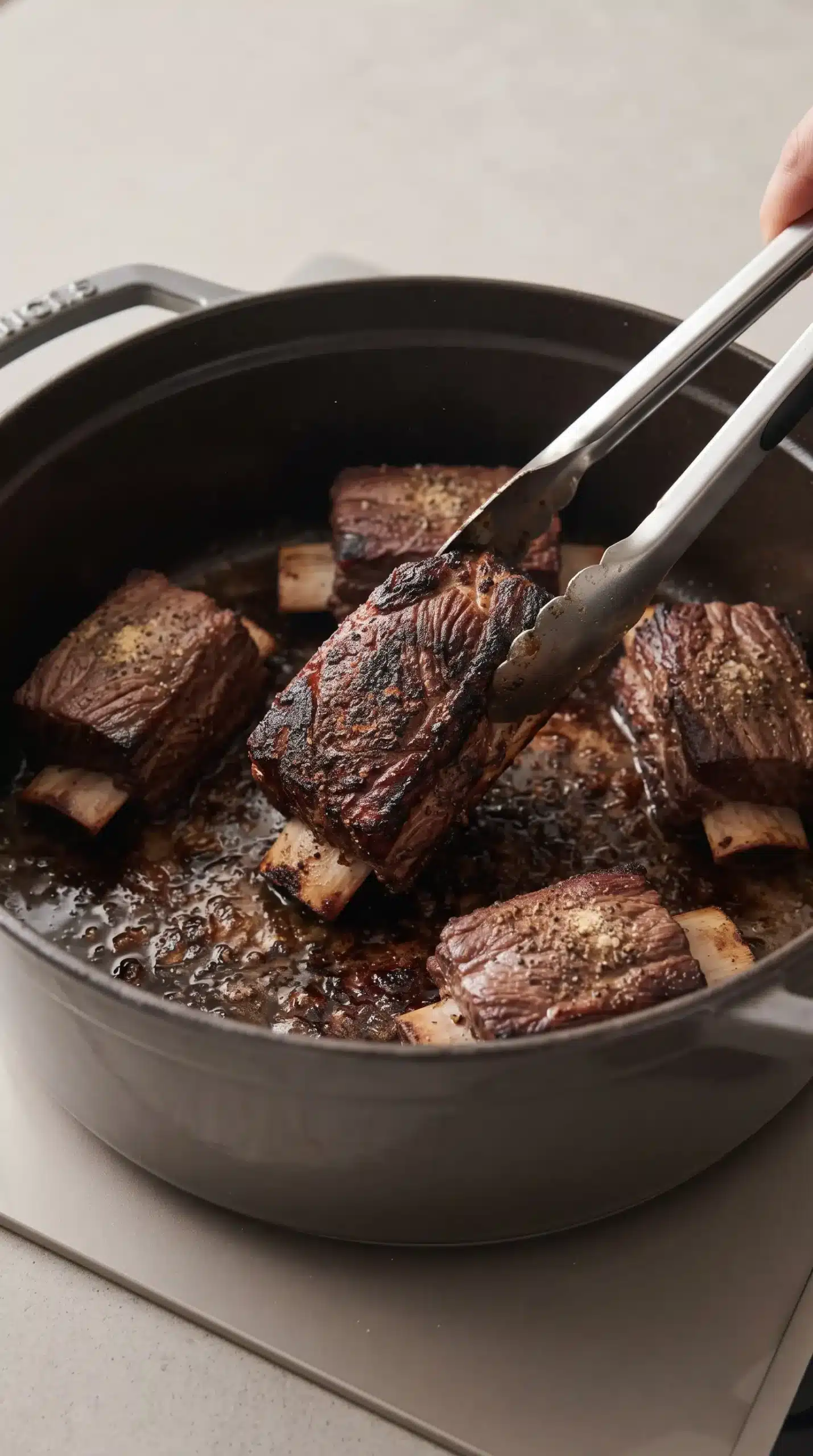
Dry, well-seasoned short ribs brown more effectively than damp meat. Pressing the surface with paper towels before seasoning helps the exterior develop a dark crust instead of steaming in released moisture.
Give each piece enough room against the bottom of the Dutch oven. Crowding lowers the surface temperature and causes liquid to collect, so working in batches is preferable when the pot cannot hold the ribs comfortably in one layer.
After browning, broth loosens the concentrated bits attached to the pot. Scraping those deposits into the liquid preserves flavor that would otherwise remain behind, giving the finished beef short rib soup a noticeably deeper savory foundation.
Gentle Simmering Protects Beef Tenderness
Once broth, thyme, and bay leaves enter the pot, a quiet simmer is more useful than a forceful boil. Small, steady bubbles soften the ribs while allowing the onions and beef juices to integrate gradually.
Rapid boiling can tighten the meat’s outer fibers and evaporate liquid too quickly. Keep the pot partially monitored, reduce the heat whenever the surface becomes turbulent, and add a little broth only if the ribs are no longer adequately surrounded by liquid.
Fork tenderness is the clearest doneness signal. The meat should pull apart with little resistance, and any bones should release cleanly. A fixed clock cannot account for every rib’s thickness, marbling, or bone structure, so texture remains the more dependable guide.
During prolonged moist cooking, collagen converts into tender gelatin, so the ribs may need more time even after an estimated cooking window has passed. Their texture is therefore a more reliable endpoint than the clock alone.
Bread and Gruyère Need a Separate Finish
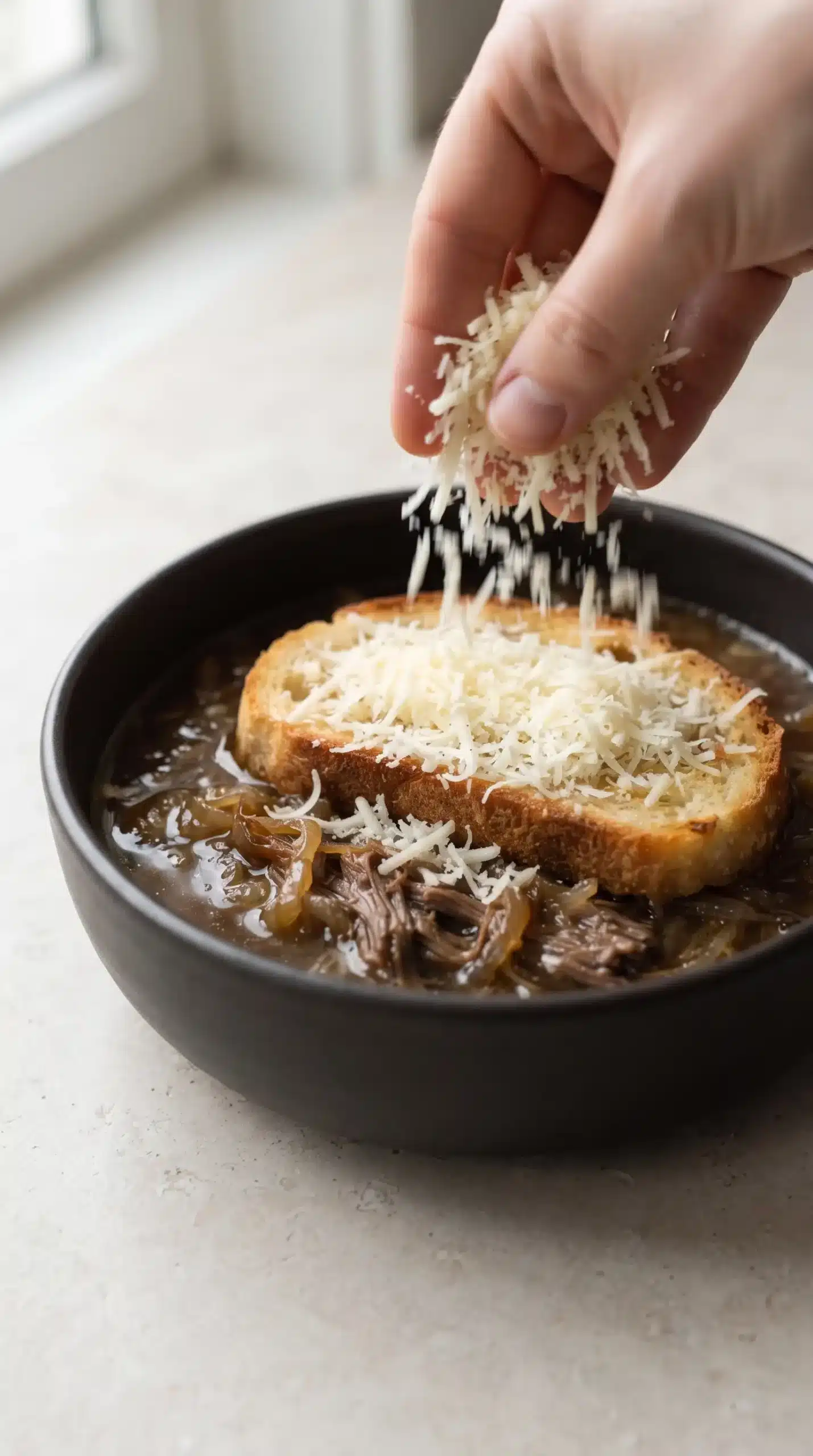
Toasted bread should enter the bowl only after the soup is fully cooked. Pre-toasting dries the surface, helping the slice absorb broth more slowly while keeping some chew and crispness near its edges.
Oven-safe bowls allow the cheese to melt directly over each serving. Shredded Gruyère should cover the bread generously enough to form a connected layer, yet not so heavily that the cheese masks the onion and beef beneath it.
Baking the assembled bowls at 350°F (175°C) produces a bubbling, golden topping. Serve carefully, since the bowls retain heat long after leaving the oven, and let each portion stand briefly so the cheese settles without becoming firm.
Flavor Variations That Preserve the Onion Base
- Wine-enriched: Add red wine before the broth and let it reduce slightly so its flavor concentrates without thinning the soup.
- Vegetable-heavy: Include carrots, celery, or mushrooms for a more stew-like bowl while keeping onions dominant.
- Gently spicy: Add chili flakes or a small amount of cayenne for warmth that does not overpower the Gruyère.
- Extra creamy: Stir in a splash of cream near the end for a softer, rounder broth.
- Family-friendly: Chop onions into smaller pieces, shred the beef finely, and use mild Swiss or mozzarella.
French Onion Short Rib Soup Mistakes to Avoid
Cooking onions over high heat is the most damaging shortcut. Dark specks may appear quickly, but the interiors remain sharp and firm, leaving bitterness without the rounded sweetness that defines french onion beef soup.
Adding wet ribs to a crowded pot creates another common problem. Pale meat and excess liquid indicate steaming, not searing. Remove some pieces, allow the pot to regain heat, and brown the ribs in smaller batches.
Boiling the broth hard can leave the meat less tender and reduce the liquid before the connective tissue has softened. Lower the heat as soon as the surface becomes aggressive, then continue until the beef shreds easily.
Thin bread and unmelted cheese weaken the finish. Toast a sturdy slice first, grate the cheese finely, and give the assembled bowl enough oven time for a cohesive golden cap.
A Practical Cooking Timeline
| Stage | Main Action | Observable Sign |
|---|---|---|
| Preparation | Slice onions, dry the beef, and season thoroughly | Even onion slices and a dry meat surface |
| Onion cooking | Cook slowly in butter | Soft, golden strands with no scorched patches |
| Browning | Sear the short ribs in uncrowded batches | A dark crust forms on several sides |
| Simmering | Cook with broth, thyme, and bay leaves | Beef pulls apart easily with a fork |
| Cheese finish | Top with toasted bread and Gruyère | Cheese bubbles and develops golden areas |
Serving Choices That Balance the Richness
A crisp green salad provides the clearest contrast to french onion short rib soup, especially when the dressing has enough acidity to cut through the beef and cheese.
Roasted Brussels sprouts, buttered asparagus, garlic green beans, or other plainly seasoned vegetables also suit the meal. Their firmer texture keeps the plate from feeling uniformly soft.
Fresh thyme, chopped parsley, cracked black pepper, or a small amount of Parmesan can finish each bowl. Additional bread is rarely necessary because the toasted topping already supplies starch and structure.
Storage Works Best Without the Topping
Cool the soup before transferring it to airtight containers, and keep bread and cheese separate. Refrigerated portions remain suitable for up to three days, while the plain soup base can be frozen for up to two months.
Reheating Without Toughening the Beef
Warm the soup gradually over medium-low heat and avoid a rolling boil. Once the broth is steaming and the beef is heated through, transfer it to oven-safe bowls and add newly toasted bread with fresh cheese for a texture close to the original serving.
Make-Ahead Work That Saves the Most Time
Caramelized onions can be prepared in advance and refrigerated, removing the most attention-intensive stage from the day of serving. Cheese may also be grated ahead and stored tightly covered.
Cooking a double batch of onions can make the prep time more worthwhile: reserve one portion for the soup and refrigerate the rest for a French onion meatloaf later in the week. Cool the extra onions promptly and store them in a covered container before mixing them into the second dish.
- Cook and cool the onion-beef soup base.
- Remove the bay leaves and separate any bones from the tender meat.
- Refrigerate the soup without bread or cheese.
- Reheat gently, then assemble individual bowls just before serving.
Preparing the complete base a day early can improve convenience because the meat is easier to shred once handled carefully, and any firm fat on the chilled surface can be removed before reheating when a lighter bowl is preferred.
Budget Swaps That Keep the Soup Satisfying
Chuck roast is the most useful cost-saving replacement for short ribs because it still supports slow cooking and shredding. Swiss cheese can stand in for Gruyère, while day-old French bread becomes an effective topping after thorough toasting.
Increasing the onions and broth while reducing the beef slightly stretches the pot without removing its defining character. Since caramelized onions carry so much flavor, the finished french onion short rib soup can remain substantial even with a more moderate amount of meat.
Good broth deserves priority when deciding where to spend. A weak base remains noticeable after simmering, whereas careful browning, fresh thyme, and deeply cooked onions can make a straightforward broth taste considerably more developed.
Patient Heat Creates the Most Complete Bowl
Golden onions, darkly seared ribs, and a quiet simmer form the essential chain behind successful french onion short rib soup. Rushing any one of those stages weakens the next, while steady heat allows sweetness, browning, and tenderness to build in sequence.
Fork-tender beef and properly toasted bread provide the clearest proof that the soup is ready to serve. When both textures are present beneath a bubbling Gruyère topping, the short rib French onion soup retains the character of the classic dish while offering the substance of a complete dinner.
Tenderness, Storage, and Substitution Questions
How can I tell when the short ribs are tender enough?
Insert a fork into the thickest piece and twist gently. Properly cooked meat separates with little resistance and releases easily from the bone; firm or springy meat needs additional gentle simmering.
Can boneless short ribs replace bone-in ribs?
Boneless ribs work well and are easier to portion, though bone-in pieces may give the broth a slightly fuller character. Use tenderness, not bone separation alone, to judge when they are finished.
Why did my onions taste bitter?
Bitterness usually points to scorched onion edges or burned residue on the bottom of the pot. Lower the heat, stir before dark patches form, and loosen sticky areas with a small amount of liquid.
Can the soup be made gluten-free?
Choose a gluten-free beef broth and replace the sourdough with sturdy gluten-free bread. Toast the bread thoroughly so it retains structure after being placed over the hot broth.
What should I do if the broth tastes too strong after reheating?
Add a small amount of unsalted or low-sodium broth and warm gently until the flavor is balanced. Fresh parsley or thyme can also brighten a concentrated bowl without changing its basic character.
French Onion Short Rib Soup with Toasted Sourdough
Ingredients
Method
- Dry the beef short ribs with paper towels, season with salt and black pepper, and leave them at room temperature for 15 minutes.
- Melt the unsalted butter in a large Dutch oven or heavy soup pot over medium heat.
- Add the sliced onions and cook for 25–30 minutes, stirring occasionally, until soft and deeply browned.
- Set the caramelized onions aside in the pot, then sear the short ribs on all sides until well browned, cooking in batches if necessary.
- Add the beef broth and scrape the browned bits from the bottom of the pot, then stir in the fresh thyme leaves and bay leaves.
- Bring the soup to a gentle simmer, lower the heat, and cook uncovered for about 2 hours until the short ribs are tender and easy to shred.
- Remove the bay leaves, shred the cooked short rib meat, and return it to the soup if desired.
- Transfer the soup into oven-safe bowls, then top each bowl with toasted sourdough bread and shredded Gruyère cheese.
- Bake the topped bowls at 350°F / 175°C for 15–20 minutes until the cheese is melted, bubbling, and golden brown.
- Allow the soup to rest briefly, then serve hot.