Chocolate Marshmallow Cookies with Chocolate Chips
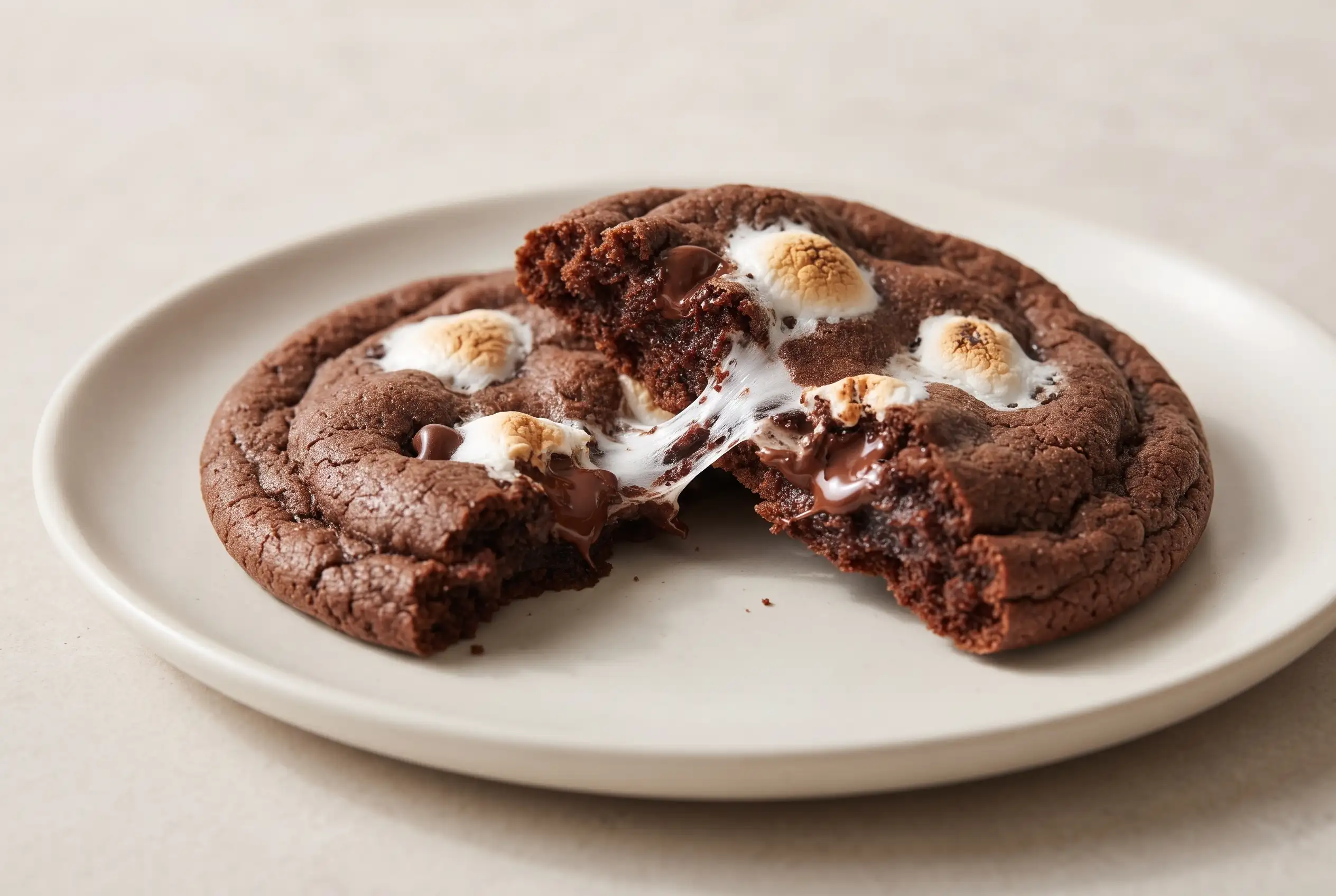
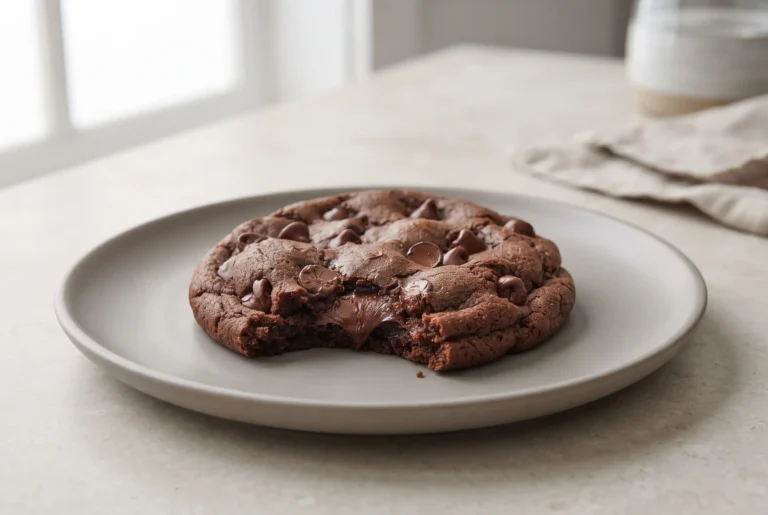
Chocolate marshmallow cookies bring together fudgy cocoa dough, melted marshmallow pockets, and chocolate chips in a soft bakery-style cookie with crisp edges and chewy centers. Each bite lands somewhere between a brownie, a mug of hot chocolate, and a chocolate-covered s’more, yet the dough relies on familiar pantry ingredients and straightforward mixing.
Fresh from the oven, the marshmallows are stretchy and intensely gooey while the chocolate remains molten. A brief rest on the baking sheet gives the cookies enough structure to move without losing the soft middle that makes them so satisfying.
Holiday trays, cookie exchanges, parties, and ordinary chocolate cravings all suit this easy marshmallow cookie recipe. The dough can be baked immediately for a thinner cookie or chilled when a thicker bakery-style shape is preferred.
Why Chocolate and Marshmallow Create a Layered Cookie
Cocoa dough provides a deep base flavor that keeps the sweetness of the marshmallows and chocolate chips from tasting one-dimensional. Granulated sugar supports crisp edges, while brown sugar holds moisture in the center and contributes a subtle caramel note.
Small marshmallows behave differently across the surface. Pieces enclosed by dough soften into creamy pockets, while exposed pieces can expand, toast lightly, or become pleasantly chewy around the edges.
Chocolate chips complete the contrast by remaining smoother and denser than the marshmallow. Once the cookies cool slightly, every portion can contain crisp dough, a chewy interior, sticky marshmallow, and soft chocolate in the same bite.
- Crisp perimeter: The outer dough sets first and gives each cookie enough structure to hold its shape.
- Fudgy middle: Cocoa, butter, eggs, and brown sugar create a soft center with a brownie-like character.
- Gooey pockets: Mini marshmallows melt in scattered areas instead of forming one oversized sticky center.
- Chocolate contrast: Chips add smooth, concentrated chocolate between the lighter marshmallow pockets.
Ingredient Choices That Improve the Chocolate Dough
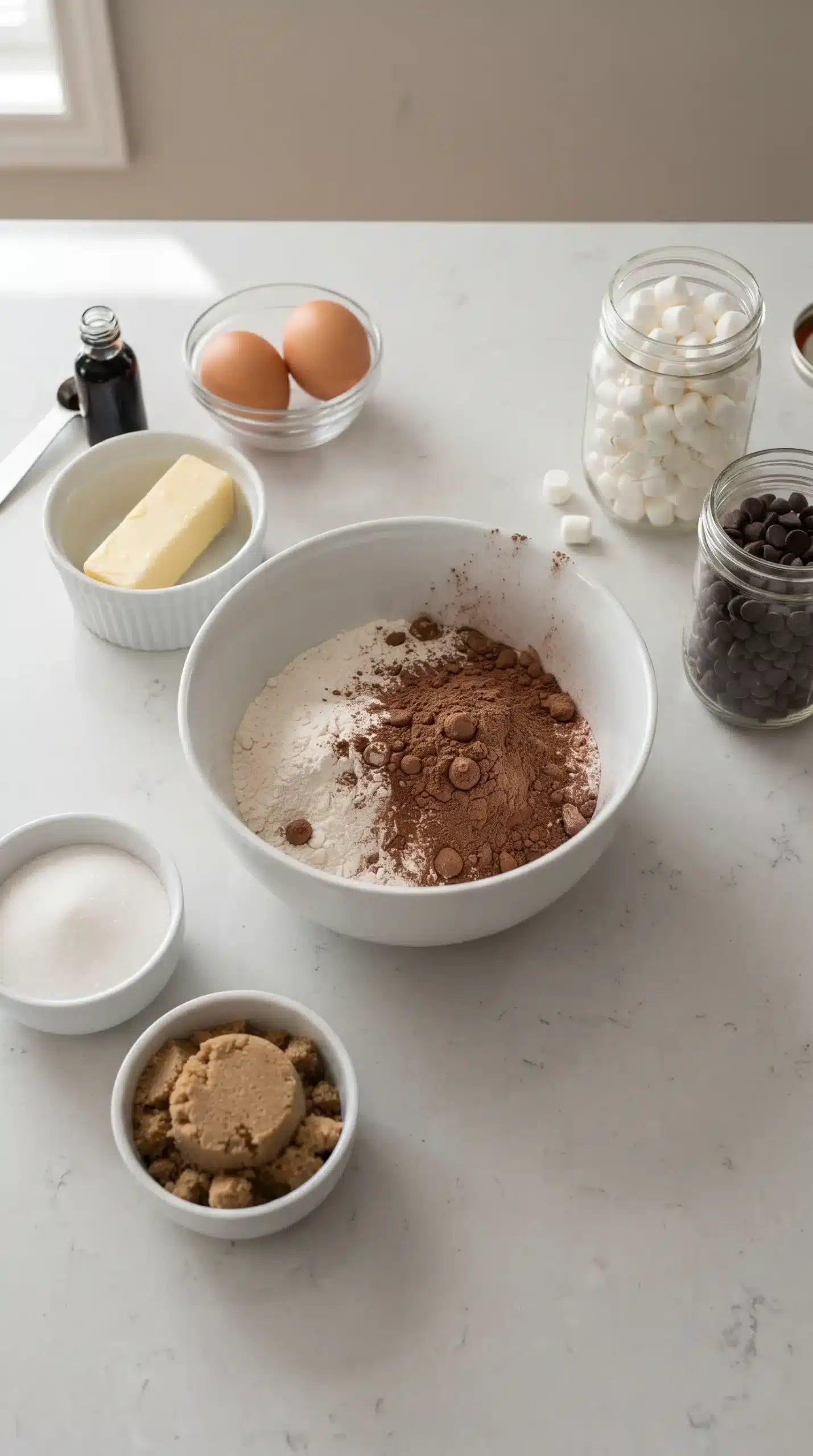
Room-temperature unsalted butter creams more evenly with both sugars than firm butter. The mixture should become visibly lighter and fluffier before the eggs are added, because poorly softened butter can leave dense streaks and uneven spreading.
Unsweetened cocoa powder supplies the dominant chocolate flavor. Dutch-process cocoa may produce a darker appearance and a richer impression, while standard unsweetened cocoa keeps the flavor familiar and direct.
Brown sugar should not be treated as interchangeable with the full quantity of granulated sugar. Its added moisture supports the chewy center associated with bakery style chocolate cookies, and dark brown sugar can deepen the caramel character further.
Mini marshmallows distribute most evenly through the thick dough. Large marshmallows may also be used when cut into small pieces, although uneven chunks can create larger sticky areas that are harder to lift from the pan.
Chip selection changes the balance of sweetness. Milk chocolate makes the cookies sweeter, while dark chocolate sharpens the cocoa intensity. A double chocolate chip cookie level of chocolate can overpower the marshmallow pockets, so keep the total chip quantity moderate when using strongly flavored dark or mint chips.
Marshmallow Placement Controls the Gooey Finish
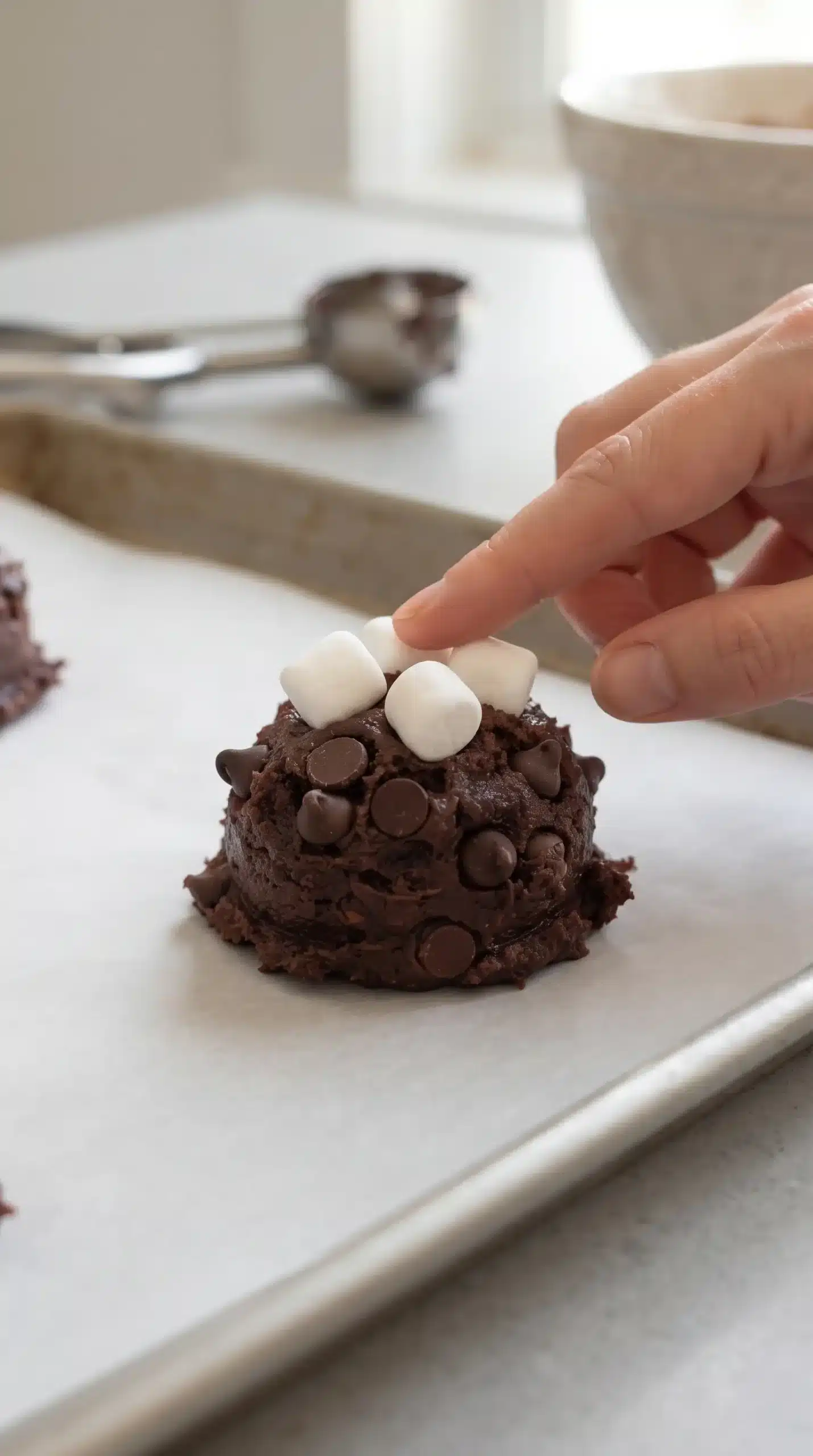
Fold most marshmallows gently into the dough, then reserve a few pieces for the tops of the scooped portions. Covered pieces create hidden molten pockets, while visible pieces give gooey chocolate marshmallow cookies their dramatic bakery-window appearance; avoid packing too many pieces against the underside, where melted sugar can stick to the baking sheet.
Dough Consistency Reveals Whether the Cookies Will Spread
Properly mixed dough should be thick enough to hold a rounded scoop without appearing dry or crumbly. Flour and cocoa absorb moisture quickly, so measuring either ingredient too generously can produce cookies that remain domed and fail to spread.
Once the dry mixture enters the butter mixture, gentle handling matters. Stop mixing when no obvious flour streaks remain, because continued beating can make the baked centers denser than intended.
Immediate baking produces a softer, wider cookie. Chilling the dough firms the butter, slows spreading, and encourages a thicker profile, although an extended chill may require the portions to soften briefly before they spread normally.
| Dough or Cookie Sign | Likely Cause | Useful Adjustment |
|---|---|---|
| Dough looks crumbly | Flour or cocoa may be overmeasured | Check that the dry ingredients were measured without packing |
| Cookies stay very tall | Dough may be too cold | Let scooped portions sit briefly before baking |
| Cookies spread too widely | Butter may be overly warm | Chill the dough until it feels firmer |
| Marshmallow sticks underneath | Too many pieces touch the pan | Tuck exposed bottom pieces back into the dough |
Oven Control Keeps the Centers Soft
A fully preheated oven gives the dough a predictable start. Baking before the oven reaches the intended temperature can allow excess spreading while the butter melts slowly.
Rounded tablespoon portions need space because both the dough and marshmallows expand. Crowded pans encourage joined edges and make sticky marshmallow patches more difficult to separate cleanly.
Visual cues are more useful than waiting for the centers to look firm. Remove the cookies when the edges appear set but the middles still look slightly soft, since residual heat continues cooking them on the pan.
Parchment paper or a silicone liner simplifies cleanup when melted marshmallow escapes. Bare pans can still work, but any exposed sugary patch is more likely to adhere as it cools.
Several minutes of undisturbed cooling are essential. Moving the cookies immediately can tear the soft centers, drag melted marshmallow across the pan, or collapse the shape before the dough has finished setting.
Mistakes That Spoil Chocolate Marshmallow Cookies
Overbaking is the most damaging error because dark cocoa dough does not show browning clearly. Waiting for the entire cookie to look firm can leave the centers dry after cooling.
Cold butter creates another preventable problem. Firm pieces resist proper creaming, producing an uneven mixture that may bake into dense cookies with inconsistent edges.
Excess marshmallows can overwhelm the dough’s structure. More filling does not always create a better result; an overloaded portion may spread irregularly, stick heavily, or leave hollow gaps after the marshmallow collapses.
Heavy mixing after the flour is added can remove the tender quality expected from chocolate marshmallow cookies. A spatula or low mixer speed gives better control once the dough becomes thick.
Premature transfer often damages otherwise well-baked cookies. Leave them on the baking sheet until the edges feel stable enough to support the soft center, then move them to a wire rack.
Warm and Cooled Cookies Offer Different Textures
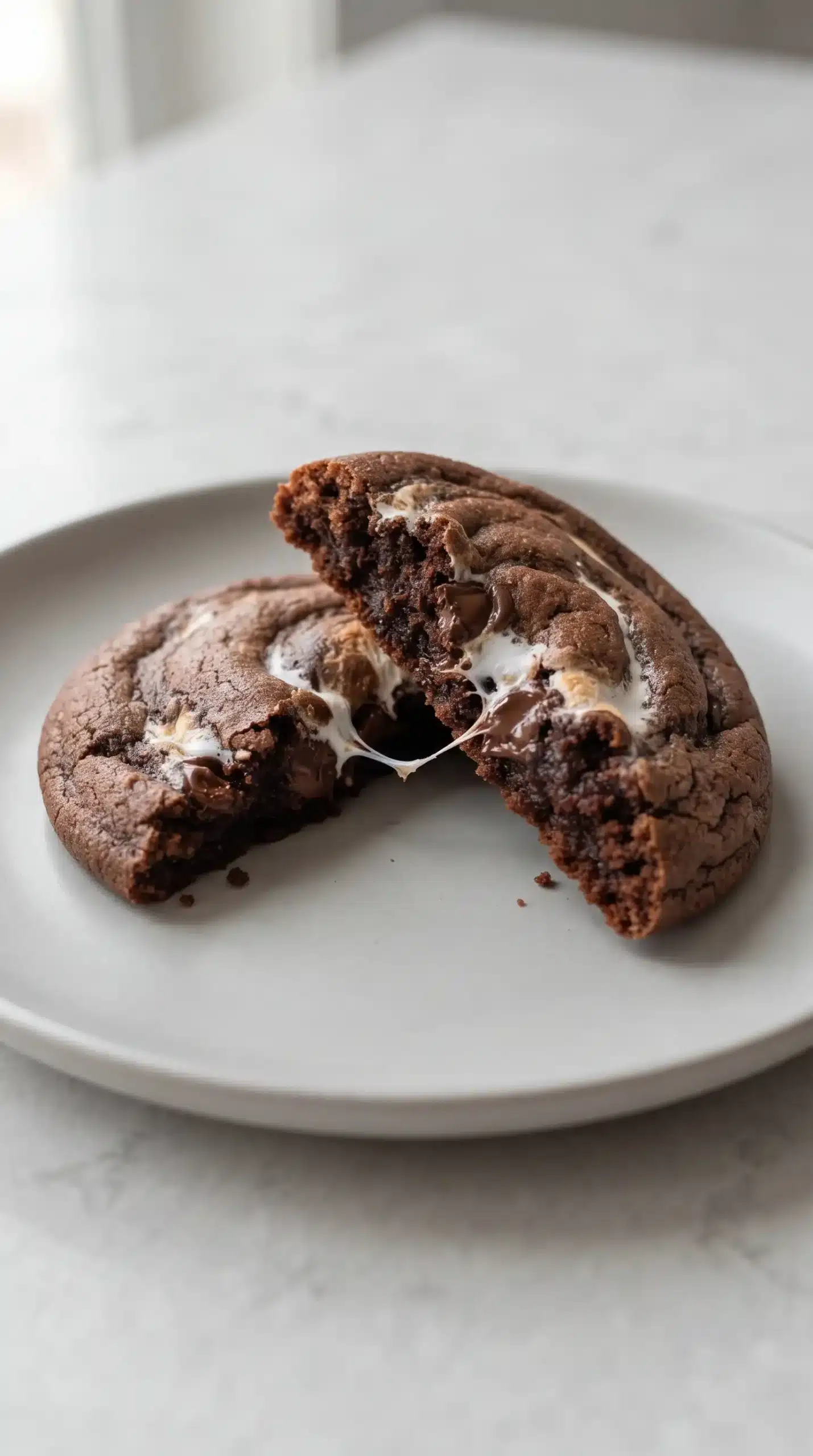
Warm cookies taste especially soft and molten, with stretchy marshmallows and fluid chocolate, while completely cooled cookies become chewier and easier to handle. Reheating one briefly restores much of the original gooey texture without requiring another batch.
Flavor Variations That Suit the Cocoa Base
The chocolate dough accepts bold additions because cocoa and brown sugar provide a strong foundation. Keep the total amount of added pieces reasonable so the dough can still surround the marshmallows and hold together.
- S’mores style: Fold in crushed graham crackers for a familiar campfire combination.
- Peanut butter: Replace part of the chocolate chips with peanut butter chips.
- Mint chocolate: Add mint chips or a restrained amount of peppermint extract.
- Espresso depth: Mix in espresso powder to intensify the cocoa flavor.
- Nutty crunch: Add chopped walnuts or pecans for firmer texture between the soft pockets.
Sea salt flakes can be scattered over the scooped dough before baking for a sharper sweet-salty contrast. White chocolate chips, colorful candies, or sprinkles may also make the cookies more festive for parties.
Dividing one batch of dough into smaller bowls allows several variations without preparing separate bases. Keep the plain portion first, then fold different additions into each bowl with minimal mixing.
Serving Ideas for Rich Marshmallow Cookies
Cold milk balances the cocoa intensity, while coffee or hot chocolate reinforces the dessert’s warm, bakery-style character. Two cooled cookies can also hold vanilla ice cream for a soft chocolate ice cream sandwich, and a mixed dessert tray can pair them with brownies, bars, or fruit-based sweets.
Storage and Freezing Without Losing Softness
An airtight container protects the chewy middle and prevents the exposed marshmallows from becoming tough. Store fully cooled cookies together only after the chocolate and marshmallow surfaces have set enough not to smear.
Frozen baked cookies are convenient for longer storage. Separate layers when necessary so sticky marshmallow areas do not fuse, then thaw the cookies before serving or warm them briefly for a softer center.
Scooped dough portions may also be frozen for future batches. Arrange them separately until firm before consolidating them, which keeps the portions from sticking together.
Baking frozen dough requires slightly more time than baking fresh dough. Watch the edges and center instead of relying only on the clock, especially when the portions are large or contain visible marshmallow pieces.
Refrigerated dough can be prepared ahead for convenient baking. Cover it well so the surface does not dry, and allow very firm dough to soften enough for even scooping or normal spreading.
Simple Equipment That Improves Consistency
A sturdy bowl, mixer, whisk, spatula, baking sheets, and cooling rack cover the essential work, while a cookie scoop keeps portions uniform and a kitchen scale can reduce flour-measuring errors. Parchment paper is especially practical for chocolate marshmallow cookies because escaped marshmallow is easier to release from a lined surface.
Chocolate Marshmallow Cookies Depend on Timely Cooling
Set edges and visibly soft centers create the defining balance in these cookies. Pulling the pan before the middle looks fully baked preserves the fudgy interior, but leaving the portions undisturbed afterward allows the butter, chocolate, and marshmallow to settle into a stable shape.
That brief transition from oven-hot and fragile to warm and chewy is what separates dry cocoa cookies from chocolate marshmallow cookies with crisp borders, soft centers, and distinct gooey pockets.
Chocolate Marshmallow Cookies Spread and Storage Questions
Why did my chocolate marshmallow cookies spread too much?
Overly soft butter, warm dough, or heavily exposed marshmallow can encourage wide spreading. Firm the dough briefly before baking and tuck marshmallows away from the bottom edges of each scoop.
Why did the cookies barely spread?
Excess flour, excess cocoa, or very cold dough can hold the portions in a tall shape. Measure dry ingredients carefully and let chilled scoops soften slightly when they feel extremely firm.
Can regular marshmallows replace mini marshmallows?
Regular marshmallows can be cut into smaller pieces before folding. Small pieces distribute more evenly and are less likely to create one oversized sticky cavity.
Can the flour be replaced with a gluten-free blend?
A 1:1 gluten-free flour blend is the stated substitute. Dough texture may differ by blend, so use the same visual cues for thickness, spreading, and soft-centered doneness.
How can frozen cookies become gooey again?
Thaw them first, then warm an individual cookie briefly until the marshmallow softens and the chocolate becomes creamy. Excess heating can make the marshmallow very hot and sticky.
Can nuts be added without changing the dough?
Chopped walnuts or pecans can be folded in with the chips and marshmallows. Use a moderate amount so the dough still holds together around the mix-ins.
Chocolate Marshmallow Cookies with Chocolate Chips
Ingredients
Method
- Preheat oven to 350°F / 175°C and prepare baking sheets with parchment paper if desired.
- Beat the unsalted butter, granulated sugar, and brown sugar together until the mixture becomes light and creamy.
- Add the eggs individually, mixing after each addition, then blend in the vanilla extract.
- Combine the all-purpose flour, cocoa powder, baking soda, and salt in a separate bowl.
- Gradually add the dry mixture to the butter mixture and stir until a thick chocolate cookie dough forms.
- Mix in the mini marshmallows and chocolate chips until evenly spread throughout the dough.
- Place rounded tablespoons of dough onto the prepared baking sheets, leaving room between each cookie.
- Bake the cookies for 10–12 minutes until the edges are set and the centers are still slightly soft.
- Allow the cookies to cool on the baking sheet for several minutes before moving them to a wire rack.