Maple Dijon Salmon with Baked Glaze Easy 25-Minute Recipe
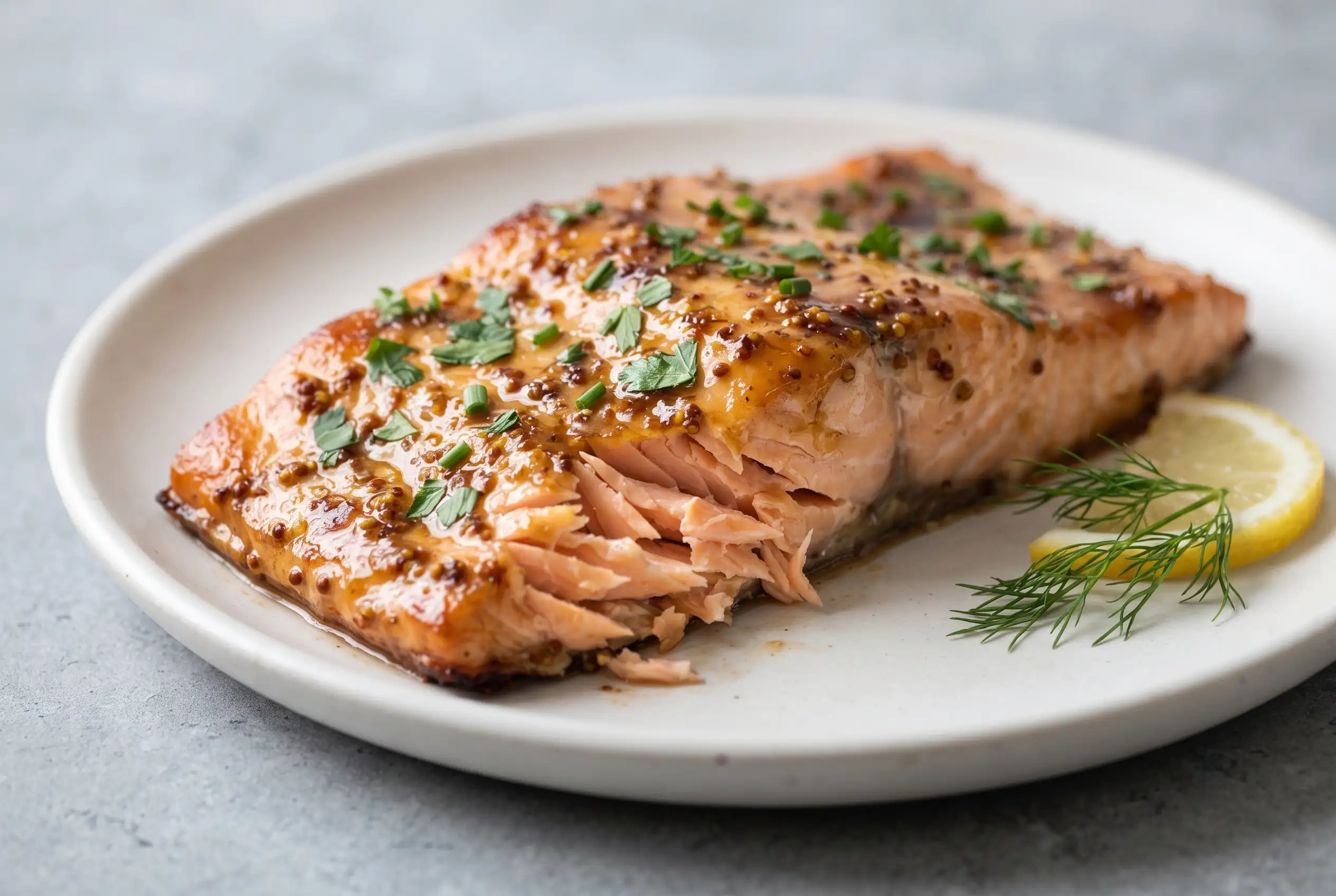
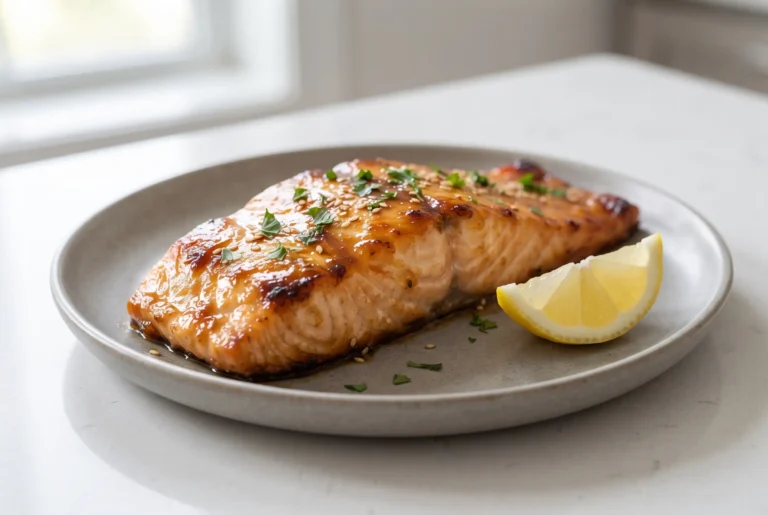
Maple Dijon salmon combines tender baked fish with a glossy glaze built from maple syrup, Dijon mustard, olive oil, and savory seasonings. The result is a sweet, tangy, and buttery dinner with a caramelized surface and flaky center that works for both busy evenings and more polished meals.
This maple dijon glazed baked salmon recipe delivers a flavorful seafood option without complicated preparation. The oven does the main work while the glaze helps create a moist texture and balanced finish.
Maple Dijon Salmon Brings Sweet Savory Balance
Rich salmon pairs naturally with the contrast of maple sweetness and Dijon sharpness. The glaze creates depth because each flavor has a clear role: maple syrup provides warmth, mustard adds tang, garlic brings savory notes, and lemon brightens the finished dish.
The Glaze Ingredients Shape The Final Flavor
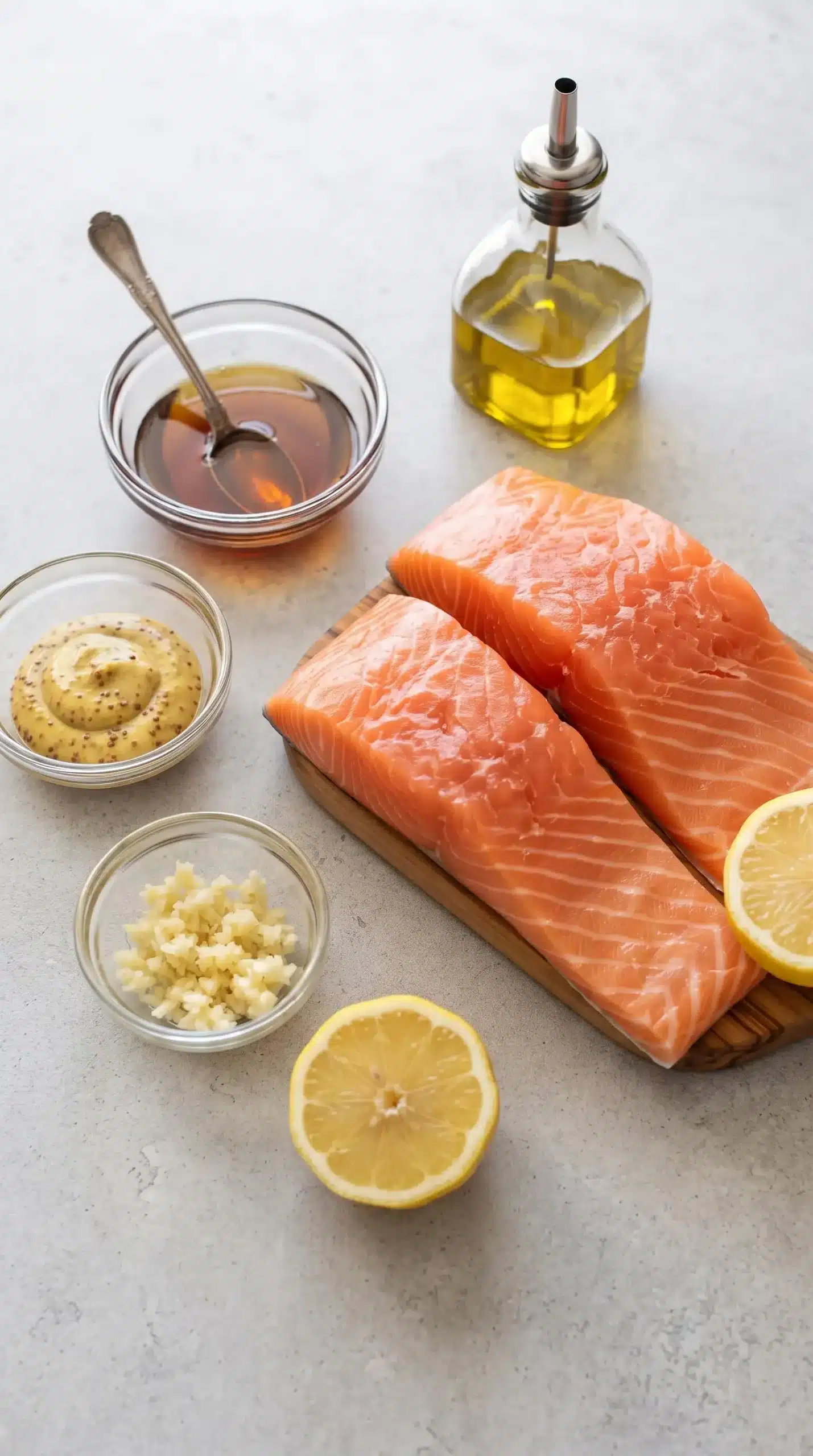
Dijon mustard is the ingredient that keeps the glaze from becoming overly sweet. Its bold character balances the maple syrup and gives the salmon a more rounded flavor profile.
Pure maple syrup helps the coating become glossy during baking. A small amount creates a noticeable caramelized finish while complementing the natural richness of salmon.
Olive oil helps the glaze spread smoothly across the fillets and supports the moist texture that makes this easy baked salmon recipe satisfying. Optional garlic adds extra savory depth, while lemon provides freshness at serving time.
| Ingredient choice | Recipe role | Useful adjustment |
|---|---|---|
| Dijon mustard | Adds tang and balances sweetness | Use whole grain, honey mustard, or yellow mustard if needed |
| Maple syrup | Creates sweetness and caramelization | Honey or agave syrup can replace it |
| Olive oil | Helps distribute glaze and retain moisture | Avocado oil or melted butter can be used |
Choosing Salmon For Better Baking Results
Fresh salmon provides excellent texture, but thawed frozen salmon can also work well when prepared correctly. Patting the fish dry before glazing helps the coating cling to the surface.
Evenly sized fillets make cooking more consistent because thinner portions are less likely to dry before thicker pieces finish. Center-cut pieces are especially useful when you want a uniform presentation.
- Salmon options: Fresh salmon, thawed frozen salmon, trout, Arctic char, or cod can suit similar preparations.
- Flavor swaps: Whole grain mustard, honey mustard, or a milder mustard can change the glaze character.
- Citrus choices: Lemon is ideal for brightness, while lime can provide a similar fresh finish.
Cooking Control Keeps Maple Dijon Salmon Tender
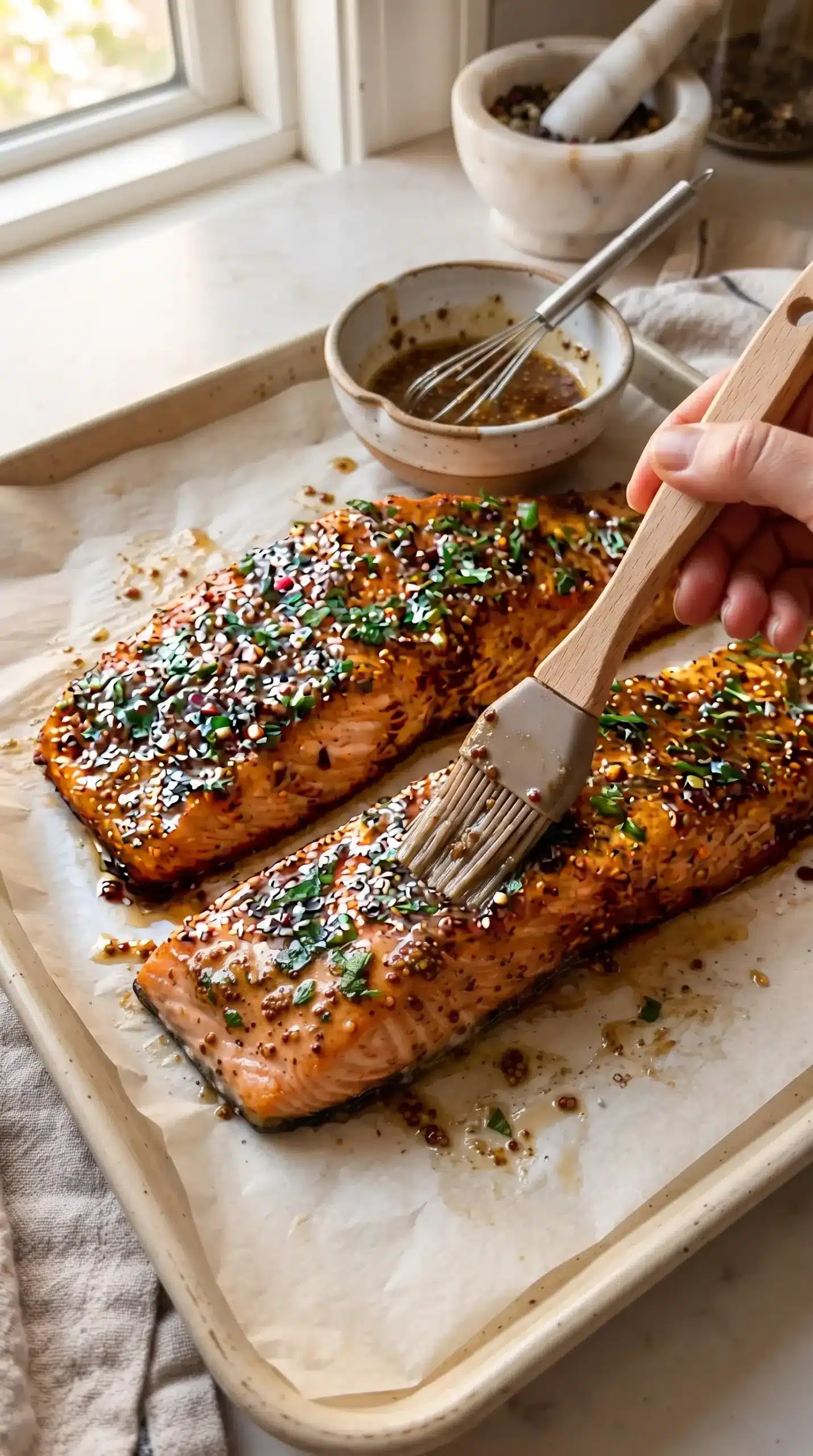
Successful maple dijon salmon depends on controlling moisture, heat, and timing. Drying the fillets first allows the glaze to coat evenly, while baking at the correct temperature helps preserve the soft texture of the fish.
Checking the salmon before it becomes overcooked is one of the most important decisions during preparation. The fish should separate easily with a fork, and the glaze should appear glossy with slight caramelization.
For an added doneness check, salmon should reach a 145°F internal temperature before serving.
Resting the salmon briefly after baking allows the juices to settle through the fillet. A fresh squeeze of lemon after cooking sharpens the flavors and balances the rich glaze.
Maple Dijon Salmon Mistakes That Reduce Flavor
Overcooking can quickly change the texture of salmon. Removing the fish once it flakes easily helps maintain a moist interior.
Skipping the drying step can prevent the glaze from sticking properly. Excess moisture on the surface makes it harder for the maple Dijon coating to develop its caramelized appearance.
Using artificial maple syrup may also change the result because pure maple syrup provides the flavor and finish expected from this dish. Extra seasoning should be added carefully since Dijon mustard already contributes saltiness.
Serving Ideas That Complete The Salmon Dinner
Maple dijon salmon works well with sides that absorb the flavorful glaze. Neutral grains, roasted vegetables, and creamy sides all complement the sweet-savory coating.
Popular pairings include:
- Garlic mashed potatoes
- Rice pilaf or quinoa
- Roasted asparagus and green beans
- Steamed broccoli
- Garden salad
- Roasted sweet potatoes
Meal Prep And Storage For Leftover Salmon
Cooked salmon keeps its flavor well when stored properly. Leftovers can become convenient lunches or quick dinners when paired with rice, vegetables, or fresh salad ingredients.
| Storage method | Recommended handling | Purpose |
|---|---|---|
| Refrigerator | Keep in an airtight container for up to 2 days | Short-term leftovers |
| Freezer | Wrap tightly and freeze for up to 2 months | Longer storage |
| Oven reheating | Warm at 300°F for about 10 minutes | Gentler texture recovery |
Microwave reheating works best at low power with short intervals. Adding a small splash of water or broth can help maintain moisture while warming.
Family Friendly Adjustments For Maple Dijon Salmon
The sweet maple glaze makes salmon more approachable for many younger eaters because it softens the sharper notes from Dijon mustard. A lighter coating can be used for anyone who prefers a milder flavor.
Smaller serving pieces can also make the meal easier to enjoy. Familiar sides such as rice, mashed potatoes, or roasted vegetables help create a comfortable family dinner.
Budget Choices Without Losing Salmon Flavor
Frozen salmon is often a practical way to make maple dijon glazed baked salmon recipe meals more affordable. Once thawed and dried properly, frozen portions can still produce a flavorful baked dish.
Saving money is also possible by using store-brand Dijon mustard and pairing the salmon with simple sides. The glaze uses a small amount of maple syrup, so one bottle can support multiple meals.
- Save on fish: Choose frozen portions or larger cuts that can be divided at home.
- Save on sides: Use rice, vegetables, or potatoes to build a complete meal.
- Save on extras: Keep pantry seasonings simple while focusing on salmon quality.
Simple Tools Support Better Salmon Results
A baking sheet, parchment paper, mixing bowl, and brush are enough to prepare maple dijon salmon successfully. These basic tools make glazing and cleanup easier.
Quick Variations For New Maple Dijon Salmon Flavors
Small changes can create different versions while keeping the same sweet-savory foundation. A spicy variation can include cayenne pepper or chili flakes, while fresh herbs such as parsley, thyme, or dill can add a brighter character.
Honey can replace maple syrup for a different sweetness profile when adjusting the glaze, while garlic can deepen the savory notes in honey garlic salmon preparations. An air fryer version also works well, with cooking at 375°F for about 8–10 minutes.
Practical Tips For A 25 Minute Salmon Dinner
Busy cooks can streamline preparation by making the glaze ahead, using pre-portioned fillets, and preparing side dishes while the salmon cooks. The strong flavor of the glaze allows the meal to stay impressive even with simple accompaniments.
Maple Dijon Salmon Delivers A Balanced Finish
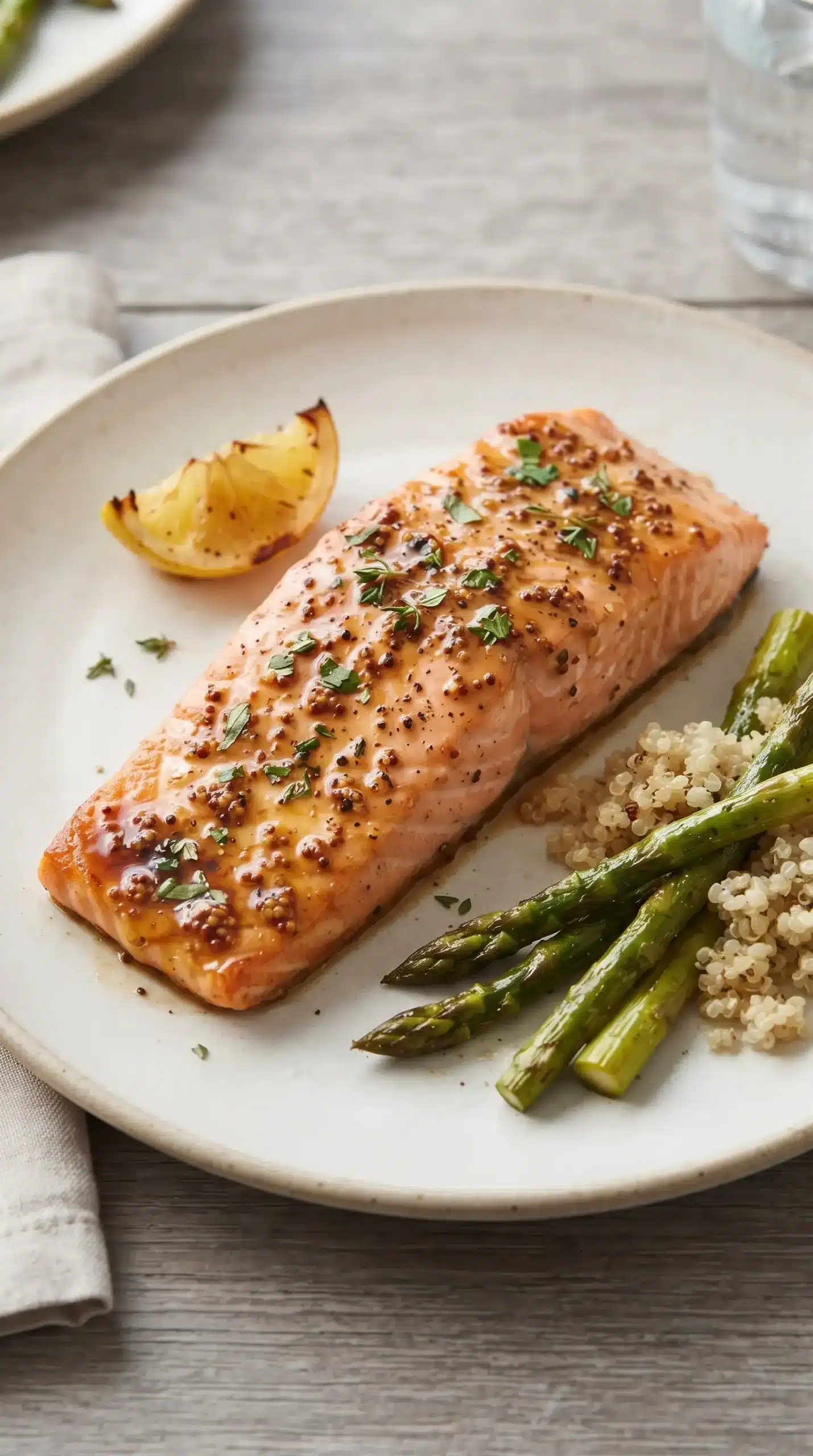
Maple dijon salmon succeeds because the cooking process protects the tender fish while the glaze develops a glossy, caramelized surface. The combination of flaky salmon, sweet mustard coating, and fresh lemon creates a complete dinner with balanced flavors.
Maple Dijon Salmon Cooking Questions and Answers
How do I prevent dry salmon?
Dry salmon usually comes from extended cooking. Check the fish as it approaches doneness and remove it when it flakes easily with a fork.
Can I use frozen salmon for this dish?
Frozen salmon works well when it is fully thawed before preparation. Patting it dry helps the glaze adhere and improves the baked texture.
Can the maple Dijon glaze be prepared ahead?
The glaze can be mixed ahead and stored in the refrigerator for up to one week, making dinner assembly faster later.
What sides pair best with maple dijon salmon?
Rice, quinoa, potatoes, roasted vegetables, and salads all complement the glaze because they balance the richness of the salmon.
How can I make the flavor milder?
Reducing the Dijon mustard slightly or adding a little more maple syrup creates a gentler glaze that may appeal to diners who prefer sweeter flavors.
Maple Dijon Glazed Baked Salmon
Ingredients
Method
- Heat the oven to 375°F / 190°C and prepare a baking sheet by lining it with parchment paper.
- Combine Dijon mustard, maple syrup, olive oil, salt, and black pepper in a small bowl, whisking until the glaze is fully blended.
- Dry the salmon fillets with paper towels and arrange them skin-side down on the lined baking sheet.
- Coat each salmon fillet with the maple Dijon glaze, then add the minced garlic on top if using.
- Bake the salmon for 12–15 minutes until it flakes easily and reaches an internal temperature of 145°F / 63°C.
- Allow the salmon to rest for 2 minutes, then serve with fresh lemon slices.