Oven Baked Salmon with Garlic Butter and Brown Sugar
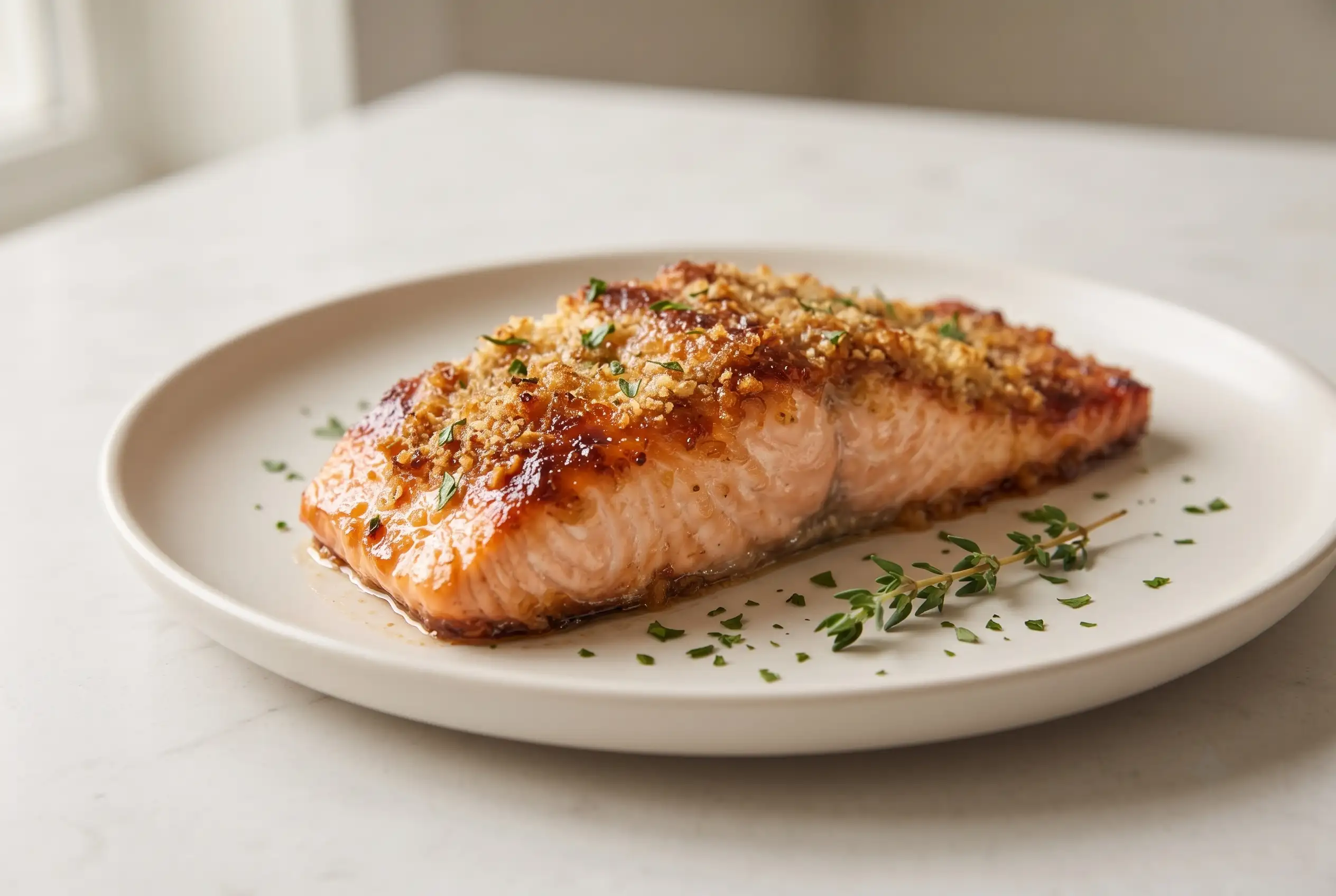
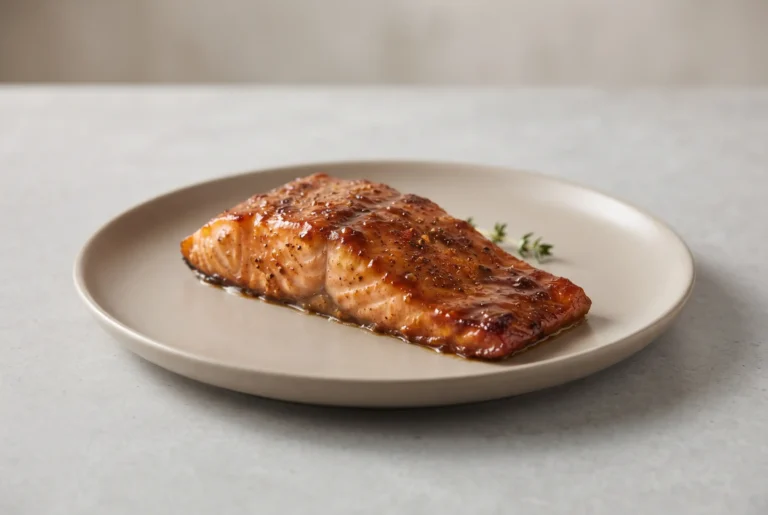
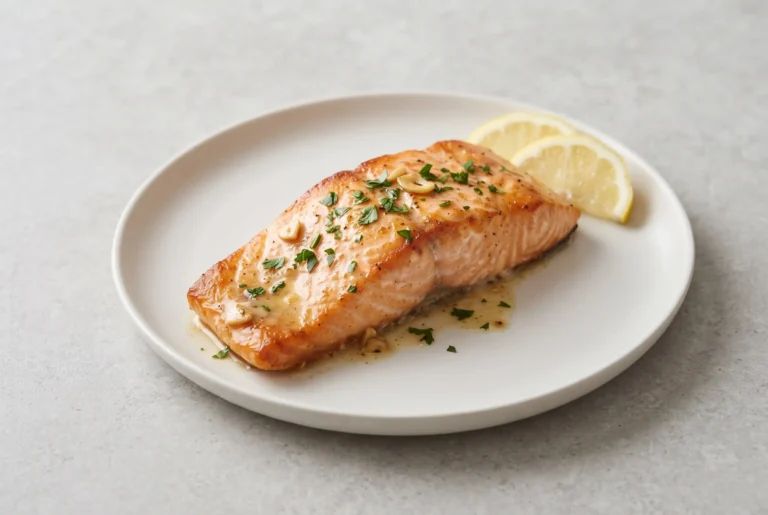
oven baked salmon brings together tender fish, garlic butter, brown sugar, and savory spices for a simple seafood dinner that feels special without complicated preparation. The combination creates a moist center, lightly caramelized surface, and rich flavor that works for everyday meals or occasions when you want a reliable baked salmon dish.
This easy baked salmon recipe focuses on a balanced coating that helps the salmon stay flavorful while it cooks. Garlic butter adds richness, paprika and other seasonings build depth, and a touch of brown sugar creates a sweet-savory finish that complements the natural flavor of the fish.
Why Oven Baked Salmon Works for Weeknight Dinners
Busy evenings often call for meals that deliver strong flavor without requiring extensive hands-on cooking. Oven baked salmon fits that need because most of the preparation happens before the pan goes into the oven, leaving the heat to gently cook the fillets.
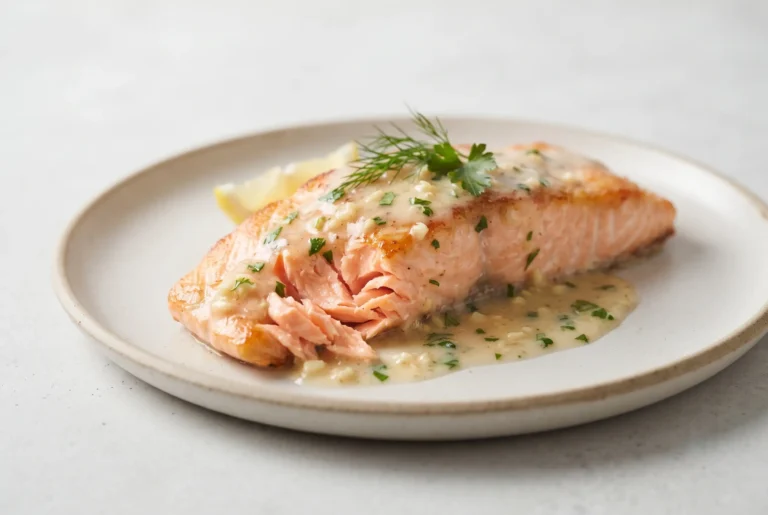
Reliable texture is one of the biggest advantages of baking salmon. The fillets develop a soft, flaky interior while the seasoned surface becomes slightly caramelized. When cooked properly, the fish separates easily with a fork and keeps the buttery texture that makes salmon popular.
Another reason this 30 minute salmon dinner works so well is its flexibility at the table. The finished salmon pairs naturally with vegetables, rice, potatoes, pasta, salads, and lighter sides, allowing the same preparation to fit different meal styles.
Garlic Butter Salmon Flavor Starts with Balanced Ingredients
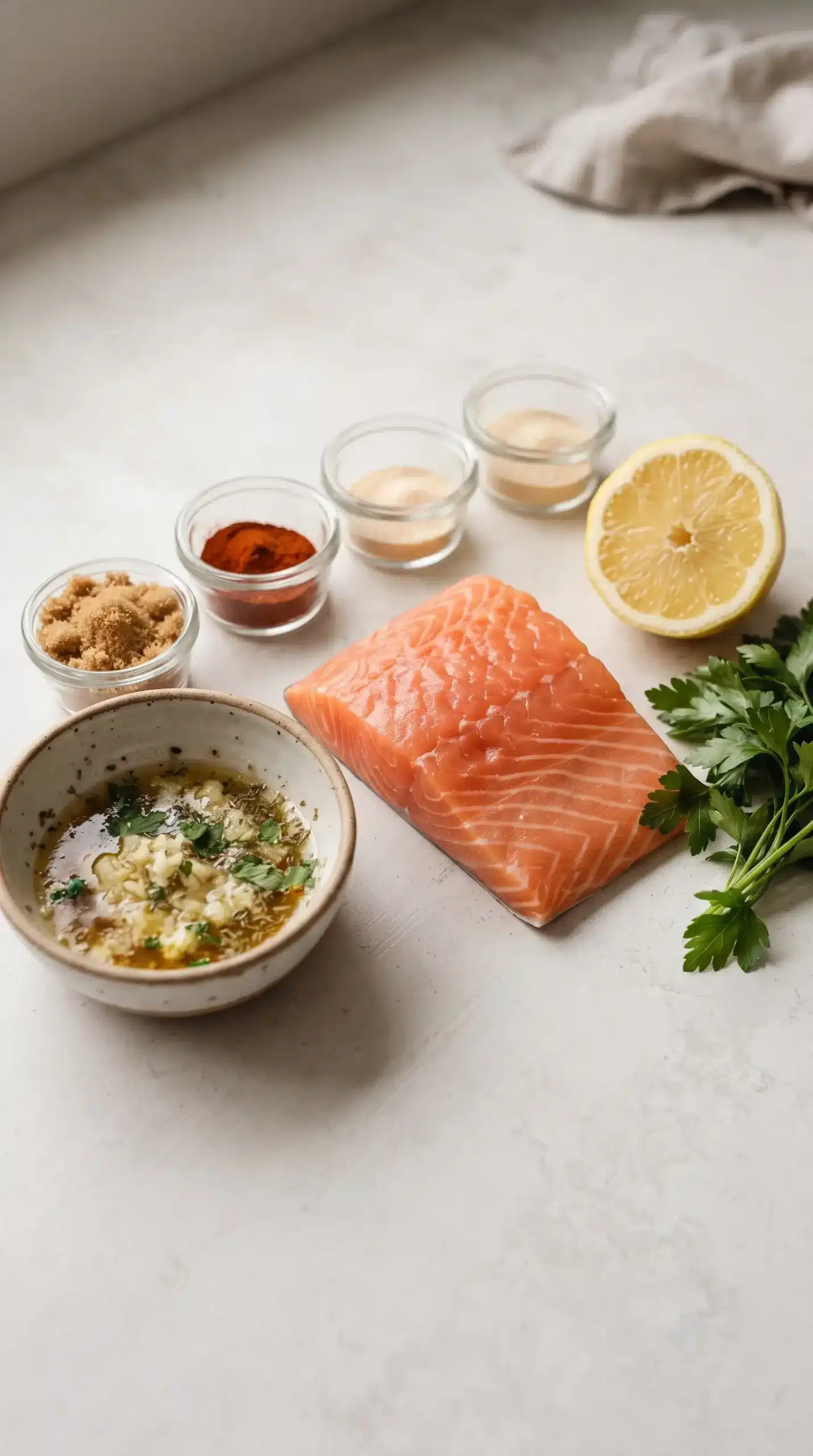
The strongest results come from understanding how the main flavor elements work together. Garlic butter baked salmon depends on a rich coating that spreads across the fillets, helping the seasonings cling while adding moisture during baking.
Fresh garlic provides a bold savory note after being gently warmed with melted butter. Brown sugar adds sweetness that balances the garlic and spices while helping the surface develop a deeper color. Paprika contributes warmth and a mild smoky character, while garlic powder and onion powder reinforce the overall seasoning profile.
Small ingredient choices can change the character of the dish. Butter creates a fuller flavor, while olive oil can provide a dairy-free alternative. Fresh lemon, parsley, or dill added after baking brings brightness that balances the richness of the salmon.
Salmon Selection Shapes the Finished Dish
Atlantic salmon offers a mild, buttery texture that works well for many home cooks, while sockeye salmon provides a deeper flavor and firmer bite. Fresh fillets are a great option, but fully thawed frozen salmon can also produce excellent results when dried before seasoning.
Baking Control That Keeps Salmon Moist
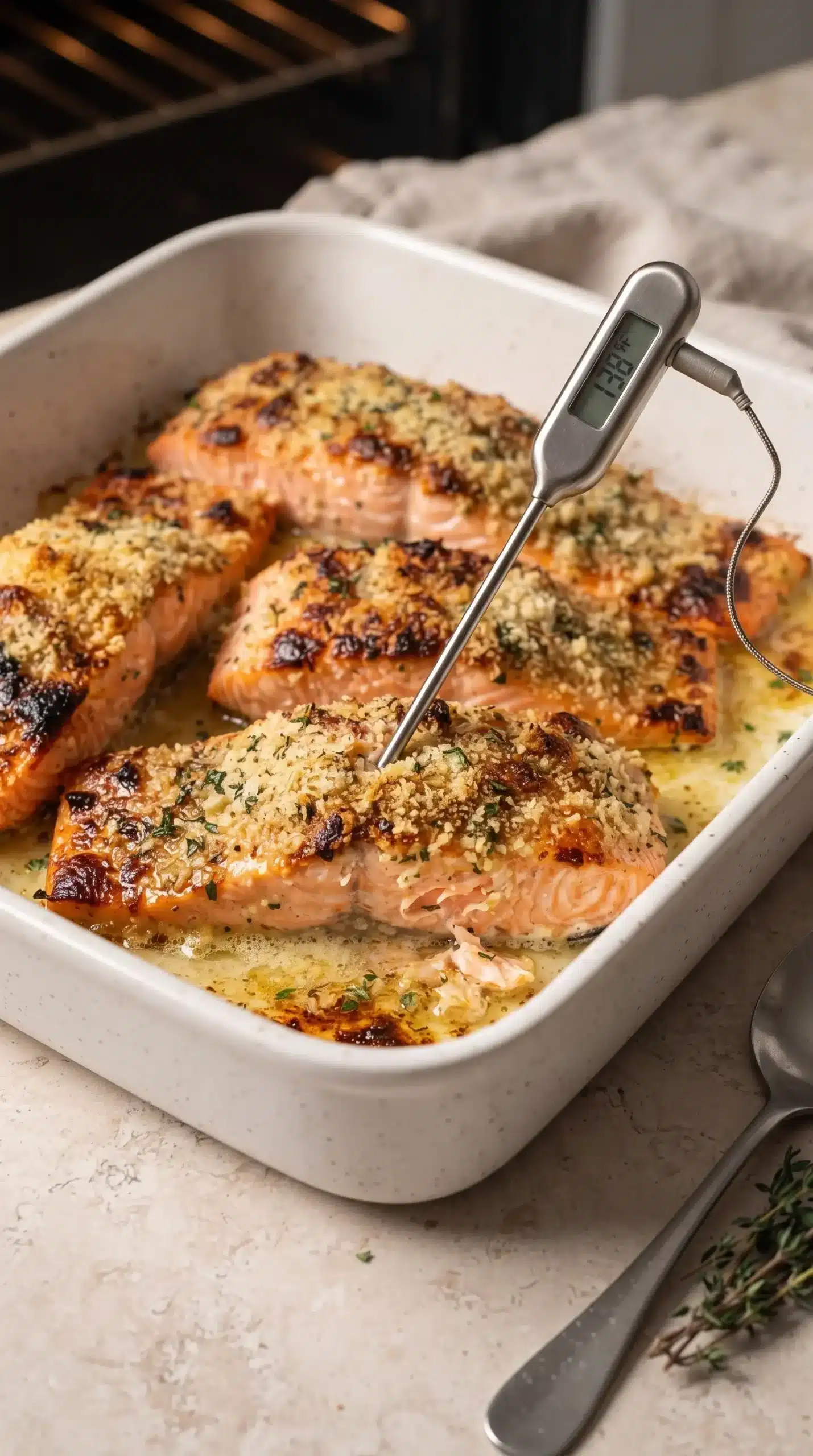
Temperature awareness and careful timing are the most important parts of achieving tender salmon. The oven should be fully preheated before the fish goes inside so the fillets begin cooking evenly from the start.
Thickness affects how long salmon needs in the oven. Thicker portions require more time, while thinner tail sections can finish sooner. Checking the fish near the expected cooking window helps protect the delicate texture.
| Salmon section | Approximate baking consideration | Useful doneness clue |
|---|---|---|
| Thicker fillet portions | Usually need closer attention toward the longer cooking range | Center should flake easily without looking dry |
| Thin tail sections | May finish sooner than thicker cuts | Texture should remain moist and tender |
| All fillets | Check carefully near the end of baking | Internal temperature reaches 145°F (63°C) |
A brief broiling finish can intensify the caramelized surface, but the process moves quickly. Watching closely during this stage helps preserve the balance between a flavorful crust and a juicy interior.
Avoid These Oven Baked Salmon Mistakes
Overcooking is the most common problem with oven baked salmon. Once the fish loses too much moisture, the soft buttery texture becomes firmer and less enjoyable. Using a thermometer and checking for easy flaking helps prevent this issue.
For a reliable doneness check, make sure salmon reaches 145°F (63°C) before serving, which provides a clear temperature point alongside the visual signs of doneness.
Excess moisture on the salmon surface can also affect the finished dish. Patting the fillets dry before applying garlic butter and seasonings helps the coating adhere better and encourages caramelization.
Too much brown sugar can overwhelm the natural flavor of the fish. A balanced amount creates a lightly sweet crust, while excessive sweetness can hide the savory spices. Crowding the baking dish is another mistake because trapped steam can soften the exterior.
Sides That Complete the Salmon Dinner
The rich flavor of garlic butter baked salmon works well with both comforting and fresh accompaniments. Roasted broccoli, asparagus, rice pilaf, quinoa, garlic mashed potatoes, green beans, Caesar salad, and buttered noodles all complement the tender fish.
Meal Prep Uses for Leftover Salmon
Cooked salmon can become a useful part of planned meals because the flavor holds up well after baking. Properly stored portions can be used beyond the original dinner and transformed into different lunches or quick meals.
Several preparation shortcuts also make future meals easier:
- Seasoning blend: Mix the spices ahead so the flavor base is ready when needed.
- Garlic butter: Prepare the butter mixture in advance for faster assembly.
- Portioned leftovers: Divide cooked salmon into containers for convenient meals.
- Flexible uses: Add flaked salmon to salads, rice bowls, wraps, or pasta.
Keeping the components simple makes oven baked salmon a practical option for meal planning. The same fillets can provide a complete dinner one day and become an ingredient in another meal later.
Variations That Change Salmon’s Flavor Direction
Simple adjustments can create new versions of the dish while keeping the same baking approach. Honey can replace brown sugar with a different sweetness, lemon zest can add extra citrus brightness, chili flakes can introduce heat, and keto-friendly sweeteners can create a lower-sugar variation.
Flavor variations can shift the character of baked salmon while keeping the cooking process familiar. A Maple Dijon glazed salmon preparation brings together sweet and tangy notes through a glaze that complements the natural richness of the fish.
Storing Oven Baked Salmon Safely
Leftover oven baked salmon should be stored in an airtight container and kept refrigerated for up to 2 days. Cooked portions can also be frozen tightly wrapped for up to 2 months and reheated gently to help maintain moisture.
Nutrition Notes for Salmon Meals
Salmon provides omega-3 fatty acids, protein, vitamin D, vitamin B12, and selenium. Baking uses minimal added oil compared with frying methods, making this garlic butter preparation a satisfying choice for balanced meals.
Oven Baked Salmon Delivers Moist Texture Through Controlled Heat
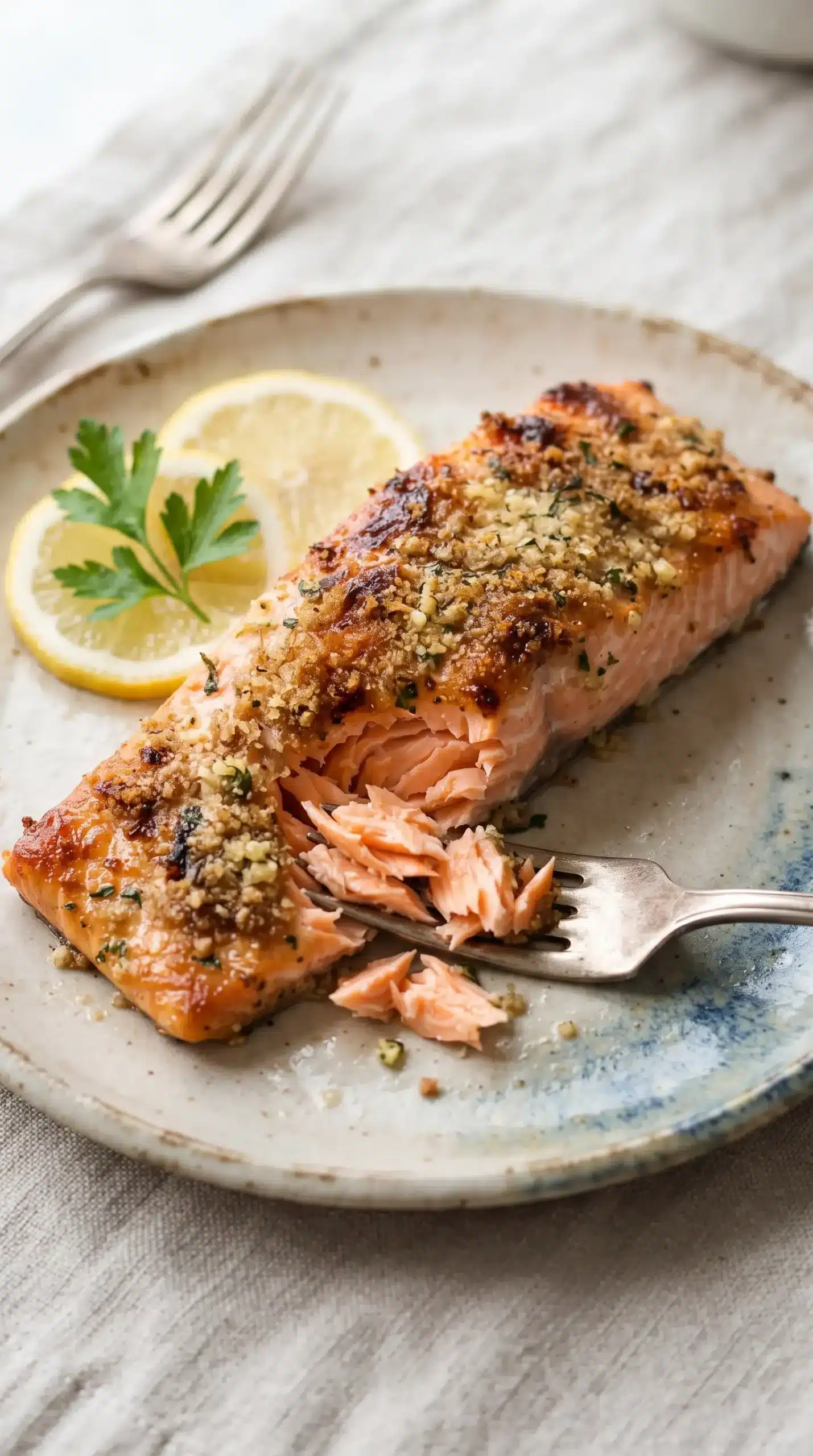
Salmon stays at its best when the cooking process protects its natural tenderness while building flavor on the surface. The combination of garlic butter, balanced spices, and careful baking creates a dish where flaky texture and caramelized seasoning work together.
Consistent results come from simple decisions: dry the fillets before seasoning, monitor thickness, and avoid pushing the fish past its ideal doneness. Those small details are what make this seafood dinner dependable for both new and experienced cooks.
Oven Baked Salmon Questions About Doneness and Storage
How do I know salmon is done?
Salmon is ready when it flakes easily with a fork and reaches an internal temperature of 145°F (63°C). The center should remain moist and tender instead of dry or tough.
Can frozen salmon be used for baking?
Frozen salmon works well when it has been completely thawed before cooking. Drying the thawed fillets before adding the garlic butter and seasoning helps improve the final texture.
Can I make oven baked salmon dairy-free?
Yes. Olive oil or vegan butter can replace regular butter when you want a dairy-free version. The seasoning blend can remain the same while still providing strong flavor.
Why does my salmon turn out dry?
Dry salmon usually comes from cooking too long or not monitoring the thickness of the fillets. Checking the temperature near the end of baking helps preserve the moist texture.
What salmon types work best with this preparation?
Atlantic, coho, and sockeye salmon are all suitable choices. Atlantic salmon provides a mild buttery result, while sockeye offers a firmer texture and deeper flavor.
Oven Baked Salmon with Garlic Butter and Brown Sugar
Ingredients
Method
- Heat the oven to 375°F / 190°C and prepare a baking dish or baking sheet with a light coating of grease or parchment paper.
- Warm the butter in a small saucepan over low heat, then stir in the minced garlic and cook for about 30 seconds until aromatic.
- Mix the brown sugar, salt, black pepper, paprika, garlic powder, and onion powder in a small bowl until evenly blended.
- Arrange the salmon fillets in the prepared dish and coat each piece evenly with the garlic butter.
- Cover the salmon fillets with the brown sugar seasoning mixture.
- Bake the salmon for 15–20 minutes, adjusting for fillet thickness, until it flakes easily and reaches an internal temperature of 145°F / 63°C.
- If desired, broil the salmon for the final 1–2 minutes to deepen the topping color, keeping a close watch to avoid burning.
- Allow the baked salmon to rest briefly before serving with fresh parsley, dill, or lemon wedges if desired.