Jamaican Curry Chicken with Coconut Milk and Peppers
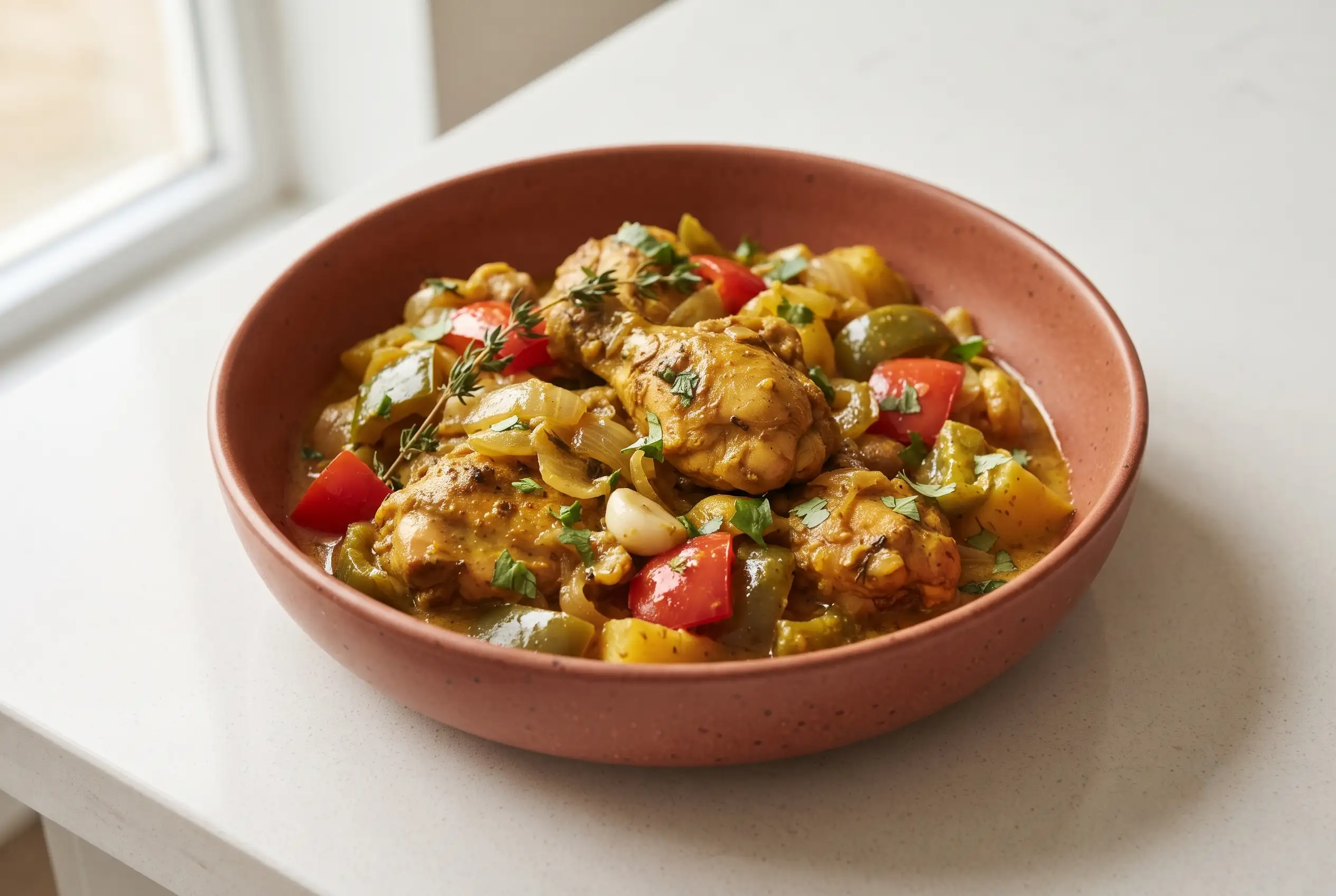
Jamaican curry chicken is a comforting Caribbean dish built around tender chicken, warming spices, creamy coconut milk, fresh thyme, garlic, and peppers. This authentic Jamaican curry chicken recipe creates a deeply flavored meal where a rich sauce develops around seasoned chicken pieces and aromatic ingredients.
Home cooks looking for an easy Jamaican curry chicken option can enjoy a dish that feels special while relying on familiar cooking techniques. The combination of curry seasoning, slow simmering, and balanced heat creates a satisfying dinner with bold island-inspired character.
Jamaican Curry Chicken Brings Caribbean Comfort
Across Caribbean cooking traditions, curry dishes are known for layering spices with fresh aromatics to create complex flavor. Jamaican curry chicken follows that approach by combining seasoned chicken with a sauce that becomes richer as the ingredients cook together.
Warm curry powder provides the foundation, while coconut milk softens the intensity of the spices. Onion, garlic, thyme, and hot peppers create a savory base that gives the sauce its recognizable depth.
Another reason this dish stands out is its ability to improve after resting. The flavors continue blending, making leftovers especially enjoyable when reheated for another meal.
Curry Powder and Coconut Milk Shape the Signature Flavor
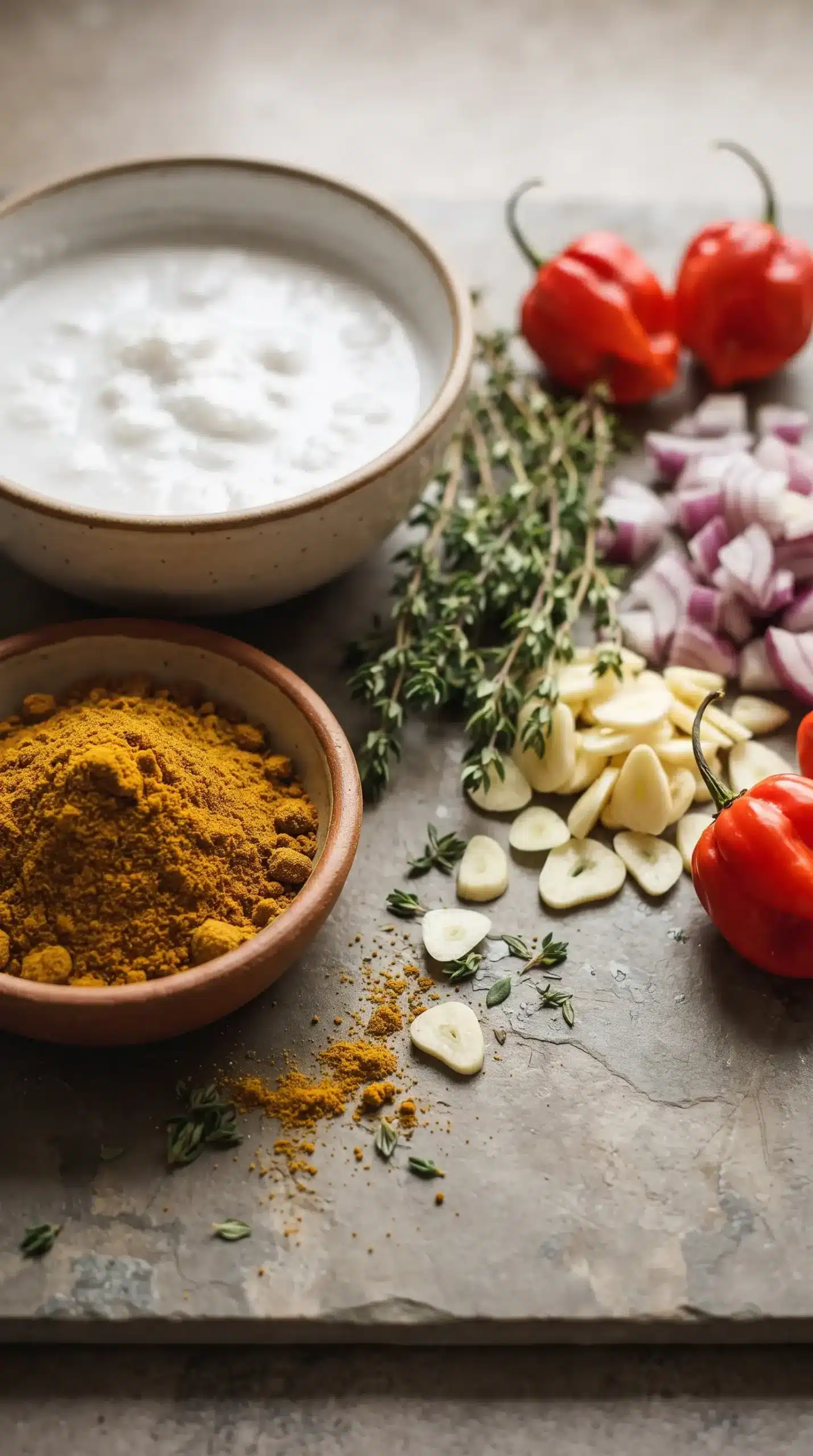
Jamaican curry powder is one of the most important choices in this dish because it defines the overall flavor direction. The blend creates earthy warmth and carries the seasoning throughout the chicken and sauce.
Coconut milk brings a creamy texture that balances the spices without removing their character. Full-bodied coconut flavor works alongside the curry instead of competing with it, creating a smooth sauce that coats each piece of chicken. Rich sauce-based meals such as creamy curry chicken dinner show how balanced spices and a velvety texture can define a comforting chicken meal.
Fresh thyme also deserves attention because it adds a bright herbal note that supports the deeper flavors. Hot peppers can be adjusted depending on whether a milder family meal or a more intense Jamaican chicken curry recipe is desired.
| Ingredient choice | Effect on the dish | Useful adjustment |
|---|---|---|
| Bone-in chicken pieces | Creates richer flavor during simmering | Use when maximum tenderness is preferred |
| Coconut milk | Adds creamy sauce texture | Choose light coconut milk for a lighter version |
| Hot peppers | Controls spice intensity | Reduce for mild servings or increase for more heat |
Building a Rich Sauce Starts With Cooking Control
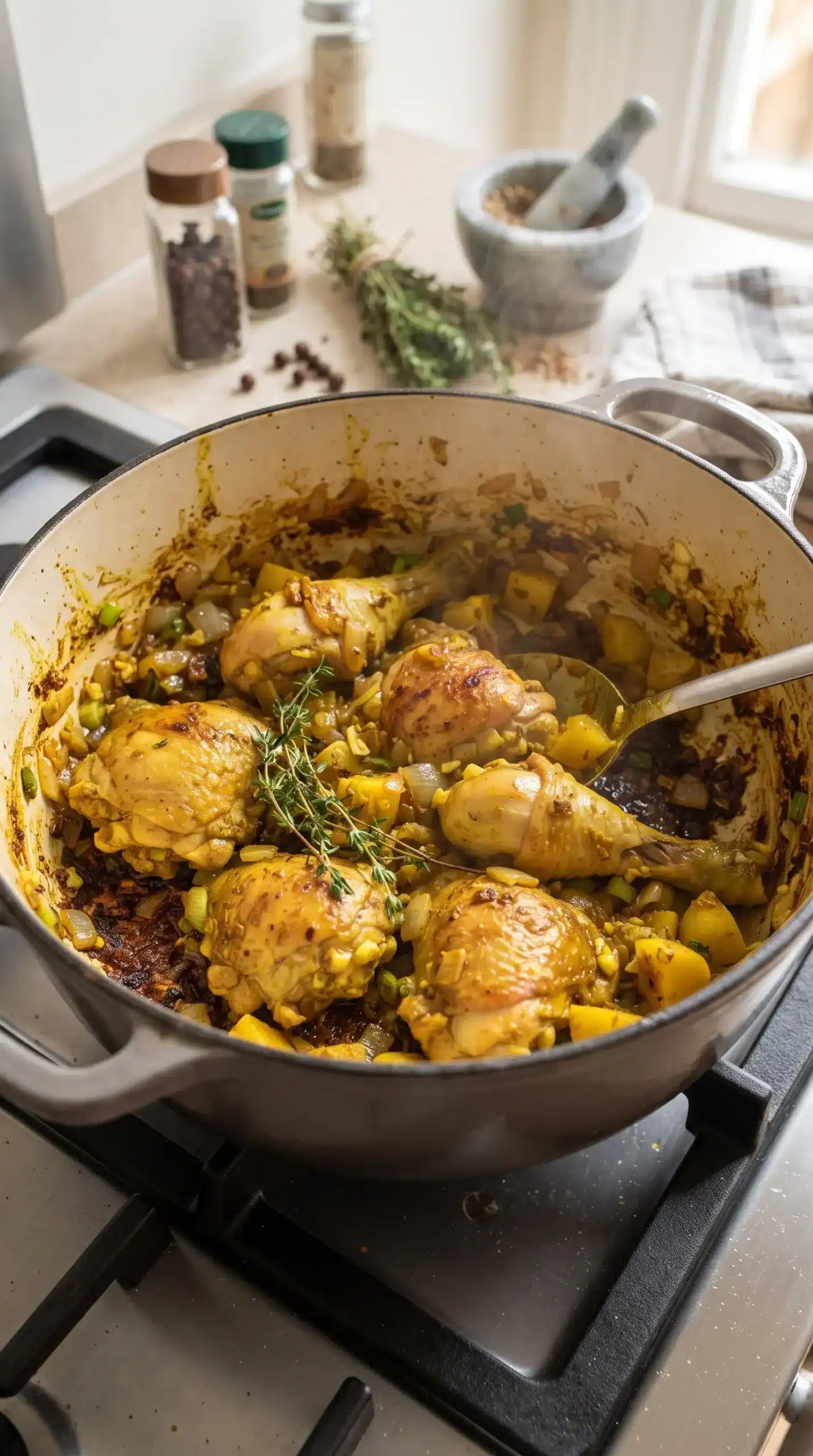
Successful curry depends on managing heat throughout cooking. Browning the chicken before adding liquids develops deeper flavor and helps create a more satisfying sauce.
Careful simmering is important because gentle simmering allows the chicken to become tender while the coconut milk, stock, and seasonings combine. A rushed boil can affect the texture and prevent the sauce from developing properly.
One useful technique is allowing curry powder to warm in oil during cooking. This helps awaken the spices and distributes their flavor more evenly through the finished dish.
Jamaican Curry Chicken Mistakes That Flatten Flavor
Several small choices can change the result of Jamaican curry chicken. Avoiding these common problems helps protect the balance between spice, richness, and tenderness.
- Skipping the marinade: Short seasoning time limits how deeply the curry flavor reaches the chicken.
- Poor browning: Lightly colored chicken misses the richer flavor created during searing.
- Excess coconut milk: Too much can soften the curry character and overpower the spices.
- Harsh boiling: Aggressive cooking can make tender chicken harder to maintain.
Attention to seasoning also matters. Curry sauces need enough salt balance to bring out the herbs, spices, and savory chicken flavors.
Choosing Chicken Cuts for Jamaican Curry Chicken
Chicken selection influences both texture and sauce quality. Bone-in thighs and drumsticks are especially suitable because they remain juicy during simmering and contribute additional richness.
Boneless pieces can still work well when convenience is important. They cook faster and create a lighter eating experience while maintaining the core curry flavors.
Cut size also affects the finished dish. Smaller pieces distribute sauce more evenly, while larger pieces provide a more traditional hearty presentation.
Heat Levels and Custom Variations
Spice flexibility makes Jamaican curry chicken easy to adapt for different households. Traditional heat can come from Scotch bonnet peppers, while milder versions can reduce or remove spicy ingredients.
Vegetables can transform the dish into a more filling meal. Potatoes, carrots, bell peppers, or green beans add texture and help extend the curry for larger gatherings.
Alternative versions can include plant-based choices such as chickpeas, tofu, cauliflower, or potatoes while keeping the aromatic curry style intact.
Serving Pairings That Balance the Curry
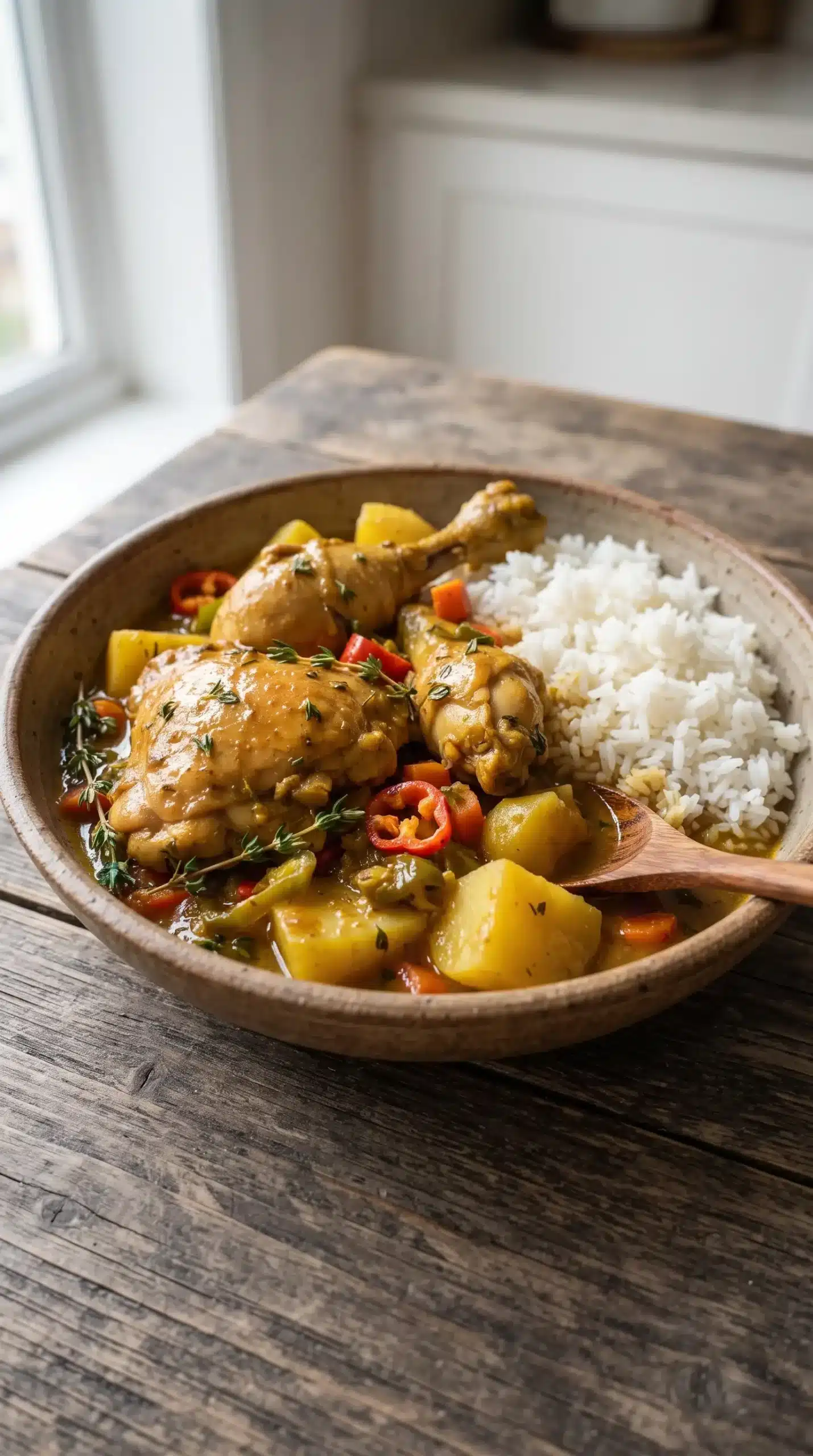
The creamy sauce is designed to pair with foods that absorb its bold flavors. Rice remains a classic choice because the grains carry the curry while adding a neutral foundation.
- Steamed white rice
- Jamaican rice and peas
- Roti or flatbread
- Fried plantains
- Roasted vegetables
Fresh sides can provide contrast alongside the richness of the curry. A simple salad, fruit dish, or sautéed greens can create a lighter balance on the plate.
Meal Prep Storage for Jamaican Curry Chicken
Proper storage helps preserve the sauce and tender chicken texture. Leftovers should be kept in an airtight container and chilled after cooling.
Freezing is also suitable for Jamaican curry chicken because the sauce holds its flavor well. Thawing slowly and reheating gently helps maintain the creamy consistency.
When reheating, a small splash of stock or water can loosen the sauce if it has thickened during storage.
A Practical Cooking Timeline
Preparation becomes easier when the cooking stages are organized around flavor development. Early work focuses on seasoning and building the aromatic base.
| Cooking stage | Main focus | Result to look for |
|---|---|---|
| Preparation | Season chicken and organize ingredients | Evenly coated pieces ready for cooking |
| Initial cooking | Sauté aromatics and brown chicken | Fragrant base with developed flavor |
| Simmering | Combine liquids and cook gently | Tender chicken with thickened sauce |
Organized preparation prevents rushed decisions once the pot is heated and allows each flavor-building stage to receive proper attention.
Family-Friendly Adjustments for Different Spice Preferences
Families with different heat preferences can easily customize the dish without losing its character. Reducing peppers keeps the curry approachable while preserving the flavors from curry powder, garlic, thyme, and coconut milk.
Younger diners may prefer smaller chicken pieces or boneless cuts because they are easier to serve. Mild vegetables added to the curry can also make the meal more familiar.
Serving rice separately gives everyone control over how much sauce and spice they want in each portion.
Budget Choices That Protect Flavor
Affordable ingredients can still create a deeply satisfying curry. Chicken thighs and drumsticks often provide excellent value while delivering the tenderness needed for simmered dishes.
Smart additions such as potatoes, carrots, and other vegetables can stretch the meal without reducing the comforting qualities of the sauce.
Spending attention on flavorful curry powder, fresh garlic, and thyme often makes a larger difference than choosing expensive versions of every ingredient.
Essential Tools for a Smooth Cooking Process
A large heavy-bottomed pot or deep skillet provides the space needed for browning and simmering. Even heat distribution helps prevent uneven cooking.
A sharp knife and sturdy cutting board make preparation easier, especially when handling onions, peppers, garlic, and chicken pieces.
- Heavy pot: Supports steady simmering and sauce development.
- Sharp knife: Improves efficient ingredient preparation.
- Measuring spoons: Keeps spice balance consistent.
Texture Changes That Make Each Bite Work
The appeal of Jamaican curry chicken comes from the contrast between tender meat, silky sauce, and fluffy rice. Each element contributes a different texture that keeps the meal satisfying.
Slow simmering allows chicken to soften while the coconut-based sauce becomes smooth and coating. Added vegetables can introduce gentle firmness that contrasts with the creamy curry.
Fresh herbs or a bright finishing touch can lift the richness and keep the dish from feeling overly heavy.
Jamaican Curry Chicken Delivers Slow-Cooked Flavor Through Simple Choices
Tender chicken, balanced curry seasoning, and a carefully developed coconut sauce create the defining qualities of this Caribbean favorite. The strongest results come from respecting the cooking process, allowing spices to bloom, and giving the sauce time to combine.
Jamaican curry chicken proves that a comforting meal can come from straightforward ingredients when seasoning, heat control, and texture are handled with care.
Jamaican Curry Chicken Questions About Spice Storage and Preparation
How spicy is Jamaican curry chicken?
The heat level depends on the peppers used. Scotch bonnet peppers create traditional intensity, but reducing or removing them produces a milder curry while keeping the aromatic flavor.
Can Jamaican curry chicken be made ahead?
Yes. Preparing it ahead allows the flavors to blend further, and many people enjoy the deeper taste that develops after resting.
What chicken pieces work best for this curry?
Bone-in thighs and drumsticks are excellent choices because they stay juicy during simmering and contribute rich flavor to the sauce.
Can coconut milk be replaced?
Light coconut milk can be used for a less rich version, while coconut cream creates a thicker and creamier texture.
How should leftover curry be reheated?
Gentle stovetop reheating works well. Adding a small amount of stock or water can restore a smoother sauce consistency.
Jamaican Curry Chicken with Coconut Milk and Peppers
Ingredients
Method
- Combine the chicken pieces with Jamaican curry powder, salt, black pepper, and 1 tablespoon oil in a bowl, coating the chicken evenly. Allow the chicken to marinate for at least 30 minutes.
- Warm 1 tablespoon oil in a large pot or deep skillet over medium heat. Add the chopped onion and minced garlic and cook until softened and aromatic.
- Add the marinated chicken to the pot and cook until the pieces are lightly browned on all sides.
- Stir in the chicken stock, coconut milk, fresh thyme, and chopped hot peppers. Bring the mixture to a gentle simmer.
- Cover the pot and simmer for 30–40 minutes, cooking until the chicken is tender and the curry sauce has thickened.
- Taste the curry and season with additional salt and pepper as needed. Serve the curry chicken hot with rice, roti, or vegetables.