Air Fryer Garlic Butter Chicken with Roasted Garlic
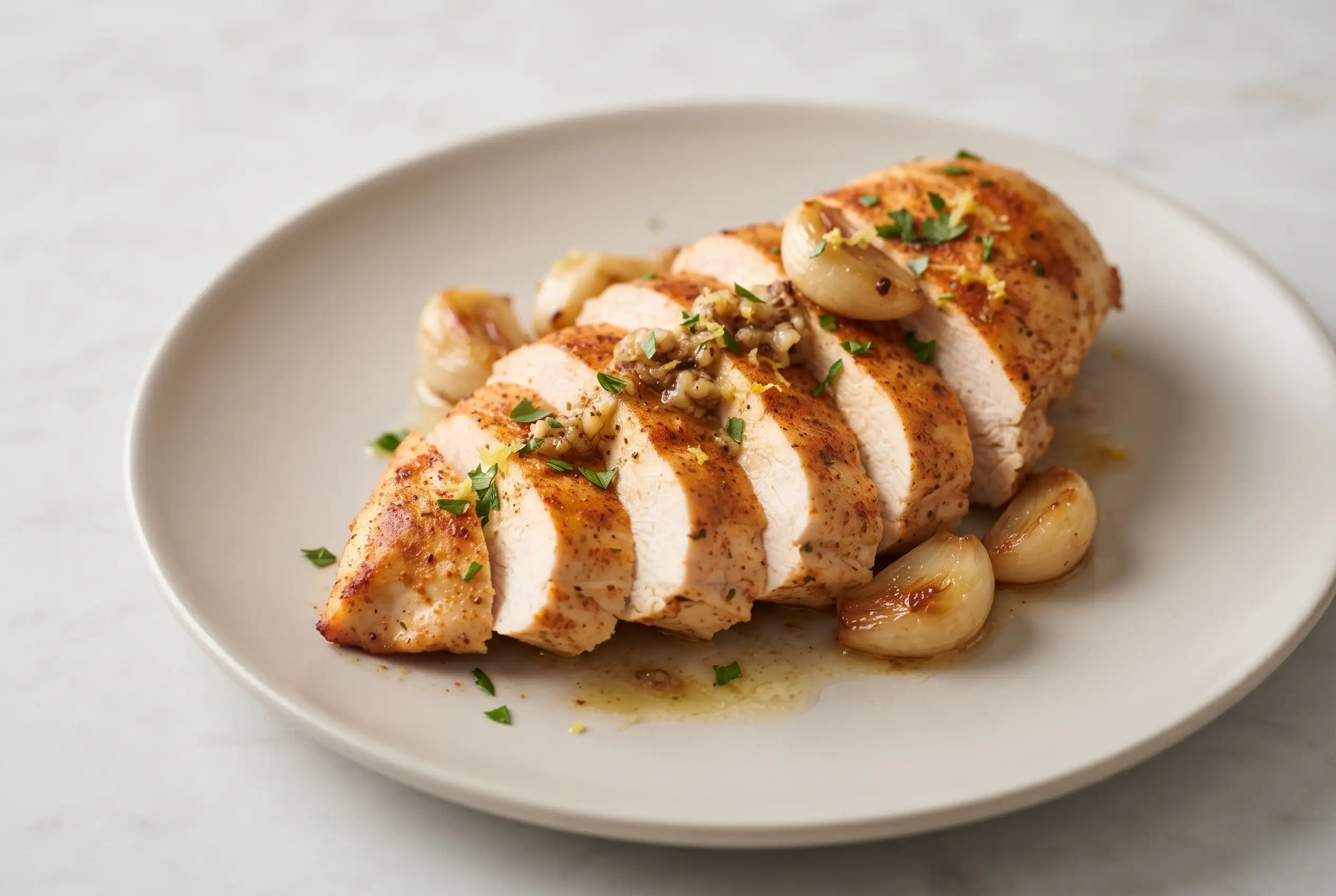
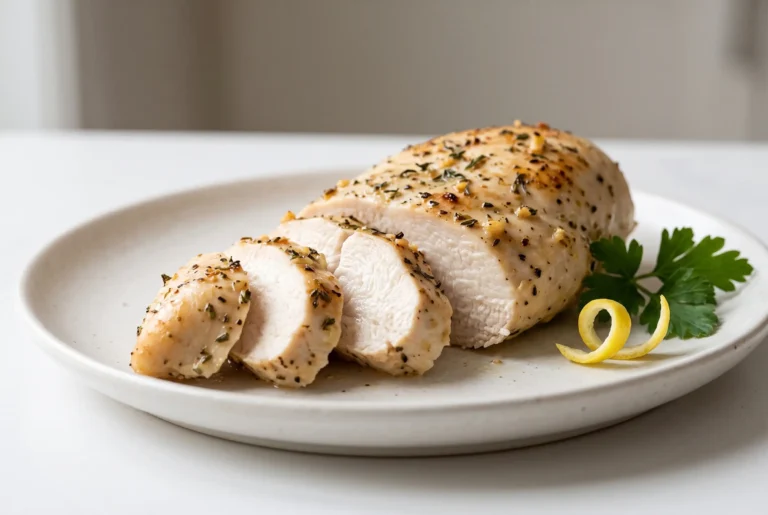
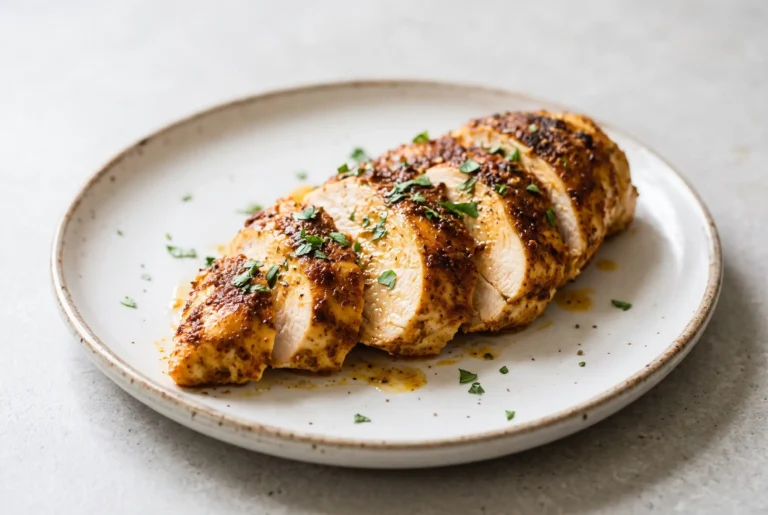
Air fryer garlic butter chicken combines seasoned chicken breasts, mellow roasted garlic, browned butter, and fresh parsley in a dinner that develops crisp golden edges without deep frying. Hot circulating air cooks the chicken quickly, while a late coating of garlic butter adds richness without scorching beneath prolonged high heat.
A quick marinade of olive oil, lemon zest, paprika, oregano, garlic powder, onion powder, salt, and black pepper gives the meat savory depth before cooking. With careful temperature control and evenly sized chicken pieces, the result is juicy air fryer chicken that works equally well for a weeknight plate, grain bowl, salad, or prepared lunch.
Why Garlic Butter Chicken Works So Well in an Air Fryer
Garlic butter chicken breast benefits from the air fryer’s concentrated heat because the surface browns efficiently while the interior cooks through. Several practical details make the combination especially dependable:
- Fast browning: Circulating heat dries the seasoned surface enough to create lightly crisp edges.
- Moisture control: Olive oil coats the chicken and limits excessive surface drying.
- Layered garlic flavor: Garlic powder seasons the marinade, while roasted cloves enrich the finishing butter.
- Balanced richness: Lemon zest and parsley keep the browned butter from tasting overly heavy.
- Flexible serving: The cooked chicken can remain whole, be sliced for bowls, or be cut into smaller portions for family meals.
Roasted Garlic and Brown Butter Need Different Heat
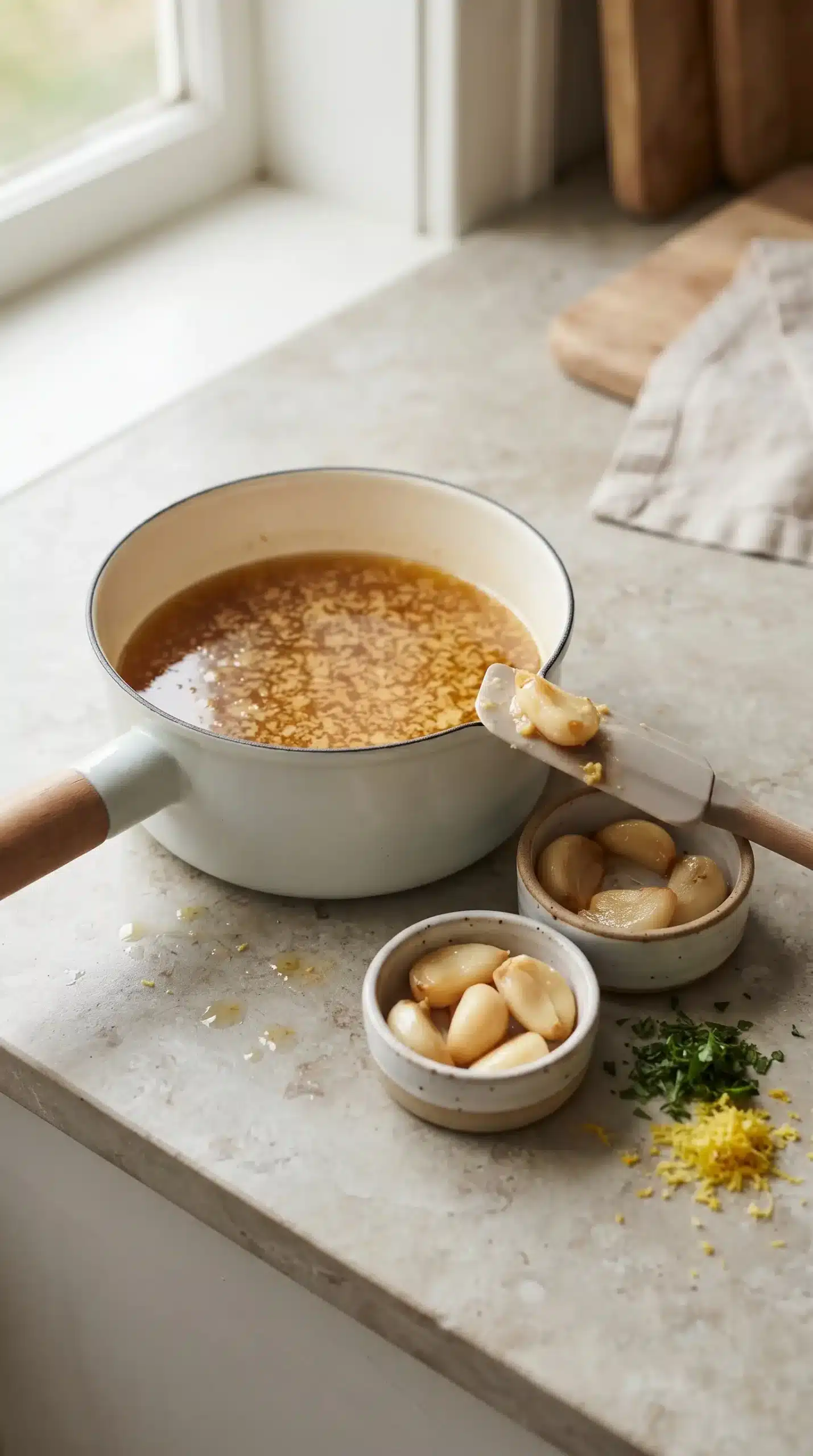
Roasted garlic develops its best texture under gentler heat. Peeled cloves soften and turn golden at 320°F (160°C), producing a mellow flavor and creamy consistency that can be mashed smoothly into butter. Exposing the cloves immediately to the hotter chicken setting could darken their exterior before their centers soften.
Browned butter requires close attention on the stovetop because water evaporates and the milk solids brown as it simmers. A nutty aroma and small golden flecks indicate that it is ready. Removing the pan promptly prevents the toasted flavor from becoming bitter.
Fresh parsley belongs in the butter after browning, where it adds color and a clean herbal finish. Combining the roasted garlic, browned butter, and parsley separately also gives the cook better control over how much sauce reaches each serving.
Even Chicken Thickness Protects Juiciness
Chicken breasts often taper from a thick center to a thin end, which can cause one area to dry out before another reaches a safe temperature. Lightly pounding unusually thick pieces creates a more uniform shape and shortens the difference in cooking time across the meat.
Even thickness matters more than exact size because air fryers vary in power, basket shape, and airflow. Two breasts of similar weight can still finish at different times when one is noticeably thicker. Checking each piece individually is safer than assuming both are done together.
A short rest after cooking allows the hot juices to settle through the meat before slicing. Cutting immediately can release more moisture onto the board, leaving the chicken less succulent on the plate.
| Chicken option | Texture | Cooking consideration |
|---|---|---|
| Chicken breasts | Lean, firm, and sliceable | Pound thick areas for more even cooking |
| Chicken thighs | Softer and naturally juicier | Check doneness because thickness may vary |
| Chicken tenders | Delicate and quick-cooking | Begin checking earlier than full breasts |
Basket Airflow Creates the Golden Exterior
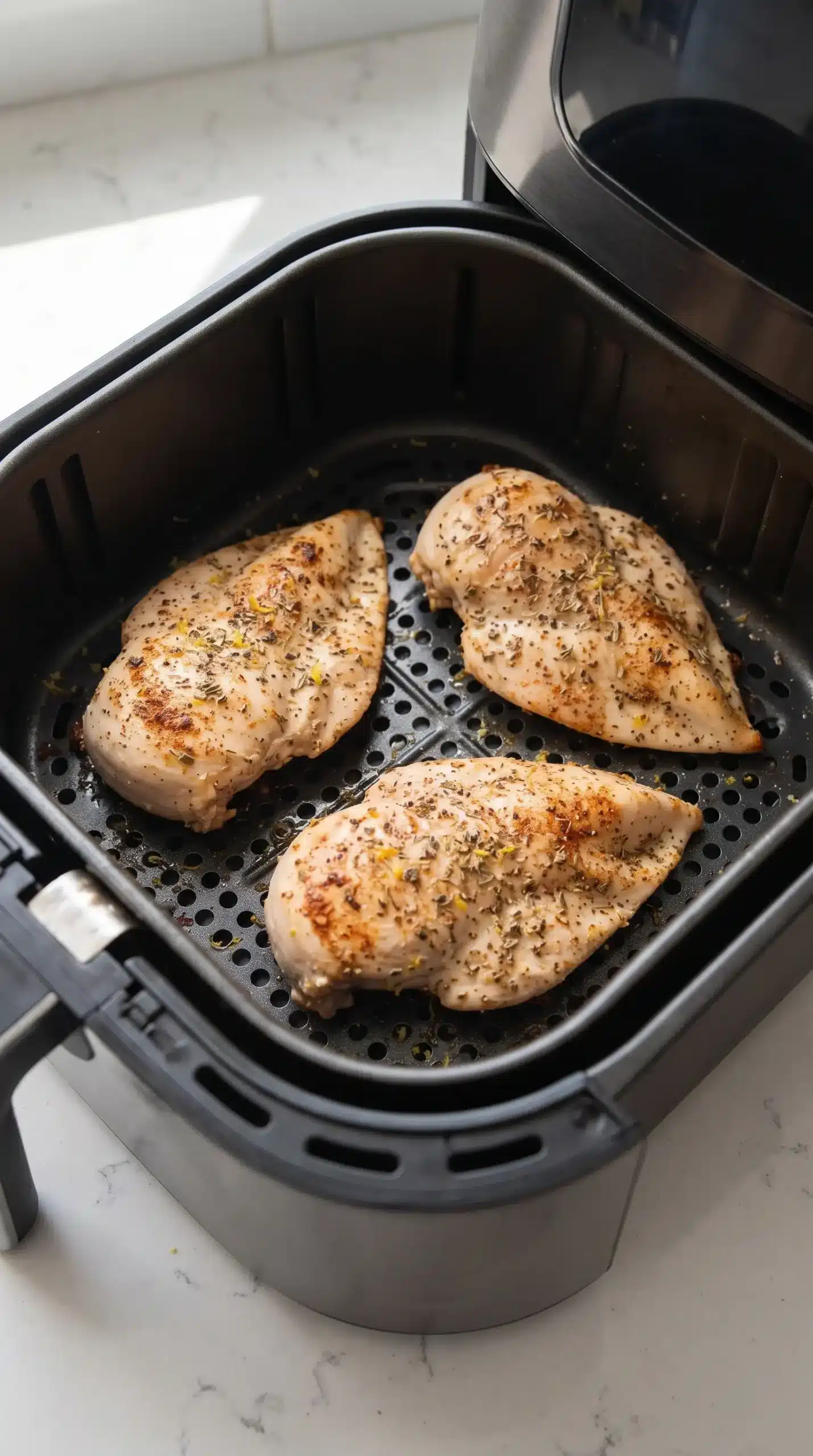
Basket airflow must reach the sides of each chicken breast to create even browning. Arrange the pieces in a single layer with open space around them, and cook in batches when necessary instead of stacking or tightly packing the basket.
Temperature Control Defines Juicy Air Fryer Chicken
Cooking at 375°F (190°C) gives the chicken enough heat to brown while allowing the center to cook without an excessively dark exterior. Preheating helps the seasoned surface begin cooking immediately, improving consistency from the first minute in the basket.
Start checking near the lower end of the stated cooking range, especially when the breasts have been pounded thin. Flip halfway through so both sides receive direct exposure to the hot circulating air. A thermometer inserted into the thickest section should reach 165°F (75°C).
Once cooked, transfer the chicken out of the hot basket so residual heat does not continue drying it. Rest it for five minutes, then spoon over any reserved garlic butter and parsley before slicing or serving whole.
Mistakes That Can Ruin Air Fryer Garlic Butter Chicken
Common mistakes usually involve heat exposure, uneven sizing, or restricted airflow. Overcooking is the most damaging error because lean chicken breasts lose moisture quickly after reaching doneness. A thermometer gives a clearer answer than judging only by surface color.
Overcrowding traps moisture between the pieces and limits browning. When the basket is too full, the chicken may cook through while remaining pale or damp in crowded areas. Leaving space around each portion produces more consistent crispness.
Adding butter too early can create burnt milk solids and bitter garlic residue. Spoon the garlic butter over the chicken during the last few minutes, then add more after resting. Raw garlic should also be avoided at the high chicken temperature because small pieces can scorch before mellowing.
Side Dishes That Catch the Garlic Butter
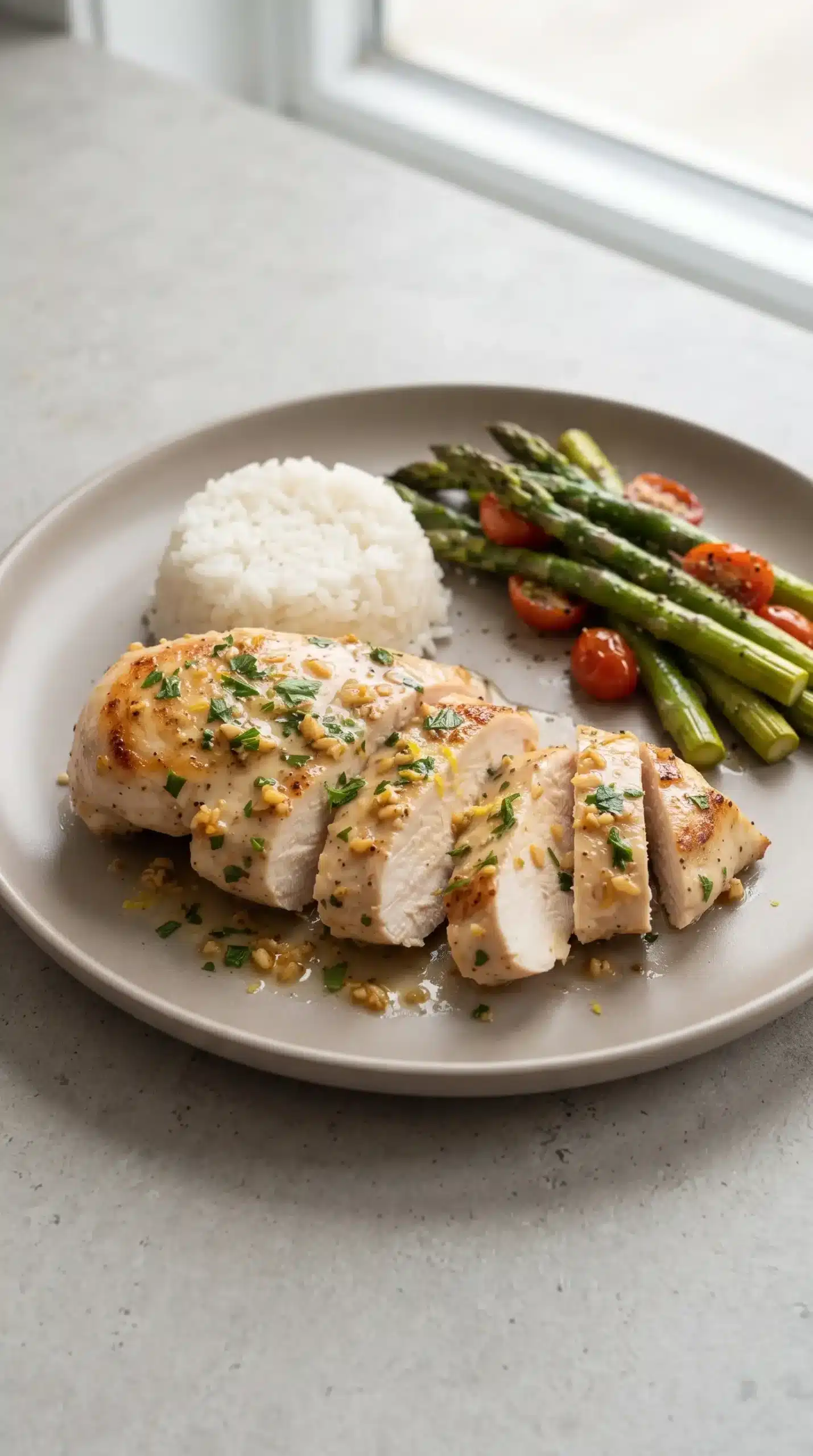
Pairing options should complement both the savory chicken and the buttery sauce without competing with the roasted garlic. Choose sides that can absorb the sauce or add a fresh contrast:
- Fluffy rice or a simple grain bowl
- Mashed or roasted potatoes
- Buttered noodles or pasta
- Roasted vegetables
- Caesar salad or mixed salad greens
- Garlic bread for a richer meal
Flavor Variations Without Changing the Core Technique
For lighter plates, increase the lemon zest and add lemon juice just before serving. Fresh acidity sharpens the buttery finish and works especially well when the chicken is paired with salad greens or vegetables.
Spicy versions can include chili flakes, cayenne pepper, or hot sauce. Add dry heat to the marinade or stir a small amount into the finished garlic butter, depending on whether the seasoning should flavor the meat throughout or remain concentrated in the sauce.
For a fuller garlic Parmesan chicken finish, scatter finely grated Parmesan over the surface during the last few minutes so the cheese browns without burning. Thyme, rosemary, or basil may be folded into the butter for a more herb-forward finish. For a dairy-free version, use dairy-free butter or additional olive oil in place of browned butter.
Storing and Reheating Without Drying the Chicken
Stored chicken should be transferred to an airtight container and refrigerated for up to three days. Keeping extra garlic butter separate makes it easier to control moisture during reheating and prevents the surface from becoming heavily saturated while chilled.
Refrigerated leftovers can be warmed in the air fryer, oven, or microwave on low power. Gentle reheating is important because the chicken has already reached a fully cooked temperature. Adding a small spoonful of garlic butter helps restore surface moisture.
Frozen portions keep for up to two months. Freeze the cooked chicken in practical serving sizes so only the needed amount must be thawed and reheated.
| Storage method | Recommended limit | Best handling approach |
|---|---|---|
| Refrigerator | Up to 3 days | Use an airtight container and keep extra butter separate |
| Freezer | Up to 2 months | Freeze cooked portions in meal-sized packages |
| Reheating | Until warmed through | Use gentle heat and add garlic butter for moisture |
Meal Prep Becomes Easier When Components Stay Separate
Meal prep is most efficient when the chicken, roasted garlic, and browned butter are prepared as separate components. Marinate the meat ahead, roast the garlic in advance, and refrigerate the finished butter until needed; cooked slices can then be portioned into wraps, sandwiches, salads, rice bowls, or quick dinners.
Crisp Edges and Creamy Garlic Create the Texture Contrast
Crisp edges form as circulating heat reduces moisture on the chicken’s seasoned exterior. The surface remains lighter than deep-fried food because it is coated with olive oil instead of submerged in cooking fat.
Roasted cloves provide a creamy element once mashed into the browned butter. Their softened texture allows the sauce to spread across the chicken without leaving sharp pieces of raw garlic or an aggressive bite.
Resting preserves the contrast between the tender interior and lightly firm surface. Garlic butter softens some of the crispness after cooking, so adding it near the end keeps the chicken glossy and rich while retaining enough exterior texture to remain satisfying.
Balanced Heat Makes Garlic Butter Chicken Reliable
Moderate roasting softens the garlic, careful stovetop heat browns the butter, and hotter circulating air cooks the chicken. Keeping those heat stages distinct protects each element from burning while allowing every part to reach its best texture.
Garlic butter chicken breast is at its juiciest when thickness, airflow, and internal temperature guide the cooking time. That control turns a simple 30 minute air fryer chicken dinner into a balanced combination of golden edges, tender meat, and a smooth roasted-garlic finish.
Doneness and Substitution Questions for Garlic Butter Chicken
Can chicken thighs replace chicken breasts?
Boneless chicken thighs are a suitable substitute and usually remain especially juicy. Their size and thickness may differ from breasts, so use internal temperature instead of relying on the same cooking duration.
Can the chicken be baked without an air fryer?
Bake the seasoned chicken at 375°F (190°C) for 20 to 25 minutes, checking the thickest section for an internal temperature of 165°F (75°C) before resting.
Does the chicken need to marinate overnight?
An overnight marinade can deepen the seasoning, but it is not essential. A brief marinating period still allows the oil, zest, herbs, and spices to coat the surface effectively.
Can the garlic butter be prepared early?
Roasted garlic and browned butter can be combined in advance and refrigerated. Warm the mixture gently before use so the butter melts without further browning the milk solids.
How can the garlic flavor be made milder for children?
Use the soft roasted garlic in the butter and reduce black pepper or paprika as needed. Serving the sauce on the side also lets each person choose how much garlic butter reaches the chicken.
Air Fryer Garlic Butter Chicken with Roasted Garlic
Ingredients
Method
- Mix 2 tablespoons olive oil with lemon zest, paprika powder, oregano, salt, garlic powder, onion powder, and black pepper in a bowl.
- Coat the chicken breasts evenly with the seasoned oil mixture and allow them to rest for at least 15 minutes.
- Arrange the peeled garlic cloves in the air fryer and cook at 320°F / 160°C for about 10 minutes until softened and lightly browned, then remove and set aside.
- Warm the butter in a small pan over medium heat until it becomes lightly browned.
- Add the roasted garlic cloves to the browned butter and mash them gently, then mix in the chopped fresh parsley.
- Preheat the air fryer to 375°F / 190°C.
- Place the marinated chicken breasts in the air fryer basket and cook for 12–15 minutes, turning halfway through the cooking time.
- Add garlic butter over the chicken during the final few minutes of cooking.
- Continue cooking until the chicken reaches an internal temperature of 165°F / 74°C, then rest for 5 minutes before serving.
- Serve the chicken warm with additional garlic butter and fresh parsley.