Amish Snow Day Soup with Potatoes and Tender Noodles
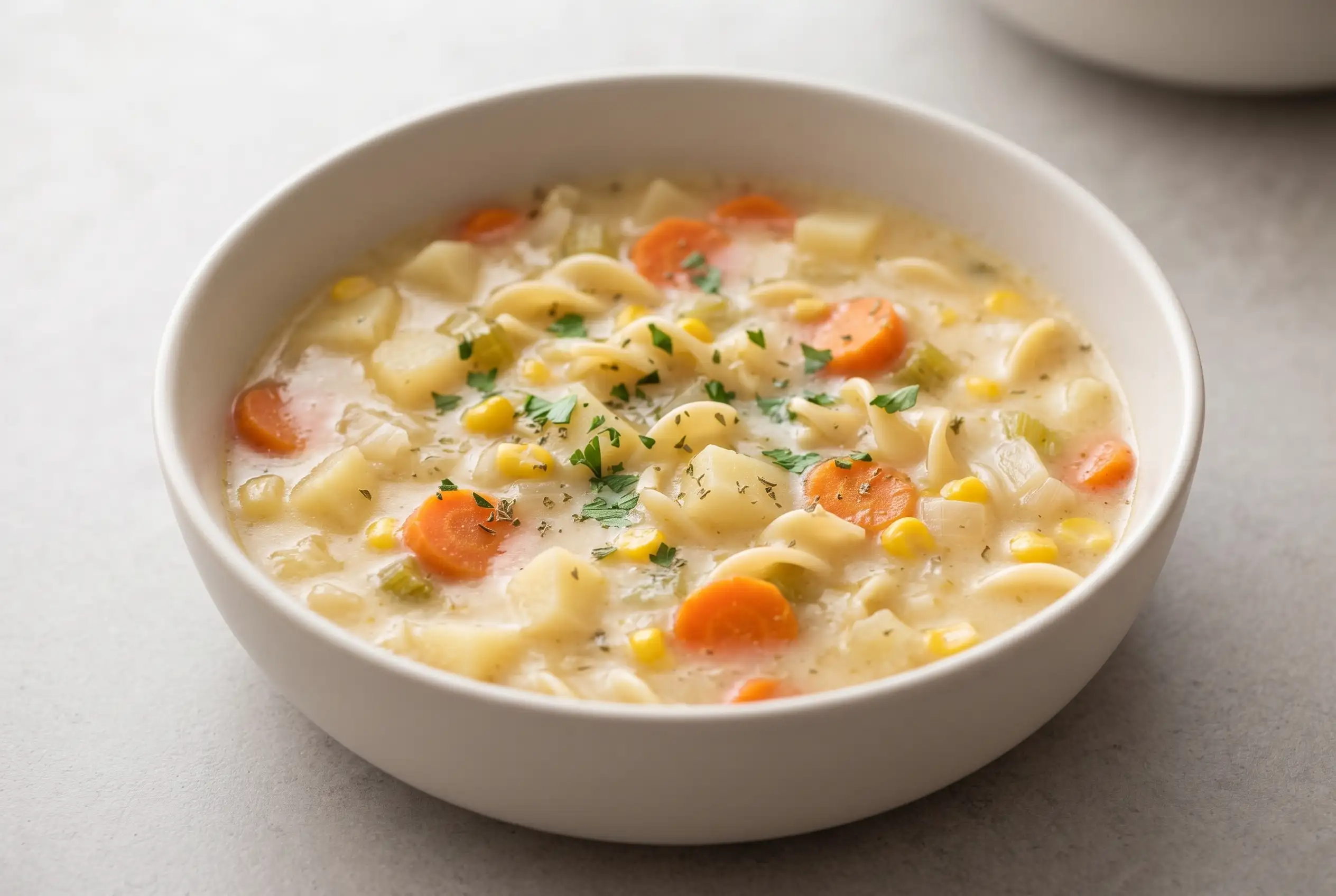
Amish snow day soup turns everyday vegetables, broth, tomatoes, potatoes, and tender noodles into a warm one-pot meal with a rustic, deeply comforting character. Its appeal comes from contrast: sweet corn against savory herbs, soft potato beside chewy pasta, and a broth that can stay light or become creamy with the optional addition of heavy cream.
Cold-weather dinners often need to be practical as well as satisfying, and this easy Amish soup recipe fits that need without relying on complicated techniques. Careful vegetable cutting, a patient sauté, and gentle simmering do most of the work, while a few small choices help the finished soup keep its best texture.
A Brothy Soup with Rustic Body
Unlike a puréed vegetable soup, Amish snow day soup keeps recognizable pieces of carrot, celery, corn, potato, and pasta in every bowl. The potatoes soften the broth slightly as they simmer, creating enough body to feel substantial without turning the soup dense.
Vegetable Size Controls the Finished Texture
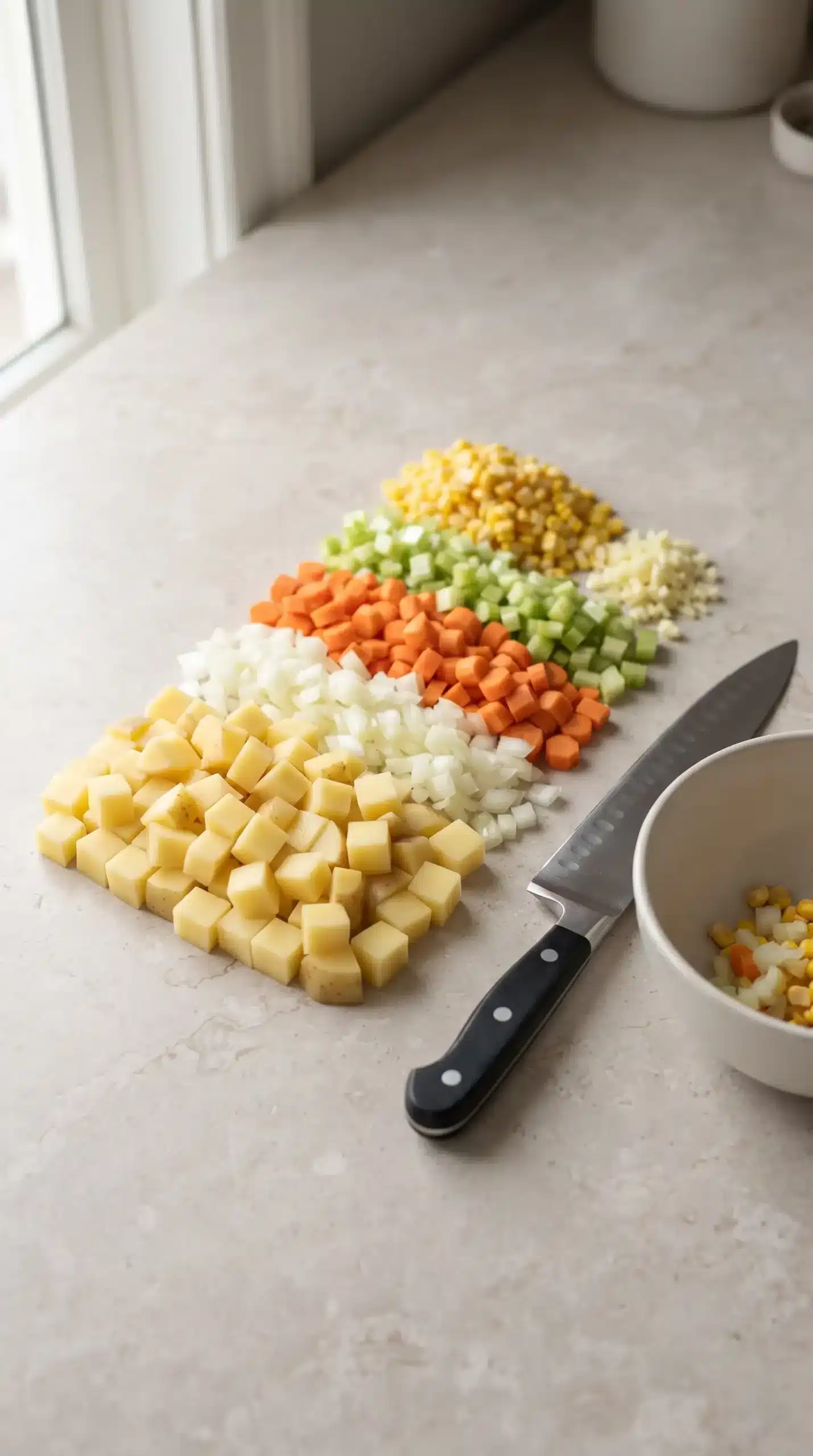
Evenly diced onion, carrots, celery, and potato cook at a similar pace, which prevents a bowl containing hard carrot pieces beside collapsing potatoes. Aim for small, consistent pieces that fit comfortably on a spoon with the noodles.
Smaller cuts are especially useful when preparing a quick dinner or serving younger eaters. They soften more readily, distribute through the broth, and make each spoonful feel balanced instead of dominated by one large vegetable.
Potato cubes deserve special attention because their size affects both tenderness and thickening. Pieces that are too large may stay firm after the other vegetables are ready, while very tiny cubes can break down almost completely.
Broth, Tomatoes, and Herbs Need Balance
The soup base combines broth with undrained diced tomatoes, so seasoning should account for both savory depth and tomato acidity. Chicken broth gives a fuller flavor, while vegetable broth keeps the pot meat-free and still supports the herbs and vegetables.
Dried thyme and oregano are strong enough to season the whole pot, but they should not dominate the mild vegetables. Add salt with restraint at first because broth and canned tomatoes may already contribute seasoning.
Near serving time, taste the liquid itself instead of judging only a noodle or potato piece. A balanced spoonful should taste savory, lightly herbal, and rounded, with the corn and carrots adding gentle sweetness.
The Sauté Builds the Soup’s Foundation
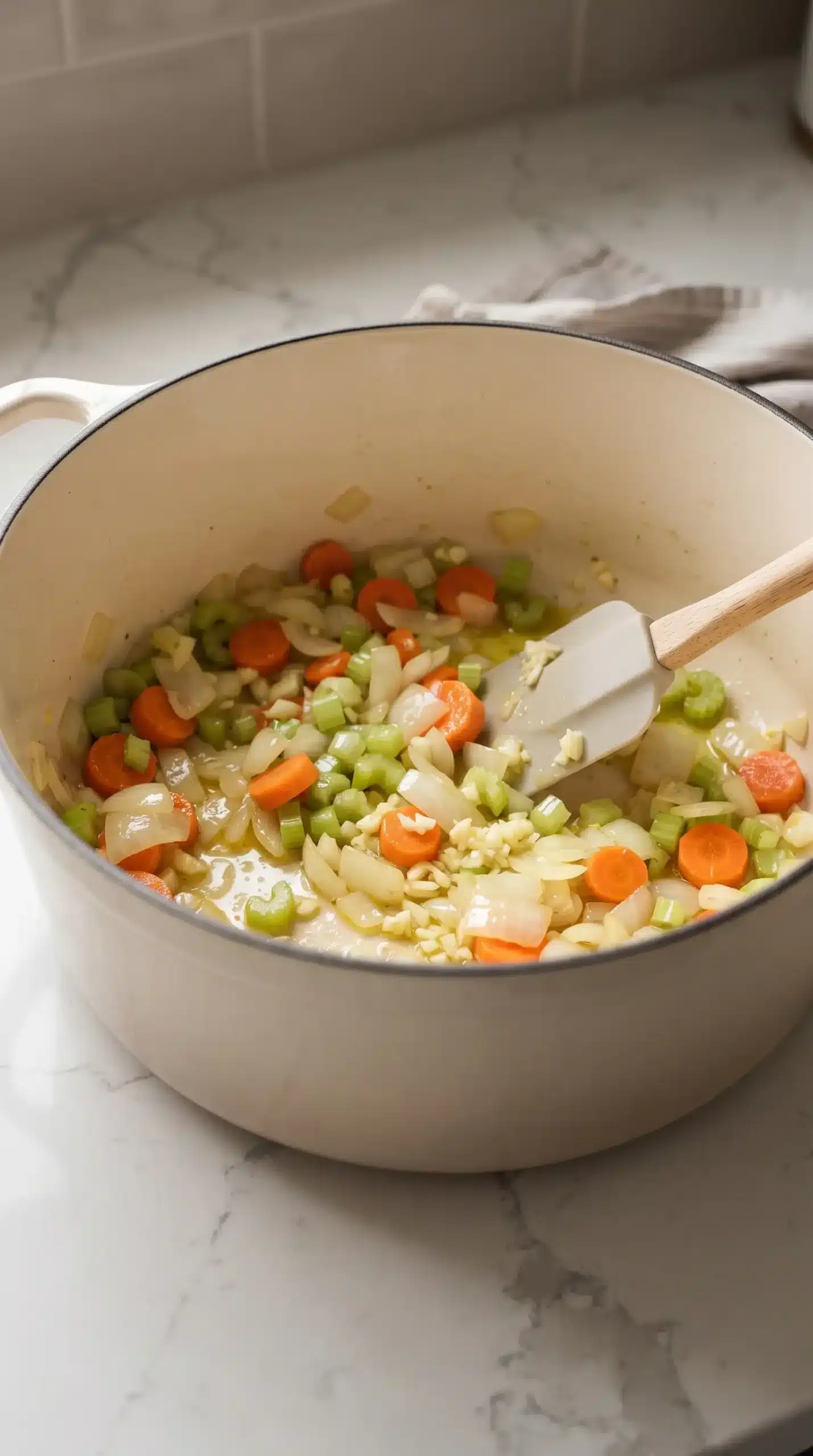
Heating the onion, garlic, carrots, and celery in olive oil before adding liquid gives the vegetables time to soften and release aroma. Medium heat is preferable because aggressive browning can overpower the mild, cozy profile of the soup.
Stir often enough to prevent garlic from catching on the bottom of the pot. Once the onion looks softened and the vegetables smell fragrant, the broth ingredients can be added without waiting for deep color. A sturdy soup pot or Dutch oven supports even heating and gives the vegetables useful contact with the oil.
Gentle Simmering Protects Every Ingredient
After the broth, tomatoes, corn, potato, and herbs enter the pot, bring the liquid to a gentle boil and then reduce the heat. A steady simmer cooks the vegetables evenly while keeping the broth clear and the potato pieces intact.
Fork-tender potato is the best visual and tactile cue for readiness. The fork should slide into a cube without resistance, yet the piece should still hold together when stirred.
Once the cooked noodles and optional cream are added, low heat becomes even more important. Vigorous boiling can make dairy separate and can break delicate noodles into short, soft pieces.
Noodles Decide Whether Leftovers Stay Pleasant
Cooked egg noodles make the soup hearty, but pasta continues absorbing liquid after the pot leaves the stove. Stirring them into a pot meant for immediate serving is convenient and gives the edges time to take on flavor. For meal prep, store the noodles separately and add them to each bowl during reheating so they stay tender without swelling and taking over the broth.
| Serving plan | Best noodle approach | Texture result |
|---|---|---|
| Serve the whole pot now | Stir cooked noodles into the soup | Tender noodles with seasoned edges |
| Refrigerate leftovers | Keep noodles in a separate container | Broth stays looser and pasta stays distinct |
| Freeze the soup base | Leave noodles out until reheating | Less risk of soft or broken pasta |
Cream Changes Richness, Not the Core Character
Heavy cream is optional, so the soup can remain bright and broth-forward or become softer and more velvety. Add it only after the vegetables are tender and the heat has been lowered.
Half-and-half, coconut milk, or oat cream can provide a similar smoothing effect, although each changes the flavor slightly. Whatever option is used, gentle heat keeps the liquid cohesive.
Skipping dairy does not leave the soup thin or unfinished. Potatoes contribute natural starch, while noodles and vegetables make the bowl substantial enough for a full meal.
Amish Snow Day Soup Mistakes to Avoid
- Uneven chopping: mixed vegetable sizes lead to inconsistent tenderness.
- Hard boiling: rough bubbling can damage noodles and cause cream to separate.
- Early pasta addition: noodles left too long in the pot can absorb excessive broth.
- Unadjusted seasoning: salt levels vary between broths and canned tomatoes, so tasting near the end matters.
Several problems can be corrected before serving. Extra broth loosens a pot that has thickened too much, while a few mashed potato pieces add body when the liquid feels lighter than desired.
Useful Variations for Different Tables
Shredded rotisserie chicken, turkey, sausage, or ground beef can turn the vegetable-and-noodle base into a more protein-rich dinner. Add already cooked meat near the end so it warms through without overcooking.
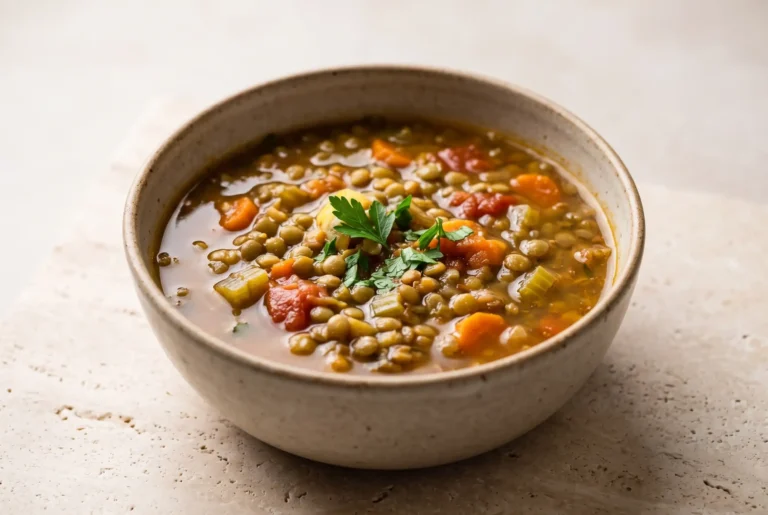
A vegetarian version works naturally with vegetable broth and can be made more filling with beans or lentils. Cooked lentils add earthy flavor, protein, and body without requiring dairy, qualities that make lentil soup especially satisfying as a meat-free dinner. For a richer variation, shredded cheddar may be stirred in over low heat until melted.
- Add red pepper flakes, jalapeños, or cayenne pepper for a spicier bowl.
- Replace the potato with cauliflower and choose less pasta for a lower-carb option.
- Use small shells, alphabet pasta, or elbow macaroni for a kid-friendly shape.
Extra vegetables such as zucchini, mushrooms, spinach, or green beans also fit the flexible nature of the soup. Add quick-cooking greens near the end and firmer vegetables early enough to become tender. Avoid crowding the pot with so many additions that the broth disappears; the liquid should still move easily around the vegetables and pasta. That flexibility makes the Amish snow day soup recipe practical for using produce already available at home.
Serving Choices That Complete the Bowl
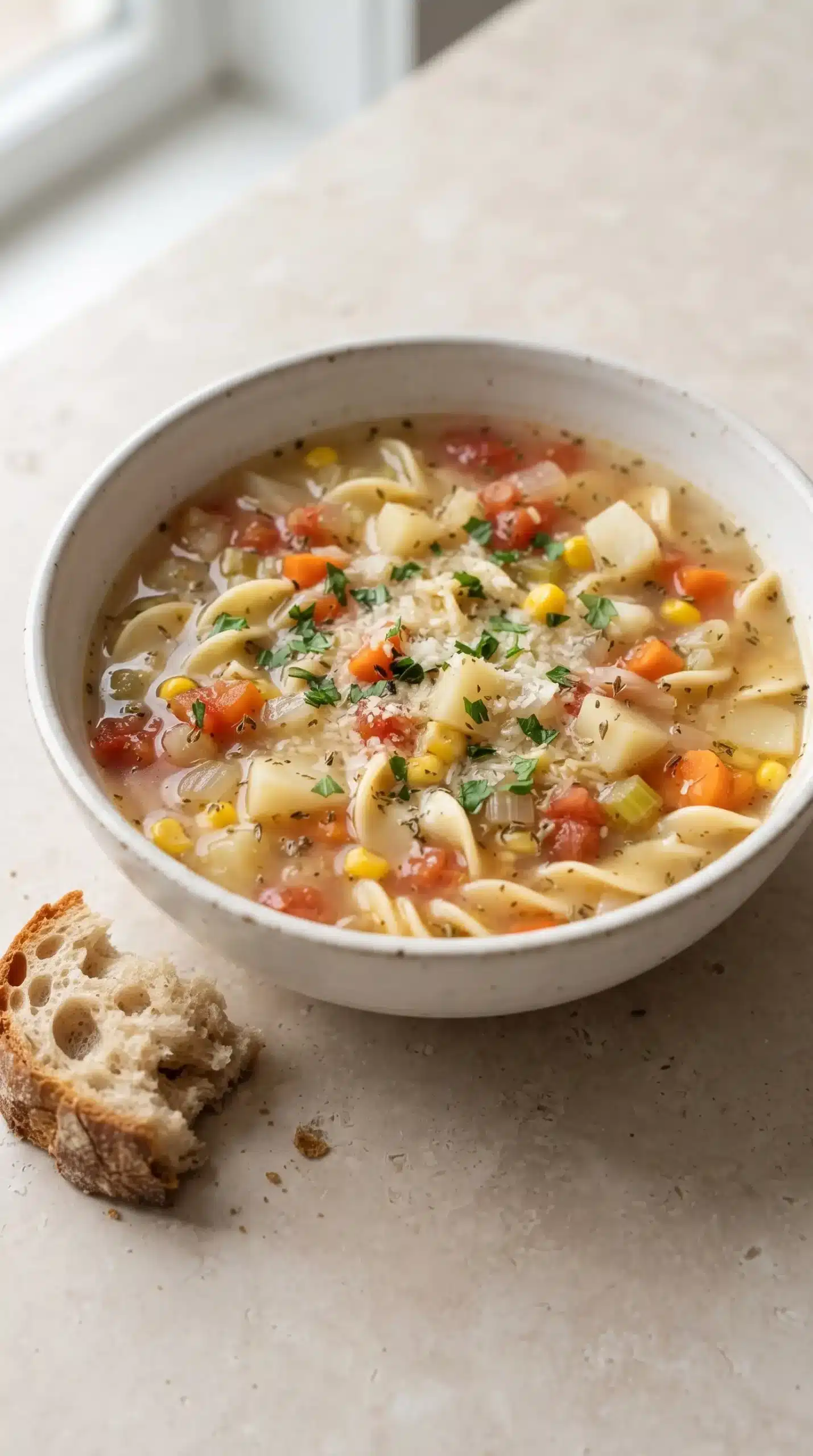
Crusty bread, garlic toast, crackers, cornbread, grilled cheese, or a simple Caesar salad all suit the savory broth and tender vegetables. A crisp side is especially useful when cream is included because it offsets the softer, richer texture. Fresh parsley or Parmesan can finish individual bowls without changing the character of the entire pot, letting each person adjust freshness and richness at the table.
Storage and Reheating Need a Light Touch
Refrigerated leftovers keep best in an airtight container for up to three days. When possible, store noodles apart from the soup base so the broth remains spoonable.
After serving, transfer the remaining soup to shallow containers and refrigerate cooked leftovers within two hours so the pot does not remain at room temperature too long.
Freezing works for up to two months, especially when cream and noodles have not yet been added. That approach preserves a cleaner texture and allows fresh pasta or dairy to be stirred in after thawing.
During reheating, use medium-low heat on the stovetop or short intervals in the microwave. Add a splash of broth if the soup has thickened, then stir gently until the vegetables and noodles are heated through.
| Storage method | What to separate | Best reheating move |
|---|---|---|
| Refrigerator | Noodles from broth when practical | Warm gently and combine before serving |
| Freezer | Noodles and cream from the soup base | Thaw, heat, then add fresh finishing ingredients |
| Single portions | Pack broth and pasta in divided containers | Add extra broth only if needed |
Simple Prep Choices Save Weeknight Time
Pre-cut onions, carrots, and celery reduce knife work, while frozen corn and store-bought broth keep shopping and preparation straightforward. Pre-cooked noodles can also be held separately until the soup is nearly ready.
Chopping vegetables earlier in the day offers another practical advantage because the cooking stage then becomes mostly hands-off. Keep the potato covered and chilled after cutting, and hold the remaining vegetables together for easy transfer to the pot. A food processor can help with larger batches, although careful knife cuts give better control over final size.
For a 30 minute comfort soup, organization matters more than speed at the stove. Have the vegetables cut, the can opened, and the broth measured before heating the pot so each stage flows without rushing.
Soft Potatoes and Gentle Heat Define the Best Bowl
Soft potato cubes are the clearest sign that the soup has reached its ideal point: the broth has gained light body, the vegetables have softened, and the herbs have had time to season the liquid. Adding noodles and cream only after that point protects their texture.
Careful heat control keeps Amish snow day soup rustic but balanced, with distinct vegetables, tender pasta, and a savory broth that stays comforting whether served creamy or clear.
Noodle, Freezing, and Thickening Questions
Can uncooked noodles go directly into the broth?
They can, but the supplied method uses cooked noodles, which gives better control over broth level and texture. Direct-cooked pasta may require extra liquid and can become soft during storage.
Which potato works best for a creamier result?
Yukon Gold potatoes give a naturally smooth texture, while a standard peeled potato also works well. Lightly mashing a few cooked cubes creates additional body without blending the whole pot.
How can the soup stay vegetarian and filling?
Use vegetable broth, keep the cream optional, and add beans or lentils for more substance. The potato, corn, vegetables, and pasta already provide a hearty base.
What should be added after freezing?
Freshly cooked noodles and cream are best added after the thawed soup base has reheated. This keeps the pasta from becoming overly soft and the dairy from losing its smooth finish.
How can an overly thick pot be fixed?
Stir in additional broth a little at a time over gentle heat until the preferred consistency returns. Taste again afterward because extra liquid may soften the seasoning.
Amish Snow Day Soup with Potatoes and Tender Noodles
Ingredients
Method
- Warm the olive oil in a large soup pot over medium heat. Add the onion, garlic, carrots, and celery, then cook for 5–10 minutes until the vegetables soften.
- Add the potato, corn, diced tomatoes with their juices, broth, thyme, oregano, salt, and pepper. Bring the mixture to a gentle boil.
- Lower the heat and simmer for 20 minutes, or until the potatoes are tender and the vegetables are fully softened.
- Mix in the cooked egg noodles or pasta and optional heavy cream. Heat gently for 5 minutes without allowing the soup to boil.
- Taste and adjust the seasoning if needed, then finish with fresh parsley before serving warm.