Creamy Lemon Salmon with Garlic Sauce and Dill Recipe
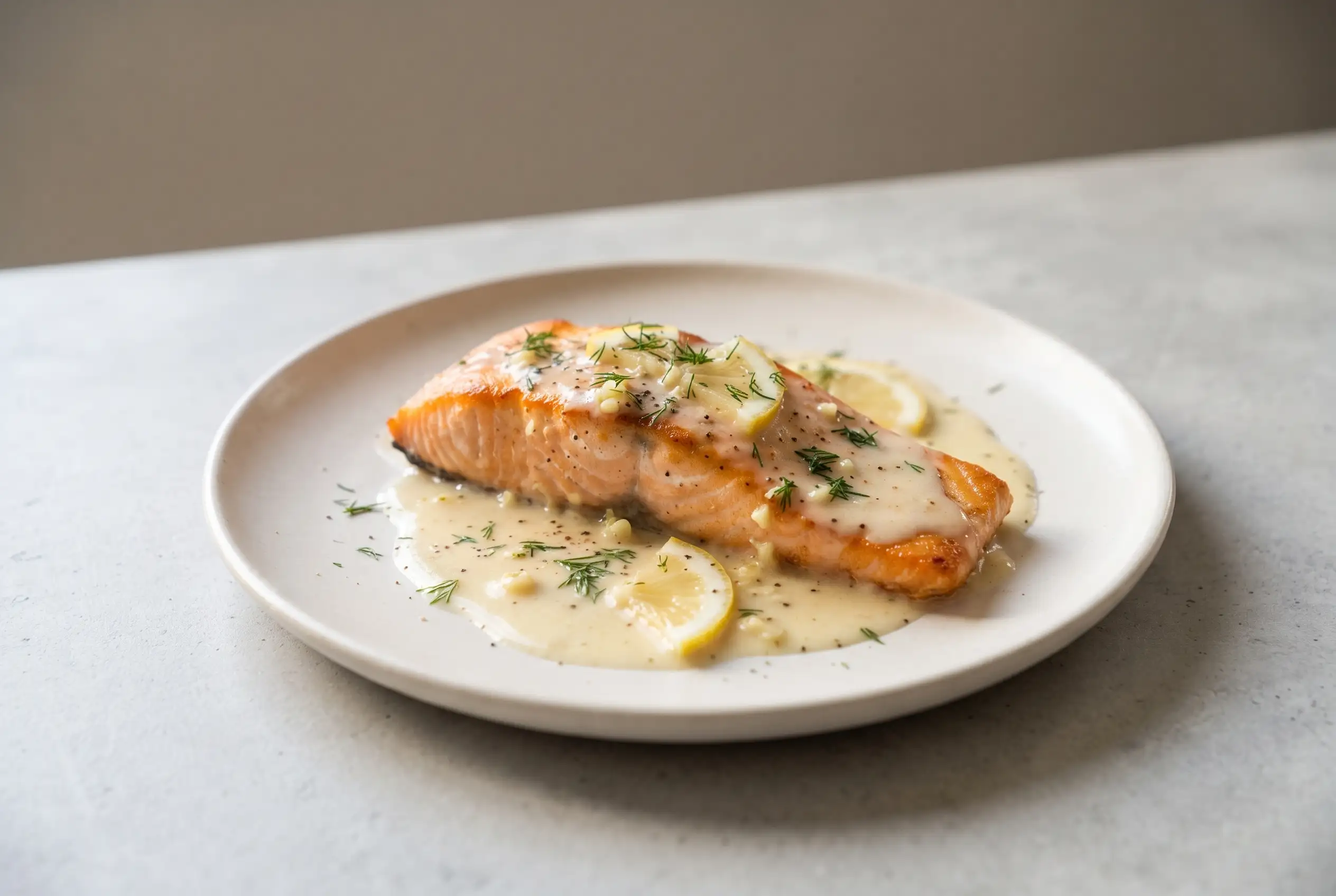
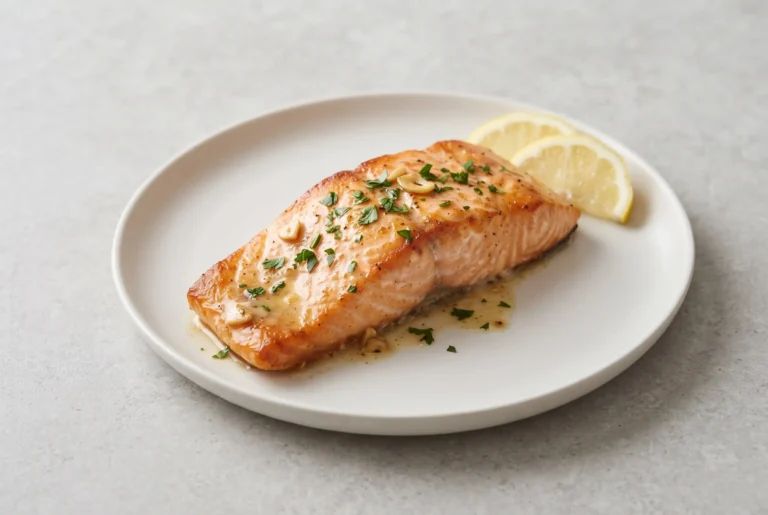
Salmon with Lemon Cream Sauce brings together golden-seared salmon fillets and a silky garlic lemon cream sauce for a seafood dinner that feels elegant while remaining practical for home cooking. Fresh lemon, butter, cream, and dill create a balanced flavor profile where richness is lifted by bright citrus.
A creamy lemon salmon recipe like this works because each part of the dish has a clear purpose. The salmon develops a browned exterior in the skillet, while the smooth sauce adds moisture, herbal freshness, and a comforting finish.
Why Salmon with Lemon Cream Sauce Works for Dinner
The appeal of salmon in lemon cream sauce comes from the contrast between textures and flavors. Tender fish pairs with a velvety sauce, creating a meal that feels complete without requiring complicated preparation.
Busy evenings benefit from the one-skillet approach. The same pan used for searing the salmon also becomes the base for the garlic cream sauce, allowing the browned flavors from cooking to blend into the finished dish.
The Balance Behind the Creamy Lemon Sauce
Lemon keeps the sauce bright and prevents the creamy texture from becoming overwhelming. Juice adds fresh acidity, while zest brings concentrated citrus aroma that changes the overall character of the sauce.
Garlic, dill, butter, and cream work together to create layers of flavor. The garlic provides savory depth, dill adds a fresh herbal note, and butter helps create a smooth sauce texture that coats the salmon evenly.
Careful heat management matters throughout cooking. A gentle simmer allows the cream sauce to thicken smoothly while preserving the delicate balance between richness and freshness.
Ingredient Choices That Improve Salmon with Lemon Cream Sauce
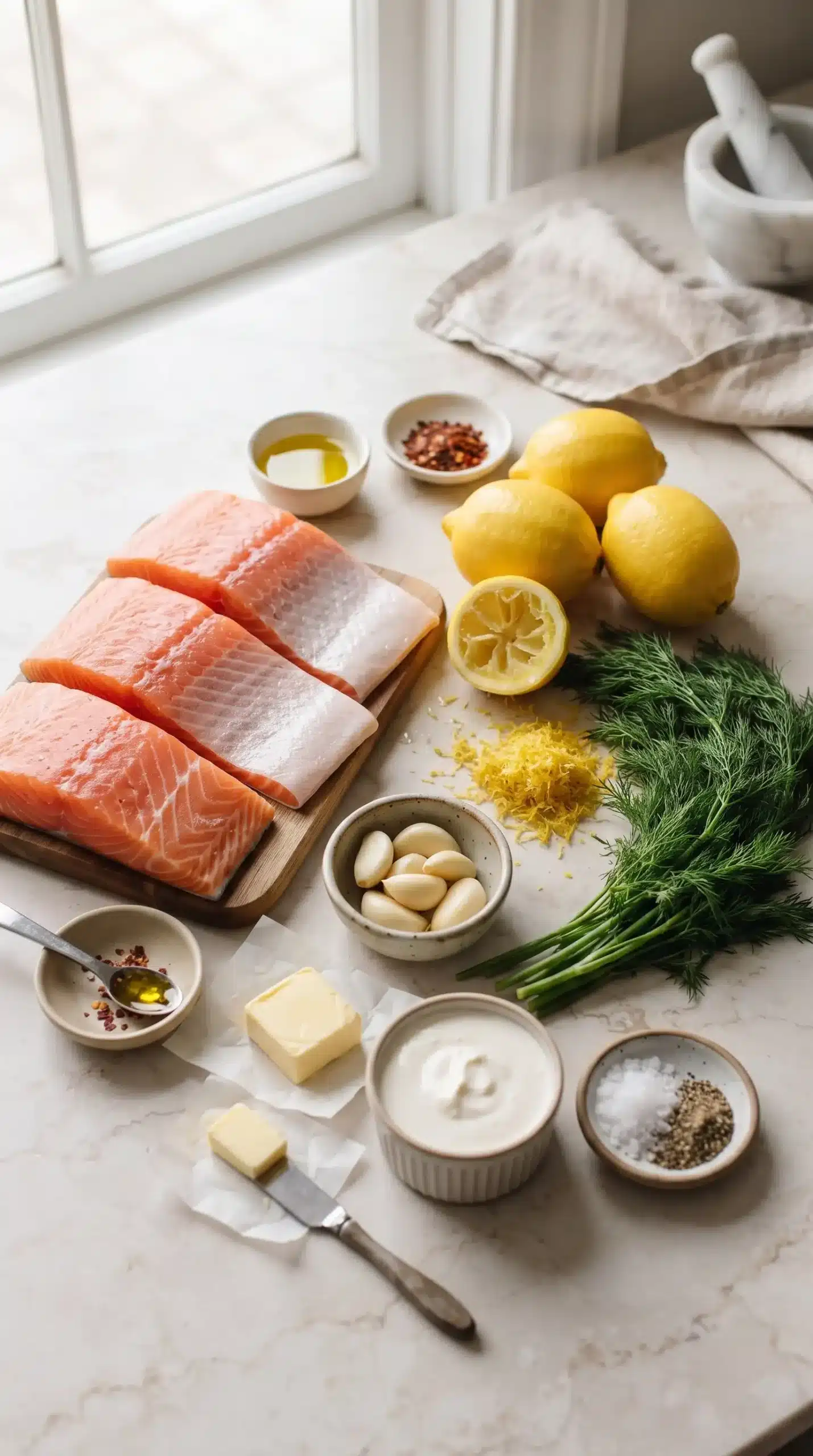
Salmon selection has the biggest effect on the finished dish. Fresh salmon offers excellent texture, while fully thawed frozen salmon can also work well when the surface is dried before cooking.
Atlantic salmon provides a rich buttery texture, while sockeye salmon offers a firmer bite and stronger flavor. Either option can pair successfully with the creamy lemon sauce.
Heavy cream creates the luxurious consistency expected from this dish. Lighter dairy options can produce a thinner sauce, while fresh lemon and herbs help maintain the bright flavor profile.
| Ingredient choice | Cooking impact | Best use |
|---|---|---|
| Fresh lemon juice | Adds bright acidity | Use for a fresher sauce flavor |
| Lemon zest | Provides concentrated citrus aroma | Add after the sauce begins thickening |
| Fresh dill | Adds herbal freshness | Stir in near the end of cooking |
| Heavy cream | Creates silky texture | Use for a richer sauce consistency |
Skillet Control Creates Better Salmon Texture
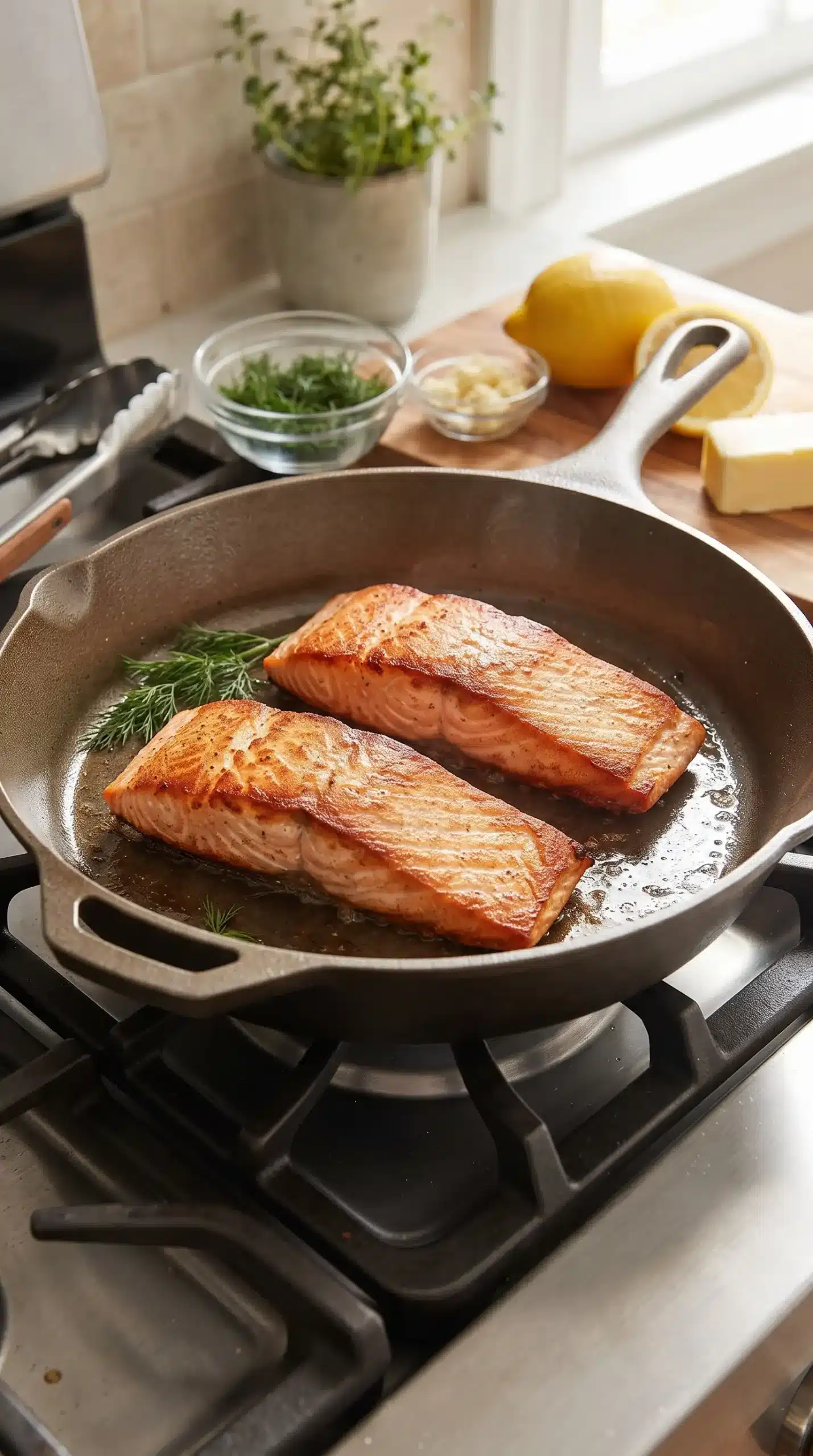
Proper searing begins with dry salmon. Removing surface moisture helps the fish develop the golden crust that gives this dish its restaurant-style appearance. Drying salmon before cooking is essential for a browned exterior, and Pan Seared Salmon with Lemon Butter features a skillet method focused on developing crisp surface texture.
Medium-high heat supports browning during the initial sear, while reducing the temperature afterward protects the cream sauce from becoming unstable. The sauce needs gentle cooking to stay smooth.
Successful cooking depends on small observations during the process. The salmon should release naturally after developing color, and the sauce should become slightly thickened without aggressive bubbling.
- Dry surface: Helps create better browning on the salmon.
- Steady whisking: Keeps the flour and cream mixture smooth.
- Gentle simmer: Protects the creamy sauce texture.
- Final spooning: Coats the salmon with extra flavor before serving.
Mistakes That Can Affect Salmon with Lemon Cream Sauce
Overcooking salmon is one of the easiest ways to lose the tender texture that makes this dinner appealing. The fish continues cooking slightly after leaving the heat, so careful timing matters.
Rapid boiling can damage the cream sauce. A high temperature may cause separation, leaving the sauce less smooth and less enjoyable.
Skipping fresh citrus changes the flavor balance. Bottled lemon juice does not provide the same brightness, and leaving out zest removes an important layer of aroma.
Side Pairings for a Complete 30 Minute Salmon Dinner
Salmon with Lemon Cream Sauce pairs naturally with sides that can absorb the silky sauce or provide contrast. Comforting options such as potatoes and pasta highlight the richness, while vegetables add freshness.
- Garlic mashed potatoes
- Buttered noodles
- Rice pilaf
- Roasted asparagus
- Steamed broccoli
- Fresh green salad
Storage and Reheating for Leftover Salmon
Leftover salmon can be stored in an airtight container for up to three days with proper cooked salmon storage practices. Keeping the fish with its sauce helps preserve moisture during storage.
Freezing is less ideal because cream sauces may separate after thawing. Gentle reheating gives better results than high heat, which can quickly dry the salmon.
A skillet over low heat works well for warming leftovers. Adding a small splash of cream, milk, or broth can help loosen the sauce if it becomes thicker after refrigeration.
Variations Inspired by Salmon with Lemon Cream Sauce
Simple adjustments can create new versions while keeping the same creamy citrus foundation. Spinach can be added near the end of cooking for extra color and texture.
Parmesan creates a richer variation with additional savory flavor. A small amount of spice from red pepper flakes or cayenne can also add warmth for those who prefer a stronger finish.
Herb swaps provide another easy change. Dill remains a natural pairing, but parsley, basil, thyme, or chives can bring different herbal notes to the sauce.
Texture Details That Define This Creamy Salmon Dinner
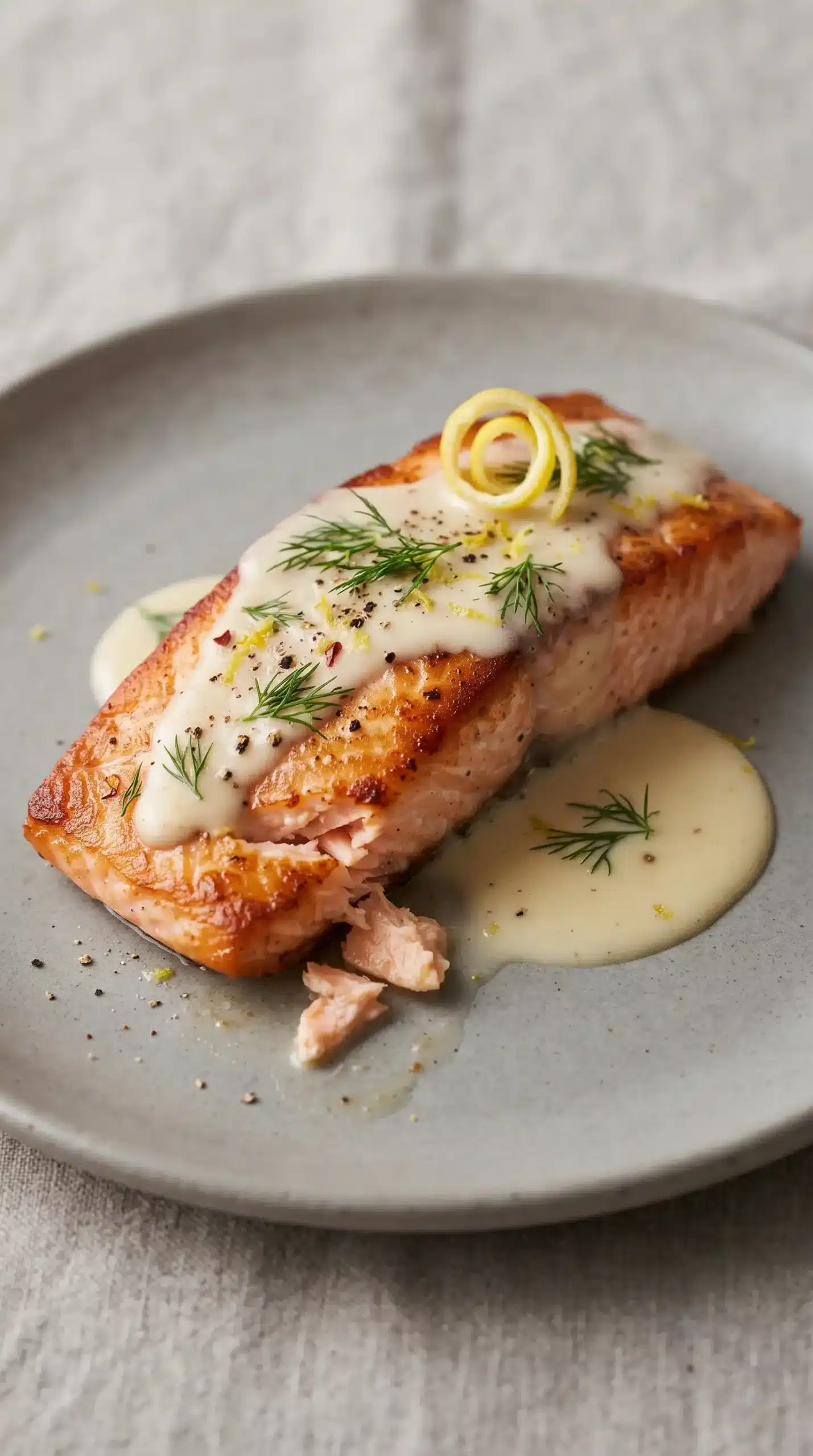
The salmon should offer a contrast between a lightly browned exterior and a soft flaky center. That texture difference is what allows the creamy sauce to feel balanced instead of heavy.
The sauce consistency is equally important. A properly prepared lemon cream sauce should cling lightly to the salmon while remaining smooth enough to spread across side dishes.
Family-Friendly Ways to Serve Salmon in Lemon Cream Sauce
Mild flavors make this salmon dinner approachable for many family meals. Serving smaller pieces over pasta or rice can make the dish easier for younger diners to enjoy.
Making Salmon with Lemon Cream Sauce Feel Special
Fresh lemon, careful searing, and gentle sauce preparation transform simple ingredients into a polished seafood dinner. The most important decision is controlling heat so the salmon stays tender and the sauce remains creamy.
Questions About Storage, Sauce Texture, and Cooking Concerns
Can I use frozen salmon for this recipe?
Yes. Frozen salmon works well when it is completely thawed and dried thoroughly before seasoning and cooking. Removing excess moisture helps the fish brown properly in the skillet.
How can I prevent the cream sauce from separating?
Keep the sauce at a gentle simmer instead of boiling it. Lower heat allows the cream, butter, and other ingredients to combine into a smoother texture.
What temperature should salmon reach when cooked?
Salmon should reach 145°F internally and should flake easily when finished. Checking doneness carefully helps avoid a dry texture.
Can I bake the salmon instead of searing it?
Yes. The salmon can be baked at 375°F for 12–15 minutes, then served with the prepared lemon cream sauce.
What can replace heavy cream?
Half-and-half, coconut cream, or evaporated milk can be used depending on the texture and flavor you want. Lighter substitutions may create a thinner sauce.
Creamy Lemon Salmon with Garlic Sauce and Dill
Ingredients
Method
- Dry the salmon fillets with paper towels, then season both sides with salt and black pepper.
- Warm the olive oil in a large skillet over medium-high heat. Place the salmon skin-side up and sear for about 5 minutes until golden.
- Turn the salmon carefully and continue cooking for another 4–5 minutes until almost fully cooked, then move the fillets to a plate.
- Lower the skillet heat to medium-low. Add the butter and minced garlic, cooking for about 30 seconds until fragrant.
- Add the flour to the skillet and whisk constantly to create a smooth roux.
- Gradually whisk in the heavy cream and gently simmer the sauce for 3–4 minutes until it thickens slightly.
- Mix in the lemon juice, lemon zest, and chopped fresh dill, then adjust the seasoning with salt and black pepper.
- Place the salmon back into the skillet and coat it with the lemon cream sauce while gently simmering for 2 minutes.
- Confirm the salmon reaches 145°F / 63°C internally, then serve warm with extra dill, lemon slices, and cracked black pepper if desired.