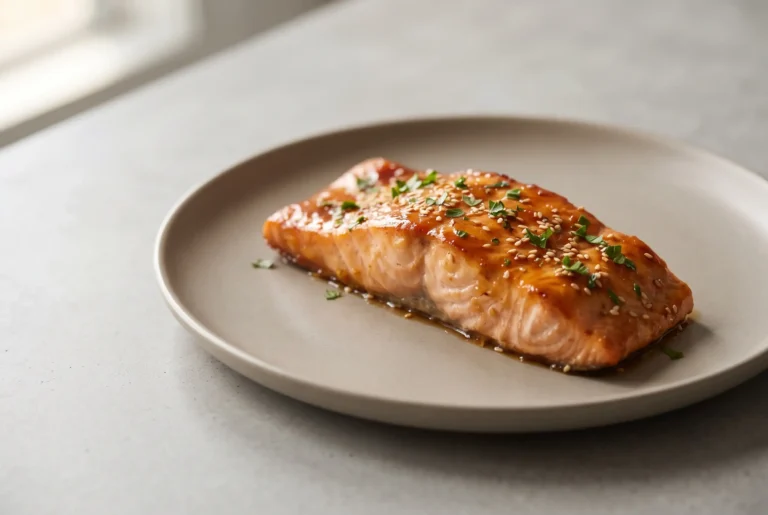
Lacquered Salmon with Crunchy Salad 30-Minute Dinner
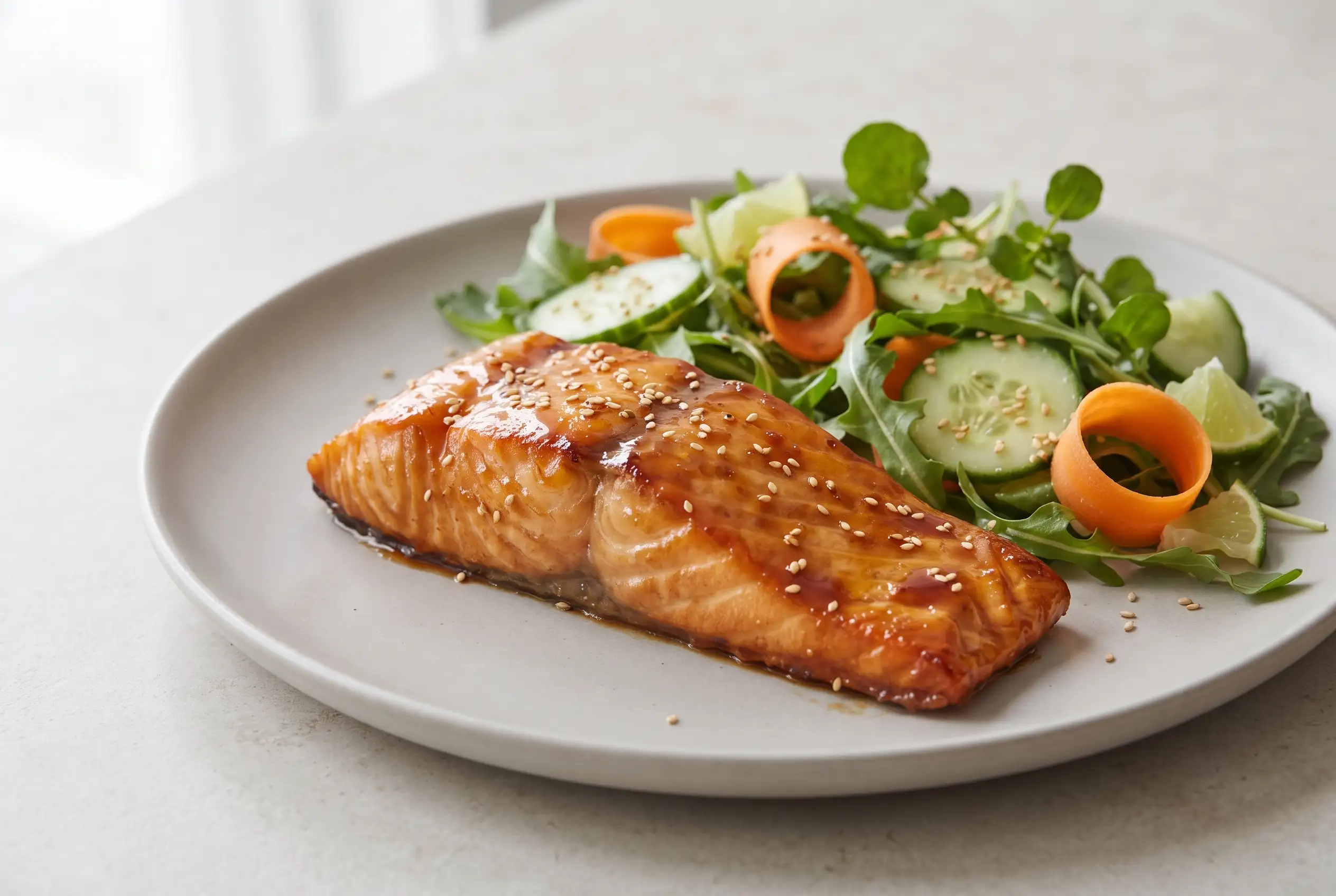
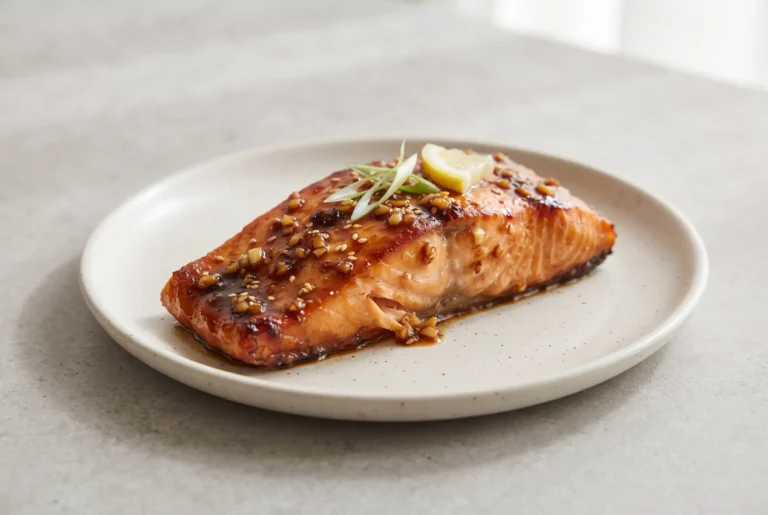
Lacquered salmon brings together a glossy honey-soy coating, tender roasted fish, and a crisp vegetable salad for a meal built around contrast. The sweet and savory glaze caramelizes over the salmon while cucumber, carrot, greens, lime, and sesame keep each bite fresh. This lacquered salmon recipe creates a polished dinner experience with straightforward preparation and balanced flavors.
Busy evenings benefit from meals that feel complete without complicated techniques. A warm fillet paired with chilled crunchy salad delivers protein, texture, and bright flavor in one plate, making this salmon with crunchy salad a dependable choice for a 30 minute salmon dinner.
Lacquered Salmon Brings Sweet-Savory Balance
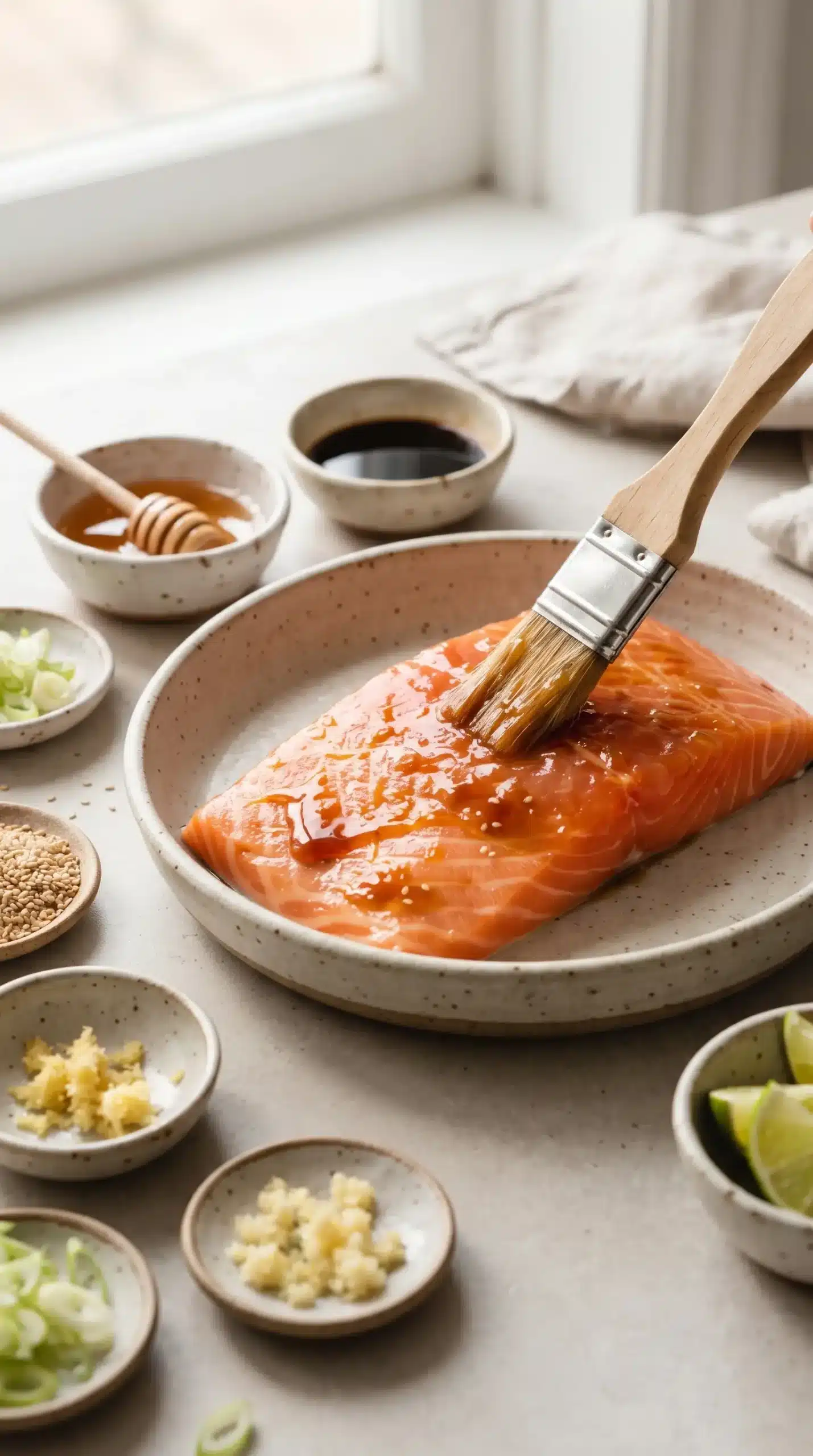
Honey, soy sauce, garlic, and ginger create the signature coating that defines this dish. The mixture develops a glossy appearance as it cooks, allowing the salmon surface to pick up concentrated savory notes with a gentle sweetness.
Fresh lime and crisp vegetables prevent the richness of the fish from becoming heavy. The combination works because every element has a different role: the salmon provides tenderness, the glaze adds depth, and the salad introduces cool crunch.
The Salmon Glaze Decisions That Improve Flavor
The quality of the lacquer depends on how the simple glaze ingredients work together. Honey supplies the sticky finish, while soy sauce contributes saltiness and umami. Garlic and ginger add aromatic warmth that keeps the flavor lively.
Patting the salmon dry before applying the glaze helps the coating cling evenly. A short salmon marinade gives the fish time to absorb the flavors while keeping the surface ready for roasting.
| Element | Purpose | Helpful choice |
|---|---|---|
| Honey | Creates glossy sweetness | Use evenly mixed glaze |
| Soy sauce | Adds savory depth | Measure carefully before adding salt |
| Fresh ginger | Provides bright warmth | Grate for smoother distribution |
| Lime juice | Balances richness | Add fresh juice when serving |
Crunchy Salad Creates the Fresh Contrast
Cool vegetables are an important part of salmon with crunchy salad because they create a different eating experience from the warm glazed fish. Mixed greens provide a fresh base, while cucumber and carrot add crisp texture.
- Keep vegetables crisp: Slice and prepare them close to serving when possible.
- Balance dressing: Use olive oil and lime juice lightly so the greens remain fresh.
- Add brightness: Finish with lime wedges for extra acidity.
Cooking Control for Better Lacquered Salmon
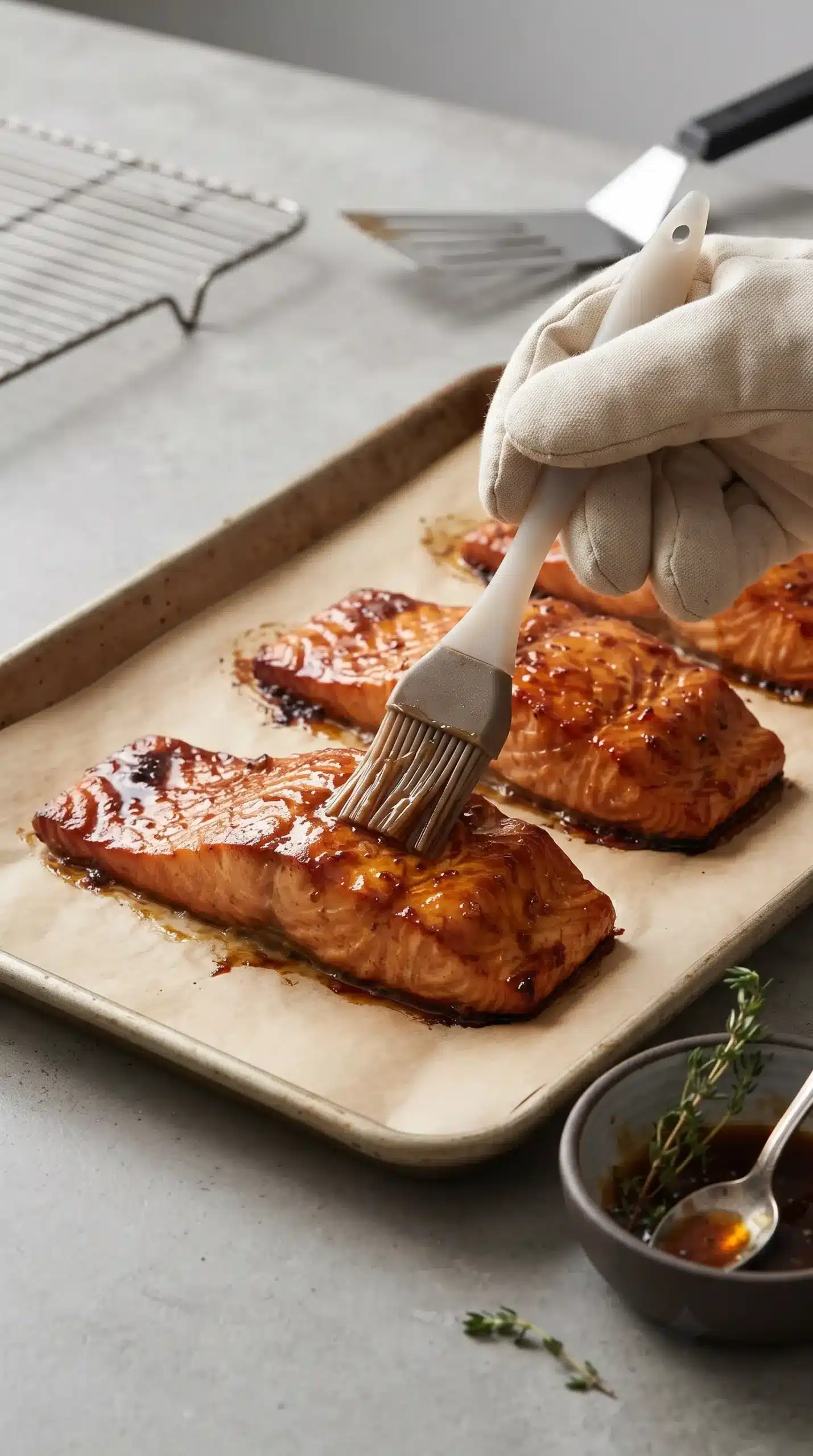
Roasting requires attention to both the fish texture and the glaze behavior. The salmon cooks in a lined baking sheet after marinating, and spooning additional glaze over the fillets midway through cooking helps build the characteristic lacquered surface.
Moderate oven heat allows the coating to develop without rushing the fish. Watching the salmon closely near the end of cooking helps preserve its tender texture because honey-based glazes can darken quickly.
Checking doneness by texture is useful: properly cooked salmon should separate easily into flakes while remaining moist inside. The fish continues cooking slightly after leaving the oven, so timing awareness matters.
Common Lacquered Salmon Mistakes to Avoid
Small preparation errors can affect the finished texture and appearance of the dish. Paying attention to a few common trouble points keeps the glaze glossy and the salad crisp.
- Burned glaze: Excessive heat can darken honey too quickly. Watch the surface during roasting.
- Dry salmon: Cooking too long removes the buttery texture that makes salmon appealing.
- Soft salad: Wet greens or early dressing can reduce the desired crunch.
- Too much salt: Soy sauce already contributes seasoning, so extra salt should be added carefully.
Serving Ideas Around a Salmon Dinner
Lacquered salmon pairs naturally with simple sides that complement the glaze without competing with it.
- Jasmine rice for a filling plate
- Quinoa for a light grain pairing
- Rice noodles for a different texture
- Edamame or steamed bok choy for vegetable additions
- Miso soup for a warm accompaniment
Recipe Variations With Similar Flavors
The core flavor profile adapts easily when different ingredients are preferred. The honey glaze can shift toward other sweet or spicy directions while keeping the same sweet-savory character.
Maple syrup can replace honey for a maple ginger version. Chili flakes, sriracha, or chili crisp introduce heat, while shredded cabbage can transform the salad into a crunchier slaw-style variation.
Fruit additions such as mango, pineapple, or avocado create a tropical direction that works with the fresh lime finish.
Storage and Meal Prep for Lacquered Salmon
Cooked salmon and salad components are best handled separately after preparation. Keeping the fish away from the dressed greens helps maintain the contrast between tender salmon and crisp vegetables.
Salmon can be stored separately from salad for up to two days. Gentle reheating in an oven, toaster oven, or air fryer helps protect the glaze texture, while the salad dressing is best stored apart during meal preparation.
Nutrition Strengths of Salmon With Crunchy Salad
This combination offers a nutrient-dense meal centered around seafood, vegetables, and balanced flavors. Salmon contributes protein, omega-3 fatty acids, vitamin D, and selenium, while the vegetables contribute fiber, hydration, antioxidants, and vitamin C.
The fresh ingredients and protein-rich salmon make the dish suitable for balanced eating patterns, including high-protein meal plans. Ginger, garlic, and lime also provide aromatic qualities that keep the plate bright and satisfying.
Kitchen Techniques That Make Results Consistent
A few practical habits improve the finished dish every time it is prepared.
- Prepare evenly: Make sure the glaze coats each salmon fillet consistently.
- Watch texture: Remove salmon once it reaches the desired flaky, moist state.
- Protect crunch: Keep salad ingredients chilled until serving.
Lacquered Salmon Delivers a Complete Weeknight Dinner
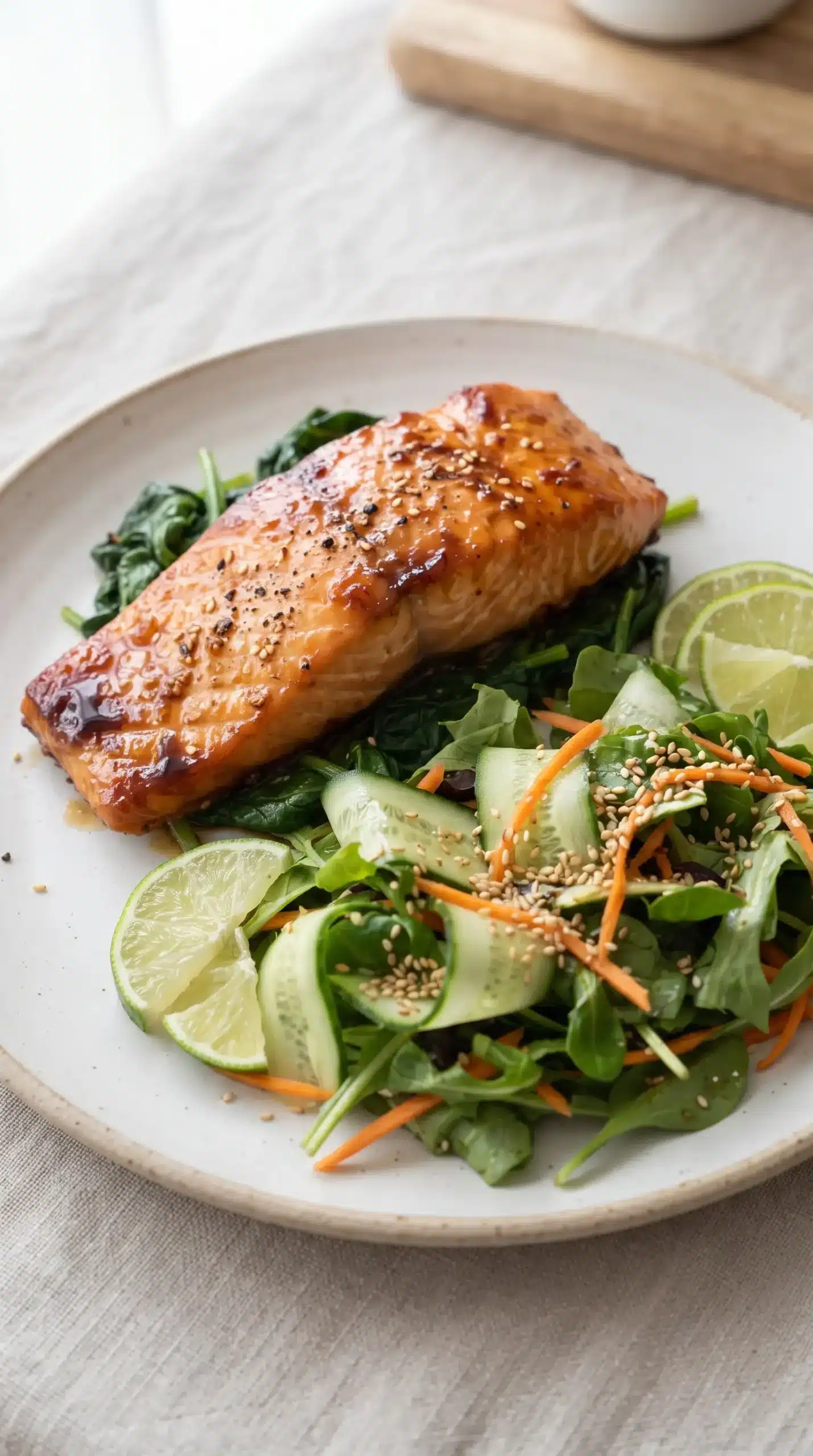
The glossy salmon surface, fresh salad, and bright citrus notes create a meal where texture and flavor remain balanced from the first bite. Careful glaze application and attention to cooking time are the details that turn simple ingredients into a polished dinner.
Warm roasted fish alongside cool crunchy vegetables makes lacquered salmon a practical choice when a flavorful seafood meal needs to feel special while staying approachable.
Lacquered Salmon Questions and Answers About Preparation
What does lacquered mean for salmon?
Lacquered describes the glossy coating created when the honey-soy glaze cooks onto the salmon surface. The finish becomes shiny and slightly caramelized during roasting.
Can frozen salmon be used for this dish?
Frozen salmon works well when fully thawed before preparation. Patting the fillets dry after thawing helps the glaze adhere more effectively.
How can the salad stay crunchy?
Keep the vegetables chilled and avoid adding the dressing too early. Storing the dressing separately is especially useful when preparing portions ahead.
Can soy sauce be replaced?
Tamari or coconut aminos can replace soy sauce when a different option is preferred. These alternatives keep the savory character of the glaze.
How do I know the salmon is cooked?
Cooked salmon should flake easily when salmon reaches 145°F internally. The texture should remain tender instead of dry or firm.
Lacquered Salmon with Crunchy Salad
Ingredients
Method
- Whisk soy sauce, honey, minced garlic, and grated ginger together in a small bowl until the glaze is fully combined.
- Dry the salmon fillets, arrange them in a shallow dish, coat with the glaze, and allow them to marinate for 10–15 minutes.
- Preheat the oven to 375°F / 190°C and prepare a baking sheet with parchment paper.
- Place the glazed salmon fillets on the lined baking sheet and bake for 15–20 minutes, adding more glaze over the salmon halfway through cooking.
- Confirm the salmon is cooked through when it flakes easily and reaches an internal temperature of 145°F / 63°C.
- Add mixed greens, sliced cucumber, and grated or julienned carrot to a large bowl.
- Pour olive oil and lime juice over the salad and toss gently to coat.
- Serve the roasted lacquered salmon with the crunchy salad, then finish with sesame seeds, fresh cilantro if using, and lime wedges.