Garlic Butter Shrimp with Asparagus Skillet Dinner
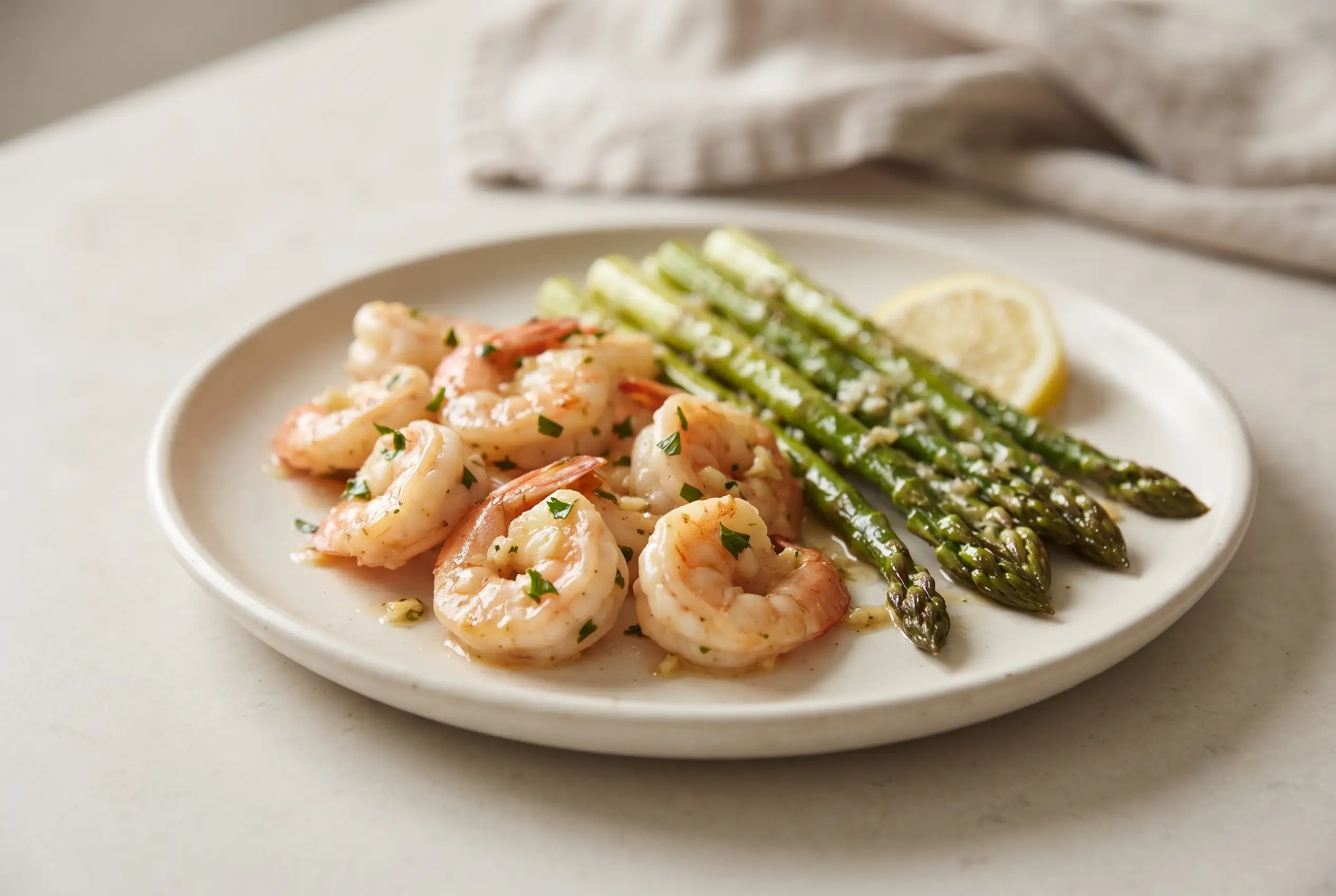
Garlic butter shrimp with asparagus brings together tender seafood, crisp vegetables, and a rich garlic butter coating in a skillet meal designed for busy evenings. Juicy shrimp, fresh asparagus, and bright lemon create a balanced dinner that feels polished without requiring complicated preparation.
Busy evenings often call for meals that deliver strong flavor with simple techniques. The combination of quick-cooking shrimp, aromatic garlic, silky butter, and fresh vegetables makes this 30 minute shrimp dinner a practical choice when a homemade meal needs to come together efficiently.
Garlic Butter Shrimp with Asparagus Creates a Fast Seafood Balance
The appeal of this garlic butter shrimp with asparagus recipe comes from contrast. The shrimp provide a tender, delicate texture, while asparagus adds a fresh bite that keeps the buttery sauce from feeling too heavy. Lemon brings brightness that ties the seafood and vegetables together.
Skillet cooking also keeps the flavors connected because the asparagus cooks in the same garlic butter that seasons the shrimp. Each ingredient picks up the savory notes from the pan, creating a cohesive meal with minimal cleanup.
Unlike complicated seafood dishes that require multiple preparations, a shrimp and asparagus skillet depends on timing and attention. Short cooking periods preserve the shrimp texture and help the asparagus stay vibrant.
Butter, Garlic, and Lemon Shape the Skillet Flavor
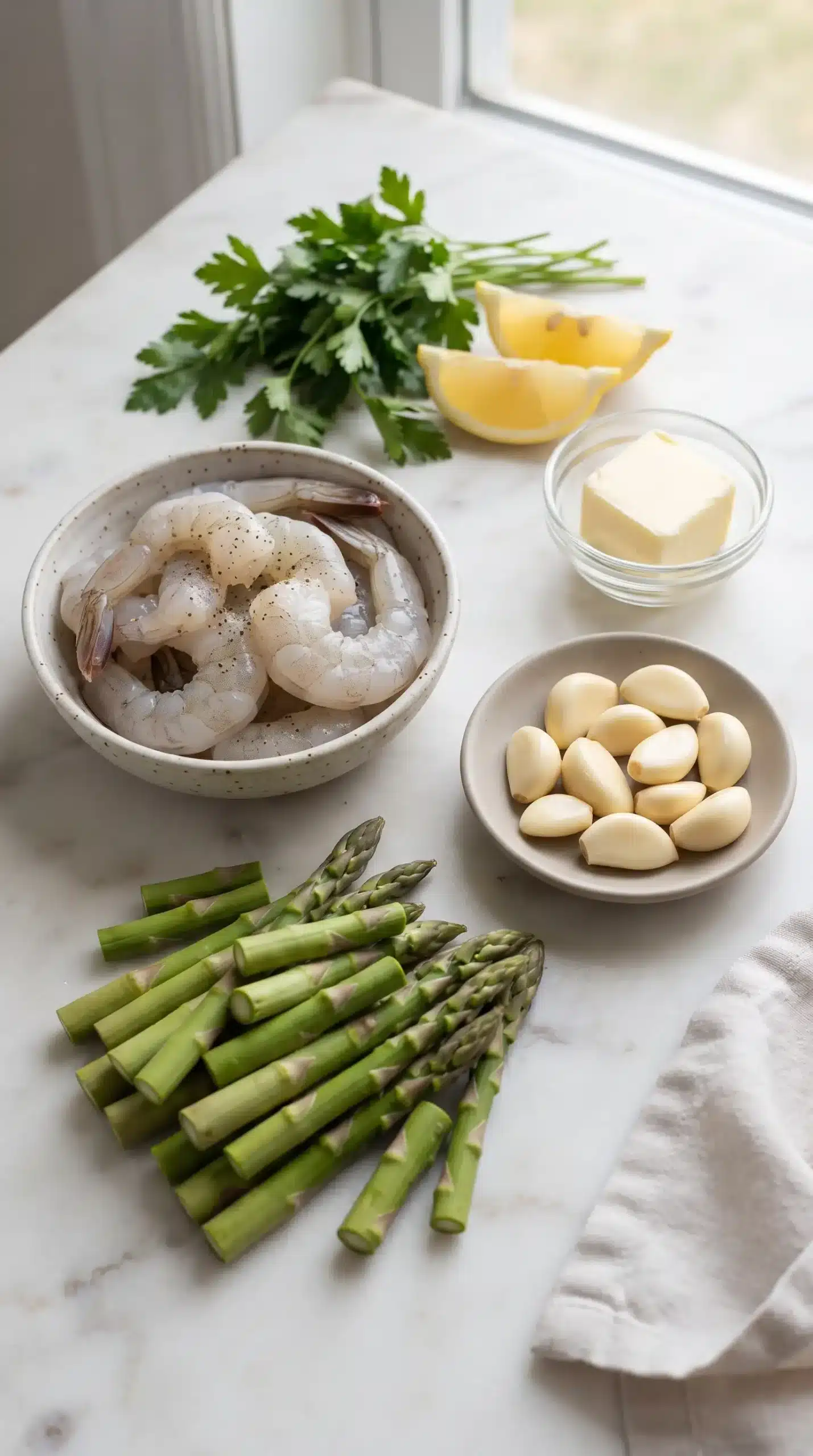
Fresh garlic has an important role in the sauce because it develops its aroma when gently warmed in melted butter. Keeping the heat controlled allows the garlic to become fragrant without taking on bitter flavors.
Lemon provides the finishing balance that makes the dish taste lighter. Added after cooking, lemon juice highlights the seafood and cuts through the richness of the butter while keeping the overall flavor fresh.
Large shrimp work especially well because they remain juicy during the short cooking time. Asparagus pieces cut into smaller sections cook quickly enough to match the seafood while maintaining their tender-crisp texture.
| Ingredient focus | Cooking purpose | Important handling choice |
|---|---|---|
| Shrimp | Provides tender seafood flavor and protein | Dry before cooking for better texture |
| Asparagus | Adds freshness and vegetable contrast | Keep slightly firm after cooking |
| Garlic butter | Creates the rich skillet sauce | Warm gently to protect flavor |
| Lemon | Brightens the finished dish | Add near serving time |
Shrimp and Asparagus Cooking Controls That Matter
Good results depend on managing heat and timing throughout the skillet process. Shrimp cook quickly, so they benefit from short exposure to heat followed by immediate removal when they become pink and opaque.
Medium heat gives better control when cooking garlic in butter. Excessive heat can change the garlic flavor quickly, while a gentler approach allows the butter to carry the garlic aroma throughout the dish.
Spacing also affects texture. Shrimp placed in a single layer have better contact with the pan, helping them cook evenly. If the skillet is crowded, cooking in batches helps maintain better results.
A Skillet Timeline for Better Texture
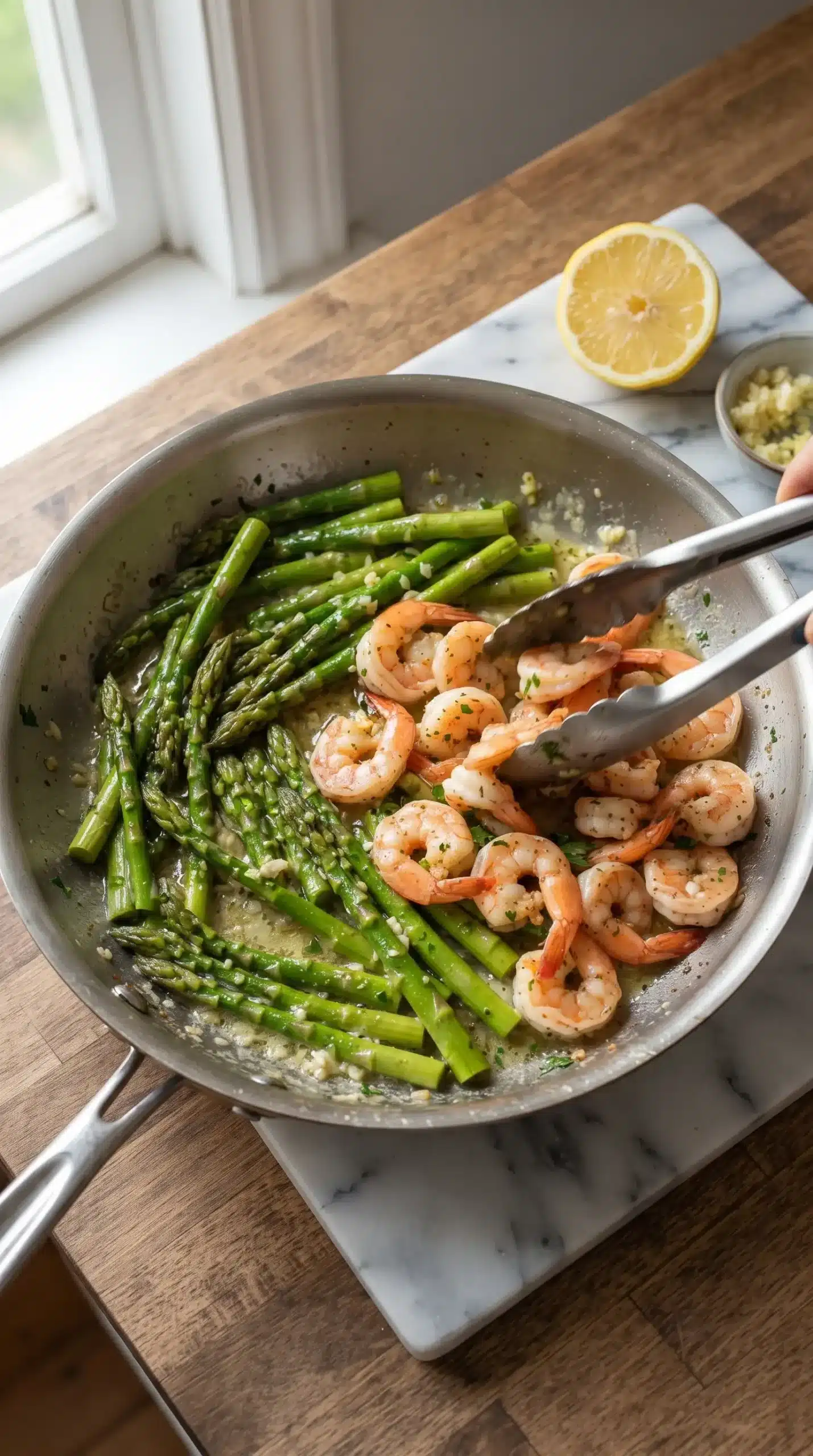
The cooking order matters because shrimp and asparagus do not require the same amount of heat exposure. Removing the shrimp temporarily prevents them from staying in the pan too long while the vegetables finish cooking.
| Stage | Main action | Texture result |
|---|---|---|
| Garlic butter preparation | Warm garlic in melted butter | Smooth aromatic base |
| Shrimp cooking | Sear briefly on both sides | Juicy and tender seafood |
| Asparagus cooking | Cook until bright and slightly firm | Fresh vegetable bite |
| Final combination | Coat shrimp and vegetables together | Even garlic butter flavor |
Garlic Butter Shrimp with Asparagus Mistakes to Avoid
Small cooking errors can change the texture of this skillet dinner. Paying attention to moisture, temperature, and timing keeps the seafood tender and the vegetables appealing.
- Overcooked shrimp: Remove shrimp once they turn pink and opaque to avoid a rubbery texture.
- Burned garlic: Keep the skillet at a controlled heat level because bitter garlic can affect the entire sauce.
- Wet shrimp: Pat shrimp dry before cooking so excess moisture does not interfere with browning.
- Soft asparagus: Stop cooking when asparagus is tender-crisp to preserve its fresh character.
Attention to these details makes the difference between a rushed seafood meal and a well-balanced skillet dinner. Each adjustment supports the simple ingredients instead of distracting from them.
Serving Choices That Complete the Dinner
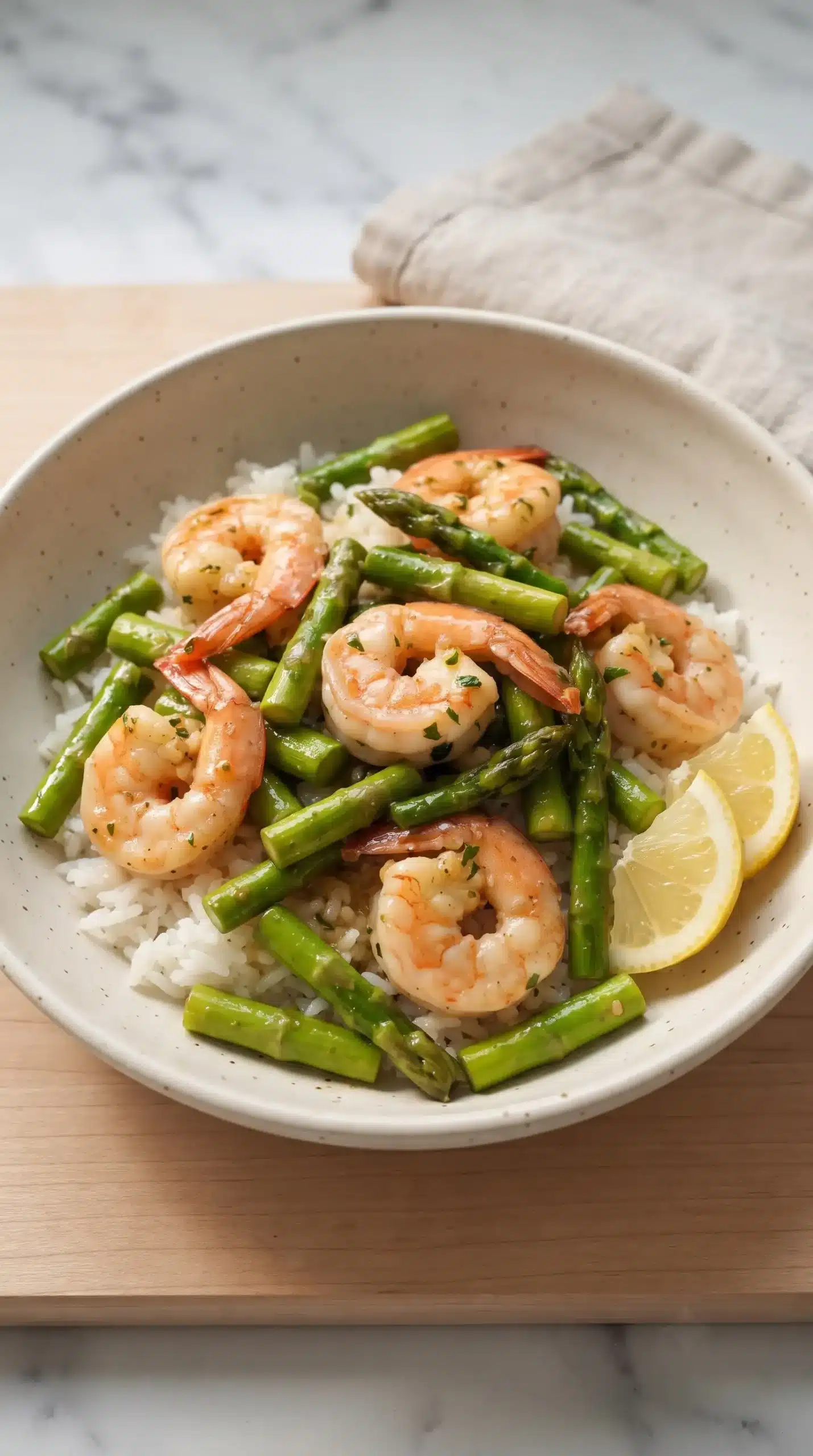
Rice, pasta, quinoa, and roasted potatoes all pair naturally with the garlic butter sauce because they can absorb the flavorful coating from the skillet. These options turn the seafood and vegetables into a more filling meal.
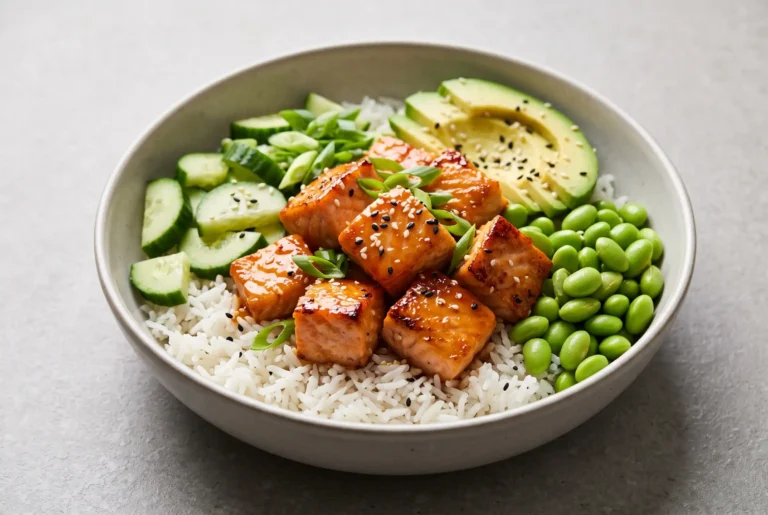
Serving the skillet over rice creates a more substantial dinner by capturing the garlic butter sauce and combining the seafood with a filling base. Rice-centered meals such as shrimp bowls keep portions organized while pairing tender seafood with complementary toppings and fresh ingredients.
Lighter pairings also work well. Cauliflower rice, salad greens, cucumber salad, or steamed vegetables keep the focus on the shrimp and asparagus while maintaining a fresh presentation.
Warm crusty bread is another useful addition because it captures the remaining garlic butter sauce. The mild flavor of bread allows the seafood, garlic, and lemon notes to remain the center of the plate.
Make-Ahead Handling for Shrimp and Asparagus
Preparation can be completed ahead of time without changing the cooking process. Taking a few minutes to clean shrimp before cooking, trim asparagus, mince garlic, and prepare lemon wedges reduces the work needed when dinner begins.
Cooked leftovers should be stored carefully because shrimp texture changes when reheated too aggressively. An airtight container helps maintain quality for short-term storage.
Gentle reheating in a skillet over low heat works better than intense heating methods. Slow warming reduces the chance of overcooking the seafood a second time.
| Storage option | Recommended approach | Main consideration |
|---|---|---|
| Refrigerator | Store in an airtight container | Best texture when eaten fresh |
| Freezer | Possible for leftovers | Shrimp texture may change |
| Reheating | Warm gently in a skillet | Avoid aggressive heating |
Flavor Variations Beyond the Classic Skillet
Different seasonings can shift the character of the meal while keeping the same seafood foundation. A spicy version can include chili flakes, Cajun seasoning, or hot sauce for extra heat.
Creamy additions such as heavy cream and Parmesan create a richer sauce style. These ingredients build on the existing butter base and add a more indulgent direction.
Mediterranean flavors fit naturally with shrimp and asparagus. Cherry tomatoes, spinach, and feta cheese add new colors and textures, while soy sauce, ginger, and sesame oil create an Asian-inspired variation.
Nutrition Qualities of the Seafood Combination
Shrimp and asparagus create a meal centered around protein, vegetables, and flavorful fats. The combination offers a satisfying balance while keeping carbohydrates relatively low.
Shrimp contributes protein along with nutrients such as selenium, vitamin B12, and omega-3 fatty acids. Asparagus adds fiber, folate, vitamin K, and antioxidants to the plate.
Garlic adds another layer of character while supporting the savory profile that makes the skillet enjoyable. The finished meal fits well with high-protein meal plans and low-carb eating styles.
Family Adjustments for Garlic Butter Shrimp with Asparagus
Families can easily adapt the dish by adjusting intensity and serving style. A milder version can use less garlic and reduce the amount of black pepper for younger diners or sensitive tastes.
Smaller shrimp pieces can make the meal easier to serve with rice or pasta. For anyone hesitant about asparagus, vegetables such as green beans, broccoli, zucchini, or snap peas provide similar freshness with different textures.
Build-your-own serving options can make dinner more flexible. Rice bowls, pasta bowls, wraps, and flatbread combinations allow each person to enjoy the garlic butter flavors in a preferred format.
Garlic Butter Shrimp with Asparagus Delivers Simple Seafood Confidence
The skillet combination of shrimp, asparagus, garlic butter, and lemon succeeds because every cooking decision protects the ingredients’ best qualities. Brief shrimp cooking keeps the seafood tender, while careful asparagus preparation preserves the contrast that defines the dish.
Garlic butter shrimp with asparagus remains a dependable dinner because it transforms a small group of ingredients into a meal with balanced flavor, appealing texture, and straightforward preparation.
Garlic Butter Shrimp with Asparagus Questions and Answers
Can frozen shrimp work for this skillet?
Frozen shrimp can be used successfully when they are fully thawed and dried before cooking. Removing excess moisture helps the shrimp cook with better texture and seasoning coverage.
How can I keep shrimp from becoming rubbery?
The best approach is watching the cooking time closely. Shrimp should be removed once they become pink and opaque because they continue cooking briefly from residual heat.
Can another vegetable replace asparagus?
Yes. Green beans, broccoli, zucchini, and snap peas all provide a fresh vegetable element that works with the garlic butter sauce and seafood.
What shrimp size creates the best result?
Large or jumbo shrimp are ideal because their size helps them stay juicy during the quick skillet cooking process.
Can the butter be replaced?
Olive oil, ghee, or vegan butter can replace butter when a dairy-free option is preferred while still providing a flavorful coating.
Garlic Butter Shrimp with Asparagus Skillet Dinner
Ingredients
Method
- Heat a large skillet over medium heat and melt the unsalted butter completely.
- Add minced garlic to the melted butter and cook for about 1 minute, keeping it from browning.
- Pat the shrimp dry, place them in the skillet in a single layer, and season with salt and black pepper.
- Cook the shrimp for 1½–2 minutes per side until they turn pink and opaque, then move them to a plate.
- Add the asparagus pieces to the remaining garlic butter in the skillet and cook for 4–5 minutes until bright green and tender-crisp.
- Return the shrimp to the skillet and gently toss for 1 minute to coat with the garlic butter sauce.
- Finish with fresh parsley, lemon juice from the lemon wedges, and extra cracked black pepper if desired.
- Serve immediately with optional chili flakes or Parmesan cheese.