Mediterranean Baked Fish with Tomatoes, Olives and Herbs
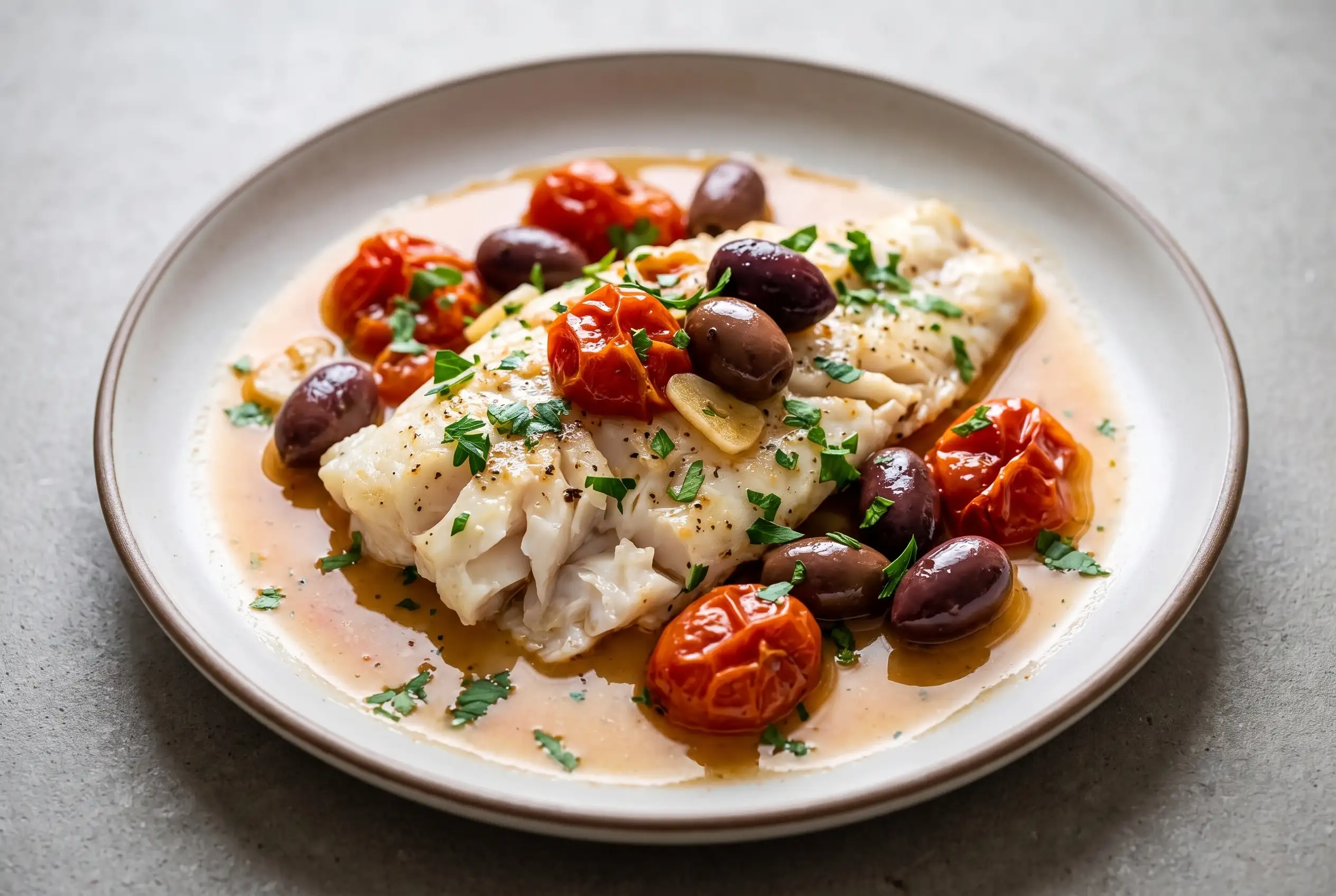
Mediterranean baked fish brings flaky white fish, juicy tomatoes, olives, garlic, olive oil, and herbs together in a bright one-pan meal that feels special without demanding complicated preparation. The combination creates a healthy dinner with fresh Mediterranean character, balanced textures, and a light sauce that develops while everything cooks together.
Busy evenings benefit from meals that deliver satisfying flavor with minimal effort. A 30 minute baked fish dinner fits that need by using a simple oven approach where the seafood stays tender and the vegetables become soft, savory, and full of flavor.
Mediterranean Baked Fish Creates a Simple Weeknight Dinner
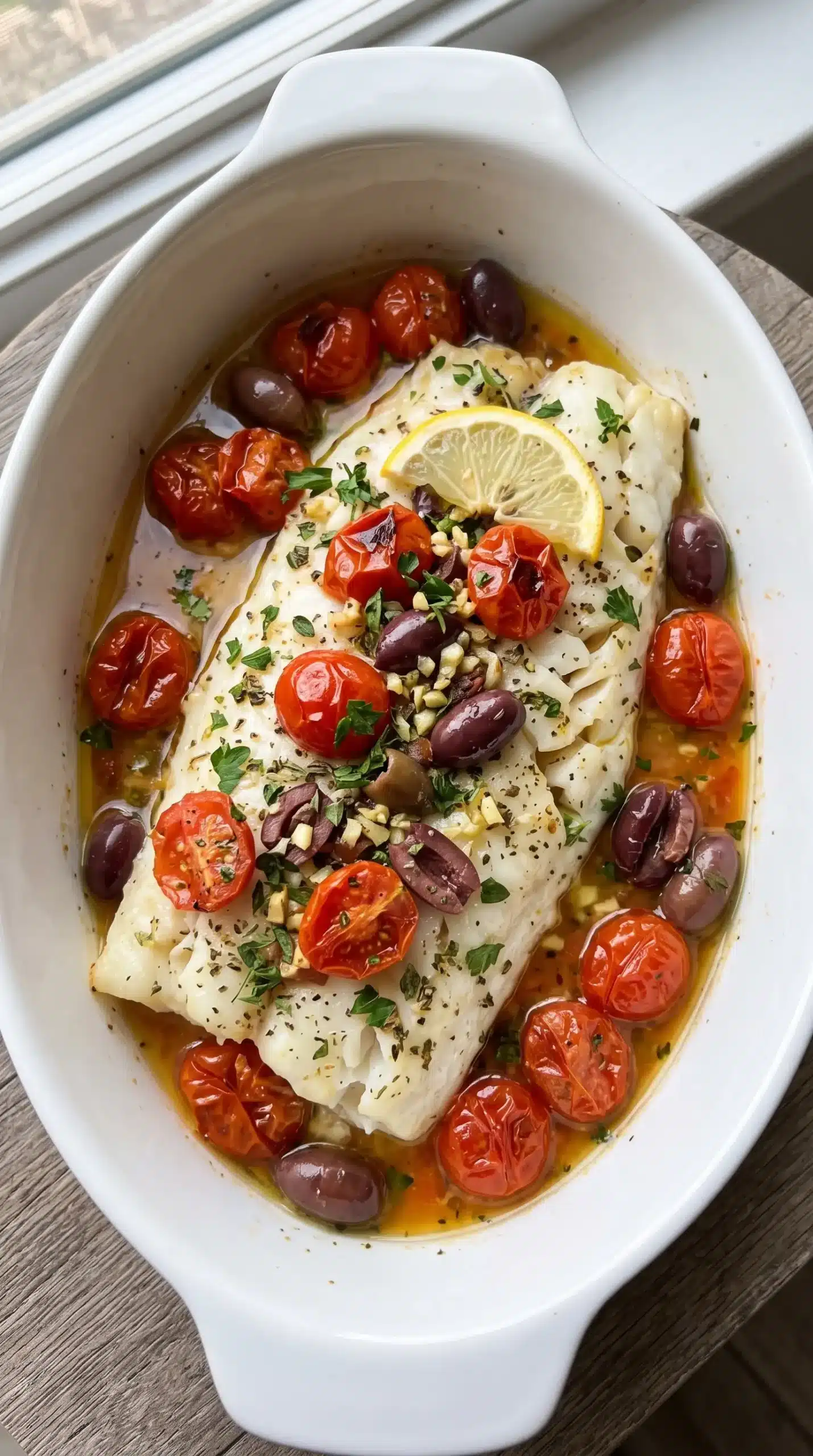
Fresh flavors define the appeal of this seafood dish. White fish provides a mild foundation that allows roasted tomatoes, salty olives, garlic, and herbs to stand out without overwhelming the plate. The result is a meal that feels comforting while keeping the ingredients clean and approachable.
Guests can enjoy the elegant presentation of colorful tomatoes and herbs, while home cooks appreciate the straightforward preparation. One baking dish holds the fish and Mediterranean topping together, helping the flavors combine as the oven works.
Families looking for a healthy Mediterranean fish recipe can adapt the meal easily. Mild fish choices, familiar sides, and optional toppings allow different preferences at the table without changing the character of the dish.
Fish Choices Shape the Mediterranean Baked Fish Flavor
White fish selection influences the texture and richness of the finished meal. Cod, haddock, snapper, halibut, and tilapia all pair well with the Mediterranean ingredients because they remain flaky and absorb the surrounding flavors during baking.
| Fish option | Texture characteristic | Flavor pairing strength |
|---|---|---|
| Cod | Firm, flaky texture | Mild taste that highlights tomatoes and herbs |
| Haddock | Tender flakes | Works well with garlic and olive oil |
| Halibut | Thicker, substantial fillets | Pairs well with bold toppings |
| Tilapia | Soft, delicate texture | Useful for a mild family-friendly version |
Cherry tomatoes are especially useful because they soften and release moisture while roasting. Roma tomatoes can also work when prepared appropriately. The tomato component helps create the light sauce that keeps the fish moist during cooking.
Olives bring the recognizable Mediterranean character to the dish. Kalamata olives provide a stronger salty note, while black olives create a gentler flavor profile. Olive oil connects the ingredients by adding richness and helping the fish remain tender.
Tomato and Olive Balance Builds Mediterranean Character
Small ingredient decisions have a noticeable effect on the finished plate. Garlic, oregano or thyme, olive oil, and tomatoes work together during baking, creating depth without requiring heavy sauces or extra preparation.
Fresh parsley or basil added after cooking provides a brighter finish. Lemon wedges offer another layer of freshness when served alongside the fish, especially when the olive oil and roasted tomato juices create a richer flavor.
- Fresh herbs: Add parsley or basil after baking to preserve their bright flavor.
- Salty elements: Use olives or capers to bring a sharper Mediterranean note.
- Creamy option: Add feta cheese when a richer finish is desired.
- Spicy touch: Include red pepper flakes for extra heat.
Oven Control Keeps Mediterranean Baked Fish Tender
Cooking accuracy matters most when preparing seafood. Fish should become opaque and separate easily with a fork, while the center should remain moist. Paying attention near the end of baking helps prevent the delicate fillets from becoming dry.
For a more precise doneness check, fish fillets should reach a 145°F internal temperature before serving.
Patting the fish dry before seasoning improves the cooking process by removing excess moisture. Keeping fillets arranged in a single layer also supports even baking and allows the tomato mixture to roast properly.
Thicker pieces need more attention than thinner portions. A large halibut or cod fillet may require more time than a thinner tilapia piece, so visual cues and texture are important when judging doneness.
Mediterranean Baked Fish Mistakes That Reduce Quality
Overcooking is one of the most common problems with Mediterranean baked fish. Dry, firm texture usually signals that the fish stayed in the oven too long. Removing it once it flakes easily helps maintain tenderness.
Skipping olive oil can also change the outcome. The oil contributes moisture and helps create the silky sauce around the fish and vegetables. Too much liquid from watery tomatoes may weaken the roasted flavor, so choosing suitable tomatoes makes a difference.
Crowded cookware creates another issue. When fillets and toppings are packed too tightly, the ingredients may steam instead of roasting. Leaving enough room allows better texture development.
Serving Ideas Complete a One Pan Baked Fish Meal
Mediterranean baked fish pairs naturally with sides that absorb the flavorful juices. Grains, vegetables, and simple salads keep the meal balanced while allowing the seafood to remain the focus.
| Side choice | Texture contribution | Why it works |
|---|---|---|
| Couscous | Light and fluffy | Absorbs tomato and olive juices |
| Crusty bread | Chewy with crisp edges | Captures the Mediterranean sauce |
| Roasted potatoes | Soft interior with roasted edges | Adds comforting substance |
| Cucumber salad | Fresh and crisp | Balances the warm baked flavors |
Simple vegetables such as roasted asparagus, zucchini, spinach, or bell peppers can expand the meal while staying aligned with the Mediterranean style.
Storage Keeps Mediterranean Baked Fish Ready for Later
Leftovers can be stored in airtight containers in the refrigerator for up to 2 days. Gentle reheating helps protect the flaky texture, while short microwave intervals can prevent the fish from drying out.
Preparation Shortcuts Speed Up Busy Nights
Advance preparation makes this meal even easier. The tomato topping can be mixed ahead and refrigerated until it is ready to combine with the fish.
Frozen fish portions can also be convenient when planning quick dinners. Proper thawing and drying before baking help preserve the texture needed for a successful result.
Store-bought seasoning blends, pre-cut tomatoes, or prepared garlic can reduce kitchen time while keeping the core Mediterranean flavors intact.
Family Adjustments Make Mediterranean Baked Fish Approachable
Mild fish such as cod or tilapia can make the dish more appealing for younger diners. Reducing the amount of olives or serving stronger toppings separately allows each person to customize their plate.
Serving smaller portions over rice, couscous, or another familiar side can make the meal feel more approachable. The roasted tomatoes often become softer and sweeter during cooking, creating a gentler flavor balance.
Nutrition Benefits Support Mediterranean Eating
Mediterranean baked fish provides lean protein and the beneficial fats associated with olive oil. Depending on the fish variety selected, seafood can also contribute nutrients such as selenium, iodine, and omega-3 fatty acids.
Tomatoes contribute vitamin C and lycopene, while garlic adds another layer of plant-based flavor compounds. Together, these ingredients create a meal that reflects many qualities associated with Mediterranean-style eating patterns.
Cooking Timeline Guides a Smooth Dinner Preparation
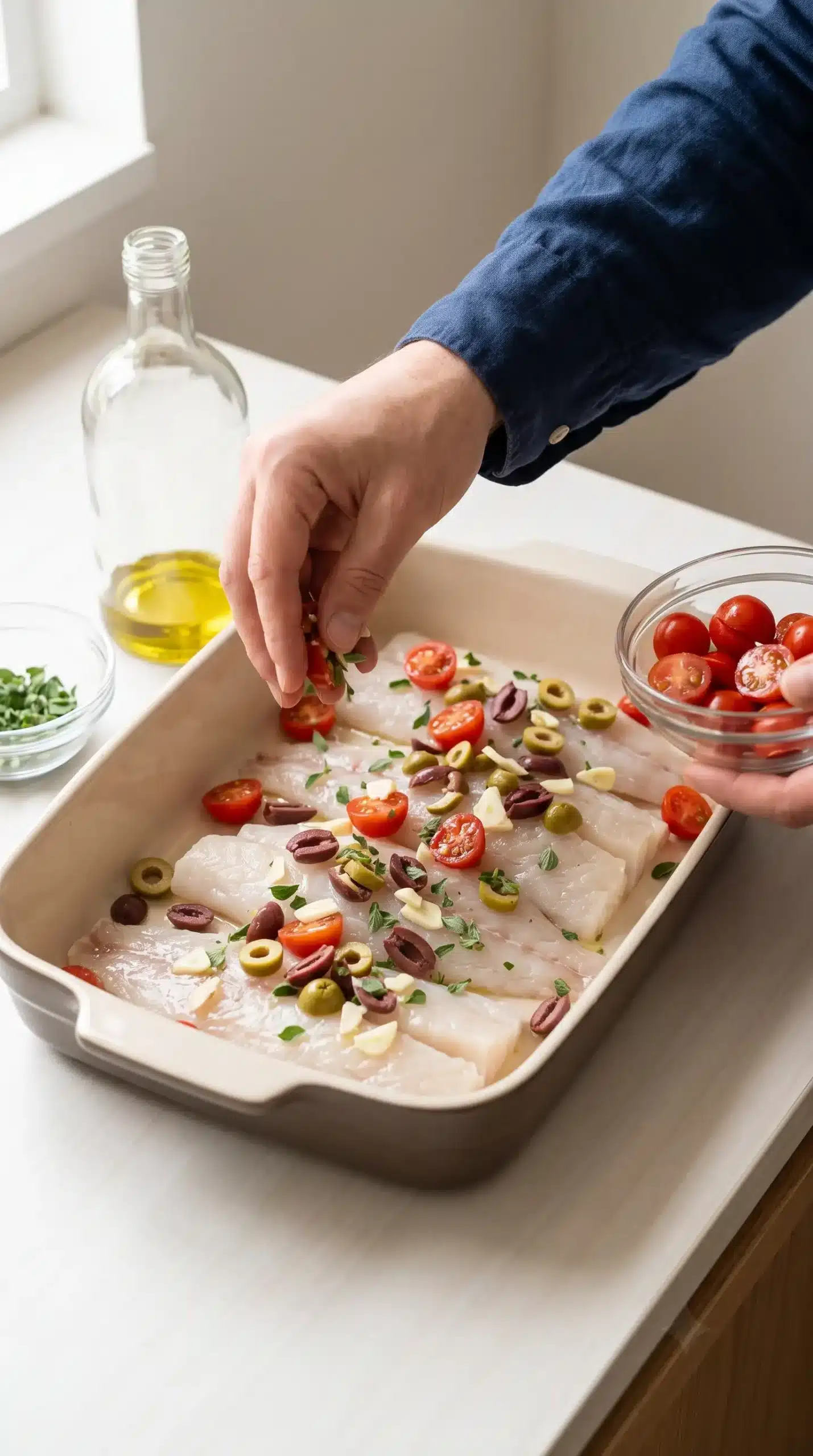
Organizing the work in stages keeps preparation efficient and helps cooks focus on the decisions that affect texture most.
- Early preparation: Warm the oven, prepare the fish, and organize the baking dish.
- Flavor assembly: Combine tomatoes, olives, garlic, olive oil, and herbs.
- Oven stage: Bake until the fish turns opaque and flakes easily.
- Serving finish: Add fresh herbs, lemon, or optional toppings before eating.
Variations Expand Mediterranean Baked Fish Options
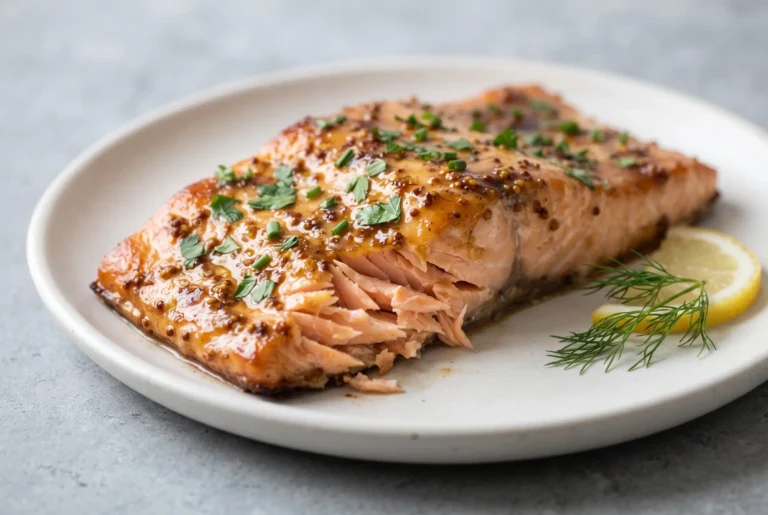
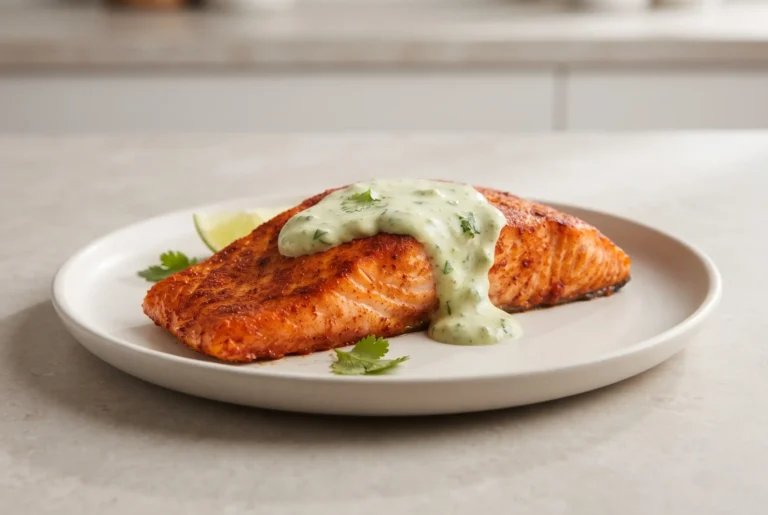
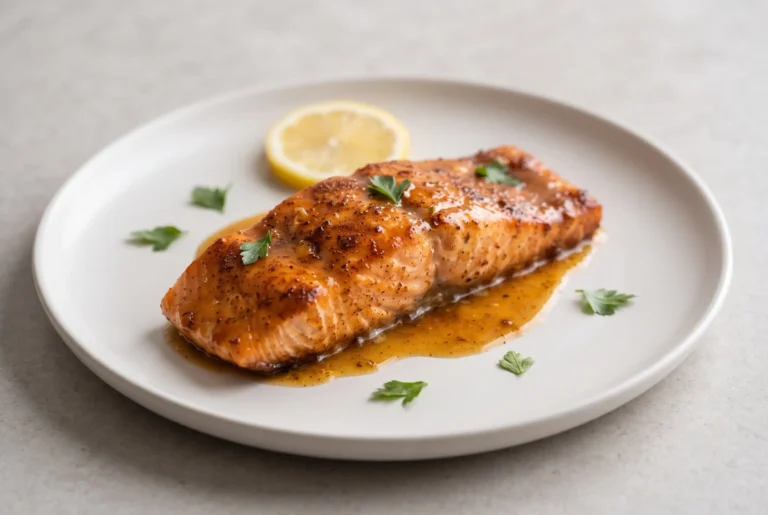
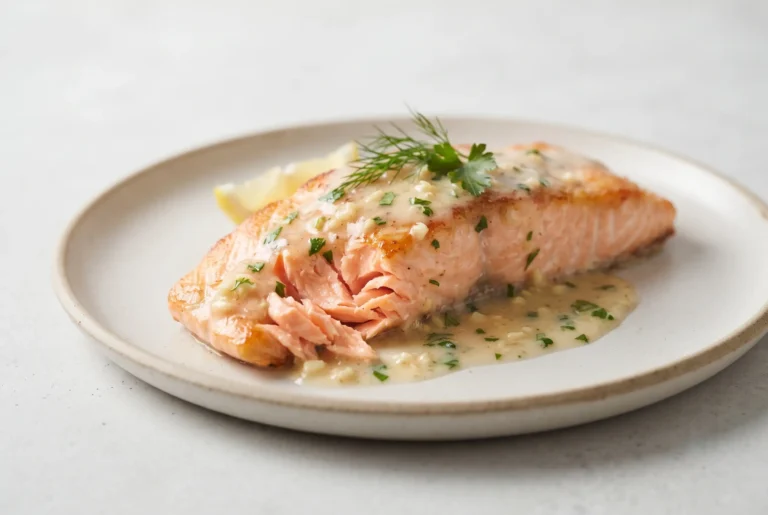
Different additions can change the character of the meal while keeping the Mediterranean foundation intact. Salmon can replace white fish for a richer seafood variation, with oven baked salmon featuring tender fillets finished with garlic butter flavors. Vegetables can add more color and texture while preserving the fresh character of the dish.
Feta cheese creates a creamy finish when added near the end of baking. Red pepper flakes bring heat, while extra vegetables such as artichokes or spinach provide additional variety.
Mediterranean Baked Fish Delivers Fresh Flavor Through Simple Cooking
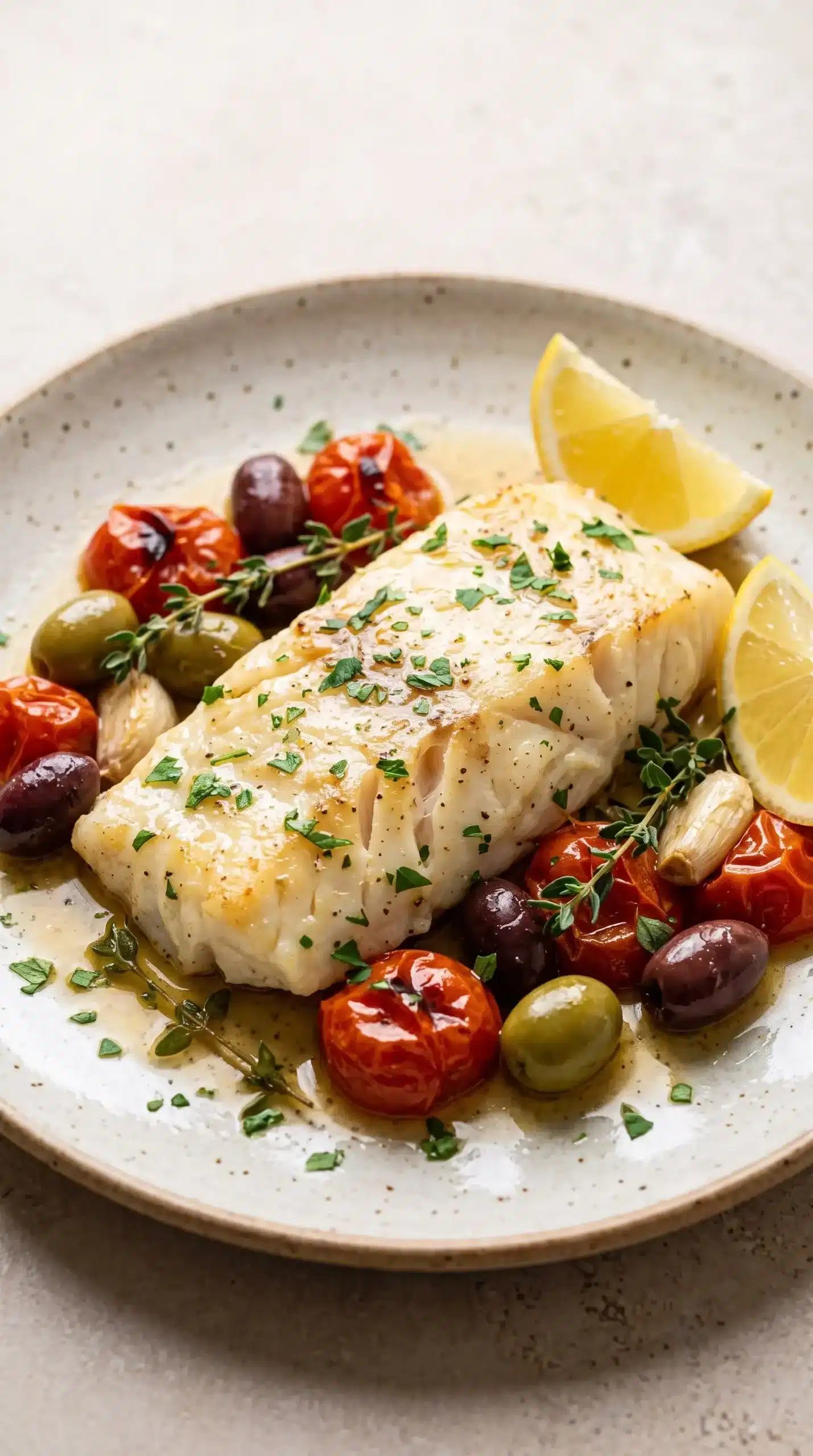
Flaky fish, roasted tomatoes, olives, garlic, and herbs show how a few carefully chosen ingredients can create a complete dinner. Mediterranean baked fish succeeds because moisture, seasoning, and cooking control work together in one dish.
The balance between tender seafood and bright Mediterranean flavors makes this meal especially practical for regular cooking. Careful attention to fish texture and the tomato topping keeps every serving fresh, flavorful, and satisfying.
Mediterranean Baked Fish Questions About Cooking and Storage
Can frozen fish be used for Mediterranean baked fish?
Frozen fish works well when it is fully thawed and dried before cooking. Removing excess moisture helps the fillets bake properly and keeps the topping from becoming diluted.
How can I tell when the fish is cooked?
The fish is ready when it becomes opaque and flakes easily with a fork. Checking the texture near the thickest part of the fillet helps determine whether it has cooked evenly.
Which vegetables pair best with this seafood dish?
Zucchini, spinach, asparagus, bell peppers, and artichokes complement the tomatoes, olives, and herbs while adding more Mediterranean variety.
Can Mediterranean baked fish be prepared ahead?
The tomato and olive topping can be prepared in advance, making it easier to assemble the meal when you are ready to cook.
What makes the fish stay moist while baking?
Olive oil and the juices released from roasted tomatoes help protect the fillets during cooking. Avoiding excess baking time also preserves the tender texture.
Mediterranean Baked Fish with Tomatoes, Olives and Herbs
Ingredients
Method
- Preheat the oven to 400°F / 200°C.
- Pat the fish fillets dry, lightly coat a baking dish with olive oil, arrange the fish in a single layer, and season both sides with salt and black pepper.
- Mix the cherry tomatoes, sliced olives, minced garlic, olive oil, and dried oregano or thyme together in a bowl.
- Distribute the tomato and olive mixture over and around the fish fillets in the baking dish.
- Bake the fish for 20–25 minutes until the fillets are opaque, easily flake with a fork, and reach 145°F / 63°C internally.
- Remove the baked fish from the oven and finish with fresh parsley or basil, lemon wedges, and optional toppings before serving.