Quick Baked Cajun Salmon with Avocado Lime Sauce Recipe
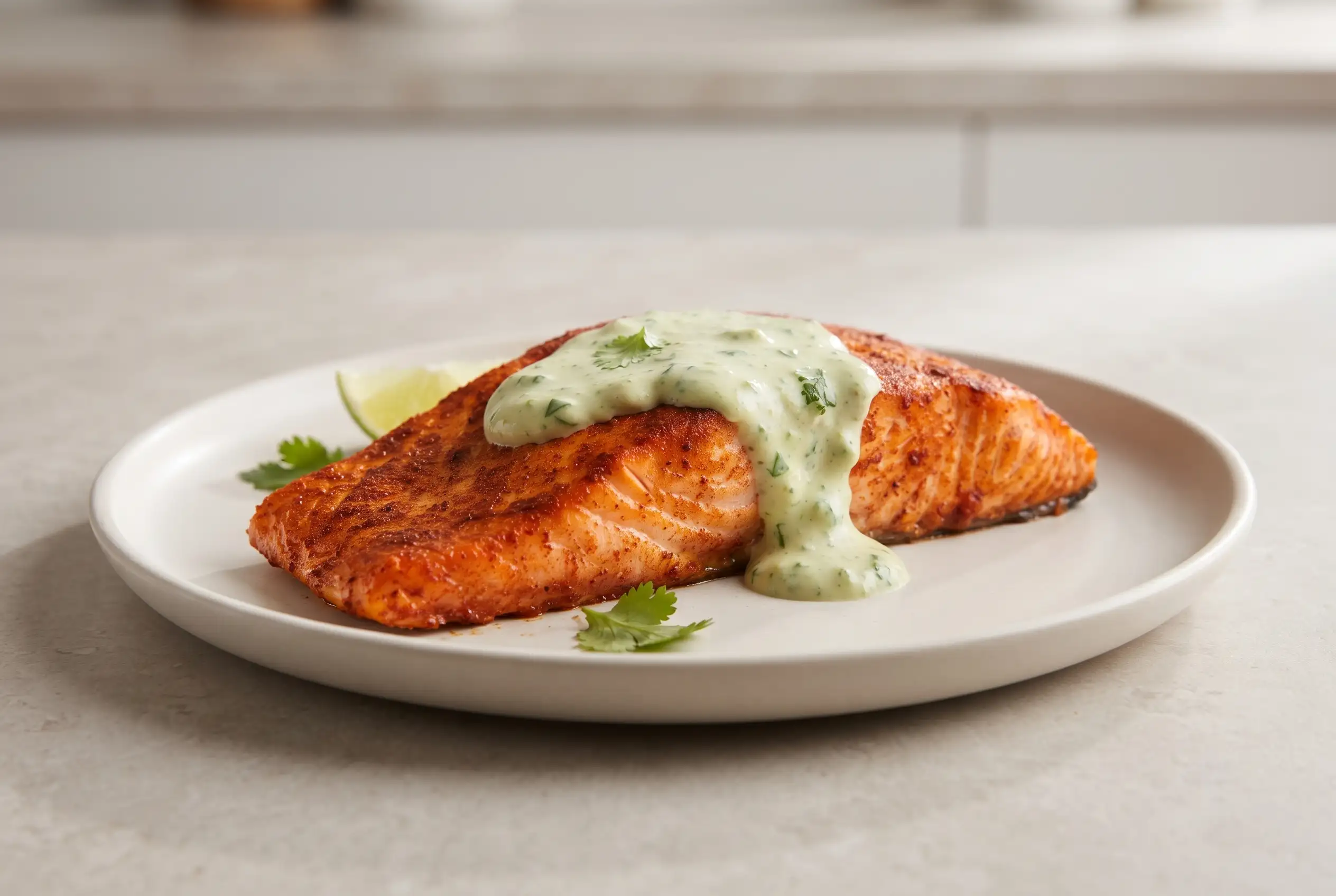
Quick Baked Cajun Salmon delivers a vibrant seafood dinner built around smoky Cajun seasoning, tender baked fish, and a cool avocado lime sauce. The combination creates a spicy baked salmon dinner with contrasting flavors that feel polished while staying simple enough for regular home cooking.
Bringing together bold spices and fresh citrus, this baked cajun salmon recipe balances heat with creamy texture. The seasoned salmon develops a flavorful crust in the oven, while the avocado sauce adds brightness that keeps each bite fresh and satisfying.
Designed for busy evenings, the dish works well as a quick cajun salmon recipe when you want a protein-rich meal without complicated preparation. The same flavors also adapt easily for bowls, tacos, salads, and other serving ideas.
Quick Baked Cajun Salmon Builds Bold Weeknight Flavor
Bold seasoning defines the character of the salmon. Cajun spices create smoky depth across the surface, giving the fish a savory coating that pairs naturally with the creamy avocado lime sauce.
Fresh contrast comes from the sauce, where avocado, lime juice, and Greek yogurt create a smooth topping with tangy notes. The cool texture balances the warmth of the seasoning and gives cajun salmon with avocado sauce its signature combination.
Simple preparation makes the meal approachable for many cooking levels. A parchment-lined baking sheet keeps cleanup easy, and the oven method allows the salmon to cook evenly while the flavors develop.
The Ingredients That Shape Cajun Salmon with Avocado Sauce
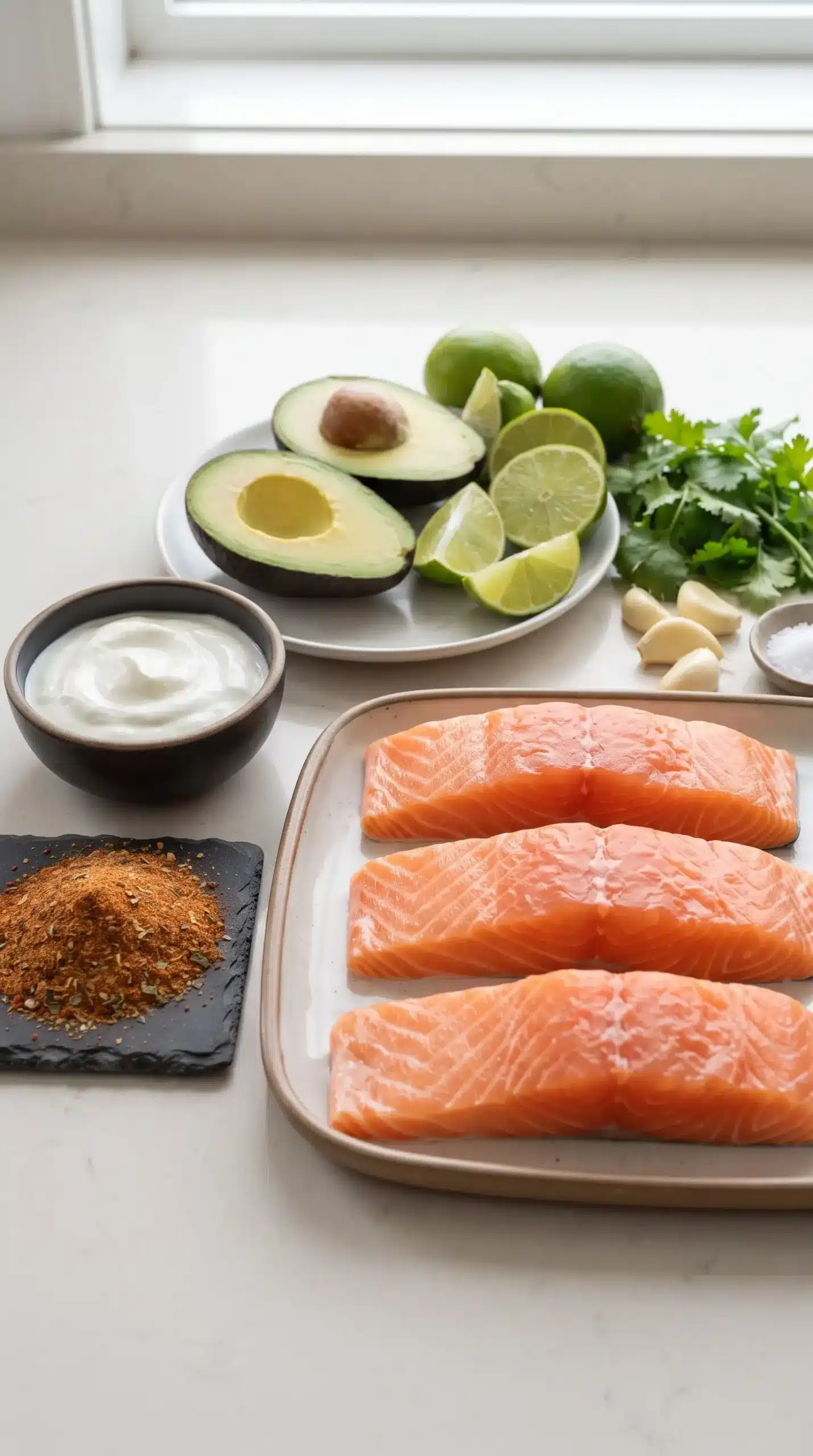
Ingredient choices have the biggest effect on the finished texture and flavor. Salmon provides the rich foundation, while the Cajun coating and avocado mixture determine how the spicy and creamy elements work together.
- Salmon selection: Fresh Atlantic, sockeye, or coho salmon provide the flaky texture expected from the dish.
- Seasoning balance: Cajun seasoning creates smoky heat, so salt should be adjusted carefully because some blends already contain salt.
- Avocado ripeness: Soft ripe avocado creates the smoothest sauce consistency.
- Citrus freshness: Fresh lime juice adds brightness that balances the richer ingredients.
Thoughtful substitutions can maintain the same style. Trout, cod, mahi-mahi, or tilapia can replace salmon when desired, and sour cream can stand in for Greek yogurt in the sauce.
Choosing Salmon and Seasoning for Better Results
Salmon thickness influences how the fish cooks and how quickly it reaches the desired texture. Center-cut fillets create consistent portions that are easier to season and bake evenly.
| Choice | Effect on Dish | Helpful Approach |
|---|---|---|
| Atlantic salmon | Rich flavor and tender texture | Works well with the creamy sauce |
| Sockeye salmon | Stronger salmon flavor | Pairs with bold Cajun seasoning |
| Coho salmon | Milder flavor and flaky texture | Good for balanced seasoning |
Careful seasoning placement matters because the Cajun coating creates most of the dish’s smoky character. Pressing the spices gently onto the salmon helps create an even layer across the surface.
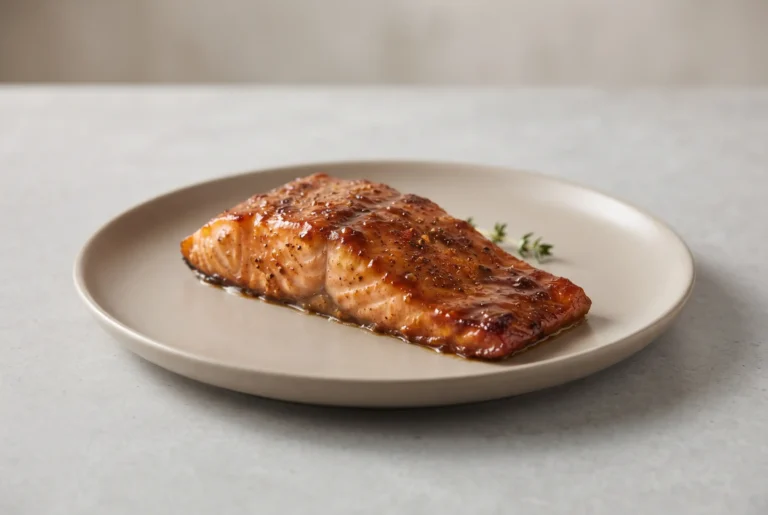
Bold seasonings can be paired with salmon beyond Cajun blends, and blackened salmon uses a spice-forward coating that develops a flavorful crust before serving.
Cooking Controls That Keep Baked Cajun Salmon Tender
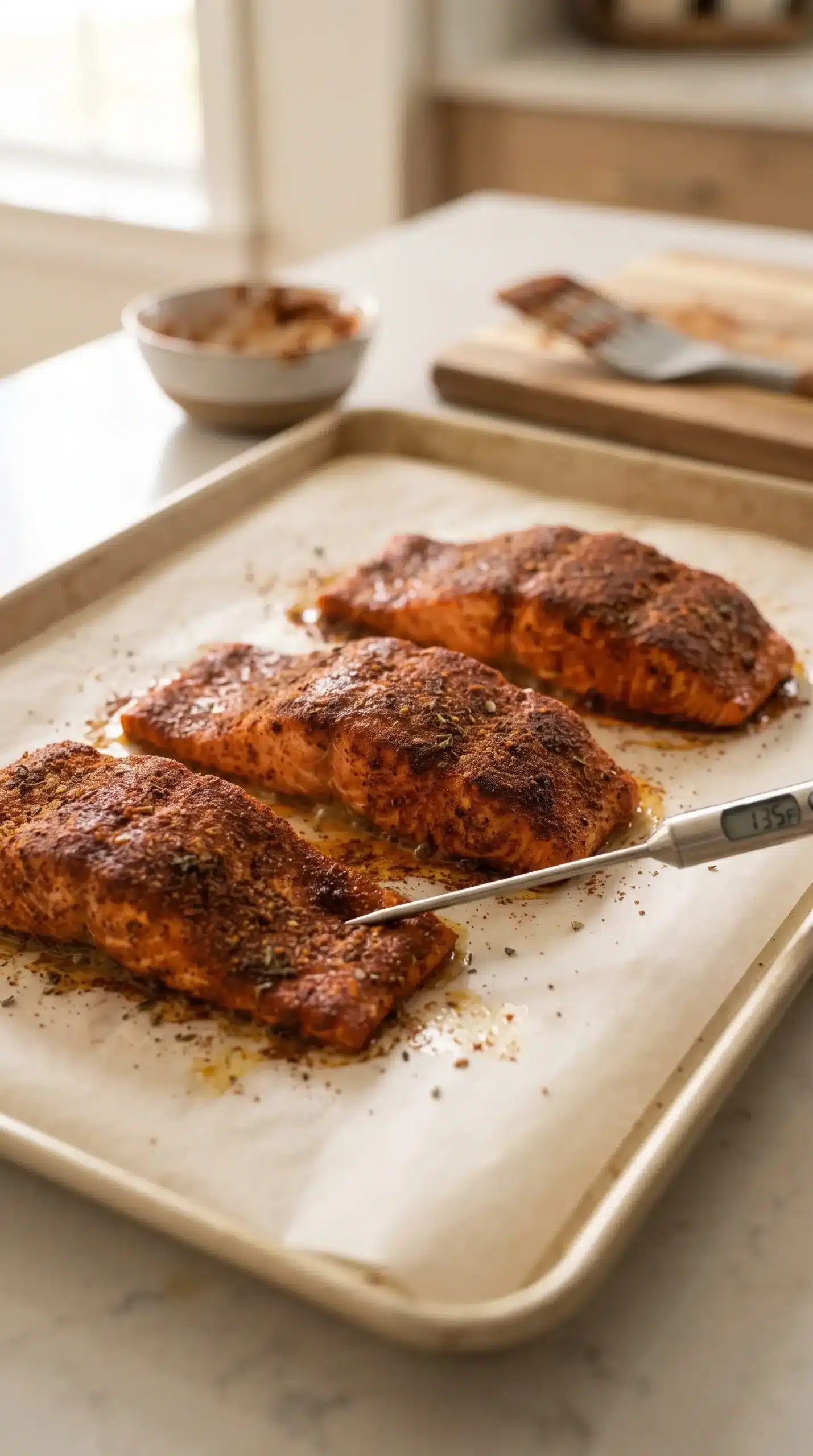
Controlled baking is what separates moist salmon from dry fish. Patting the fillets dry before seasoning helps the spices adhere and supports better browning during oven cooking.
Using a thermometer is a reliable way to confirm doneness because salmon texture can vary with fillet thickness. checking salmon temperature helps you make a more consistent decision before serving.
Temperature awareness is especially important with salmon. The fish should become opaque, flake easily, and reach an internal temperature of 145°F for a properly cooked result.
Small details improve the final texture:
- Dry surface: Removes excess moisture before seasoning.
- Even coating: Helps every bite carry Cajun flavor.
- Brief resting: Allows juices to settle after baking.
Blending the avocado lime sauce creates a smoother restaurant-style texture, while hand mashing produces a more rustic finish. Both approaches keep the creamy topping fresh and flavorful.
Common Mistakes That Can Ruin Quick Baked Cajun Salmon
Overbaking remains the biggest risk when preparing salmon. Fish that stays in the oven too long can lose its tender texture and become dry, so checking the fillets as they approach completion helps protect quality.
Another common issue comes from excess salt. Cajun blends vary widely, and adding additional seasoning before tasting the blend can make the finished dish overly salty.
Uneven preparation can also affect results. Crowding the baking sheet limits heat circulation, while using overly cold salmon can make the cooking process less consistent.
Dense avocado sauce is an easy problem to fix. A small amount of lime juice, water, or milk can loosen the mixture while keeping the creamy texture intact.
Serving Ideas for a Spicy Baked Salmon Dinner
Flexible serving options allow this salmon dinner to fit different meal styles. The creamy sauce works especially well with sides that absorb its citrus flavor and complement the Cajun seasoning.
- Cilantro lime rice
- Roasted broccoli
- Cauliflower rice
- Green salad
- Corn salsa
- Garlic green beans
Creative variations can change the presentation without changing the core flavors. Flaked salmon can become taco filling with avocado sauce, or it can be served over rice with vegetables for a complete bowl-style meal.
Storage Choices for Leftover Cajun Salmon with Avocado Sauce
Separate storage keeps the textures of the salmon and sauce in better condition. The baked fish stores well on its own, while the avocado mixture is best kept apart until serving.
Refrigerated leftovers should be handled carefully and reheated gently. Oven, air fryer, and skillet warming methods can restore heat without aggressively drying the salmon.
Freezing works for the baked salmon, but the avocado sauce is not recommended for freezing because its creamy texture may change after thawing.
Meal Prep Approaches for Faster Salmon Dinners
Advance preparation makes this dish practical for planned weekday meals. The salmon can be seasoned ahead, side dishes can be prepared early, and the sauce can be mixed before serving.
Individual portions are useful for quick lunches or dinners because the cooked fish can be paired with different sides throughout the week. Rice bowls, salads, and wraps offer simple ways to reuse leftovers.
Shortcuts can also reduce active kitchen time:
- Prepared seasoning: A Cajun blend saves time compared with measuring several spices.
- Ready sides: Cooked rice or prepared vegetables simplify assembly.
- Simple sauce method: Fork-mashing keeps cleanup minimal.
Family-Friendly Adjustments for Cajun Heat
Milder versions of the dish can work well for households with different spice preferences. Reducing Cajun seasoning or choosing a gentler blend keeps the smoky flavor while lowering the heat level.
Blending the avocado sauce completely smooth can make the topping more approachable for diners who prefer creamy textures without visible pieces.
Serving the salmon in smaller pieces, bowls, or tacos also gives everyone more control over portions and toppings.
Budget and Equipment Decisions for Home Cooks
Smart ingredient choices help keep seafood dinners practical. Frozen salmon can be a convenient option, while affordable fish such as cod or tilapia can follow the same seasoning approach.
Basic kitchen equipment is enough for reliable results. A baking sheet, parchment paper, mixing bowl, and simple utensils handle the main preparation, while an instant-read thermometer can help monitor doneness.
Baked Cajun Salmon Brings Spice and Creamy Balance
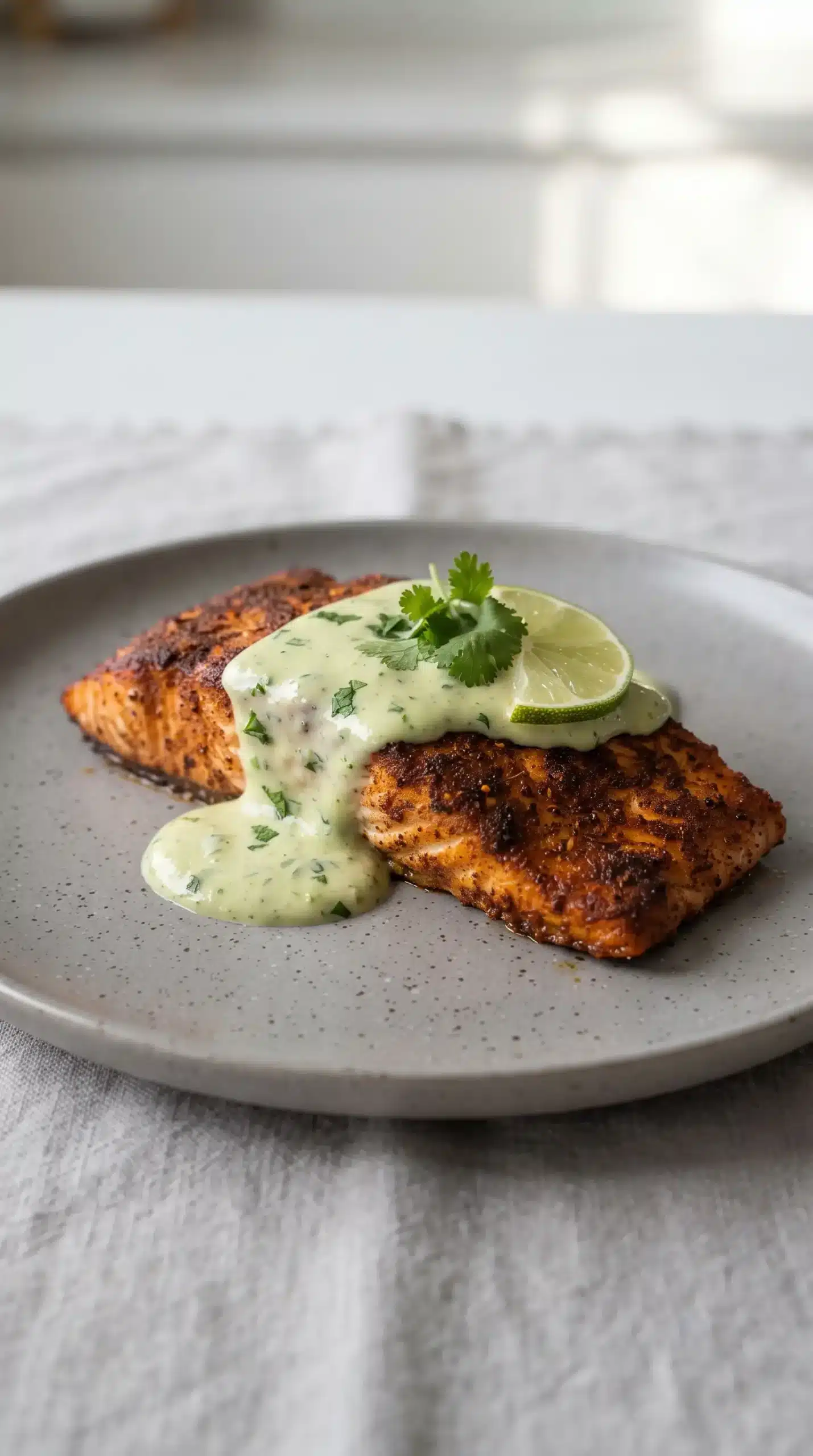
Salmon coated with Cajun seasoning and paired with avocado lime sauce creates a meal where heat, richness, and freshness remain balanced. The cooking process depends on protecting the fish’s tenderness while allowing the spices to develop their smoky character.
The strongest results come from careful seasoning, attentive baking, and serving the creamy sauce as a contrast to the bold salmon. That combination keeps the dish satisfying without requiring complicated techniques.
Common Questions About Salmon Temperature and Sauce
How spicy is baked cajun salmon?
The heat level depends on the Cajun seasoning blend used. Mild blends create a smoky flavor with less intensity, while stronger blends increase the spicy character of the salmon.
Can frozen salmon be used for this recipe?
Frozen salmon works well when it is fully thawed before cooking. Thawing helps the fish cook more evenly and allows the seasoning to coat the surface properly.
Why does the avocado sauce balance the salmon so well?
The sauce combines creamy avocado, tangy yogurt, and fresh lime juice to soften the smoky seasoning and add a bright contrast to the rich fish.
What internal temperature should salmon reach?
Salmon should reach an internal temperature of 145°F while becoming opaque and easy to flake. Checking temperature helps prevent undercooking or excessive baking.
Can the salmon be served in other ways?
The cooked fish can be flaked into tacos, placed over rice, or combined with vegetables and salads for different meal formats.
Quick Baked Cajun Salmon with Avocado Lime Sauce
Ingredients
Method
- Heat the oven to 400°F / 200°C and prepare a baking sheet with parchment paper.
- Dry the salmon fillets with paper towels, then coat them with olive oil, Cajun seasoning, salt, and black pepper.
- Arrange the seasoned salmon on the prepared baking sheet and bake for 12–15 minutes until the fish is opaque, flakes easily, and reaches an internal temperature of 145°F / 63°C.
- Mash the avocado until smooth, then mix in the lime juice, Greek yogurt, salt, and black pepper until combined; blend the mixture if a smoother sauce texture is preferred.
- Allow the baked salmon to rest for 1–2 minutes, then plate the fillets and add the avocado lime sauce on top.
- Finish with fresh cilantro, chili flakes, and lime wedges if using.