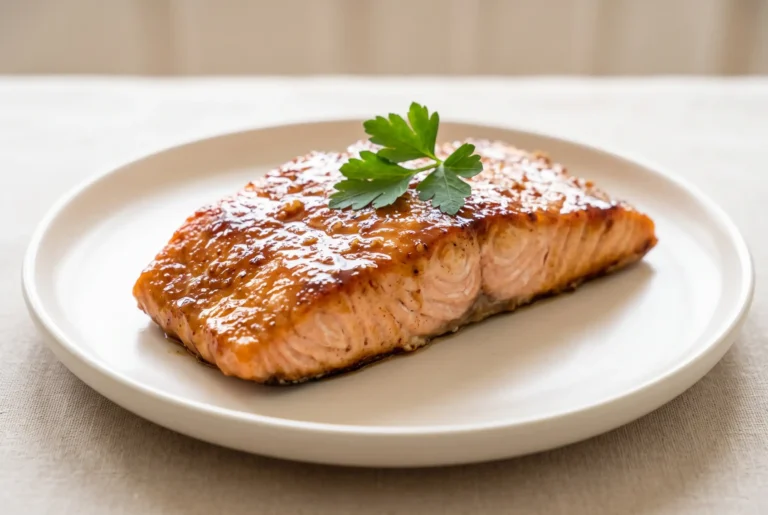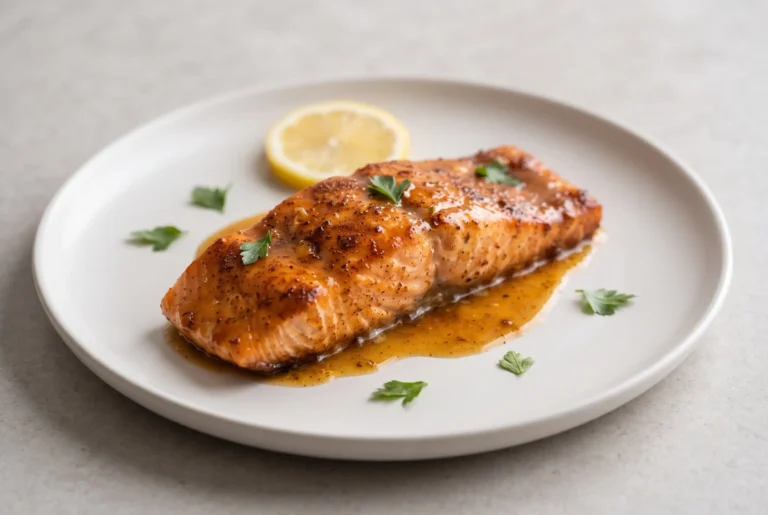
Crab Shrimp Stuffed Salmon with Creamy Seafood Filling
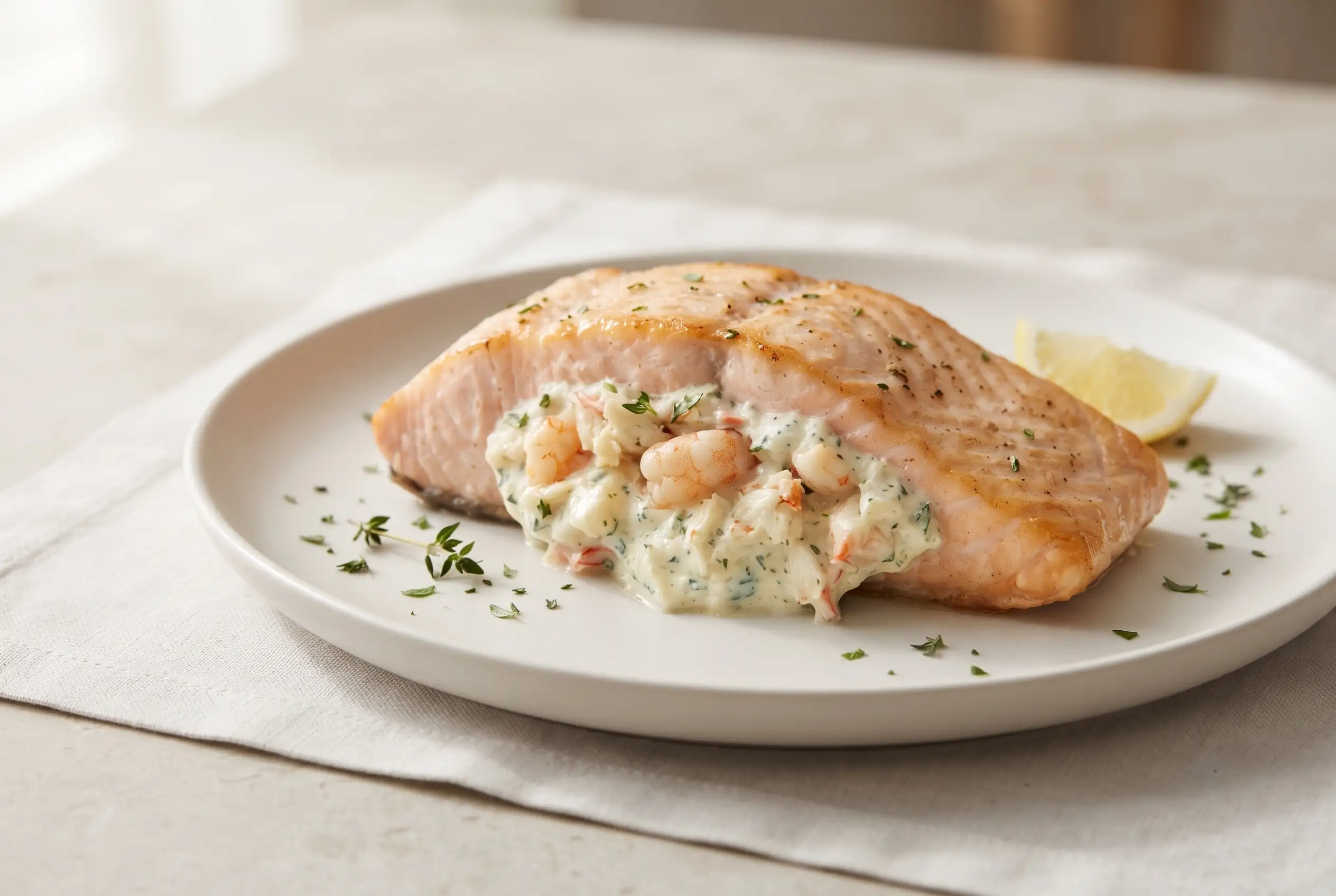
Stuffed salmon recipe lovers will appreciate a dinner that combines flaky fish, creamy seafood filling, and elegant presentation without complicated preparation. Crab, shrimp, cream cheese, and herbs create a rich center that turns simple salmon fillets into a restaurant-inspired meal.
Crab shrimp stuffed salmon brings together contrasting textures and flavors in every portion. The golden exterior, tender salmon, and savory filling make it suitable for special occasions while still fitting comfortably into home cooking routines.
Stuffed Salmon Recipe Creates Coastal Dinner Appeal
Elegant seafood dishes often depend on balance, and this seafood stuffed salmon delivers that through the relationship between the fish and the filling. Salmon provides a rich, buttery base while the crab and shrimp mixture adds creamy texture and delicate seafood character.
The preparation method also helps create the finished experience. A quick sear develops color on the outside before oven baking gently cooks the stuffed fillets through. The result is a dish with a lightly golden surface and a moist interior.
The creamy center makes this meal stand out because the filling cooks inside the salmon pocket. Cream cheese softens around the seafood, while breadcrumbs help maintain a stable texture that stays inside the fillet.
| Dish Element | Texture Contribution | Flavor Role |
|---|---|---|
| Salmon fillet | Flaky and tender | Rich seafood foundation |
| Crab filling | Soft and delicate | Sweet coastal flavor |
| Shrimp pieces | Slightly firm bite | Savory seafood depth |
Seafood Filling Choices Shape the Creamy Center
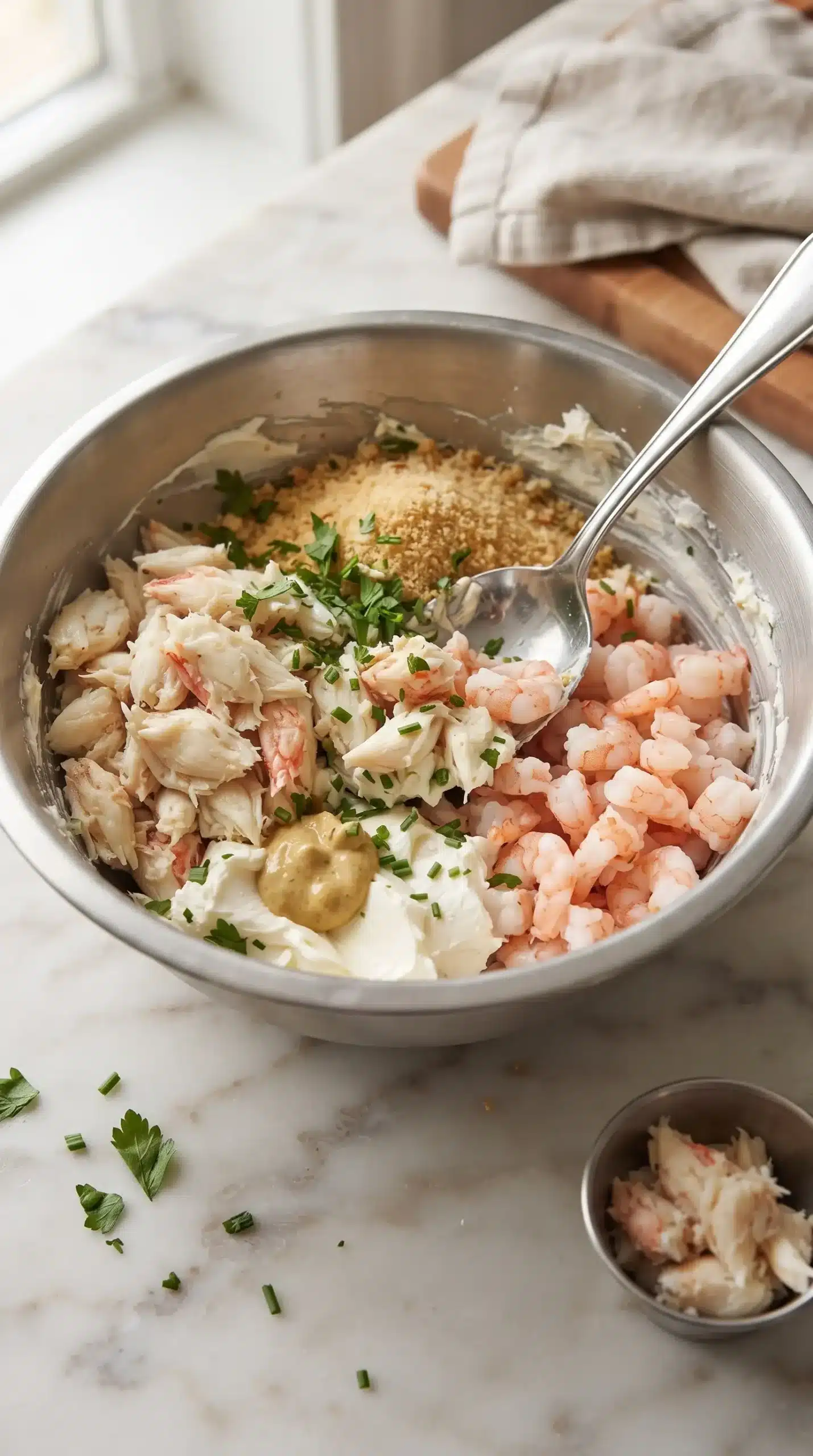
The quality of the stuffing determines much of the character of creamy stuffed salmon. Lump crab creates the luxurious texture expected from the dish, while chopped cooked shrimp adds structure so the filling does not become completely smooth.
Cold seafood is easier to handle during preparation because the filling stays firm while it is placed inside the salmon. Gentle mixing keeps the crab pieces intact and preserves the layered seafood texture.
The creamy base comes from softened cream cheese combined with mayonnaise and Dijon mustard. Breadcrumbs provide support, allowing the mixture to remain rich while holding its shape during cooking.
Salmon Pocket Preparation Determines Success
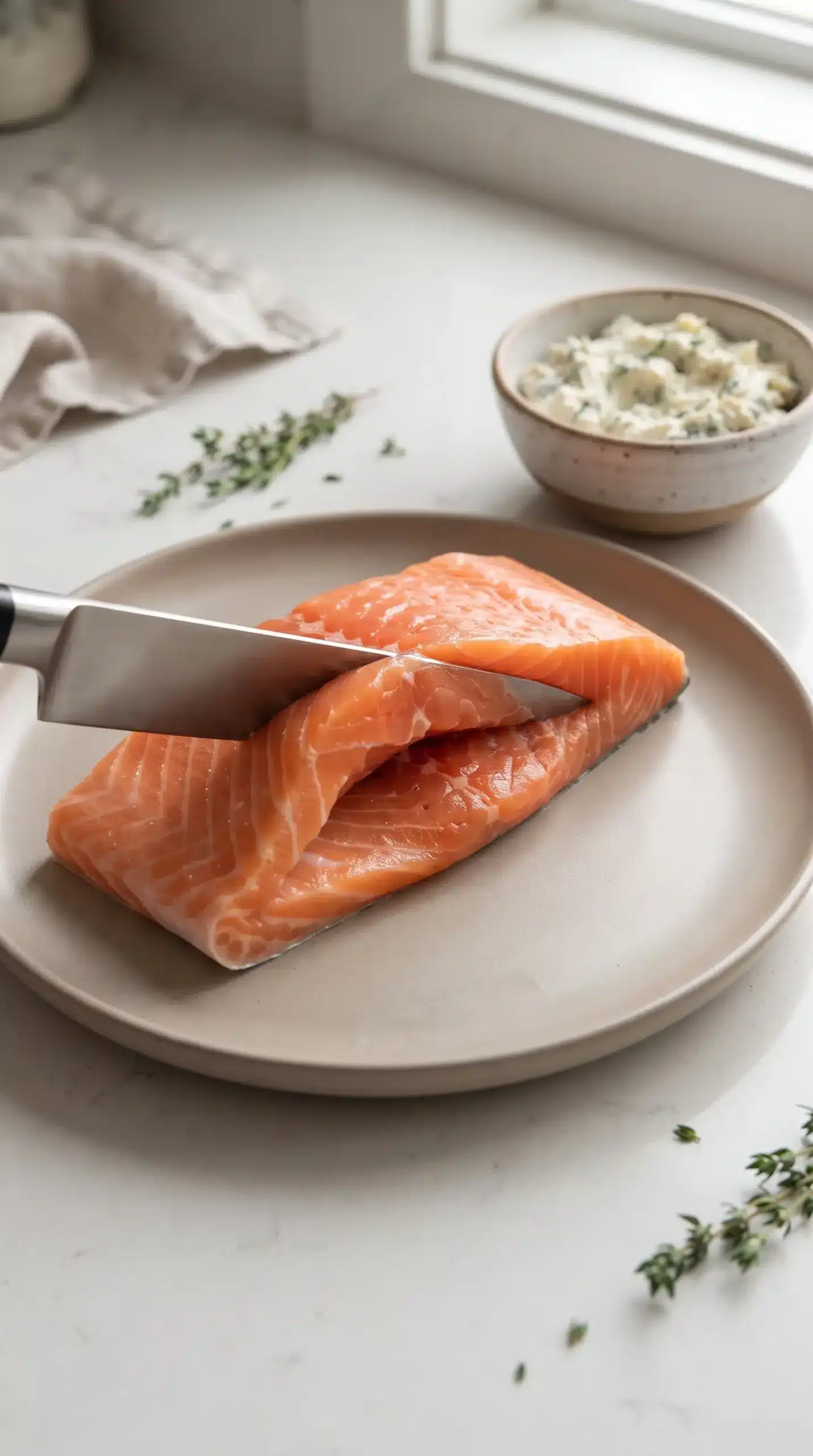
Creating the pocket is the most important preparation decision for a stuffed salmon recipe. A deep opening gives the filling enough space while keeping the fillet connected so it cooks evenly.
A sharp knife makes it easier to create a controlled cavity. Cutting slowly helps avoid separating the salmon completely, which can cause the filling to escape during searing or baking.
Center-cut salmon fillets are especially useful because their thickness supports stuffing and helps the fish cook more consistently. Similar fish options can work when a different seafood profile is preferred.
Searing And Baking Controls Keep Salmon Moist
Cooking control has a major effect on the final texture of crab shrimp stuffed salmon. The initial sear creates surface color and flavor, while oven baking finishes the thicker stuffed portions more gently.
Medium heat is important during searing because excessive heat can darken the outside before the center is ready. A steady cooking process protects the salmon texture and keeps the filling creamy.
Using an oven-safe skillet makes the transition from stovetop to oven simple. After baking, a short rest allows the juices inside the salmon to settle before serving.
| Cooking Stage | Main Purpose | Important Observation |
|---|---|---|
| Searing | Develop exterior color | Look for light golden browning |
| Baking | Cook the stuffed center | Salmon should flake easily |
| Resting | Settle moisture | Keep the filling intact |
Crab Shrimp Stuffed Salmon Mistakes That Ruin Texture
Several small errors can affect the appearance and texture of this seafood dinner. Understanding the common trouble points makes the cooking process more reliable.
- Overcutting the fillet: Creating a pocket too deep can split the salmon and allow filling to escape.
- Overpacking the center: Excess filling can spill during cooking, so a rounded but controlled amount works best.
- Overbaking the fish: Extended cooking can remove the moisture that makes salmon tender.
- Roughly mixing seafood: Aggressive stirring can break down the crab and reduce the delicate texture.
Serving Pairings Balance The Rich Seafood Flavor
Crab shrimp stuffed salmon has a naturally rich profile, so side dishes that add freshness or gentle simplicity create a balanced plate. Vegetable sides, grains, and lighter accompaniments allow the seafood flavors to remain the focus.
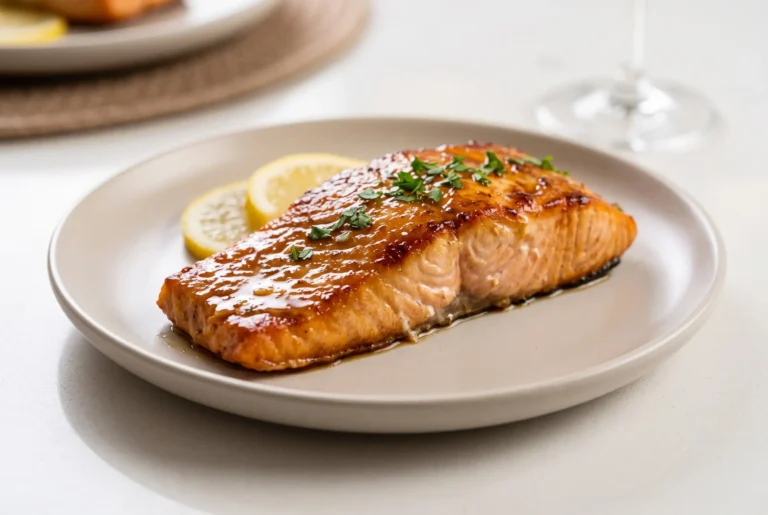
Lemon wedges and fresh parsley add brightness at serving time. Garlic butter drizzle or a lemon-based sauce can also complement the creamy filling.
Suitable pairings include roasted vegetables, rice pilaf, mashed potatoes, green beans, asparagus, and fresh salads. These options provide different textures while supporting the main seafood course.
Make Ahead Storage Keeps Leftovers Enjoyable
The seafood filling can be prepared ahead, which makes entertaining easier. Stuffed salmon can also be assembled in advance and refrigerated until cooking time.
Cooked leftovers should be stored in airtight containers and handled carefully to protect the texture of the salmon and creamy center.
Gentle reheating works best because strong heat can dry out the fish and affect the cream cheese filling. Freezing is less ideal since the creamy mixture may separate after thawing.
Family Friendly Changes Keep Portions Approachable
The flavors of crab shrimp stuffed salmon can be adjusted for different preferences while keeping the main idea of the dish intact. Smaller seafood pieces create a smoother filling that may appeal to younger diners.
Milder seasoning adjustments can reduce intensity without removing the creamy seafood character. Serving smaller portions with familiar sides such as rice or potatoes can also make the meal easier for families to enjoy.
Budget Decisions Preserve Seafood Quality
A luxurious seafood dinner does not require every ingredient to be the most expensive option. Frozen salmon fillets can provide good results when properly thawed and dried before cooking.
Lump crab offers the best texture, but choosing carefully between seafood options can help manage costs. Spending more attention on the salmon quality is worthwhile because thicker fillets hold stuffing better.
Affordable sides such as rice, roasted potatoes, pasta, or seasonal vegetables help create a complete meal without increasing the overall cost significantly.
Expert Equipment Choices Simplify Stuffing
A few basic kitchen tools make this dish easier to prepare. An oven-safe skillet, sharp knife, mixing bowl, and reliable cooking thermometer support better control during each stage.
A food thermometer can confirm that salmon reaches a safe 145°F internal temperature before serving.
A sharp knife is especially valuable because the salmon pocket needs a clean cut. A fish spatula can also help move the delicate stuffed fillets without breaking them apart.
Variations Expand The Creamy Stuffed Salmon
Different flavor directions can change the personality of this seafood dinner while keeping the same stuffed salmon foundation.
- Coastal crunch: Add buttered Panko on top before baking for extra texture.
- Tuscan style: Include spinach, Parmesan, and sun-dried tomatoes for a different flavor direction.
- Cajun version: Add Cajun seasoning, chili flakes, or hot sauce for more heat.
Gluten-free adjustments are also possible by replacing traditional breadcrumbs with suitable alternatives such as almond flour.
Crab Shrimp Stuffed Salmon Delivers A Balanced Seafood Dinner
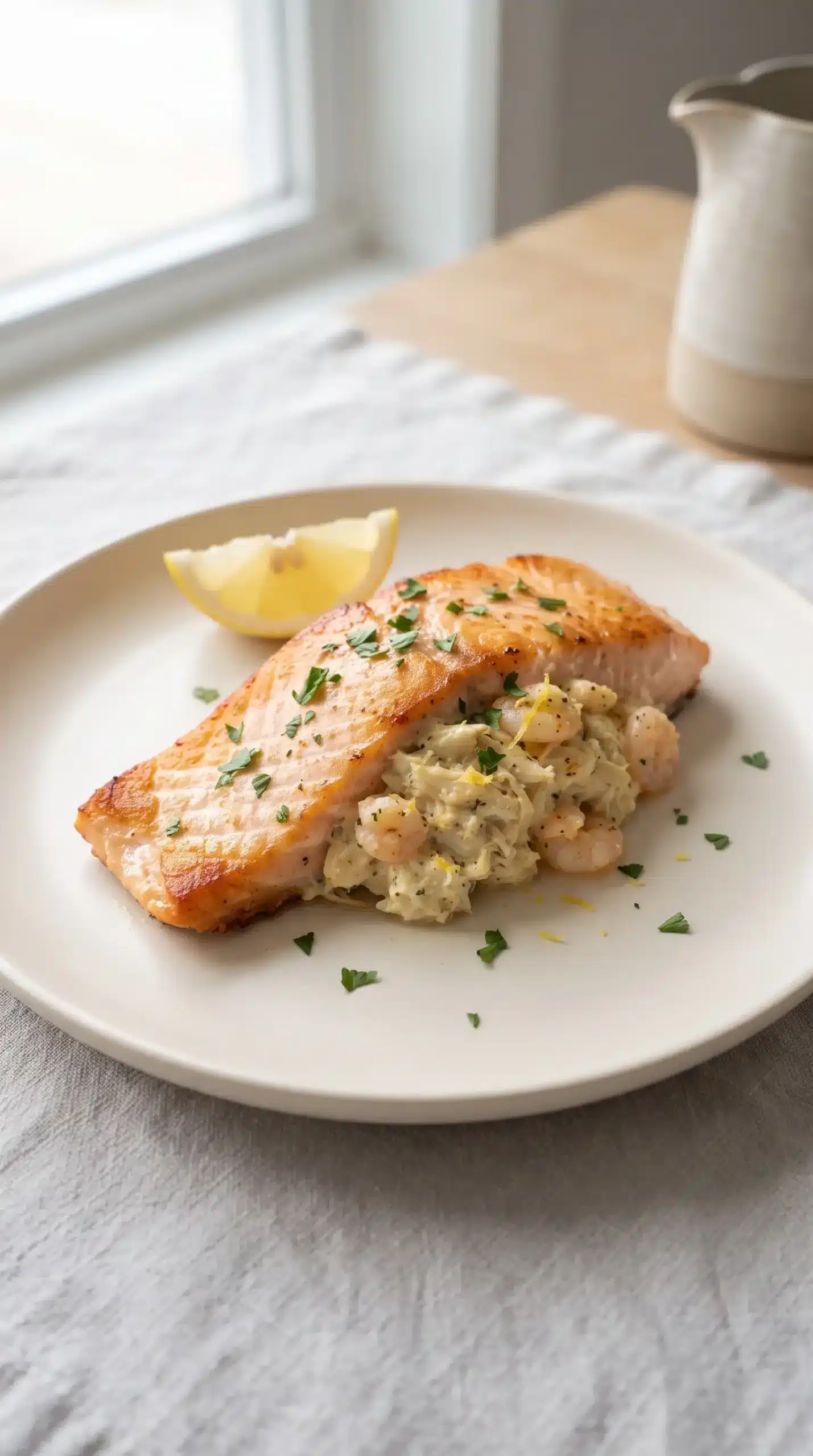
The creamy seafood filling and carefully cooked salmon create a combination where texture and flavor depend on thoughtful preparation. Keeping the filling controlled, protecting moisture, and using gentle cooking techniques are the decisions that shape the finished dish.
Crab shrimp stuffed salmon succeeds because it brings together elegant seafood qualities with practical home cooking. The result is a meal built around tender salmon, a rich center, and a presentation that feels special without unnecessary complexity.
Crab Shrimp Stuffed Salmon Filling Questions
How do I prevent filling from leaking out?
Keep the salmon pocket intact, avoid cutting completely through the fillet, and fill the cavity without pressing in too much stuffing. Toothpicks can help secure the opening during cooking.
Can canned crab work for the filling?
Canned crab can be used, but lump crab provides a more delicate texture and a stronger seafood flavor that better matches the style of the dish.
Why should the shrimp already be cooked?
Cooked shrimp are easier to combine with the other filling ingredients and are already prepared before the short baking period finishes the stuffed salmon.
Can another fish replace salmon?
Trout, Arctic char, or steelhead trout can work as alternatives because they can hold a similar stuffed preparation while providing a different seafood flavor.
What sauce pairs well with stuffed salmon?
Lemon butter sauce, garlic cream sauce, or Cajun cream sauce can complement the seafood filling and add another layer of flavor at serving time.
Crab Shrimp Stuffed Salmon with Creamy Seafood Filling
Ingredients
Method
- Add lump crab meat, chopped cooked shrimp, softened cream cheese, breadcrumbs, mayonnaise, Dijon mustard, parsley, garlic powder, and paprika to a bowl and gently stir until the filling is evenly combined.
- Create a deep pocket in each salmon fillet, keeping the bottom intact, then season the salmon on all sides and inside the pocket with salt and black pepper.
- Fill each salmon pocket with an equal portion of the seafood mixture, using toothpicks to hold the opening closed if needed.
- Warm olive oil in a large oven-safe skillet over medium-high heat, then sear the stuffed salmon for 2–3 minutes per side until lightly browned.
- Move the skillet into a preheated 375°F / 190°C oven and bake for 12–15 minutes until the salmon flakes easily and reaches an internal temperature of 145°F / 63°C.
- Remove any toothpicks, allow the salmon to rest briefly, and serve with lemon wedges and fresh parsley.