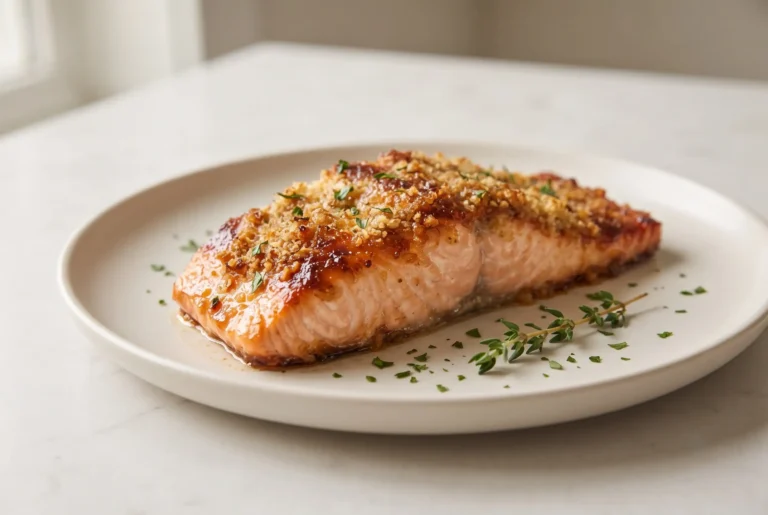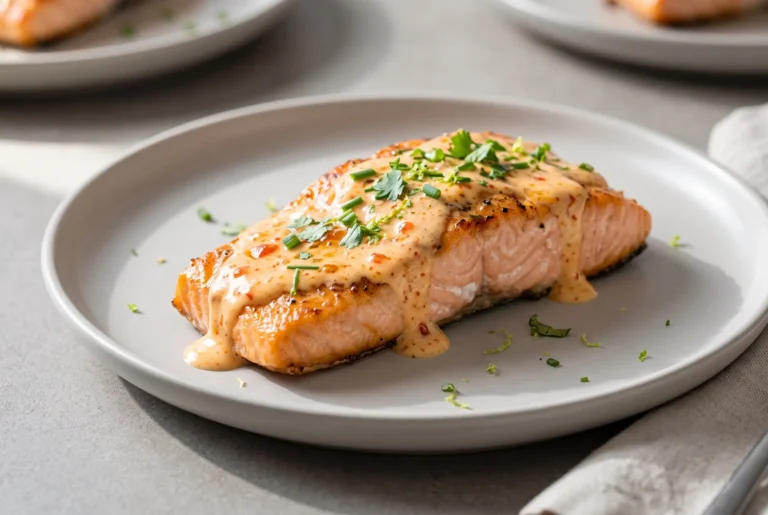
Creamy Garlic Salmon Pasta with Parmesan Garlic Sauce
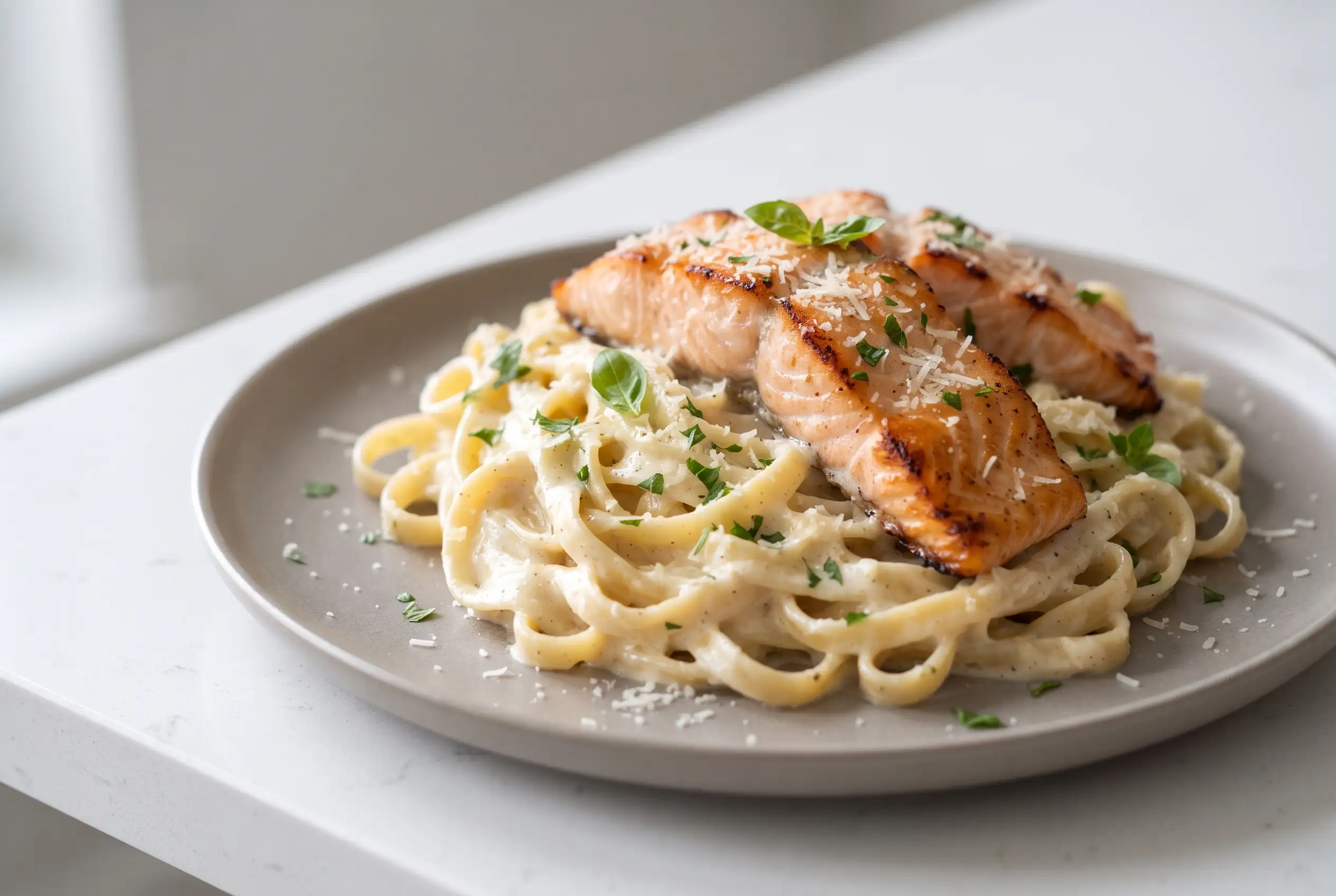
Creamy garlic salmon pasta brings together flaky salmon, silky Parmesan garlic sauce, and tender pasta for a dinner that feels elegant while remaining practical for home cooking. The combination of golden seared fish, rich cream, and savory garlic creates a comforting seafood pasta experience with balanced texture and deep flavor.
Restaurant-style flavor comes from a few simple decisions: building a flavorful skillet base, keeping the sauce smooth, and protecting the salmon’s tender texture. This salmon pasta recipe turns familiar ingredients into a creamy salmon pasta dinner that works for busy evenings, relaxed gatherings, or a special meal at home.
Unlike many heavy pasta dishes, garlic salmon pasta creates contrast through its ingredients. Soft pasta strands carry the sauce, while flaky salmon pieces add a satisfying bite that keeps the dish memorable from the first serving to the last.
Creamy Garlic Salmon Pasta at a Glance
Simple timing and a focused ingredient list make this dish approachable without sacrificing the qualities people love about creamy seafood pasta. The skillet method allows the salmon, garlic, cream, and Parmesan flavors to come together in one cohesive meal.
| Cooking Element | Important Detail | Why It Matters |
|---|---|---|
| Salmon preparation | Golden seared fillets | Creates rich flavor and flaky texture |
| Cream sauce | Gentle simmer with Parmesan | Keeps the sauce smooth and cohesive |
| Pasta finish | Tossed with reserved pasta water | Helps the sauce cling to noodles |
Ingredient balance is what gives the meal its restaurant-inspired feel. Salmon provides the seafood centerpiece, while Parmesan and garlic create the savory foundation that connects every part of the dish.
Sauce Choices Shape Creamy Garlic Salmon Pasta
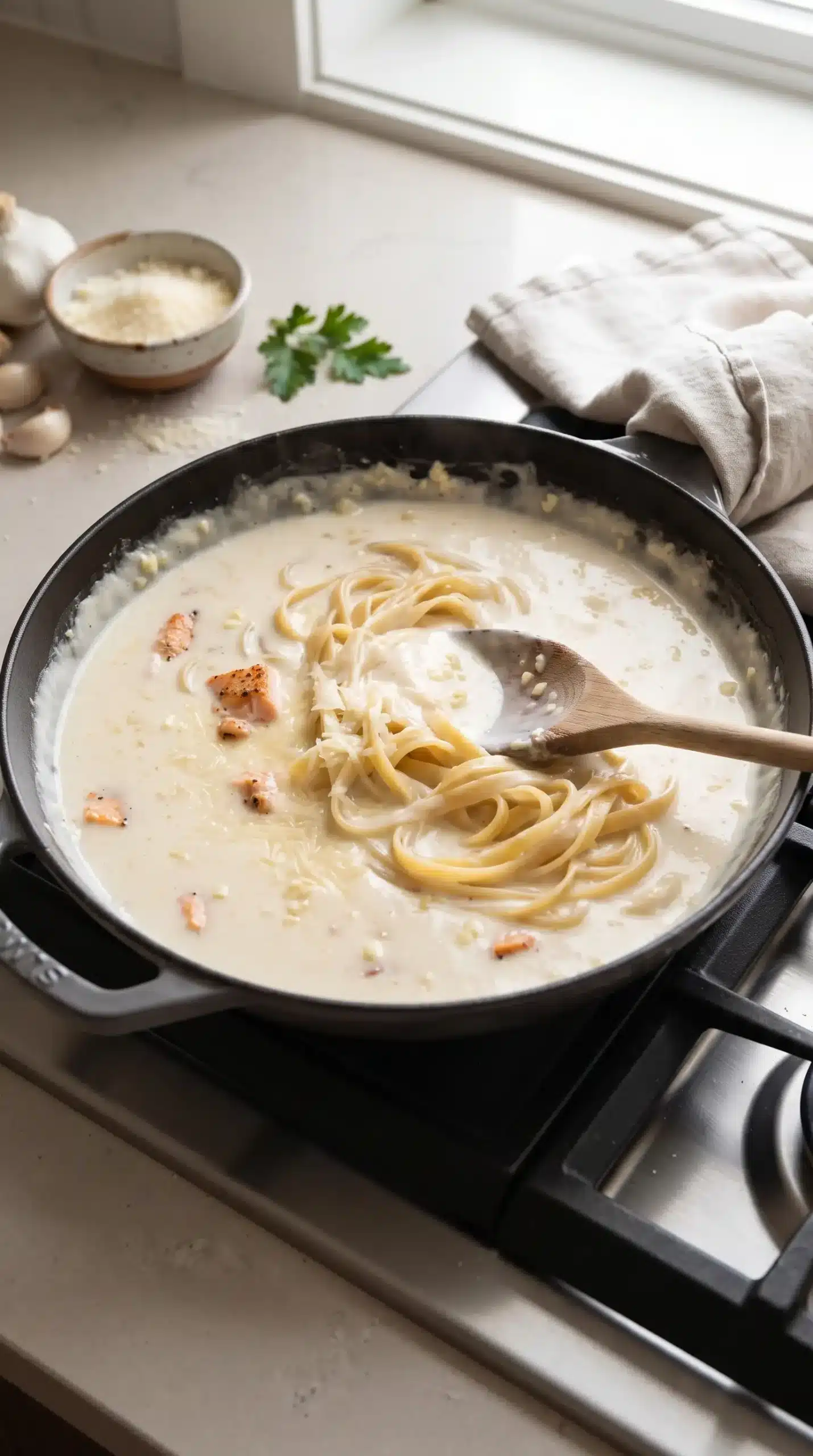
Freshly grated Parmesan and heavy cream are the key elements that define the sauce texture. Parmesan melts into the cream to create a smooth coating, while the dairy base carries the garlic flavor throughout the pasta.
Gentle heat is essential when developing the sauce. A calm simmer helps maintain a silky consistency, while aggressive boiling can affect the texture and make the sauce less stable.
- Fresh Parmesan: melts smoothly and supports a creamy finish.
- Heavy cream: creates the rich base that coats each pasta strand.
- Garlic cloves: provide the aromatic flavor that defines the dish.
Small adjustments can change the character of the sauce while keeping the core idea intact. Half-and-half creates a lighter version, and dairy-free cooking cream offers another option when needed.
Salmon Searing Controls Define the Dish
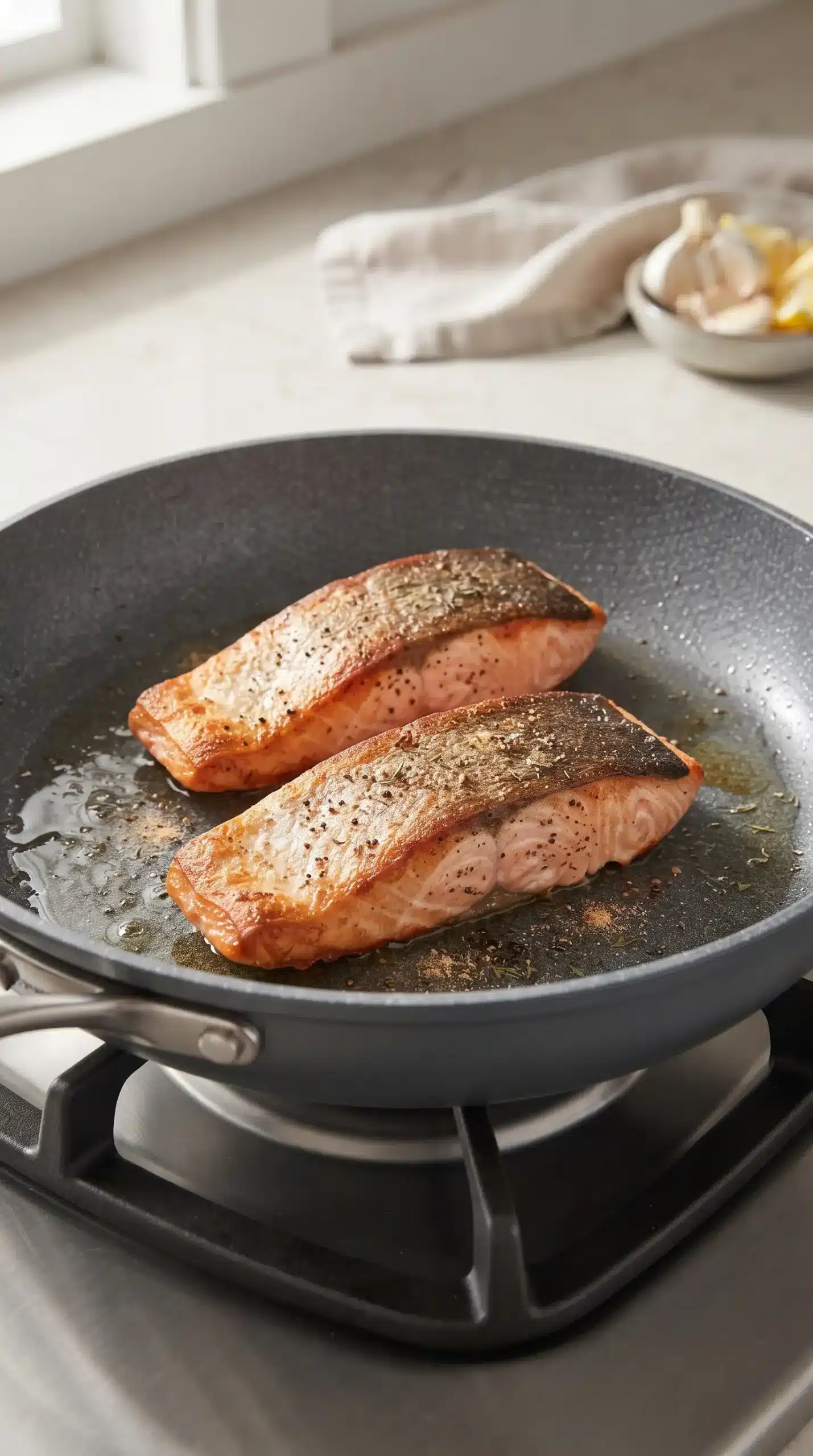
Proper salmon preparation has a major impact on the finished meal. Drying the fillets before cooking helps the surface develop better browning, which adds depth to the flavor profile.
Skillet cooking works especially well because the browned salmon pieces contribute flavor that remains in the pan before the sauce is created. Proper pan seared salmon preparation relies on a dry surface and steady heat, helping develop the golden exterior that makes each bite more satisfying.
Timing matters during this stage because salmon can lose moisture when overcooked. Removing the fish once it flakes easily keeps the texture tender before it is gently folded back into the creamy sauce.
For a reliable cooking endpoint, salmon is considered fully cooked when it reaches a 145°F internal temperature, while still maintaining the tender texture needed for creamy pasta dishes.
Common Creamy Garlic Salmon Pasta Mistakes to Avoid
Several small cooking errors can change the texture and flavor of creamy garlic salmon pasta. Understanding the cause behind each issue makes it easier to protect the silky sauce and tender seafood.
| Common Issue | What Causes It | Better Approach |
|---|---|---|
| Dry salmon | Cooking too long | Remove once flaky and fully cooked |
| Bitter garlic | Over-browning | Cook briefly until fragrant |
| Separated sauce | Excessive heat | Keep the cream at a gentle simmer |
| Clumpy cheese | Adding Parmesan too quickly | Stir cheese in gradually |
Another common problem happens when pasta water is ignored. The reserved starchy liquid helps adjust the sauce texture and allows the creamy coating to stay connected with the noodles.
Pasta Pairings Complete the Salmon Dinner
Long pasta shapes work particularly well because they capture the creamy sauce across a larger surface area. Fettuccine and linguine create the classic presentation, while other shapes can still provide excellent results.
Supporting sides should bring freshness and contrast to the richness of the dish. Lighter accompaniments help balance the creamy texture without competing with the salmon.
Leftovers Stay Smooth After Creamy Garlic Salmon Pasta
Stored portions keep well when placed in airtight containers. Gentle reheating helps protect the creamy texture and prevents the salmon from becoming overly dry.
Warm leftovers over medium-low heat and add a small splash of milk, cream, or pasta water if the sauce needs to loosen. This restores some of the smooth consistency that develops when the dish is freshly prepared.
Meal Prep Keeps Garlic Salmon Pasta Practical
Preparation ahead works best when the ingredients are organized before cooking begins. Having garlic, Parmesan, parsley, and salmon portions ready reduces the pressure of assembling the meal during a busy evening.
Prepped components can make the cooking process feel faster without changing the character of the finished dish. Slightly undercooking pasta before reheating can also help maintain a pleasant texture.
Separate storage of sauce and pasta can preserve quality when preparing portions in advance. The creamy mixture can then be combined with noodles during reheating for a fresher result.
Nutrition Balance Comes From Salmon Pasta Recipe Components
Salmon contributes protein, omega-3 fatty acids, B vitamins, and healthy fats to the meal. Parmesan adds calcium, protein, and savory flavor that strengthens the overall profile of the dish.
Lightening the meal can be done through practical adjustments. Using half-and-half, reducing Parmesan slightly, or adding vegetables such as spinach changes the richness while keeping the main flavors recognizable.
Family-Friendly Changes Keep Salmon Pasta Approachable
Different serving preferences can be accommodated easily with this creamy pasta. Smaller salmon flakes can blend more evenly into the sauce for diners who prefer a less noticeable seafood texture.
Younger eaters may enjoy shorter pasta shapes because they are easier to handle. Penne, rotini, bowties, and shells can all work well while still carrying the creamy garlic sauce.
- Milder flavor: reduce garlic slightly while keeping Parmesan richness.
- More vegetables: blend spinach into the sauce near the end of cooking.
- Flexible protein: replace salmon with shrimp, scallops, or chicken when desired.
Creamy Garlic Salmon Pasta Delivers Its Signature Finish
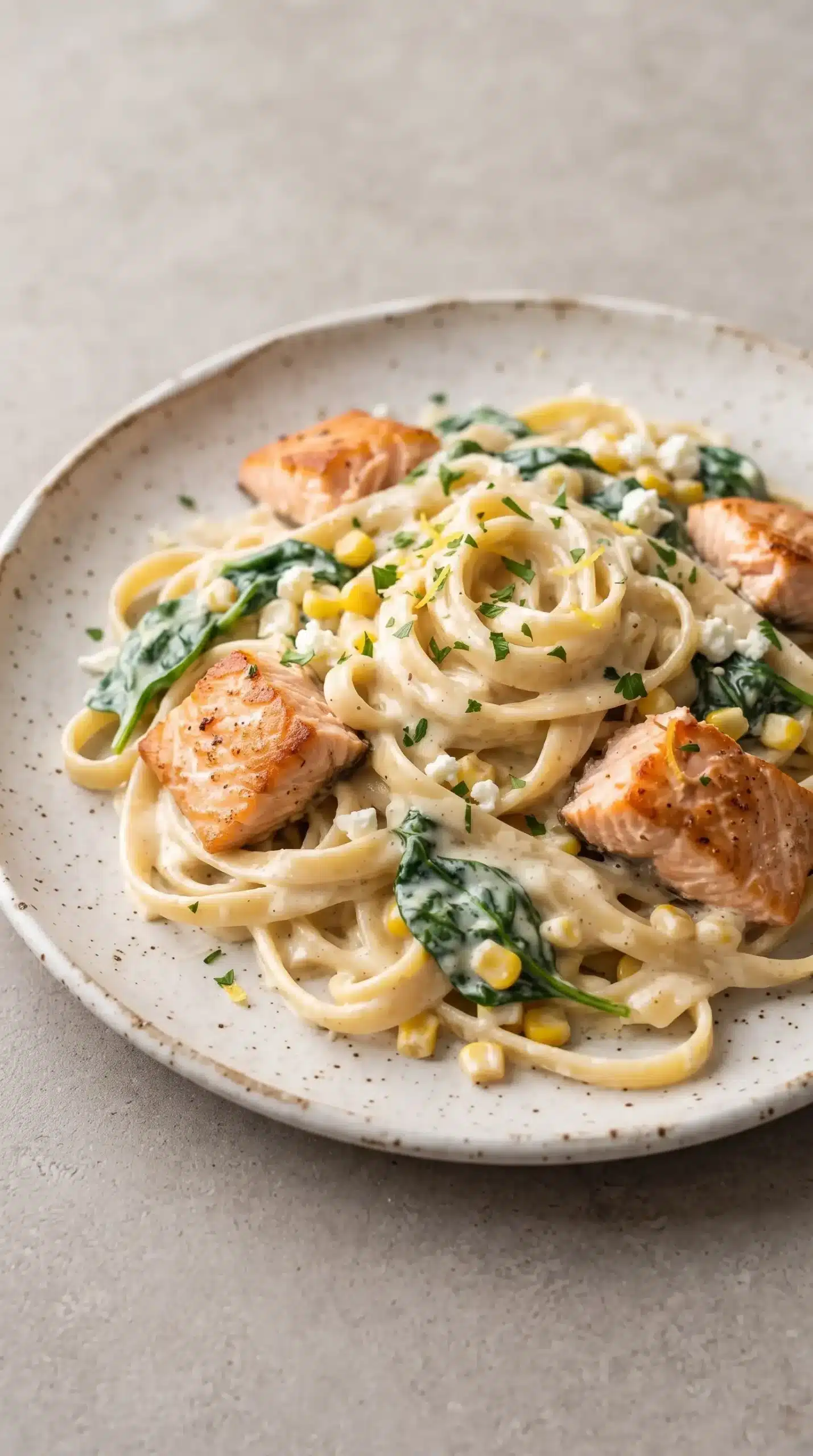
Golden salmon, smooth Parmesan sauce, and properly coated pasta create the balance that defines creamy garlic salmon pasta. The most important cooking choices happen around texture control: preserving flaky fish, maintaining gentle sauce heat, and allowing the noodles to absorb the creamy coating.
Every component works together because the dish depends on harmony instead of complexity. Careful skillet cooking transforms simple ingredients into a satisfying seafood dinner with a polished finish.
Creamy Garlic Salmon Pasta Questions About Storage and Cooking
Can frozen salmon work for creamy garlic salmon pasta?
Frozen salmon works well when it is fully thawed and dried before cooking. Removing excess moisture helps the fish brown properly and develop better texture in the skillet.
Why does my cream sauce become uneven?
An uneven sauce usually comes from using heat that is too high. Keeping the cream at a gentle simmer and adding Parmesan gradually helps maintain a smoother consistency.
Which pasta shapes pair best with the sauce?
Fettuccine and linguine are excellent choices because their long strands hold creamy sauces effectively. Spaghetti and tagliatelle are also suitable alternatives.
How can leftovers be reheated without drying out?
Low, gentle reheating with a splash of milk, cream, or pasta water helps restore moisture and keeps the sauce from becoming too thick.
Can this dish be made lighter?
A lighter version can use half-and-half, include vegetables such as spinach or broccoli, and slightly reduce the amount of Parmesan while preserving the main flavors.
Creamy Garlic Salmon Pasta with Parmesan Garlic Sauce
Ingredients
Method
- Bring a large pot of salted water to a boil. Cook the fettuccine or linguine until al dente according to package directions, reserve 1/2 cup pasta water, and drain the pasta.
- Season the salmon fillets with salt and black pepper before cooking.
- Heat olive oil in a large skillet over medium heat. Cook the salmon fillets for 4–5 minutes per side until golden and fully cooked, then remove them from the skillet.
- Add minced garlic to the same skillet and cook for about 30 seconds until fragrant, keeping it from browning deeply.
- Pour heavy cream into the skillet and bring it to a gentle simmer over moderate heat.
- Stir the freshly grated Parmesan cheese into the cream sauce gradually until the sauce becomes smooth.
- Break the cooked salmon into large pieces and fold it gently into the Parmesan garlic cream sauce.
- Add the drained pasta to the skillet and toss until coated with sauce, adding the reserved pasta water gradually if needed to adjust the texture.
- Finish the creamy garlic salmon pasta with fresh parsley, extra Parmesan, and cracked black pepper if desired, then serve immediately.