Fruit Smoothie Bowl with Frozen Fruit and Greek Yogurt
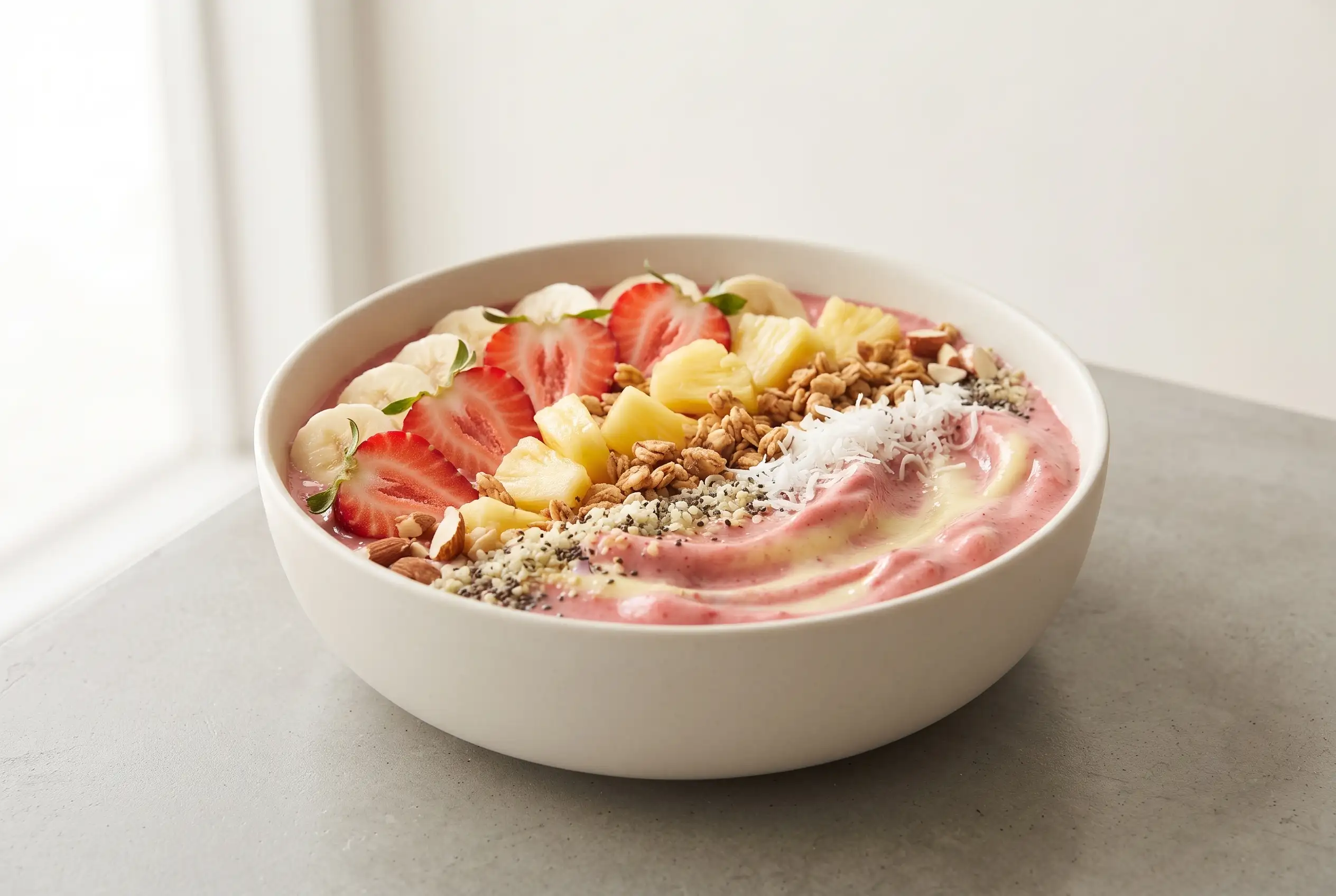
A fruit smoothie bowl turns frozen banana, strawberries, pineapple, and Greek yogurt into a thick, colorful breakfast with a creamy base and crisp toppings. The mixture stays dense enough for a spoon because frozen fruit supplies structure while thick yogurt adds richness without requiring juice, ice cream, or large amounts of added sweetener.
Fresh berries, banana slices, granola, coconut, seeds, and nuts bring contrasting textures to every bite. Preparation is quick once the fruit is frozen, making this an easy smoothie bowl recipe for busy mornings, post-workout meals, or refreshing afternoon snacks.
Frozen Fruit Creates the Spoonable Base
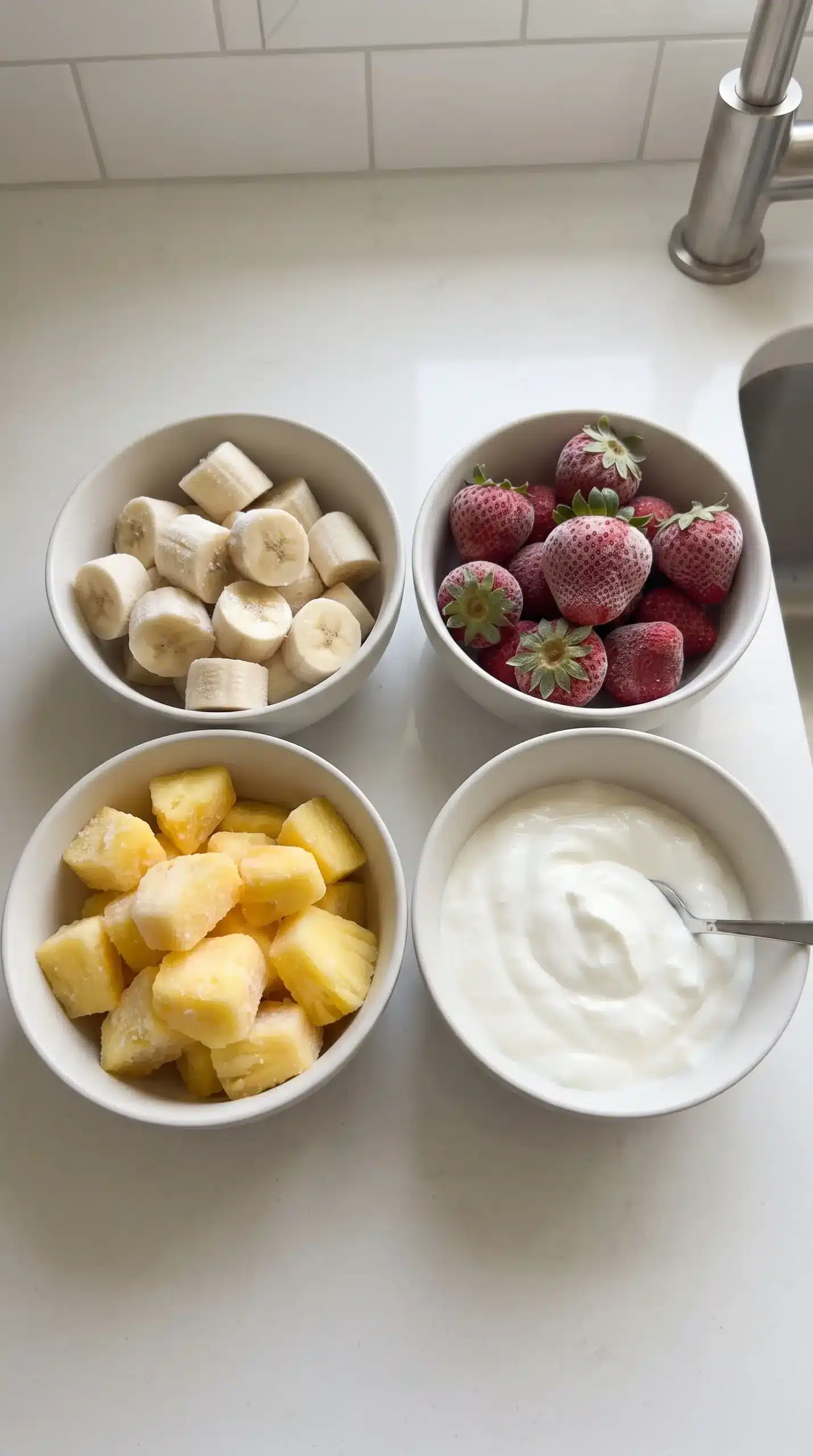
A successful frozen fruit smoothie bowl depends on ingredients that remain very cold during processing. Frozen banana supplies the smoothest texture, while strawberries and pineapple add berry flavor, tropical sweetness, acidity, and color. Using all three produces a balanced base that feels creamy without losing its refreshing fruit character.
Fresh fruit contains the same flavors but lacks the firm structure needed for a thick bowl. As it blends, fresh fruit releases juice and creates a consistency closer to a drink. Frozen pieces stay colder and require more processing, which helps the mixture hold soft peaks when transferred to a serving bowl.
Banana should be sliced before freezing. Smaller chunks move through a food processor more easily than a whole frozen banana and reduce the need for added liquid. Freezing ripe bananas also preserves fruit that might otherwise become too soft for eating fresh.
Banana and Greek Yogurt Control Creaminess
Ripe frozen banana provides natural sweetness and a soft, almost frozen-dessert consistency. Vanilla Greek yogurt reinforces that texture while adding tanginess and protein. Thick yogurt is especially useful because it binds the fruit mixture without making the fruit smoothie bowl watery.
The proportion between banana and yogurt can be adjusted carefully. More yogurt makes the base creamier and tangier, but excessive yogurt may soften it. Extra frozen banana creates a denser, sweeter bowl. Any adjustment should preserve enough frozen fruit to keep the mixture spoonable.
| Ingredient choice | Texture effect | Flavor result |
|---|---|---|
| Frozen banana | Very creamy and dense | Sweet and mellow |
| Frozen mango | Smooth and thick | Rich tropical sweetness |
| Frozen peach | Soft and slightly lighter | Delicate fruit flavor |
| Coconut yogurt | Creamy but variable by brand | Mild coconut flavor |
| Skyr | Dense and substantial | Tangy and less sweet |
Slow Blending Protects a Thick Finish
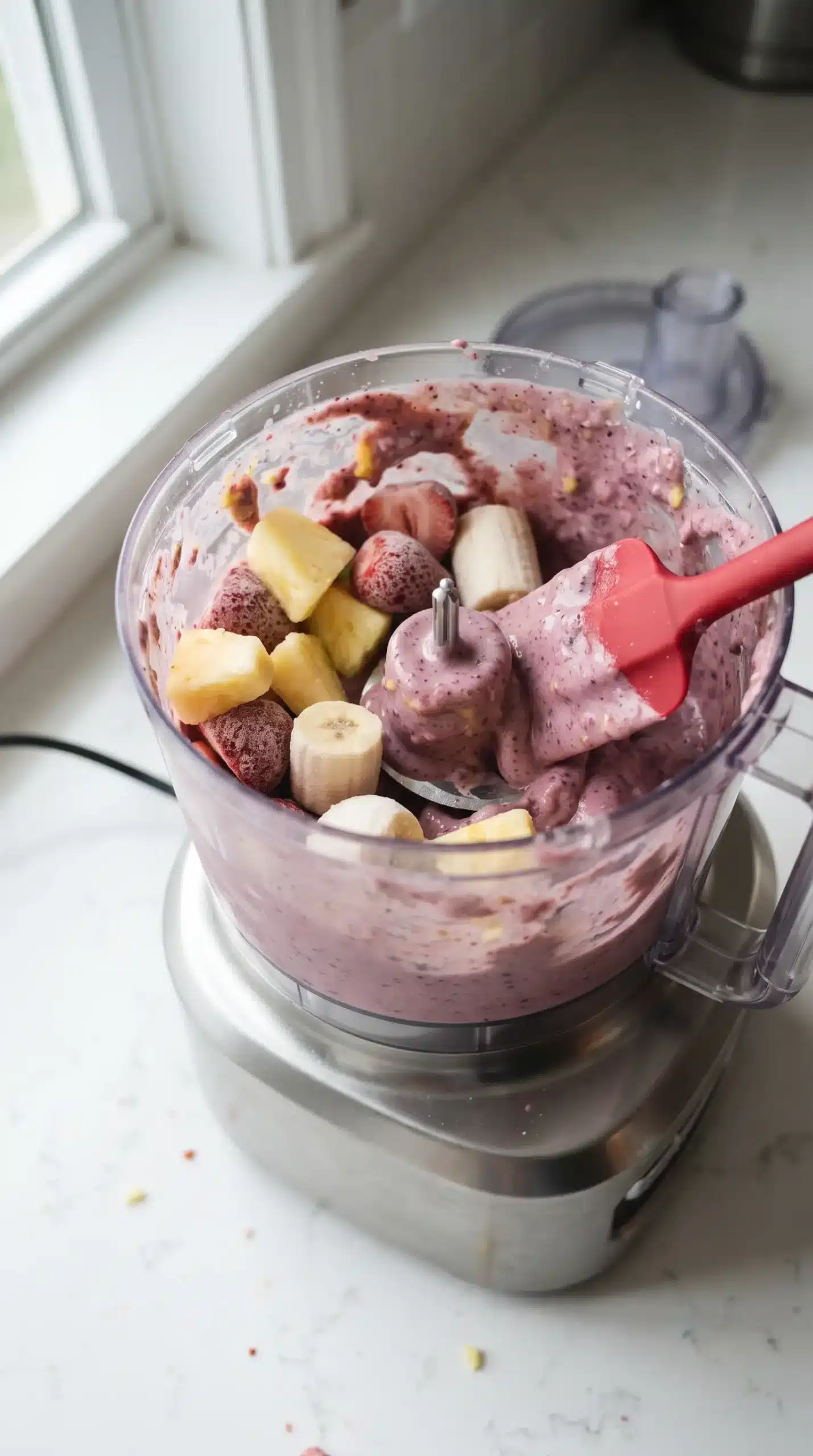
Begin processing at a low speed so the blades can catch the frozen pieces instead of forcing them against the sides. Pause frequently, scrape the container with a silicone spatula, and redistribute any large chunks before blending again.
Processing may take several minutes because the mixture contains very little free liquid. Patience is more useful than pouring in juice or milk. Tiny additions of liquid should be reserved for a machine that cannot move the ingredients at all, since even a small amount can quickly loosen the base.
Stop once the fruit is evenly smooth and the mixture holds its shape. Continued blending creates friction and warmth, gradually melting the frozen ingredients. A properly finished base should be creamy enough to scoop yet firm enough to support fruit, granola, and nuts on the surface.
- Start slowly: Give the blades time to break down the frozen pieces evenly.
- Scrape often: Move fruit from the walls back toward the blade.
- Limit liquid: Add only a very small amount when the machine cannot process the mixture.
- Stop promptly: Transfer the base as soon as it becomes smooth and thick.
Toppings Turn Smooth Fruit Into Breakfast
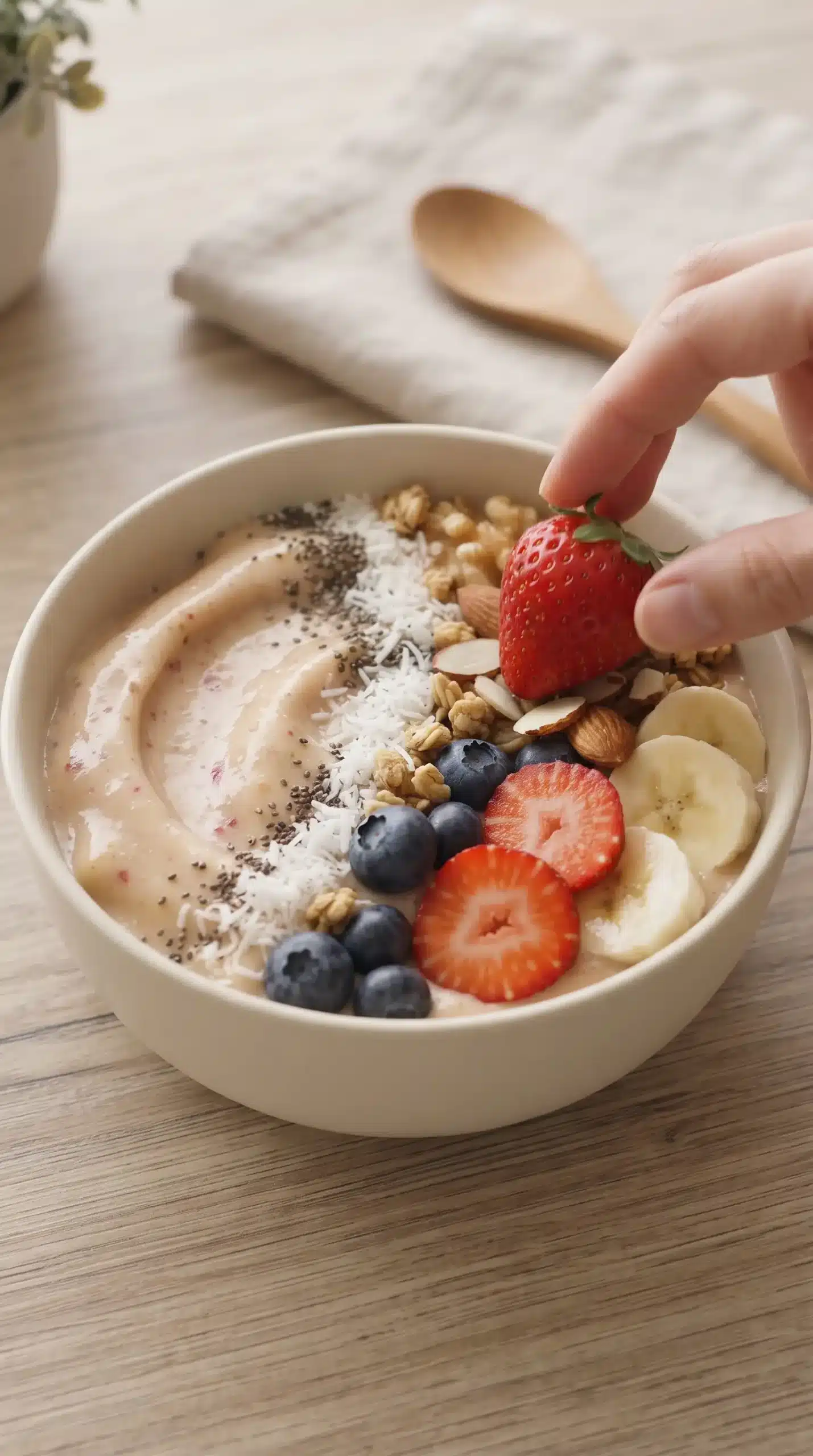
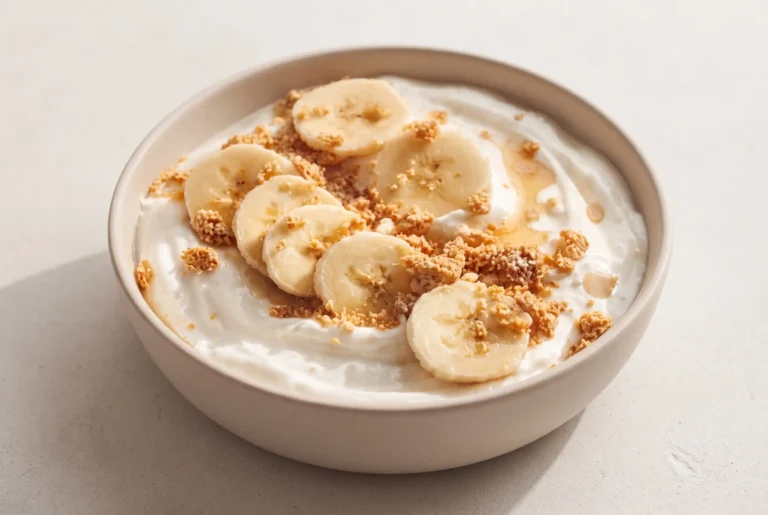
A plain blended base can feel one-dimensional, even when its flavor is pleasant. Granola, slivered almonds, walnuts, chia seeds, shredded coconut, and fresh fruit create crisp, chewy, soft, and juicy contrasts. Those changing textures help the bowl feel more substantial than a drinkable smoothie.
Toppings should be added immediately before serving. Granola and nuts begin absorbing moisture as soon as they touch the fruit base, so early assembly reduces their crunch. Fresh banana and strawberry slices also look cleaner when arranged at the last moment.
Balance matters more than quantity. One crunchy topping, one fresh fruit, and a small finishing ingredient such as cinnamon, coconut, or chia seeds can provide enough variety without covering the frozen base. Honey, nut butter, hemp seeds, protein powder, or dark chocolate chips can be included when additional sweetness, richness, or protein is desired.
Fruit Smoothie Bowl Mistakes That Thin the Texture
Excess liquid is the most common cause of a runny bowl. Juice, milk, or water helps frozen fruit move faster, but it also removes the dense consistency that distinguishes a fruit smoothie bowl from an ordinary smoothie.
Warm ingredients create a similar problem. Yogurt taken from a warm environment softens the frozen fruit quickly, while prolonged blending adds heat through friction. Keeping the yogurt chilled and stopping the machine as soon as the mixture becomes smooth protects the intended texture.
Large frozen pieces may leave uneven chunks or cause the processor to stall. Slicing bananas before freezing and using manageable pieces of strawberries and pineapple improves circulation. When ingredients collect above the blades, switch off the machine and scrape them down instead of immediately adding liquid.
Heavy toppings can sink when the base is already too soft. A sunken layer of granola or nuts signals that the mixture needs more frozen fruit or less processing. Additional frozen banana or berries can restore body if the correction is made before serving.
Simple Variations Keep the Bowl Flexible
The same low-liquid technique supports several flavor combinations, allowing the bowl to change without altering its essential preparation.
- Tropical bowl: Combine mango, pineapple, and coconut yogurt, then finish with coconut flakes.
- Berry protein bowl: Use mixed berries with Greek yogurt, protein powder, and almond butter.
- Green fruit bowl: Blend spinach or kale with avocado and the frozen fruit base.
- Chocolate banana bowl: Add cocoa powder and peanut butter, then scatter chocolate chips on top.
Substitutions should preserve the balance between frozen solids and thick yogurt. Mango, peach, avocado, raspberries, cherries, and mixed berries can work well because they can be used frozen. Watery additions may require extra banana or less yogurt to maintain structure.
Freezer Packs Make Mornings Faster
Pre-portioned bags containing frozen banana, strawberries, and pineapple turn the bowl into a practical 5 minute smoothie bowl. Keep the yogurt refrigerated and store granola, nuts, seeds, and coconut separately so every component is ready without becoming soft.
Properly frozen fruit can retain quality for longer storage when it is selected, packed, and stored carefully.
Serving Choices Can Increase Staying Power
A bowl topped with granola, nuts, seeds, and fresh fruit can stand alone as breakfast. For a larger meal, serve it with whole-grain toast, hard-boiled eggs, scrambled eggs, a yogurt parfait, or protein muffins.
Coffee and herbal tea complement the cold fruit without changing its texture. A smaller portion can also work as part of a broader breakfast when paired with nut-butter toast or another protein-rich item.
Post-workout servings may include extra Greek yogurt, nut butter, hemp seeds, or protein powder. These additions should be incorporated sparingly so the fruit remains prominent and the base does not become overly dense or chalky.
Fresh Serving Preserves Color and Structure
The finished fruit smoothie bowl is best eaten immediately because the fruit begins thawing as soon as it leaves the processor. Refrigeration allows moisture to separate and produces a thinner, less uniform texture.
Leftover base can be frozen in a container or silicone mold instead of refrigerated. When needed, process the frozen portion again with a little Greek yogurt. Toppings should always be stored separately and added after reblending.
Family Bowls Benefit From Simple Choices
Children may prefer smoother fruit combinations and fewer toppings. Banana, mango, strawberries, and vanilla Greek yogurt create familiar sweetness, while soft fruit slices provide decoration without adding too much crunch.
A topping bar lets each person choose granola, berries, coconut, nuts, seeds, or a small drizzle of honey. Separate choices make breakfast interactive and prevent unwanted ingredients from being mixed through every serving.
For younger eaters, consider the size and firmness of nuts, granola pieces, and seeds. Softer toppings can be introduced first, while stronger textures can be added gradually according to individual preferences and appropriate eating ability.
Smart Shopping Keeps Smoothie Bowls Affordable
Frozen fruit is practical for both texture and cost because it lasts longer than fresh berries and can be used directly from the freezer. Overripe bananas can be sliced and frozen before they spoil, creating a ready supply for future bowls.
Store-brand granola, bulk nuts, and rotating toppings can keep costs controlled. Every bowl does not need every optional addition; one fruit garnish and one crunchy element are enough to create contrast.
Yogurt texture deserves more attention than an elaborate topping collection. A thick Greek yogurt supports the frozen base, while a thin yogurt may require more fruit to compensate. Buying ingredients that can also be used in parfaits, snacks, and other breakfasts reduces waste.
Basic Equipment Handles the Dense Mixture
A food processor is well suited to the low-liquid base because its wide container helps frozen fruit circulate. A high-powered blender can also work, especially when used with a tamper that moves ingredients safely toward the blades.
A silicone spatula is essential for scraping down the sides between blending intervals. Measuring cups, a sharp knife, a cutting board, freezer containers, serving bowls, and spoons cover the remaining preparation needs.
Chilled bowls can help the mixture stay firm a little longer during serving. Rinsing the processor or blender promptly also prevents fruit residue from drying onto the container and blades.
Cold Ingredients Deliver the Best Fruit Smoothie Bowl
Frozen banana chunks, frozen berries, frozen pineapple, and chilled thick yogurt create the structure that makes a fruit smoothie bowl satisfying. Careful blending preserves that cold structure, while last-minute toppings provide the contrast that turns a smooth fruit base into a complete breakfast.
Keeping liquid to a minimum is the decisive judgment. When the processor needs help, scraping and redistributing the fruit should come before dilution, allowing the bowl to remain creamy, scoopable, and strong enough to hold its toppings.
Texture and Preparation Questions Answered
Can I make a fruit smoothie bowl without banana?
Frozen mango, peach, or avocado can replace banana, although the flavor and sweetness will change. Mango offers the closest combination of smoothness and natural sweetness, while avocado creates creaminess with a milder taste.
Why does my smoothie bowl melt so quickly?
Warm yogurt, extended blending, room-temperature bowls, and excessive liquid all accelerate melting. Use chilled ingredients, process only until smooth, and transfer the mixture into cold serving bowls.
Can a regular blender handle the frozen mixture?
A strong blender can process it, but the ingredients may need frequent tamping and scraping. Work in short intervals and avoid forcing utensils near moving blades.
How can I sweeten the bowl without changing its texture?
Use a very ripe frozen banana, vanilla Greek yogurt, or a small drizzle of honey over the finished bowl. Sweetening the surface avoids adding extra liquid during blending.
Which toppings stay crunchy longest?
Slivered almonds, walnuts, coconut flakes, and firm granola generally retain texture better when scattered on immediately before eating. Keep every topping dry and separate until serving.
Can the smoothie base be prepared the night before?
Freezing a prepared portion works better than refrigerating it. Reblend the frozen base with a small amount of yogurt in the morning, then add fresh toppings after the texture becomes smooth again.
Fruit Smoothie Bowl with Frozen Fruit and Greek Yogurt
Ingredients
Method
- Cut the banana into chunks and freeze for at least 2 hours before preparing the smoothie bowl.
- Place the frozen banana, frozen strawberries, frozen pineapple, and Greek yogurt in a food processor.
- Process the mixture for 2–4 minutes until thick and smooth, pausing to scrape down the sides as needed without adding extra liquid.
- Spoon the thick smoothie mixture evenly into serving bowls.
- Add sliced strawberries, banana slices, blueberries, granola, shredded coconut, chia seeds, slivered almonds, chopped walnuts, and cinnamon over the smoothie mixture.
- Serve immediately while the smoothie bowl remains cold and thick.