High Protein Coffee Truffles with Cocoa and Almond Flour
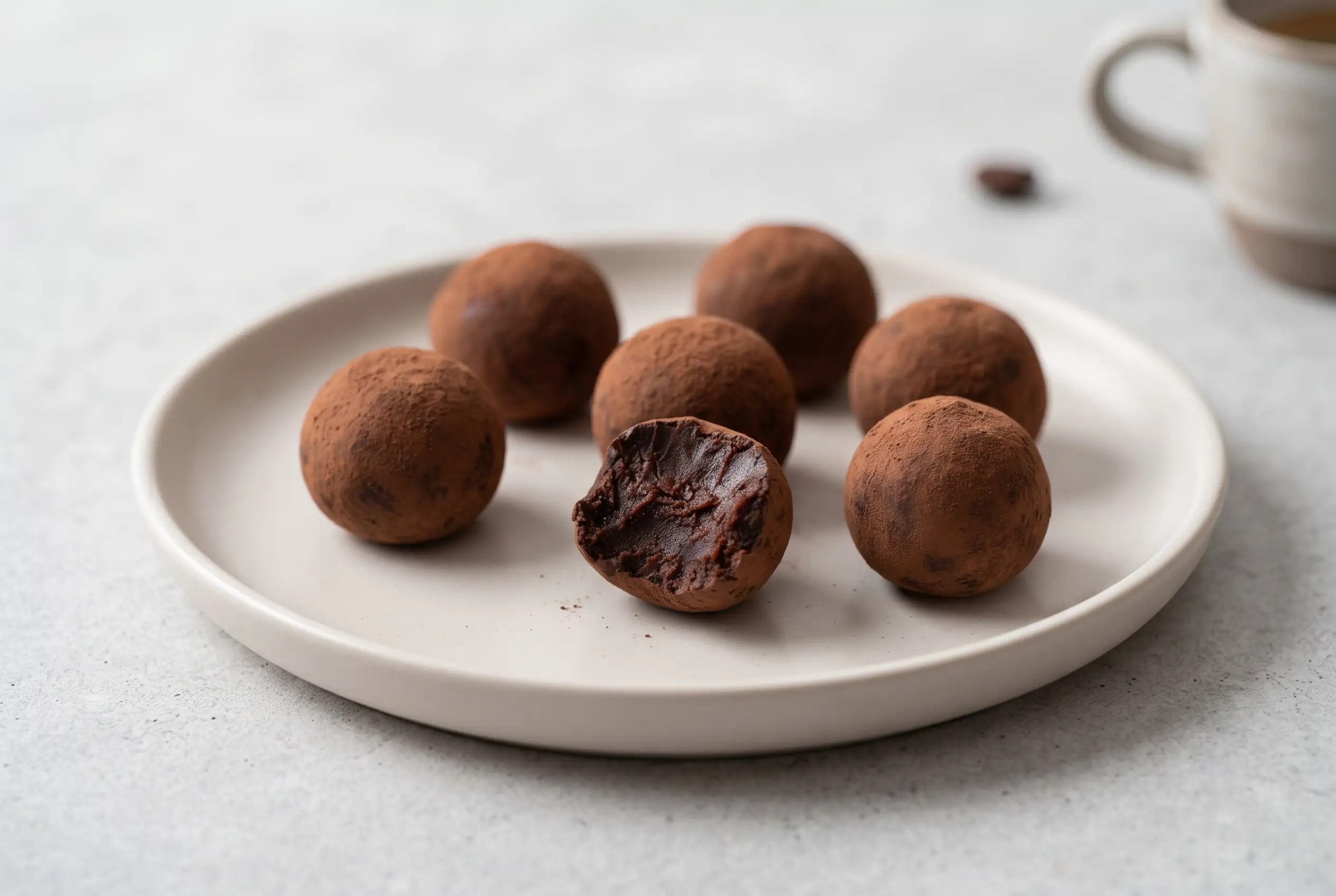
High protein coffee truffles combine cocoa, almond flour, protein powder, brewed coffee, and adjustable sweetness in a soft no-bake bite with bold mocha flavor. The mixture comes together quickly, then firms in the refrigerator into a fudgy snack that works equally well beside morning coffee, after a workout, or as a small chocolate dessert.
Unlike many packaged protein snacks, these truffles rely on familiar pantry ingredients and a texture you can control by sight and touch. Fine almond flour keeps the center smooth, coffee deepens the cocoa, and gradual mixing prevents the dough from becoming either chalky or sticky. Because sweetness can be adjusted to match the protein powder, the finished bites can lean toward an energizing snack or a richer dessert without changing the basic preparation.
Mocha Flavor Without Baking
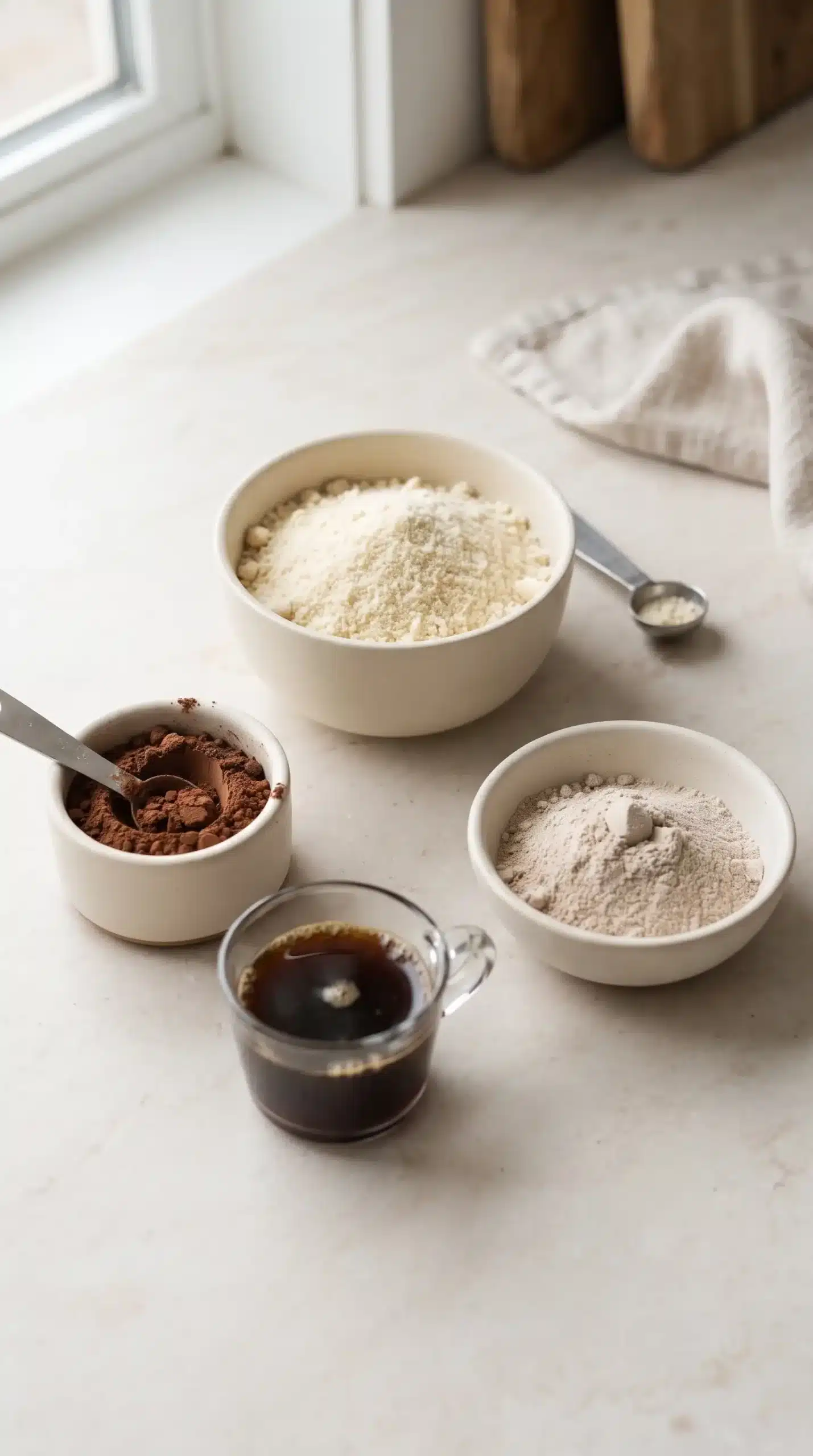
Deep chocolate flavor develops here without an oven because coffee intensifies the cocoa while adding the moisture needed to bind the dry ingredients. Strong brewed coffee, espresso, or cold brew concentrate all fit the same basic approach, with the strength of the coffee determining how clearly the mocha character comes through.
Softness matters just as much as flavor. Almond flour supplies enough richness to keep the center dense and fudgy after chilling, while protein powder gives the dough enough body to hold a rounded shape. The result is closer to a brownie-like truffle than a dry protein ball.
Because the mixture is uncooked, adjustment remains easy until rolling begins. A spoonful of almond flour can correct excess stickiness, while a small splash of coffee can rescue a dough that cracks when pressed.
The Ingredient Choices That Shape Texture
Fine almond flour is the most dependable base because its small particles create a smoother bite than coarse almond meal. Oat flour, cashew flour, or sunflower seed flour can replace it, but each substitution may change how quickly the mixture absorbs liquid and how firm it becomes after chilling.
| Choice | Likely Result | Best Adjustment |
|---|---|---|
| Vanilla or chocolate whey | Smooth, cohesive dough | Add coffee gradually |
| Casein blend | Thicker, firmer mixture | Use slightly more liquid if needed |
| Plant protein | Drier, more absorbent texture | Increase coffee cautiously |
| Coarse almond meal | Grainier finish | Choose fine almond flour when possible |
Sweetness depends heavily on the protein powder. Flavored powders may need little additional sweetener, while unsweetened varieties can require maple syrup, honey, monk fruit, or stevia to balance cocoa bitterness.
Cocoa selection changes the edge of the flavor without changing the structure. Natural cocoa tastes sharper and more intense, while Dutch-process cocoa gives a rounder, smoother chocolate note because it is treated with alkali to reduce natural acidity. Either works, so the better choice is the one that matches the desired balance between bitterness and sweetness.
Coffee Strength Sets the Mocha Balance
Weak coffee can disappear behind cocoa, so a strong brew gives high protein coffee truffles a clearer coffee identity without requiring a large amount of liquid.
Moisture Control Makes the Dough Rollable
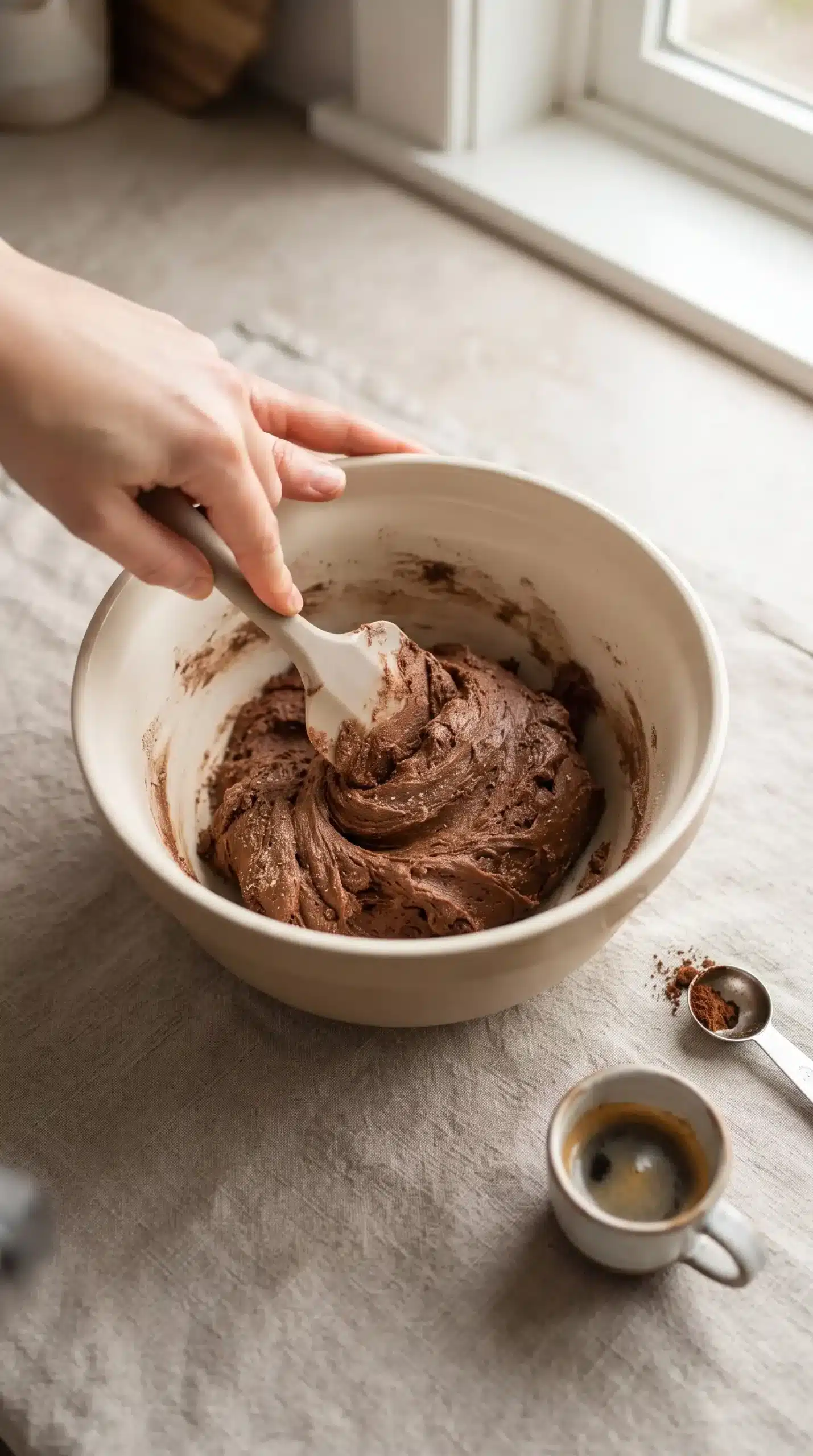
Pouring all the coffee at once creates the biggest execution risk. Different protein powders absorb liquid at different rates, so the safest approach is to stir in the coffee slowly and stop as soon as the mixture forms a soft dough that holds together when pressed.
A proper dough should feel pliable, not wet. It should roll between the palms without coating the hands heavily, and a finished ball should remain round when set on a plate.
Cracks signal insufficient moisture, while slumping or smearing points to excess liquid. Make corrections in small amounts because the dough can move from dry to sticky quickly.
- Too dry: Add coffee a little at a time until the dough compresses cleanly.
- Too sticky: Mix in a small amount of almond flour and reassess.
- Too warm: Chill briefly before continuing to shape.
- Too grainy: Use finer flour in the next batch for a smoother center.
Maple syrup and honey contribute both sweetness and moisture, so they can soften the dough more than concentrated sweeteners such as monk fruit or stevia. When using a liquid sweetener, reduce the coffee cautiously and judge the mixture by feel before adding the full amount.
Chilling Creates the Fudgy Finish
Refrigeration allows the protein powder to hydrate, the almond flour to absorb moisture evenly, and the fats to firm. That resting period turns freshly rolled coffee protein energy bites from soft dough into a more stable, brownie-like snack. Cold truffles feel firmest and richest, while slightly softened ones become creamier inside; no reheating is needed, and serving them chilled gives the cleanest texture. Chocolate desserts with a dense center, such as fudgy chocolate brownies, follow a similar preference for a rich, firm texture after cooling.
Coatings Add Contrast Without Changing the Base
Cocoa powder creates the most classic truffle finish, crushed almonds add crunch, coconut flakes add chewiness, and mini chocolate chips make the exterior more dessert-like. Finely ground coffee or espresso powder can sharpen the coffee flavor, though a light coating is enough to avoid a gritty surface.
Common High Protein Coffee Truffle Mistakes
Adding excess brewed coffee produces dough that sticks to the hands and loses its shape. Correct it with almond flour, then let the mixture rest briefly before deciding whether it needs more.
Skipping the chill leaves the center softer and less cohesive. Rolling can still succeed, but the finished texture will not develop the same fudgy firmness.
Overloading the bowl with protein powder creates a dry, chalky bite. The measured balance of almond flour, cocoa, and liquid matters, especially because protein powders vary widely in absorption.
Choosing coarse almond meal can make the surface rough and the center grainy. Fine almond flour is the better choice when a smooth chocolate truffle texture is the priority.
Mocha Variations That Stay Consistent
Small additions can change the flavor while preserving the same no-bake structure. Peanut butter creates a creamier mocha version, coconut flakes and coconut extract shift the profile toward coconut coffee, and dark cocoa with espresso concentrate produces a more intense chocolate finish.
- For extra richness: Add peanut butter and a little espresso powder.
- For deeper cocoa: Use dark cocoa with strong espresso concentrate.
- For more crunch: Roll the balls in crushed almonds or cacao nibs.
- For a softer family version: Replace regular coffee with decaf, milk, or chocolate milk.
Flavor intensity can also be adjusted after mixing. A pinch of sea salt sharpens the chocolate notes, mini chocolate chips add small bursts of sweetness, and espresso powder strengthens the coffee character without introducing much extra liquid.
Keep additions modest so the dough remains easy to roll. Heavy mix-ins can interrupt the smooth center or make the balls split, especially when the pieces are large.
Serving High Protein Coffee Truffles
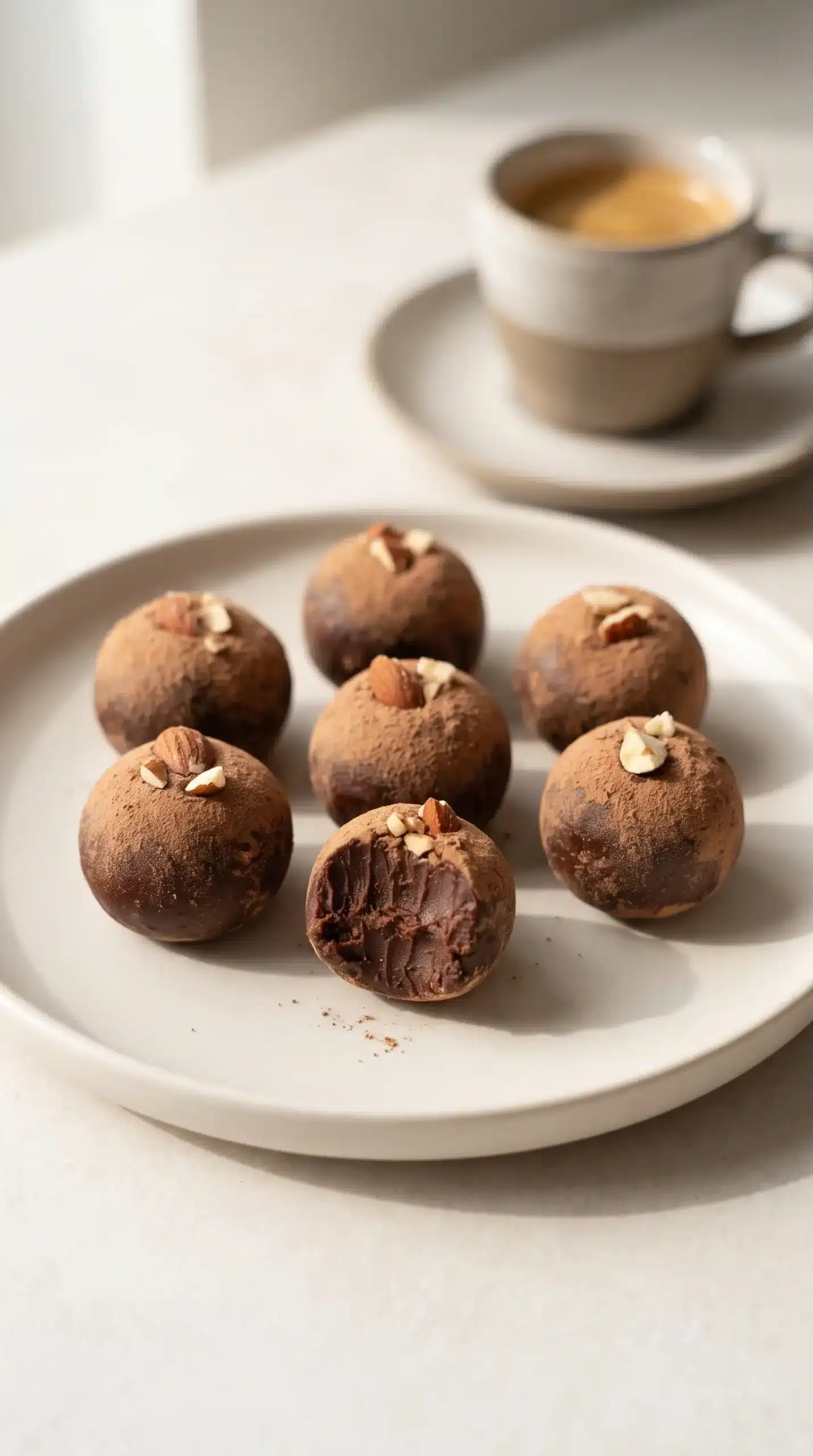
Pair these chocolate coffee protein truffles with espresso, cold brew, cappuccino, almond milk, Greek yogurt, fresh berries, or a protein smoothie. Their small size also makes them practical as post-workout snacks, afternoon bites, or light desserts.
Presentation can stay simple on a plate, or each truffle can sit in a mini cupcake liner for easier serving. Several coatings on one tray create variety without changing the base mixture.
For children or caffeine-sensitive eaters, decaf coffee keeps the mocha profile while reducing caffeine. Smaller portions and familiar coatings such as mini chocolate chips or coconut flakes can make the texture and appearance more approachable.
Storage Keeps the Center Firm
An airtight container in the refrigerator keeps high protein coffee truffles at their best for up to seven days, and layers of parchment help prevent coated surfaces from sticking together.
Freezing works for up to one month. The truffles stay pleasantly firm when frozen and thaw quickly, which makes batch preparation practical for future snacks.
Room-temperature holding softens the center, so return unused portions to cold storage when a firmer bite is preferred.
Meal Prep Works Best in Small Batches
Uniform tablespoon portions chill evenly, travel neatly, and make it easier to control serving size across the batch.
Preparing several coatings at once gives one batch different finishes with almost no extra mixing. Divide the rolled balls among cocoa, crushed nuts, coconut, or chocolate chips, then chill them together in a single container.
Leftover brewed coffee can be used straight from the refrigerator, which removes an extra preparation step. Pre-measuring the dry ingredients also makes high protein coffee truffles faster to assemble on busy days.
Equipment Can Stay Minimal
A medium bowl, spoon or silicone spatula, measuring cups, tablespoon scoop, and plate or baking sheet are enough to prepare no bake coffee truffles. A mini food processor can create a more uniform mixture, while a fine mesh shaker helps apply cocoa evenly, but neither tool is essential. When doubling the batch, mix thoroughly before adding liquid so the cocoa and protein powder remain evenly distributed. Larger quantities may need more stirring, yet the same visual cues still determine when the dough is ready, keeping preparation simple even when several days of convenient snacks are made together.
High Protein Coffee Truffles Depend on Balance
Soft dough that holds its shape is the clearest sign that the coffee, flour, cocoa, and protein powder are working together. Careful liquid control followed by thorough chilling produces the dense, smooth center that defines the finished truffle.
That balance also makes high protein coffee truffles adaptable. Sweetness, coffee intensity, and coatings can change, yet the core texture remains reliable when moisture is added gradually and the rolled bites are kept cold.
Coffee Strength and Texture Questions
Can decaf coffee replace regular coffee?
Decaf works well in high protein coffee truffles because it contributes the same moisture and coffee flavor while reducing caffeine.
Why does the dough crack while rolling?
Cracking usually means the mixture is too dry, so add a small amount of coffee and knead gently until the dough presses together cleanly.
Which protein powder gives the smoothest result?
Whey protein generally creates the smoothest consistency, while plant protein may need a little more liquid because it can absorb moisture more aggressively.
Can the truffles be made without protein powder?
They can, but both structure and protein content will change significantly, so the mixture may require different proportions of flour and liquid.
How much caffeine is in each truffle?
The amount is usually around 8–10 milligrams, depending on coffee strength and the exact quantity used.
Are the truffles gluten-free?
They are gluten-free when every ingredient, including the protein powder and any coatings, is certified gluten-free.
High Protein Coffee Truffles with Cocoa and Almond Flour
Ingredients
Method
- Combine almond flour, protein powder, and unsweetened cocoa powder in a medium bowl and mix until evenly blended.
- Stir sweetener into the dry mixture until fully incorporated.
- Slowly add brewed coffee while mixing until a thick dough forms.
- Modify the consistency as needed by adding a small amount of almond flour if the dough is too sticky or additional coffee if it is too dry.
- Portion the dough into about 1 tablespoon amounts and shape each portion into a smooth ball.
- Coat the truffles with optional cocoa powder, espresso powder, crushed almonds, or coconut flakes, and add optional mini chocolate chips as desired.
- Refrigerate the truffles for at least 30 minutes before serving.