Red Curry Noodle Soup with Coconut Milk and Fresh Lime
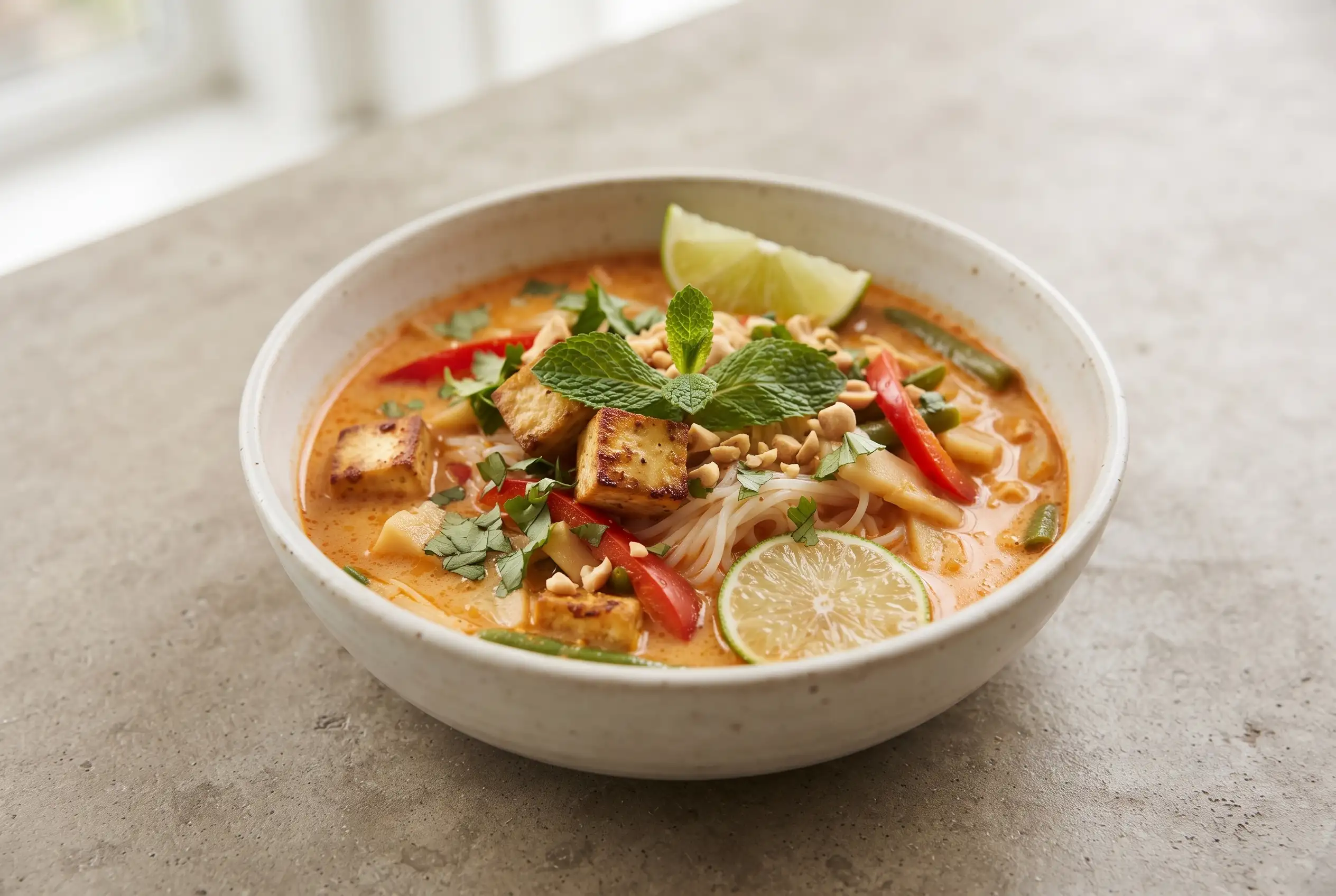
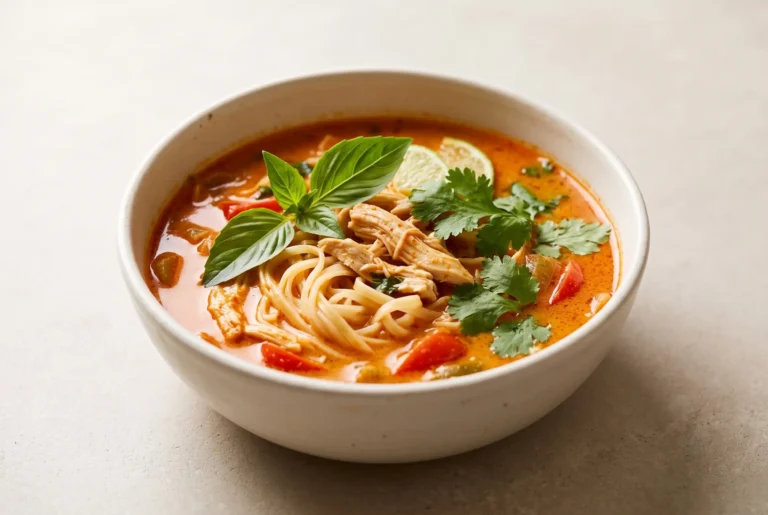
Red curry noodle soup brings coconut milk, Thai red curry paste, rice noodles, fresh herbs, and lime into one creamy bowl with enough heat to feel lively without losing its comforting character. The broth tastes rich, the noodles stay soft and satisfying, and optional vegetables or proteins make the dish easy to adapt for a weeknight dinner. Because red curry noodle soup relies on a compact set of bold ingredients, small handling choices have a noticeable effect on every spoonful.
Unlike heavier cream-based soups, the coconut broth stays bright because lime and fresh herbs cut through the richness. Careful heat and noodle timing matter most, since aggressive boiling can affect the broth while overcooked rice noodles quickly lose their pleasant texture. The best bowl keeps those contrasts intact instead of blending every element into one uniform softness.
Coconut-Curry Balance Defines the Broth
Coconut milk softens the concentrated heat of red curry paste and creates the silky body that makes the soup feel complete. Full-fat coconut milk produces the richest finish, while light coconut milk gives a thinner, less luxurious broth that still carries the curry flavor.
Fresh lime juice changes the broth at the end by lifting its savory depth and keeping the coconut from tasting flat. Adding it late preserves its brightness and makes seasoning easier to judge after the noodles and vegetables have influenced the liquid. A small adjustment at serving time can sharpen the whole pot more effectively than extra salt.
Chopped basil and cilantro provide a fresh counterpoint to the warm curry base. Stirring them in close to serving keeps their aroma distinct, which is especially important in a creamy coconut curry noodle soup where long simmering can mute delicate herbal notes.
Curry Paste and Coconut Milk Choices Matter
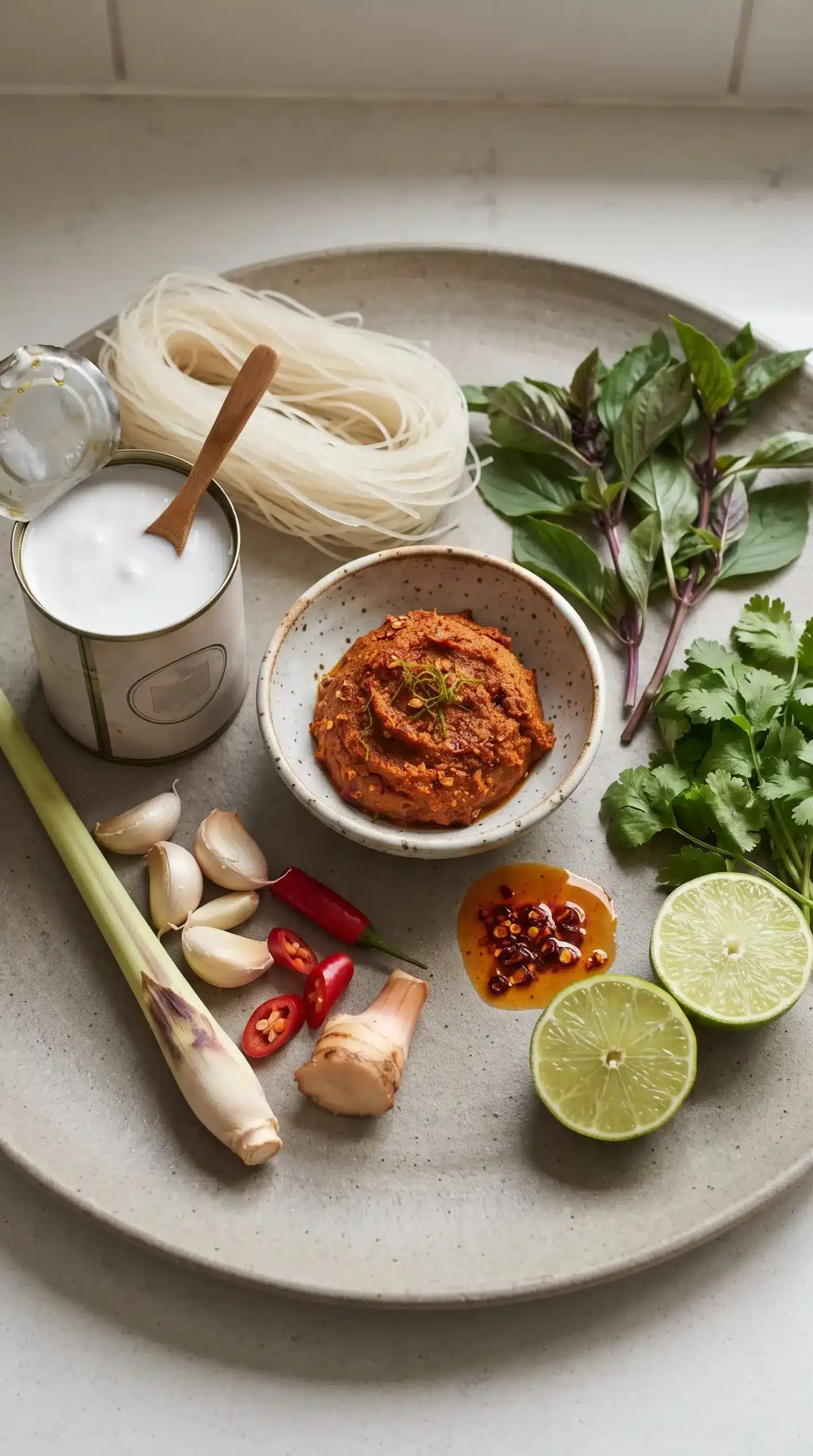
Thai red curry paste supplies most of the soup’s concentrated character, including chili heat, garlic, lemongrass, aromatics, and spices. Brands can vary in intensity, so cooks who prefer a gentler bowl can begin with less and adjust after the broth is fully combined. stir-fry curry paste before adding liquid to build its aromatic foundation and create a more rounded flavor.
Full-fat coconut milk gives red curry noodle soup a smooth, rounded texture that clings lightly to the noodles. Cashew cream can provide a similarly creamy effect, while yellow or green curry paste can replace red curry paste when a different curry profile is desired.
Noodle choice affects both texture and broth absorption. Rice noodles suit the broth because they absorb flavor while keeping the bowl light. Ramen, udon, or soba can also work, but each changes the texture and may require a different cooking time, making package guidance more important than a fixed minute count. Wider noodles feel more substantial, while thinner strands soften faster and need closer attention.
Noodle Timing Controls the Bowl
Rice noodles soften quickly and continue absorbing liquid after the pot leaves the heat, so checking them early protects both texture and broth volume. For meal prep, cooking them separately gives an easy red curry noodle soup a cleaner texture when reheated.
Gentle Heat Keeps Coconut Broth Smooth
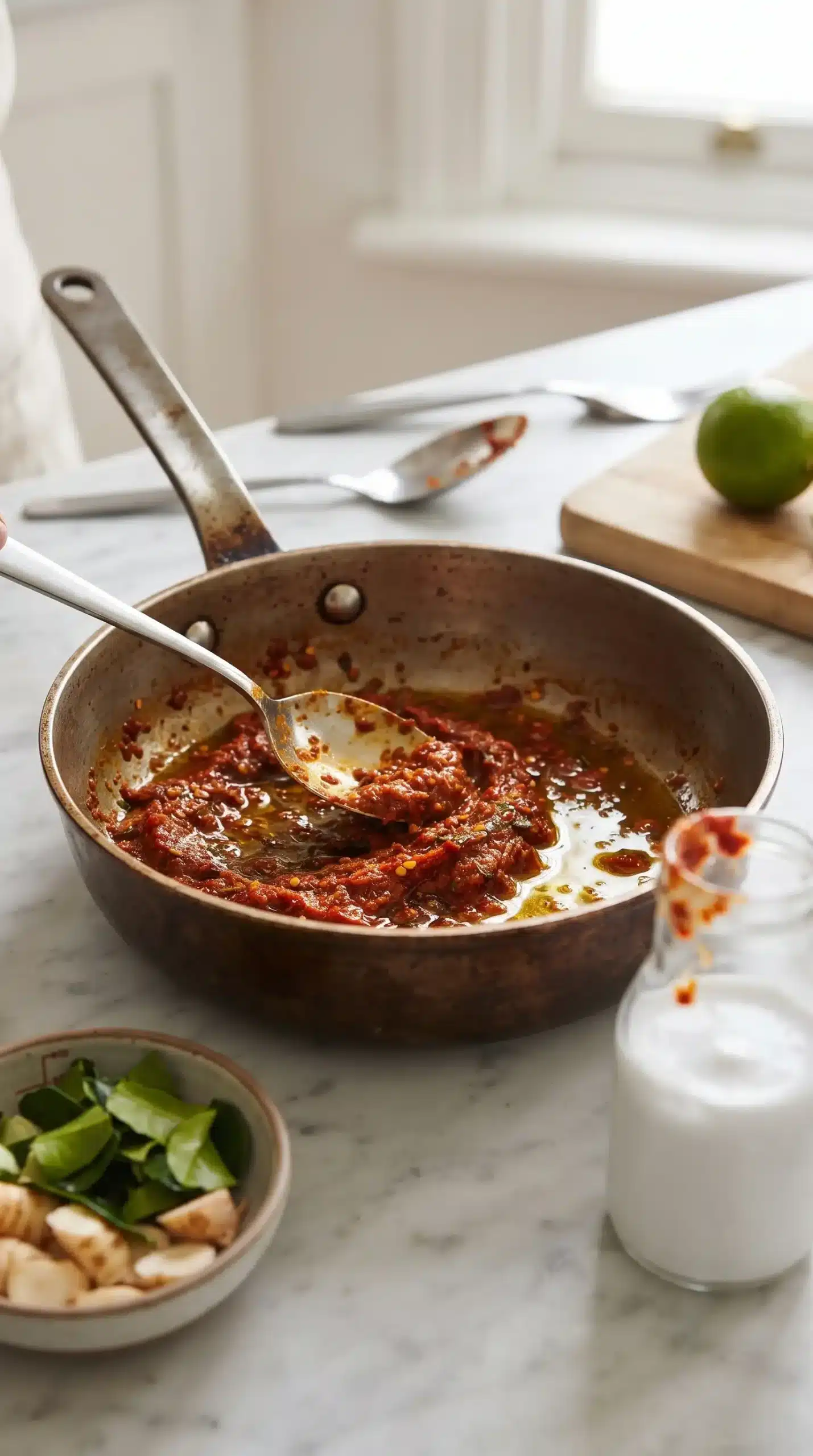
Medium heat is enough to wake up the curry paste before liquid is added. A brief cook until fragrant deepens the aromatic base without exposing the paste to prolonged dry heat.
Once coconut milk and vegetable broth enter the pot, a gentle simmer keeps the mixture cohesive. Hard boiling can encourage separation and can also push delicate vegetables and noodles past their best texture before the broth tastes balanced.
Near serving time, seasoning should be judged in layers: salt for savory depth, lime for brightness, and extra curry paste only when more heat is truly needed. That sequence makes the thai red curry noodle soup easier to correct without overwhelming the coconut base.
Vegetable Add-Ins Need Different Timing
Bell peppers, carrots, snap peas, mushrooms, spinach, bok choy, and baby corn can all fit the soup, but firmer vegetables need a head start while spinach and tender greens belong near the end. Evenly cut pieces cook more predictably and preserve the contrast between creamy broth and fresh vegetables. Frozen stir-fry blends are useful when speed matters, though they should be added with enough time to heat through without turning soft.
Mistakes That Flatten Red Curry Noodle Soup
Too much curry paste can make the broth harsh before the coconut milk has a chance to balance it. Starting conservatively is easier to correct than trying to dilute an overly spicy pot after the noodles are already cooked.
Aggressive boiling can separate the coconut milk and soften every ingredient at once. Lowering the heat as soon as the broth reaches a simmer protects the silky texture and gives vegetables a better chance to stay vibrant.
Overcooked noodles create a second problem by thickening the broth as they absorb more liquid. If they begin to soften faster than expected, serving immediately or removing the pot from the heat can prevent a mushy finish.
Protein Options Without Losing Broth Balance
Tofu, shrimp, chicken, chickpeas, edamame, or flaked coconut curry salmon can make the soup more substantial, but additions should support the broth instead of crowding it. Pre-cooked chicken and salmon belong near the end, while quick-cooking shrimp needs only enough time to become tender. Chickpeas and edamame are especially convenient because they add body without requiring a separate cooking step.
Toppings Build Contrast at the Table
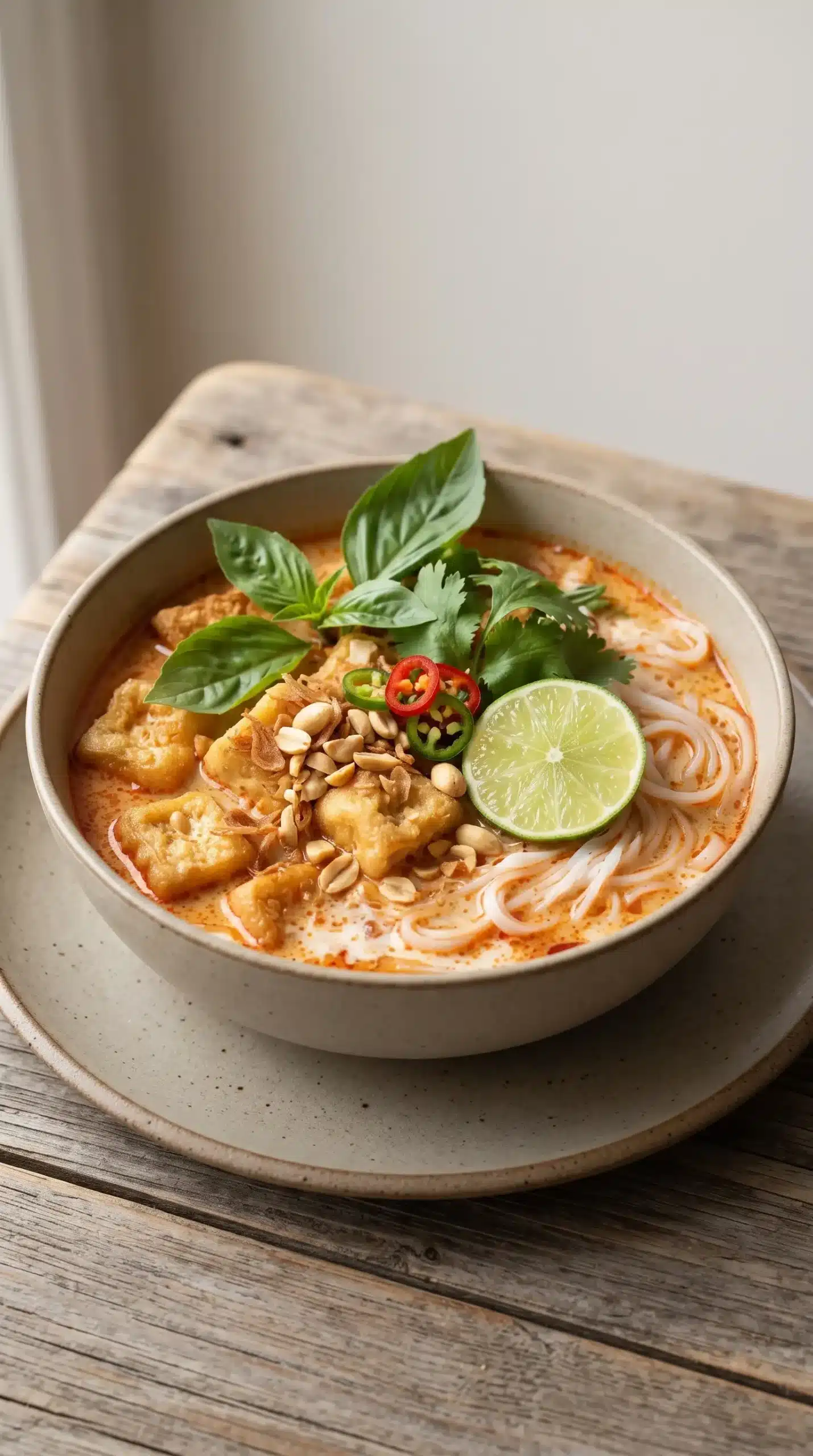
Crunchy and fresh garnishes make the creamy broth feel more dynamic without changing the pot itself. Serving toppings separately also lets each person adjust heat, acidity, and texture.
- For brightness: lime wedges and extra basil.
- For crunch: crushed peanuts, sesame seeds, or crispy noodles.
- For heat: chili oil, sriracha, or fresh chilies.
- For substance: crispy tofu or mild shredded chicken.
Spring rolls, Thai cucumber salad, dumplings, or crispy tofu can turn the soup into a broader meal. Garlic bread is less traditional, yet its crisp texture still pairs well with the silky broth.
Meal Prep Depends on Separating Broth and Noodles
Prepared broth holds up better than a fully assembled bowl because rice noodles keep drinking in liquid during storage. Keeping the components apart preserves a looser broth and a more distinct noodle texture. It also lets each serving be adjusted with fresh lime and herbs after reheating, which restores much of the brightness lost during chilling.
Chopped vegetables, measured curry paste, and portioned toppings can all be prepared ahead. The coconut curry base may also be made in advance, then reheated gently before fresh noodles, herbs, and lime are added.
For efficient lunches, divide noodles among containers only when they will be eaten soon. A separate container of broth gives better control and helps the red curry noodle soup taste closer to freshly made.
Storage and Reheating Need a Light Touch
Leftovers keep best in an airtight container for up to three days, with noodles stored separately whenever possible. Freeze only the broth for the most reliable texture, then reheat over medium-low heat and loosen with extra broth if needed.
| Component | Best storage choice | Why it helps |
|---|---|---|
| Coconut curry broth | Refrigerate or freeze separately | Protects the smooth texture and avoids noodle breakdown |
| Rice noodles | Refrigerate in a separate container | Limits excess broth absorption and mushiness |
| Fresh herbs and toppings | Keep chilled and add after reheating | Preserves freshness, aroma, and crunch |
Milder Bowls Still Keep the Curry Character
Children and spice-sensitive diners may prefer one tablespoon of curry paste instead of two. Extra coconut milk can soften the heat further, while skipping chili oil and other spicy toppings keeps the bowl approachable.
Mild vegetables such as carrots, corn, mushrooms, and baby spinach are often easier for cautious eaters. Serving noodles, broth, herbs, and toppings separately also makes the meal more familiar and lets everyone build a bowl at their own pace.
Ramen or egg noodles can replace rice noodles when a different texture feels more comfortable. Shredded rotisserie chicken offers another mild addition, though the base remains vegan when vegetable broth and plant-based additions are used.
Budget Choices Can Preserve the Best Flavor
Store-brand coconut milk, frozen vegetables, bulk noodles, and simple garnishes can lower the cost without changing the core identity of the soup. The strongest flavor still comes from curry paste and coconut milk, so those are the two ingredients where quality has the clearest impact. Using leftover vegetables or cooked chicken also turns the pot into a practical clean-out-the-fridge meal without making it feel improvised.
- Use frozen stir-fry vegetables directly from the freezer.
- Stretch the pot with extra noodles, chickpeas, tofu, or vegetables.
- Choose one fresh herb when buying both basil and cilantro would create waste.
- Turn leftover chicken or vegetables into a deliberate add-in.
Balanced Heat Makes the Whole Bowl Work
Gentle simmering, early noodle checks, and late additions of lime and herbs are the decisions that keep red curry noodle soup creamy, bright, and texturally varied. Each choice protects a different part of the bowl, from the smooth coconut base to the soft noodles and crisp vegetables.
A well-balanced broth should taste savory first, warmly spicy second, and fresh at the finish. When those elements stay in proportion, the soup remains comforting without becoming heavy or one-dimensional.
Red Curry Noodle Soup Spice and Storage Questions
Can the soup be made ahead?
Prepare the coconut curry broth in advance and keep the noodles, herbs, and toppings separate. Reheat the broth gently, then combine only the portions needed for serving.
How spicy is the finished bowl?
Heat can range from mild to medium because curry paste intensity varies by brand. Beginning with a smaller amount gives more control, especially when serving children or spice-sensitive diners.
Can another curry paste replace red curry paste?
Yellow or green curry paste can be used, though the flavor profile and heat level will change. Keep the coconut milk, broth, noodles, lime, and fresh herbs in place to maintain the same creamy soup structure.
What is the best way to freeze leftovers?
Freeze the broth without noodles, herbs, or crunchy toppings. Freshly cooked noodles can be added after the thawed broth has been warmed slowly.
Which protein works best for a fuller meal?
Chicken, shrimp, tofu, chickpeas, and edamame all suit the broth. Choose based on preferred texture and add each at a point that avoids overcooking.
Red Curry Noodle Soup with Coconut Milk and Fresh Lime
Ingredients
Method
- Warm a large soup pot over medium heat and cook the Thai red curry paste for 1–2 minutes to release its aroma.
- Pour in the coconut milk and vegetable broth, whisking until combined, then bring the mixture to a gentle simmer.
- Add the rice noodles to the simmering broth and cook according to package directions until tender.
- Mix in the chopped cilantro, fresh basil, lime juice, and any optional vegetables, then continue cooking briefly until vegetables soften while remaining vibrant.
- Taste the soup and adjust the salt as needed before serving hot.