Garlic and Onion Soup Easy Recipe with Vegetable Broth
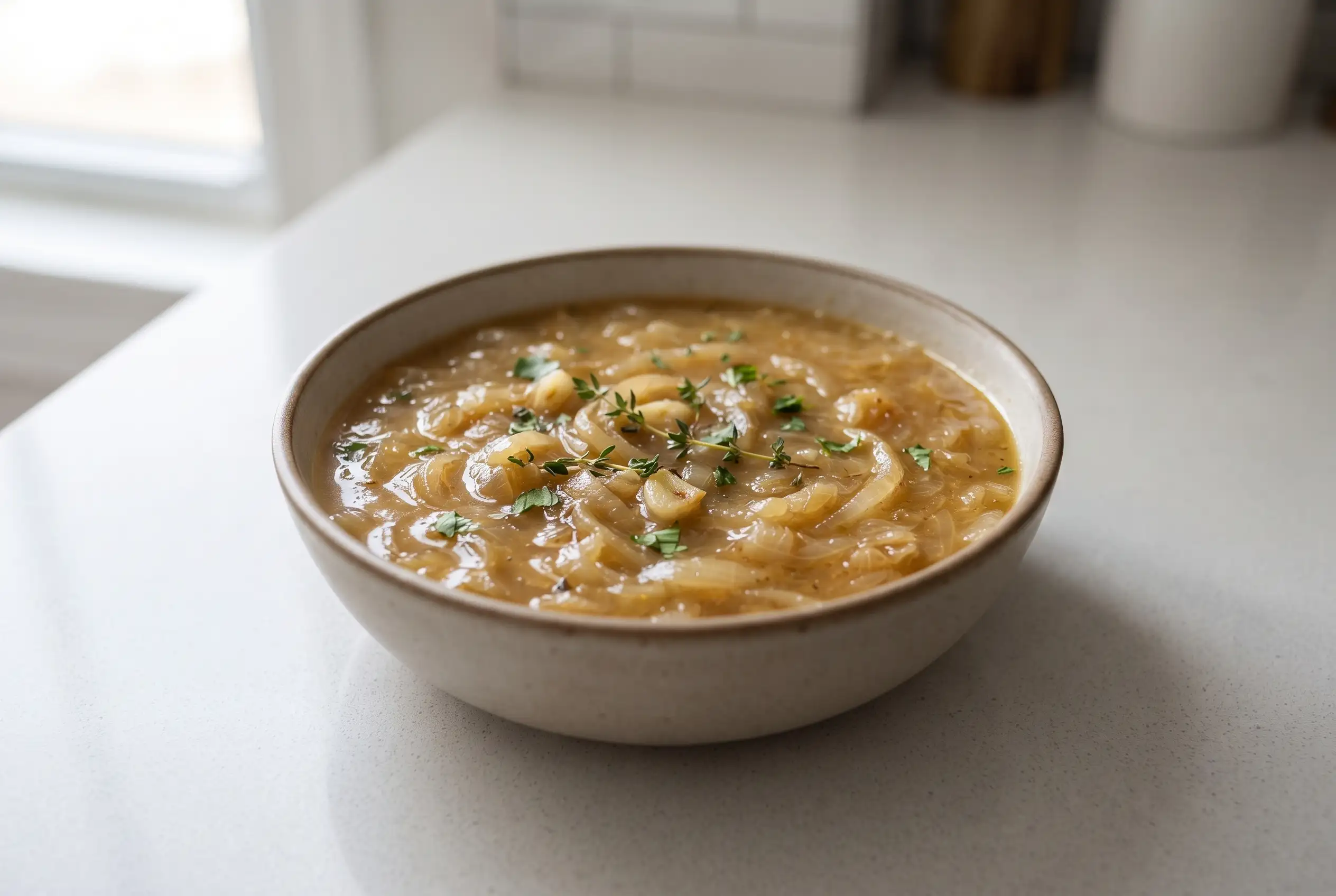
Garlic and onion soup brings together humble pantry staples, slow-cooked aromatics, and a savory broth for a comforting bowl that feels rich without complicated preparation. This easy garlic and onion soup recipe transforms sliced onions and garlic into a deeply flavored meal with a naturally sweet aroma and a cozy homemade character. The approach works especially well for chilly evenings, simple lunches, or anyone looking for a 40 minute garlic and onion soup option that delivers satisfying flavor.
Unlike soups that rely on many additions, the character of garlic and onion soup comes from careful cooking choices. The onions need time to soften and develop their golden color, while the garlic needs gentle handling so it becomes mellow and aromatic. Those small details create the layered taste that makes this soup memorable.
Garlic and Onion Soup at a Glance
The appeal of garlic and onion soup comes from the contrast between its simple preparation and its full-bodied result. A short ingredient list creates a broth with sweetness from softened onions, warmth from herbs, and richness from the combination of olive oil and butter.
| Feature | Cooking Detail | Why It Matters |
|---|---|---|
| Flavor base | Slowly cooked onions and garlic | Builds mellow sweetness and savory depth |
| Broth style | Vegetable broth with herbs and seasoning | Creates a balanced soup foundation |
| Serving texture | Optional partial blending with crusty bread | Adds softness while keeping rustic appeal |
Several qualities make this soup practical for regular cooking. The ingredients are affordable, the method is approachable for newer cooks, and the flavors continue to develop after preparation. The finished bowl can feel both rustic and refined depending on how it is served.
Building Flavor with Yellow Onions and Garlic
Yellow onions provide the central flavor transformation in garlic and onion soup. When sliced onions are cooked slowly, their sharpness fades and their natural sweetness becomes more noticeable. The softened pieces create the body of the soup and help the broth taste rounded instead of plain.
The deeper color and richer taste of slowly cooked onions come from onion caramelization, as natural sugars and compounds change during the cooking process. This transformation is what gives the soup its layered sweetness and savory depth.
Fresh garlic changes during the same process. Its stronger raw flavor becomes softer, warmer, and more blended into the surrounding broth. Keeping garlic from cooking too aggressively helps preserve the smooth savory quality that makes the soup inviting.
- Onion texture: Soft, tender slices create the soup’s signature comforting feel.
- Garlic character: Gentle cooking produces mellow aroma without harshness.
- Herb balance: Thyme adds an earthy note that supports the sweet onion flavor.
The combination works because each element develops at its own pace. The onions create the foundation, garlic adds aromatic depth, and herbs connect the flavors into one cohesive bowl.
Choosing the Best Ingredients for Garlic and Onion Soup
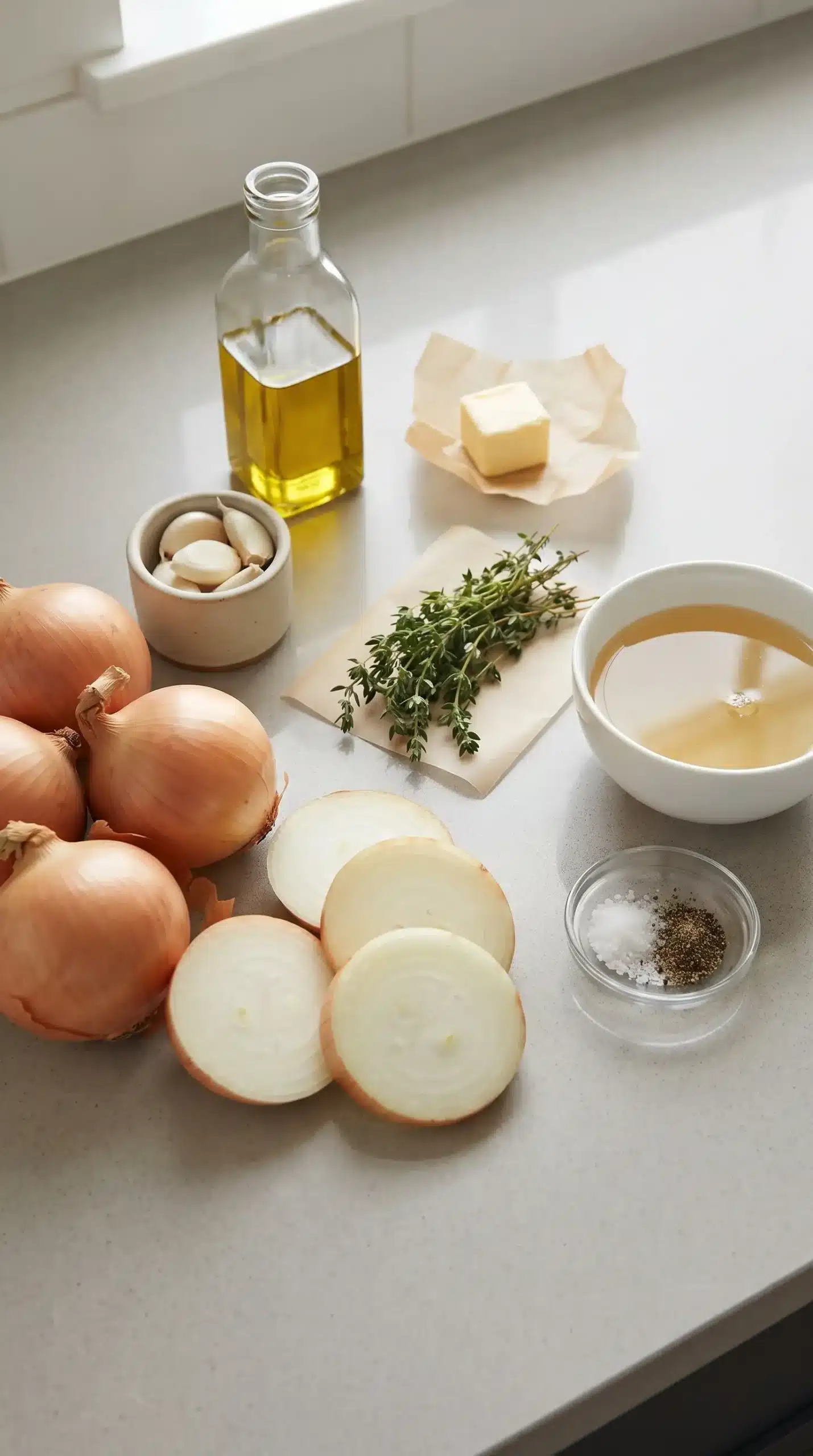
The most useful ingredient decisions for garlic and onion soup focus on balance. Yellow onions are especially suitable because they provide both savory notes and natural sweetness after cooking. White onions, sweet onions, or some shallots can also be used when a slightly different onion profile is preferred.
Fresh garlic is valuable because it delivers the strongest aromatic result, but roasted garlic or garlic paste can be practical alternatives. Olive oil and butter work together to help the onions cook evenly while adding richness. For a dairy-free approach, olive oil alone or vegan butter can replace the butter.
Broth quality has a noticeable effect because it forms most of the liquid base. Vegetable broth keeps the soup aligned with the original style, while chicken broth or bone broth can create a richer variation. Fresh thyme contributes earthy flavor, though rosemary, sage, or Italian seasoning can shift the herbal character.
Cooking Control for a Balanced Garlic and Onion Soup
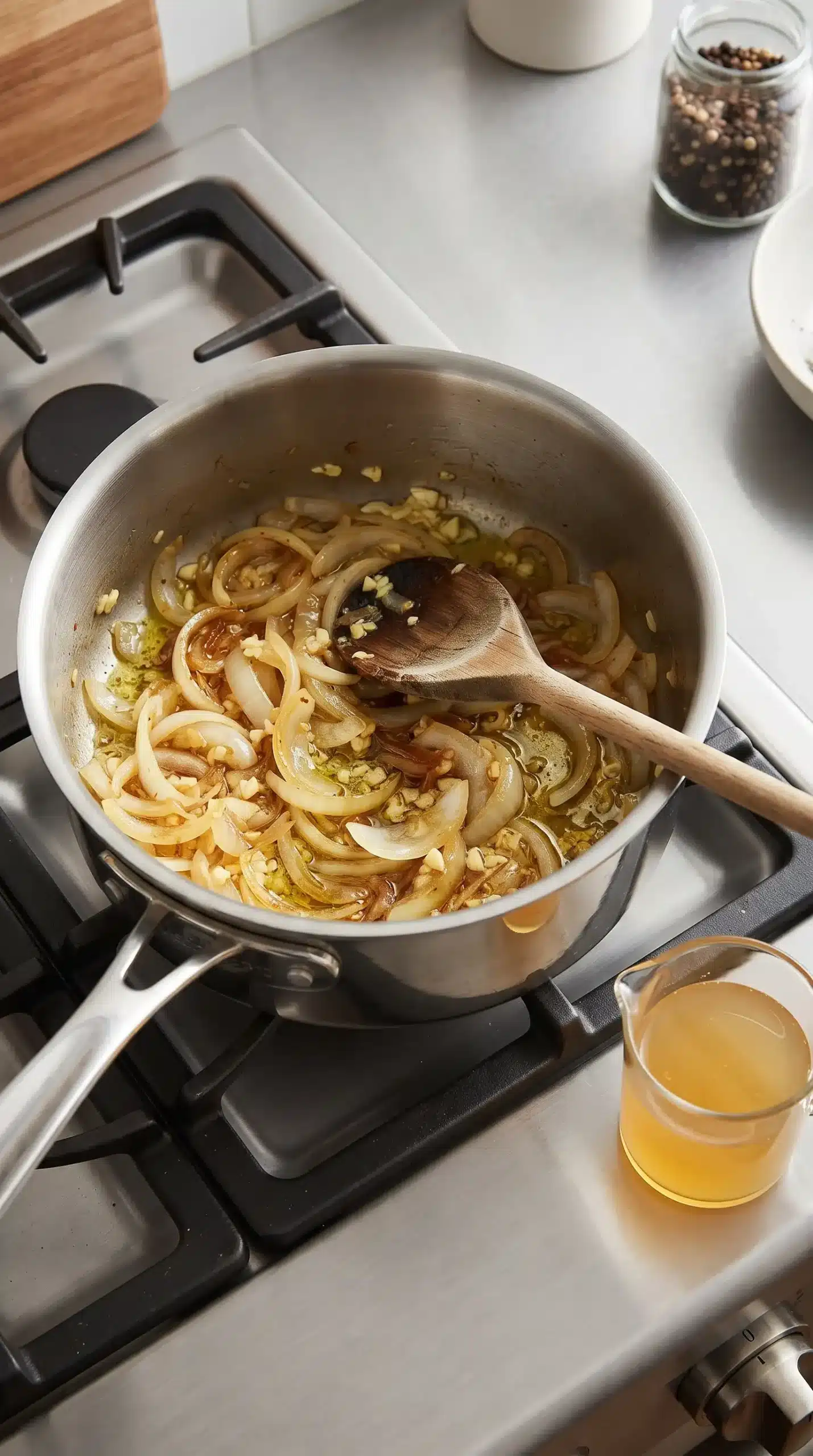
Successful garlic and onion soup depends less on complicated techniques and more on controlling heat and timing. The onions should cook slowly enough to become deeply golden and tender. Rushing this stage can leave the soup without the sweetness and richness that define it.
Careful deglazing is another important control point. When broth is added to the pot, scraping the browned pieces from the bottom captures concentrated flavor. Those small pieces dissolve into the liquid and strengthen the overall taste.
Gentle simmering allows the broth, aromatics, and herbs to combine smoothly. A calmer cooking environment keeps the flavors balanced and gives the onions time to become fully integrated into the soup.
Common Garlic and Onion Soup Mistakes to Avoid
Even a straightforward homemade garlic onion soup can lose some of its appeal if a few key details are overlooked. The most common problems come from rushing the onions, overheating the garlic, or ignoring flavor adjustments.
| Mistake | What Happens | Better Approach |
|---|---|---|
| Cooking onions too quickly | The soup misses deeper sweetness | Use slower heat until onions soften and turn golden |
| Burning garlic | The flavor becomes bitter | Stir carefully once garlic is added |
| Skipping deglazing | Flavor remains stuck in the pot | Use broth to lift browned bits |
Another issue is under-seasoning at the end. Tasting before serving helps identify whether the soup needs more seasoning. Small adjustments can make the broth feel more complete without changing the recipe’s character.
Texture Choices for a Homemade Garlic Onion Soup
Texture plays a major role in how garlic and onion soup feels when served. The naturally softened onions provide tenderness, while the broth keeps the bowl light and soothing. This balance allows the soup to feel comforting without becoming overly dense.
Partial blending creates a smoother finish by combining some of the softened onions with the broth. This technique thickens the soup naturally while preserving some pieces for a rustic texture. Keeping part of the original structure gives each spoonful more character.
Crusty bread adds another layer of contrast. The crisp surface and chewy center complement the soft onions and silky broth, making a simple serving feel more substantial.
Serving Pairings That Complete the Bowl
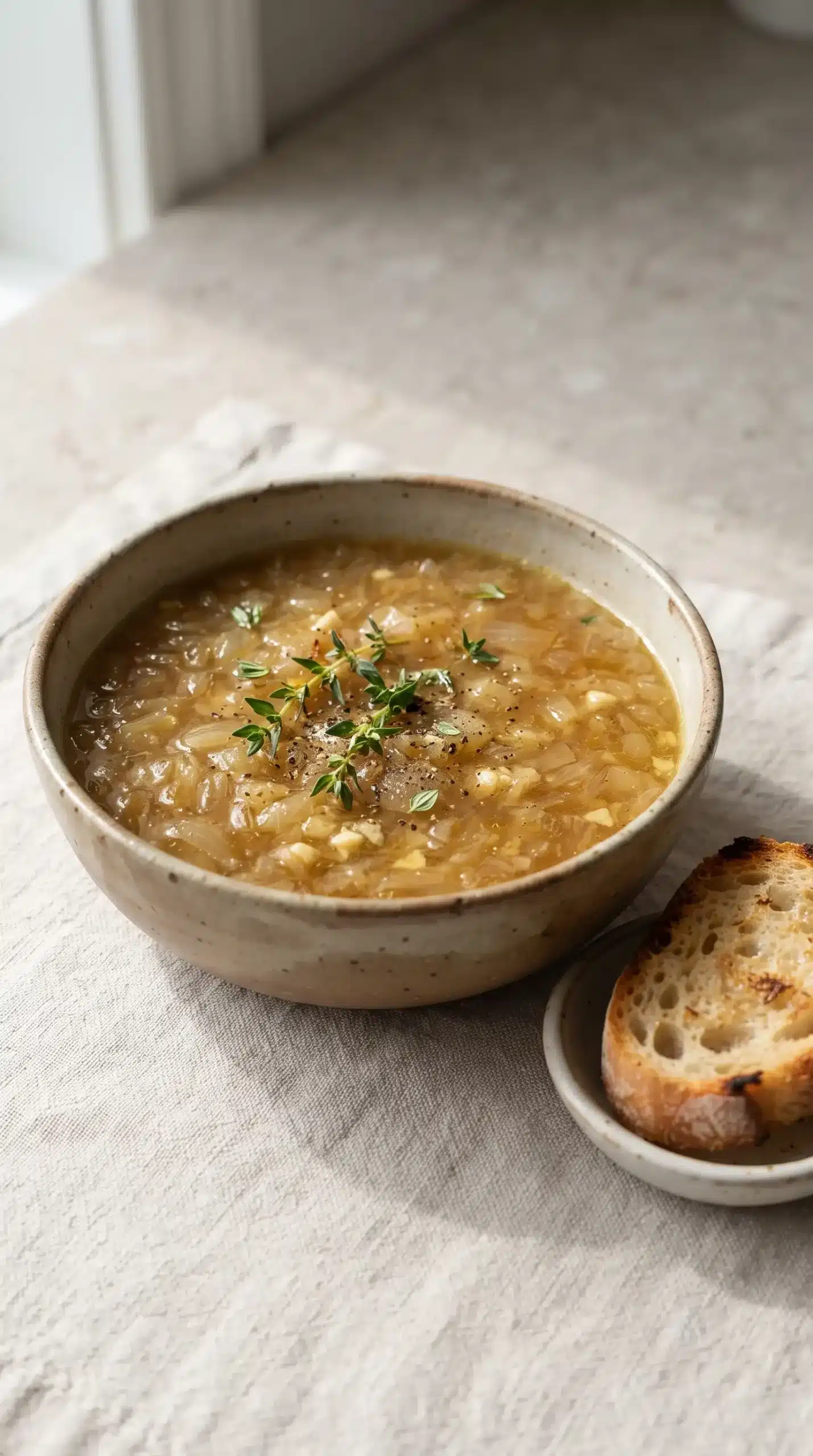
Garlic and onion soup works well as a standalone meal or as part of a larger comfort-food spread. The warm broth pairs naturally with breads and simple sides that add texture without competing with the main flavors.
- Toasted sourdough: Adds crunch and absorbs the flavorful broth.
- Grilled cheese: Creates a familiar, hearty pairing.
- Roasted vegetables: Brings additional texture and a savory companion.
- Herb crackers: Offers a quick topping or side option.
For a larger dinner, the soup can begin a meal before richer comfort dishes. Its balanced flavor makes it flexible enough for casual lunches and more complete gatherings.
Storing Garlic and Onion Soup for Later
Prepared garlic and onion soup keeps its comforting qualities after storage. The flavors can continue blending over time, making leftovers a convenient option for future meals.
Store cooled soup in an airtight container in the refrigerator for up to four days. For longer storage, the soup can be frozen for up to three months after it has cooled completely.
Reheating works best with gentle warming. On the stovetop, use medium-low heat and warm slowly. When using a microwave, heat in shorter intervals and stir occasionally. If the soup becomes thicker after storage, adding extra broth can restore the preferred consistency.
Simple Variations for Garlic and Onion Soup
The basic structure of garlic and onion soup allows several adjustments while keeping the comforting flavor intact. Variations can change richness, texture, or heartiness depending on the meal you want to create.
A heartier onion soup variation can include slow-cooked beef, toasted sourdough, and a richer finish through French Onion Short Rib Soup, creating a more substantial meal while keeping the comforting onion foundation.
- Creamy version: Add heavy cream or coconut milk for extra richness.
- French onion style: Finish with toasted bread and melted cheese.
- Heartier bowl: Add shredded chicken or white beans.
- Spiced variation: Include chili flakes or cayenne pepper.
Extra vegetables such as mushrooms, carrots, or celery can also add more texture. These changes allow the soup to fit different preferences while keeping the onion and garlic foundation recognizable.
Making an Easy Garlic and Onion Soup Recipe Work on Busy Days
Although the best flavor comes from patient cooking, a few preparation choices can make homemade garlic onion soup easier to fit into a busy schedule. Pre-sliced onions reduce chopping time, and pre-minced garlic can help when convenience matters.
Broth concentrate or bouillon paste can simplify pantry storage while still providing a flavorful base. A food processor with a slicing attachment is another useful option when preparing larger amounts.
Making the soup ahead is also practical because the flavors continue developing after cooking. Individual portions can be stored for quick lunches or easy dinners later.
Nutrition Notes Behind Garlic and Onion Soup
Garlic and onion soup uses vegetables and aromatics as the foundation of its flavor. Garlic contributes compounds associated with antioxidant activity, while onions provide fiber and natural sweetness without added sugar.
The broth helps create a satisfying meal with a lighter feel. Because the soup relies heavily on vegetables, herbs, and aromatics, it offers a comforting option built around simple ingredients.
Approximate nutrition information from the source recipe indicates each serving contains about 350 calories, 5 grams of protein, and 15 grams of fat.
Family-Friendly Ways to Serve Garlic and Onion Soup
Garlic and onion soup can be adjusted easily for different tastes at the table. The long cooking process naturally softens the sharpness of both main aromatics, creating a milder flavor that works well for many eaters.
Blending part or all of the soup can help anyone who prefers a smoother texture. Keeping toppings separate also allows each person to customize a bowl with bread, herbs, cheese, or additional seasoning.
For larger appetites, cooked pasta, shredded chicken, or white beans can make the soup more filling while maintaining its familiar savory profile.
Garlic and Onion Soup Finds Its Strength in Slow Flavor
Slow-cooked onions create the defining character of garlic and onion soup by turning simple ingredients into a broth with sweetness, aroma, and depth. The careful balance of softened garlic, herbs, and savory liquid shows how cooking control can transform everyday foods.
The most important choice is giving the onions enough time to develop their flavor. Once that foundation is established, the soup becomes a dependable comfort meal that remains practical for everyday cooking.
Garlic and Onion Soup Questions About Storage and Flavor
Can garlic and onion soup be made vegan?
Yes. Replace the butter with olive oil or vegan butter to create a vegan-friendly version while keeping the rich onion and garlic flavor.
Why does the soup taste sweeter after cooking?
The onions develop natural sweetness as they slowly soften and become golden. This change creates a deeper flavor without adding sugar.
How can garlic and onion soup become thicker?
Blending part of the soup or allowing it to simmer longer can create a thicker texture by incorporating more of the softened onions into the broth.
Can chicken broth replace vegetable broth?
Yes. Chicken broth can be used and will create a slightly richer flavor while keeping the soup’s main characteristics.
What is the best way to prepare the soup for leftovers?
Cool the soup before storing it in an airtight container. Gentle reheating and a small addition of broth, if needed, help bring back the original consistency.
Garlic and Onion Soup with Vegetable Broth
Ingredients
Method
- Warm a large Dutch oven or soup pot over medium heat, then add the olive oil and unsalted butter.
- Add the sliced onions and garlic to the melted butter and oil. Cook for 20–25 minutes, stirring occasionally, until the onions become soft and deeply golden.
- Add a small amount of vegetable broth and scrape the bottom of the pot to release any browned bits.
- Stir in the remaining vegetable broth along with the bay leaf, thyme, salt, and black pepper.
- Simmer the soup uncovered for 20–30 minutes to develop the flavors, then taste and adjust seasoning if needed.
- Take out the bay leaf and thyme stems from the soup.
- Blend a portion of the soup and mix it back into the pot if a smoother texture is preferred.
- Serve the garlic and onion soup hot in bowls with crusty bread or a drizzle of olive oil.