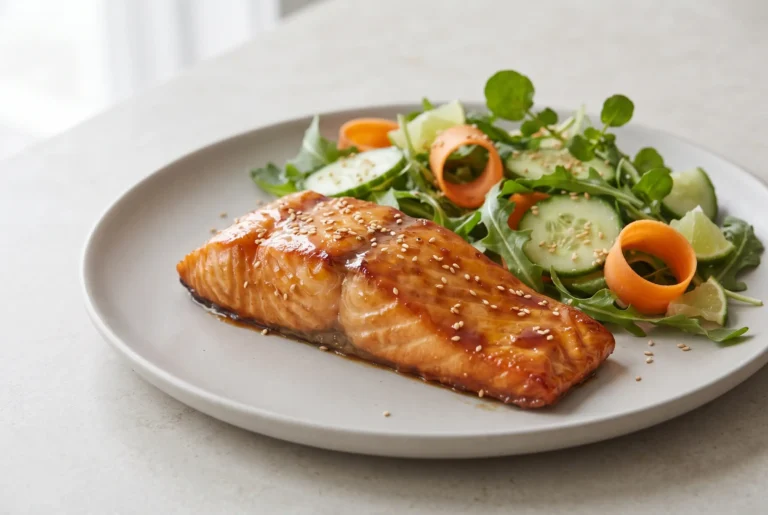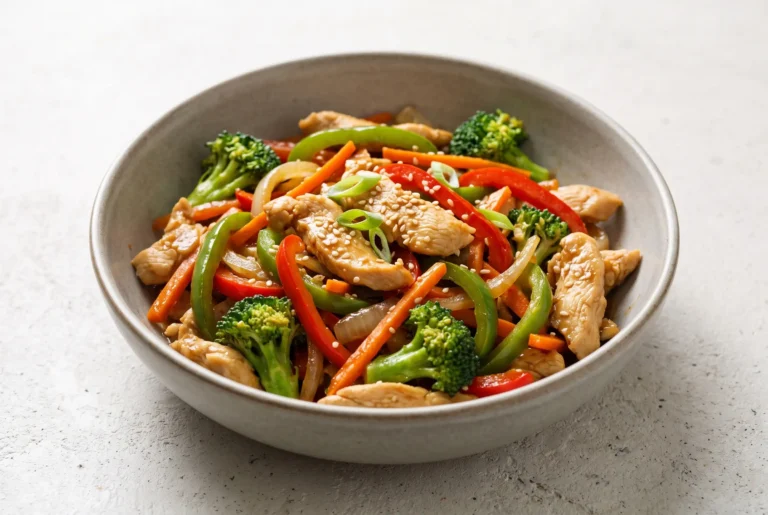
Baked Honey Garlic Salmon with Honey Garlic Glaze Recipe
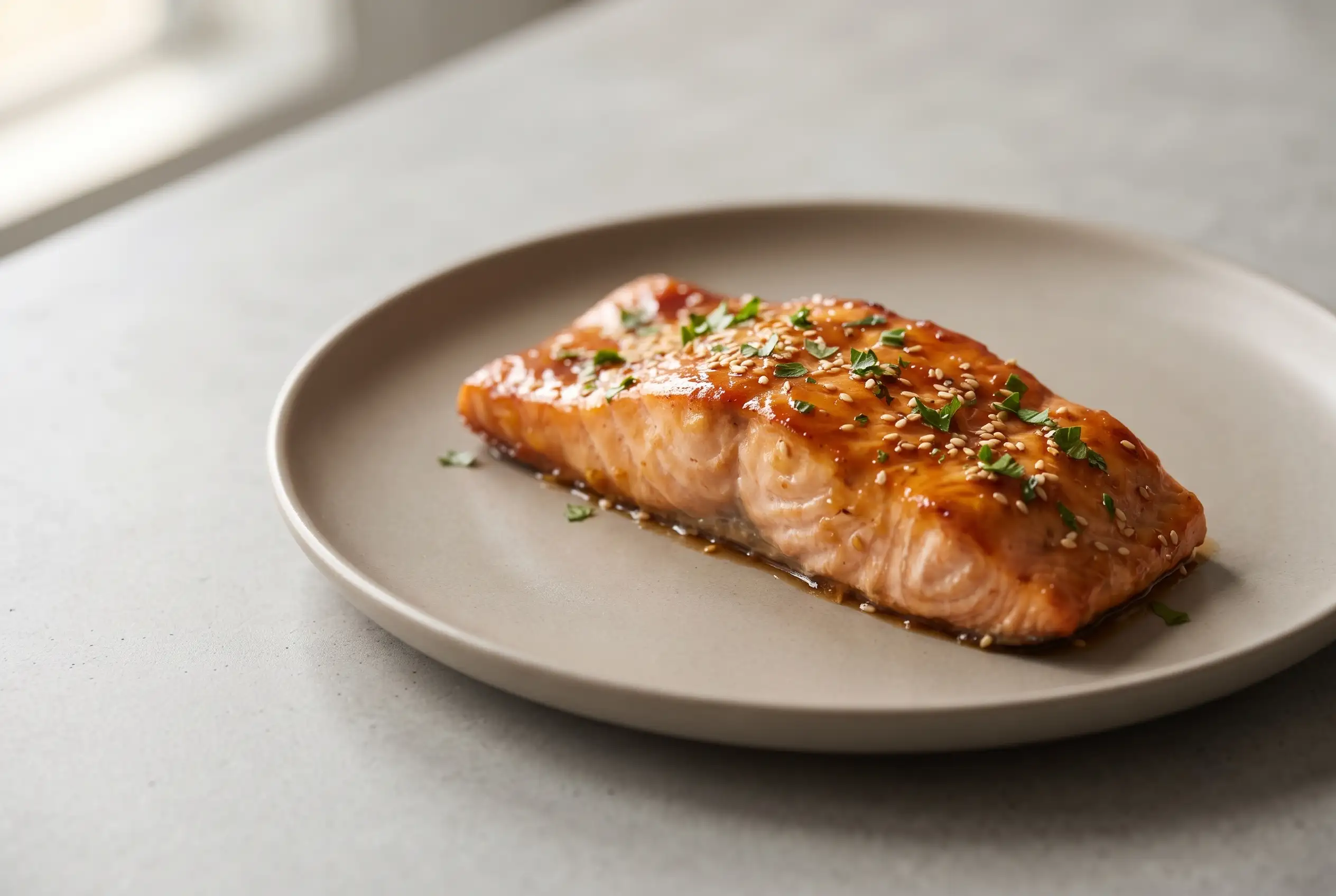
Baked honey garlic salmon brings together tender fish, a glossy sweet-savory glaze, and a simple oven approach that fits busy dinners. Salmon fillets are coated with honey, soy sauce, garlic, olive oil, and lemon juice before baking until flaky with lightly caramelized edges. The result is an easy honey garlic salmon recipe that delivers bold flavor without complicated preparation.
Why Baked Honey Garlic Salmon Works for Busy Dinners
Reliable weeknight meals need strong flavor and straightforward handling, and baked honey garlic salmon delivers both. The combination of a sticky glaze and moist salmon creates a dish that feels special while using familiar ingredients and a dependable baking method.
The Glaze Balance Behind Honey Garlic Salmon
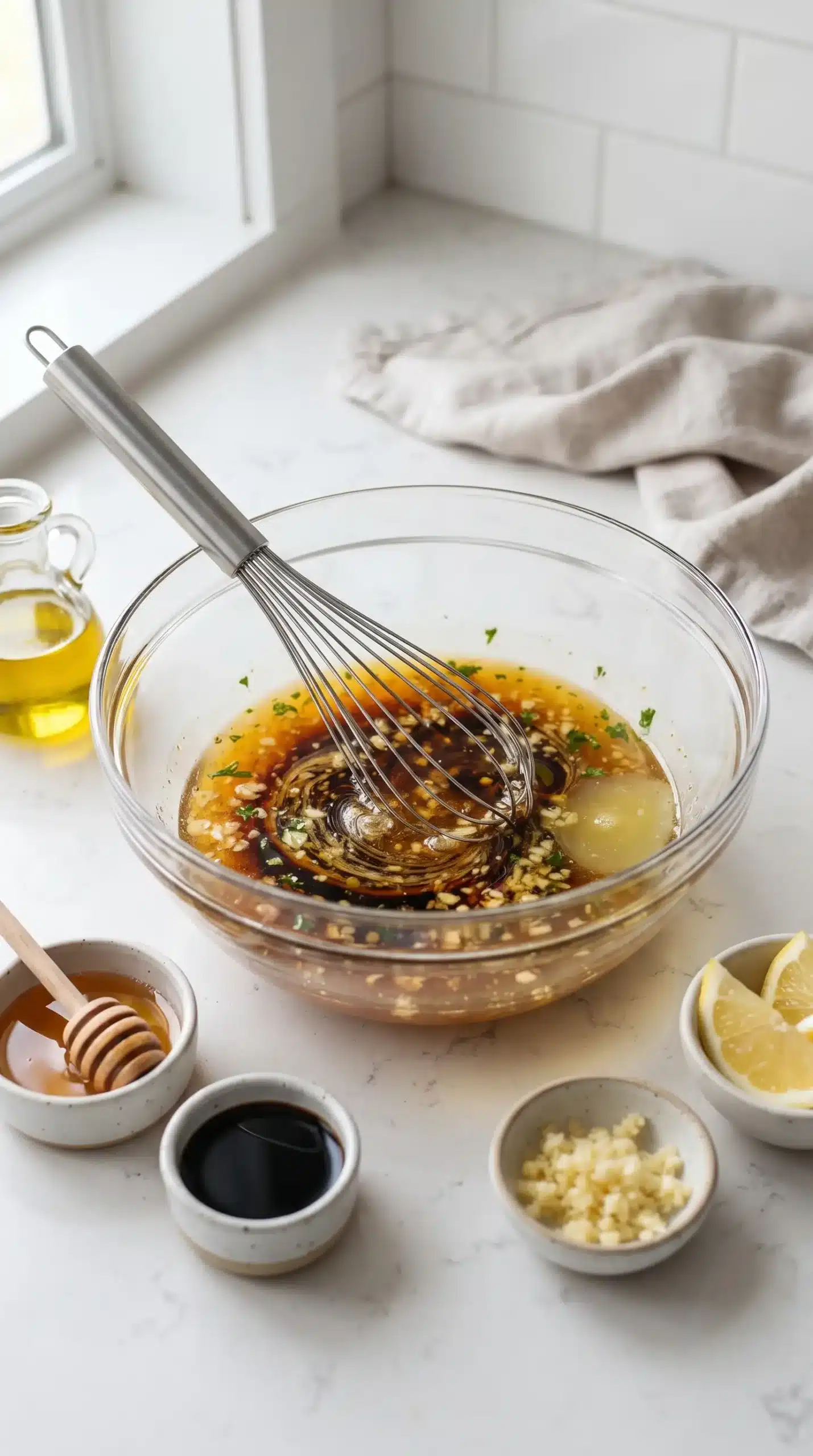
The honey garlic glaze is the defining element of this dish because each part has a clear role. Honey brings sweetness and helps the surface develop color through honey sugars caramelize during baking, while soy sauce adds savory depth that keeps the glaze from tasting one-dimensional.
Fresh garlic creates the recognizable aroma associated with honey garlic glazed salmon, and lemon juice adds brightness that balances the richness of the fish. Olive oil helps the glaze spread smoothly across the fillets while supporting an even coating during cooking.
Careful mixing matters because a glossy, combined glaze clings better to the salmon. Whisking the ingredients until smooth helps create the even finish that makes every bite of this 30 minute baked salmon recipe taste balanced.
Choosing Salmon for the Best Texture
Salmon quality and cut influence the texture you get after baking. Center-cut fillets are especially useful because their even thickness helps them cook consistently, while thawed frozen portions can also work well when properly prepared.
| Salmon choice | Texture result | Best use |
|---|---|---|
| Center-cut fillets | Even, tender texture | Consistent everyday dinners |
| Frozen fillets | Moist when fully thawed | Convenient meal planning |
| Whole side portion | Large flaky sections | Serving multiple portions |
Cooking Control That Keeps Salmon Tender
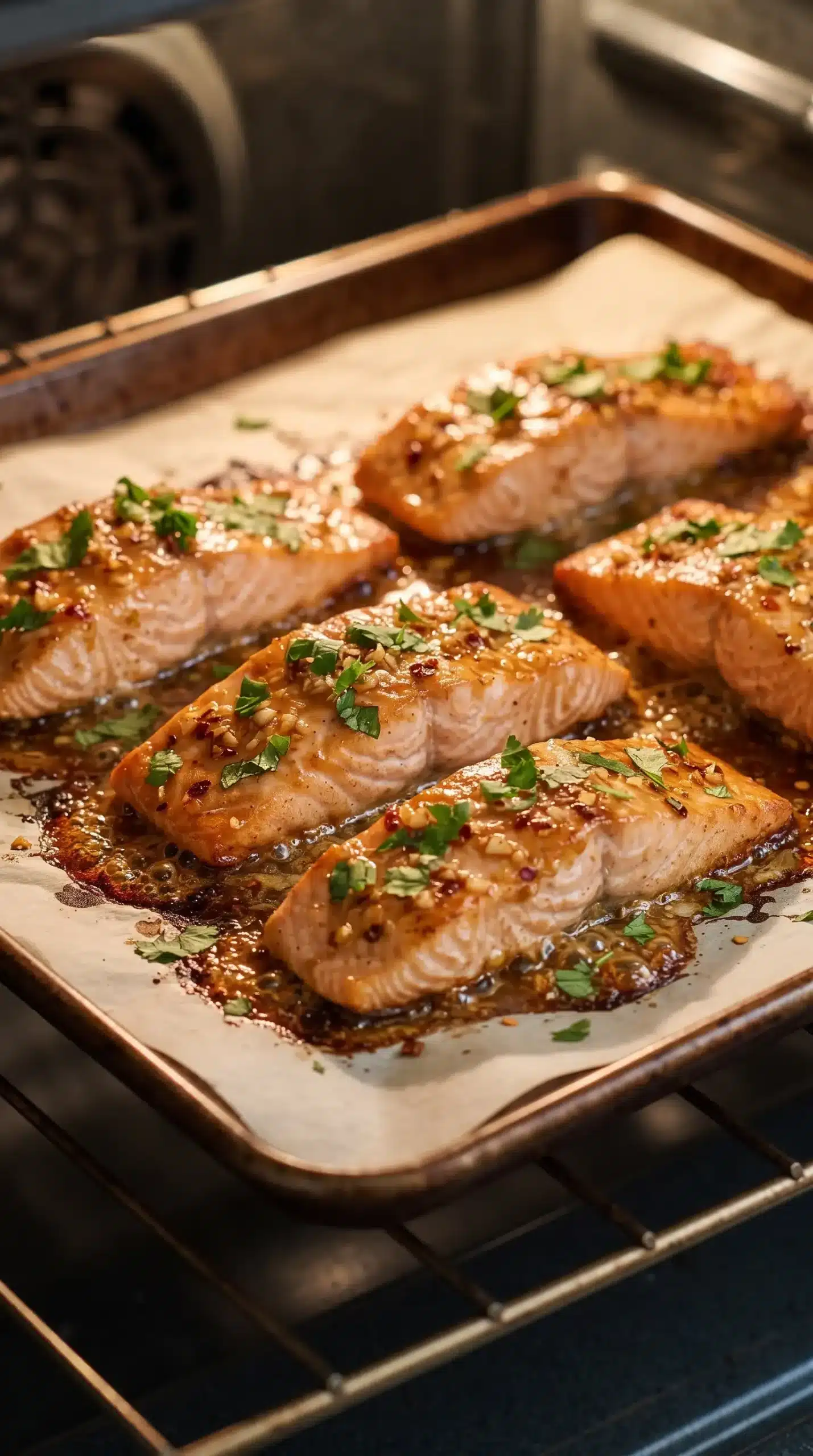
Proper heat management makes a noticeable difference when preparing baked honey garlic salmon. Baking at 400°F allows the glaze to develop color while helping the fish cook evenly throughout the fillet. A reliable oven baked salmon method can help maintain moisture and achieve a tender finish with careful timing.
Patting the salmon dry before seasoning improves how the glaze adheres and supports better caramelization. Evenly sized pieces also help prevent thinner sections from drying before thicker areas finish cooking.
Monitoring doneness is essential because salmon can lose its soft texture when left in the oven too long. The fish should flake easily with a fork and reach an internal temperature of 145°F. A short resting period after baking allows the texture to settle before serving.
Mistakes That Can Ruin Baked Honey Garlic Salmon
Small preparation errors can affect the glaze, texture, and overall finish of baked honey garlic salmon. Avoiding a few common problems keeps the dish closer to the intended flaky and glossy result.
- Wet salmon: Excess moisture can stop the glaze from sticking properly and reduce caramelization.
- Too much salt: Soy sauce already contributes saltiness, so light seasoning helps maintain balance.
- Crowded pan: Proper spacing helps the salmon roast instead of trapping moisture around the fillets.
- Overcooking: Checking the fish as it approaches doneness protects the tender center.
Another issue appears when the glaze is too thin. A briefly thickened glaze can coat the salmon more effectively and create the glossy surface expected from a honey garlic salmon preparation.
Simple corrections usually make a major difference. Drying the fish, combining the glaze thoroughly, and watching the cooking time address the main causes of disappointing results.
Side Pairings That Complete the Salmon Meal
Serving baked honey garlic salmon with the right companion foods highlights the glaze and creates a balanced plate. Rice, roasted vegetables, potatoes, noodles, quinoa, and fresh salads all pair naturally with the sweet-savory sauce.
Storage Methods for Leftover Salmon
Leftover baked honey garlic salmon keeps its flavor when stored carefully. An airtight container helps maintain quality in the refrigerator for up to 3 days, making the fish practical for planned lunches or quick meals.
Freezing is also an option when extra portions need longer storage. Wrapped portions can be frozen for up to 2 months while preserving the cooked salmon for future use.
Gentle reheating protects the texture. Warming the salmon in a 300°F oven for about 10 minutes or using short microwave bursts at low power helps prevent the fish from becoming dry. Adding a little water or extra glaze can help maintain moisture.
Meal Prep Advantages of This Salmon Recipe
Meal preparation becomes easier with baked honey garlic salmon because the glaze can be prepared ahead and the cooked portions work well with rice, vegetables, or bowls. Pre-chopping garlic and green onions also reduces last-minute kitchen work.
Flavor Variations for Honey Garlic Salmon
Different flavor directions can change the personality of honey garlic salmon while keeping the core preparation intact. A spicy version can include sriracha or chili flakes, adding heat to the sweet glaze without replacing its main character.
Additional ginger creates a warmer variation with extra complexity, while a short broiling finish can add more caramelized surface color. These adjustments focus on the glaze and finishing touches rather than changing the basic baked approach.
Alternative ingredients can also adapt the dish for different preferences. Maple syrup or agave nectar can replace honey, while tamari or coconut aminos can replace soy sauce when a different savory element is preferred.
Texture Details That Make Each Bite Stand Out
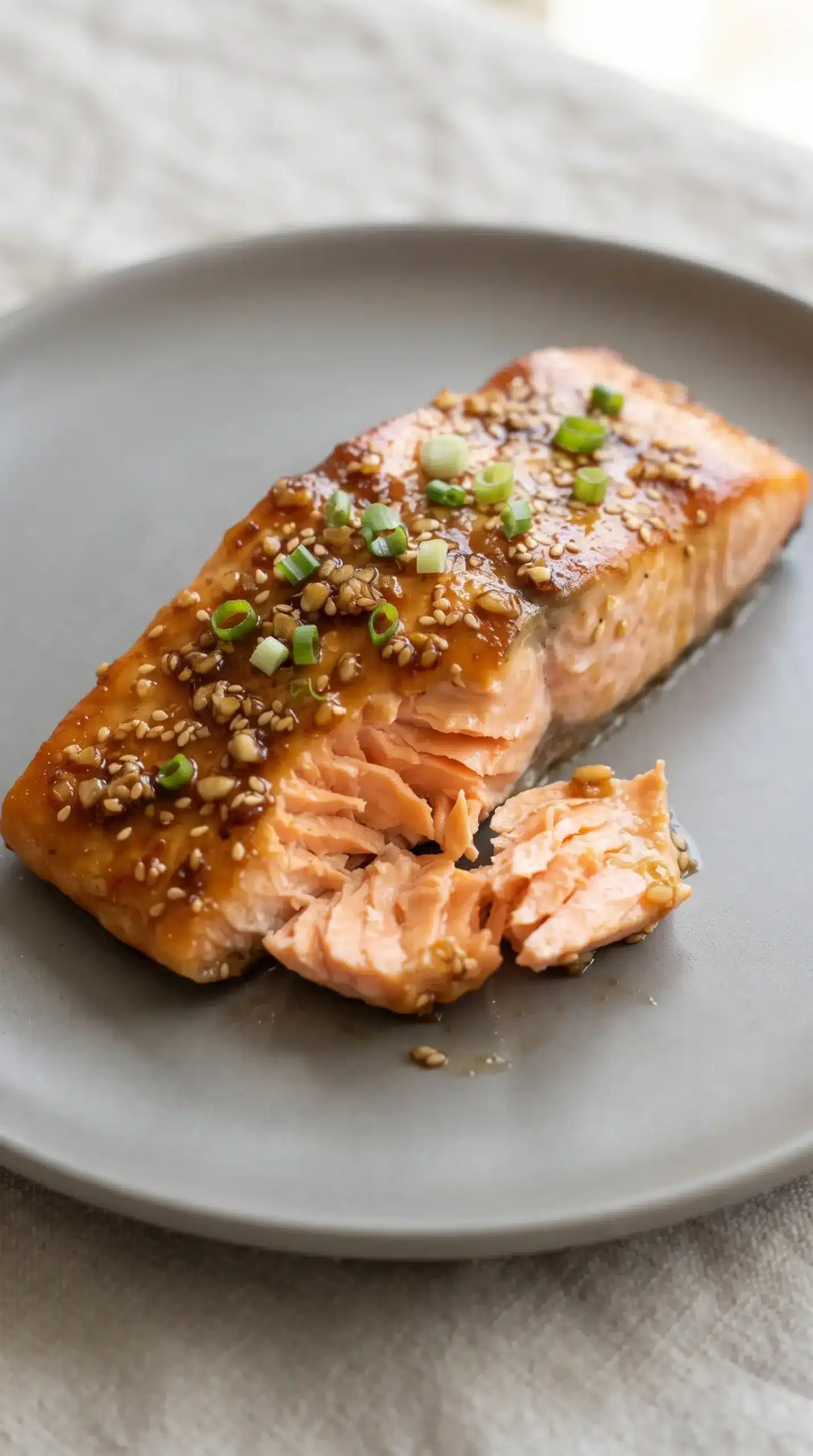
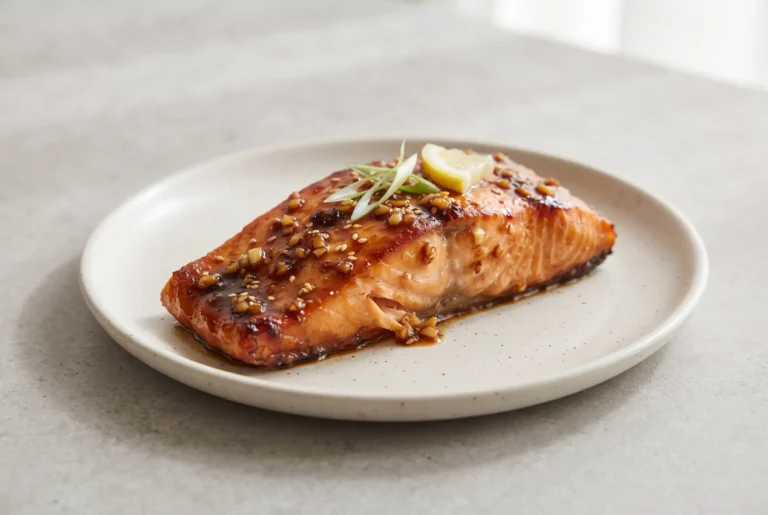
Flaky salmon, sticky glaze, and fresh green onion create the signature contrast that makes baked honey garlic salmon satisfying. The sauce coats the fish while the center stays soft, giving the dish a combination of richness and freshness.
Kitchen Tools That Support Better Results
A baking sheet or baking dish, parchment paper or foil, a mixing bowl, and a brush or spoon for glazing provide the essential setup. An instant-read thermometer is a useful optional tool because it helps confirm doneness without relying only on appearance.
Helpful equipment choices improve consistency by supporting even heating and easier cleanup. The recipe remains approachable because specialized cookware is not required for a successful result.
Extra tools such as a microplane or broiler-safe tray can be useful for cooks who want more control over garlic preparation or caramelized edges.
Cooking Timeline for a Smoother Dinner Plan
A simple preparation rhythm keeps the cooking process organized. Begin with the oven and baking surface, move into glaze preparation and salmon seasoning, then finish by checking doneness and adding the garnish before serving.
Flaky Glazed Salmon Comes From Careful Heat and Balance
Salmon fillets develop their best texture when moisture, glaze coverage, and oven heat work together. The honey garlic coating supports a flavorful surface while careful baking protects the soft interior that defines a successful salmon dinner.
Consistent preparation choices, from drying the fish to avoiding overbaking, are what make baked honey garlic salmon dependable. The dish succeeds because simple ingredients are handled with attention at each important point.
Baked Honey Garlic Salmon Questions About Doneness
How do I know when baked honey garlic salmon is done?
The salmon is ready when it flakes easily with a fork and reaches an internal temperature of 145°F. The center should remain moist instead of appearing dry.
Can I use frozen salmon for this recipe?
Frozen salmon works well when it is completely thawed before baking. Thawing helps the fish cook more evenly and supports the desired texture.
Why does my honey garlic glaze not stick?
A glaze may not cling well if the salmon surface is wet or if the ingredients are not fully combined. Drying the fillets and whisking the glaze until smooth improves coverage.
Can I prepare the glaze before cooking?
The glaze can be prepared ahead, which makes dinner faster when the salmon is ready to bake. Keeping the mixture refrigerated until needed helps streamline preparation.
What can replace soy sauce in honey garlic salmon?
Tamari or coconut aminos can replace soy sauce while maintaining the savory balance of the glaze. These alternatives provide a similar role in the overall flavor profile.
Baked Honey Garlic Salmon with Honey Garlic Glaze
Ingredients
Method
- Heat the oven to 400°F / 200°C and prepare a baking sheet by lining it with parchment paper or foil.
- Combine the honey, soy sauce, minced garlic, olive oil, and lemon juice in a bowl, whisking until the glaze is fully blended.
- Dry the salmon fillets with paper towels, season them lightly with salt and black pepper, and arrange them skin-side down on the prepared baking sheet.
- Coat the salmon fillets with the honey garlic glaze, keeping a small portion aside to use after baking.
- Bake the salmon for 12–15 minutes, applying more glaze halfway through, until the fish flakes easily and reaches 145°F / 63°C internally.
- Allow the salmon to rest for 2–3 minutes, then add the remaining glaze from the pan over the fillets and finish with chopped green onions before serving.