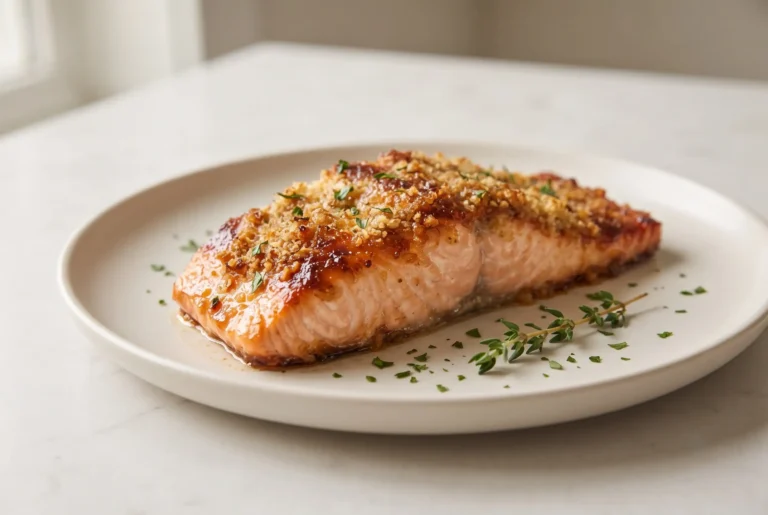
Coconut Curry Salmon One-Pan with Coconut Sauce Recipe
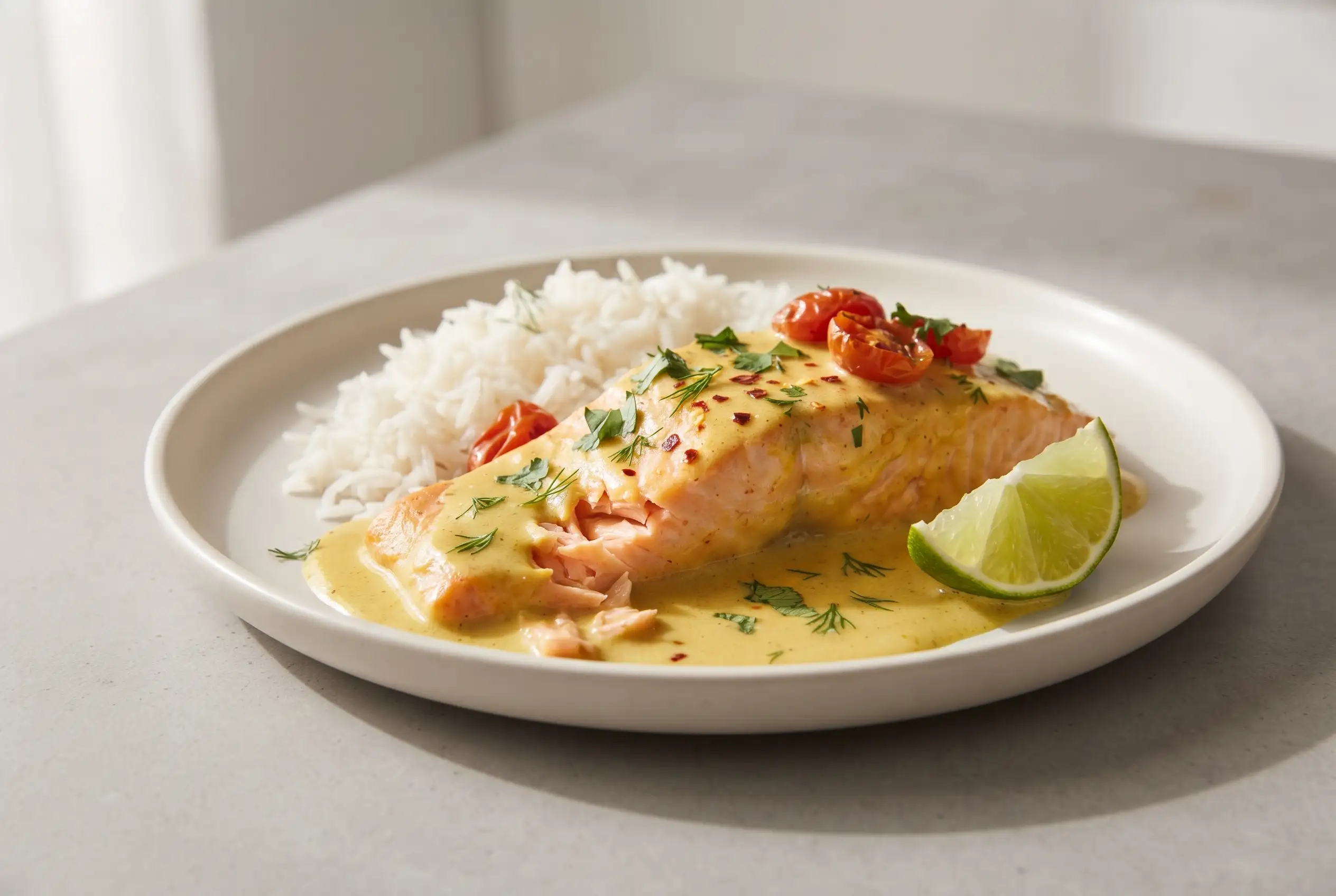
Coconut curry salmon brings together tender fish, silky coconut sauce, garlic butter, and warming spices in a single skillet meal that feels special without requiring complicated preparation. The combination creates a creamy coconut curry salmon recipe with a balanced mix of richness, brightness, and gentle spice.
Built around a smooth curry sauce and carefully controlled cooking, this one pan coconut curry salmon delivers restaurant-style comfort while remaining practical for busy evenings. The salmon absorbs the flavors of coconut milk, curry powder, garlic, paprika, and lime as it cooks, creating a deeply satisfying 30 minute salmon dinner.
Why Coconut Curry Salmon Works in One Skillet
One-pan cooking allows every flavor layer to develop in the same space. Garlic butter creates the savory foundation, coconut milk provides a smooth base, and curry spices bring warmth that spreads throughout the sauce.
The skillet method also keeps the salmon surrounded by moisture during cooking. A gentle simmer helps the fish stay flaky and tender while the sauce slowly coats each portion. Instead of relying on complicated techniques, the dish builds depth through simple temperature control and careful timing.
Balance is what makes the combination successful. Rich coconut milk is lifted by fresh lime juice, while herbs and optional vegetables add contrast to the creamy sauce. Serving the salmon with rice or naan also allows every bit of the flavorful sauce to be enjoyed.
Coconut Milk and Curry Choices Shape the Sauce
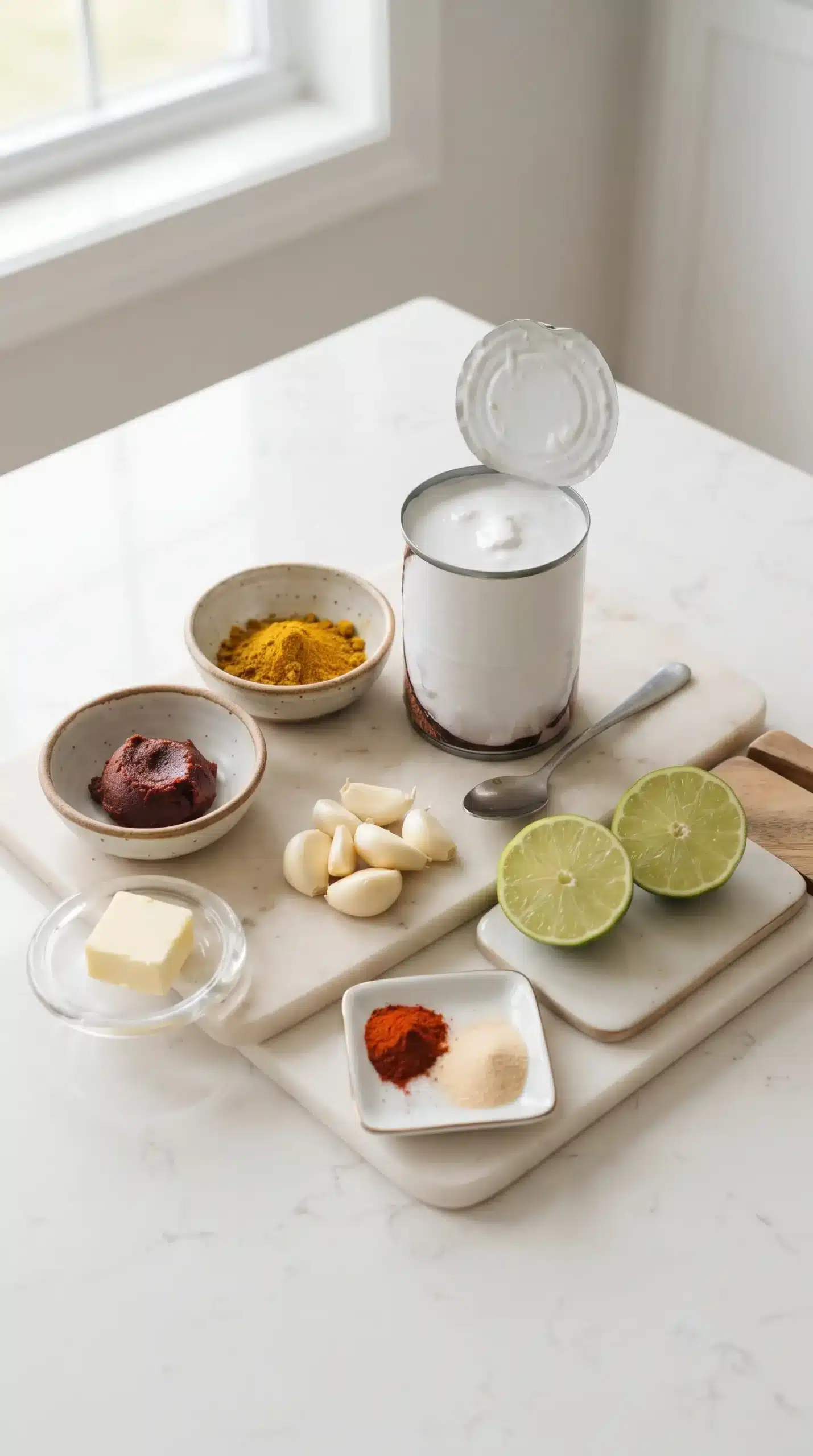
Full-fat coconut milk is the key ingredient behind the smooth texture of the sauce. Its richness helps create the velvety consistency that defines this dish because full-fat coconut milk’s higher fat content provides more body than lighter versions.
Curry powder determines much of the character of the meal. Mild blends create a gentle warmth, while stronger curry options can bring deeper spice. Thai red curry paste can also be used when a more intense curry profile is desired.
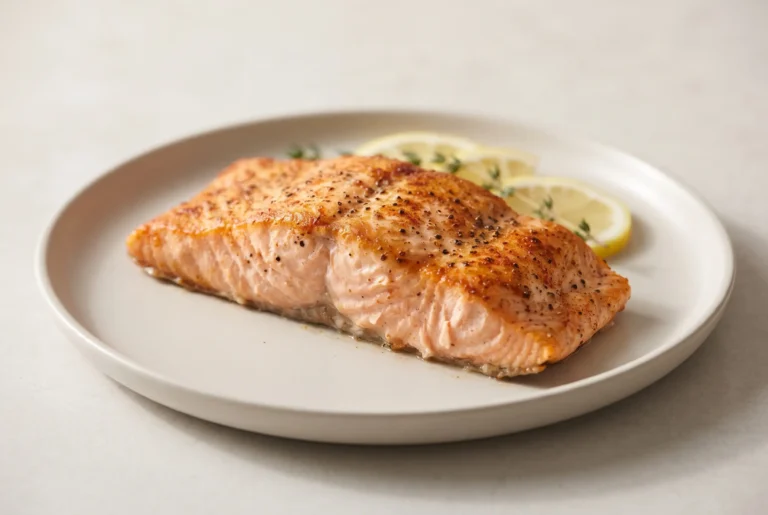
Garlic, butter, paprika, onion powder, and lime juice each support the sauce in a different way. Fresh garlic creates the aromatic base, butter rounds out the spices, and lime adds brightness that keeps the coconut flavor from becoming too heavy. A dish like garlic butter salmon shows how these rich flavors can highlight the natural taste of salmon in a simple dinner preparation.
| Ingredient choice | Effect on the dish | Best use |
|---|---|---|
| Full-fat coconut milk | Creates a creamy sauce texture | Use for the richest skillet sauce |
| Curry powder | Adds warmth and spice | Adjust based on preferred heat level |
| Thai red curry paste | Creates deeper curry flavor | Use for a bolder variation |
A Gentle Simmer Keeps Salmon Tender
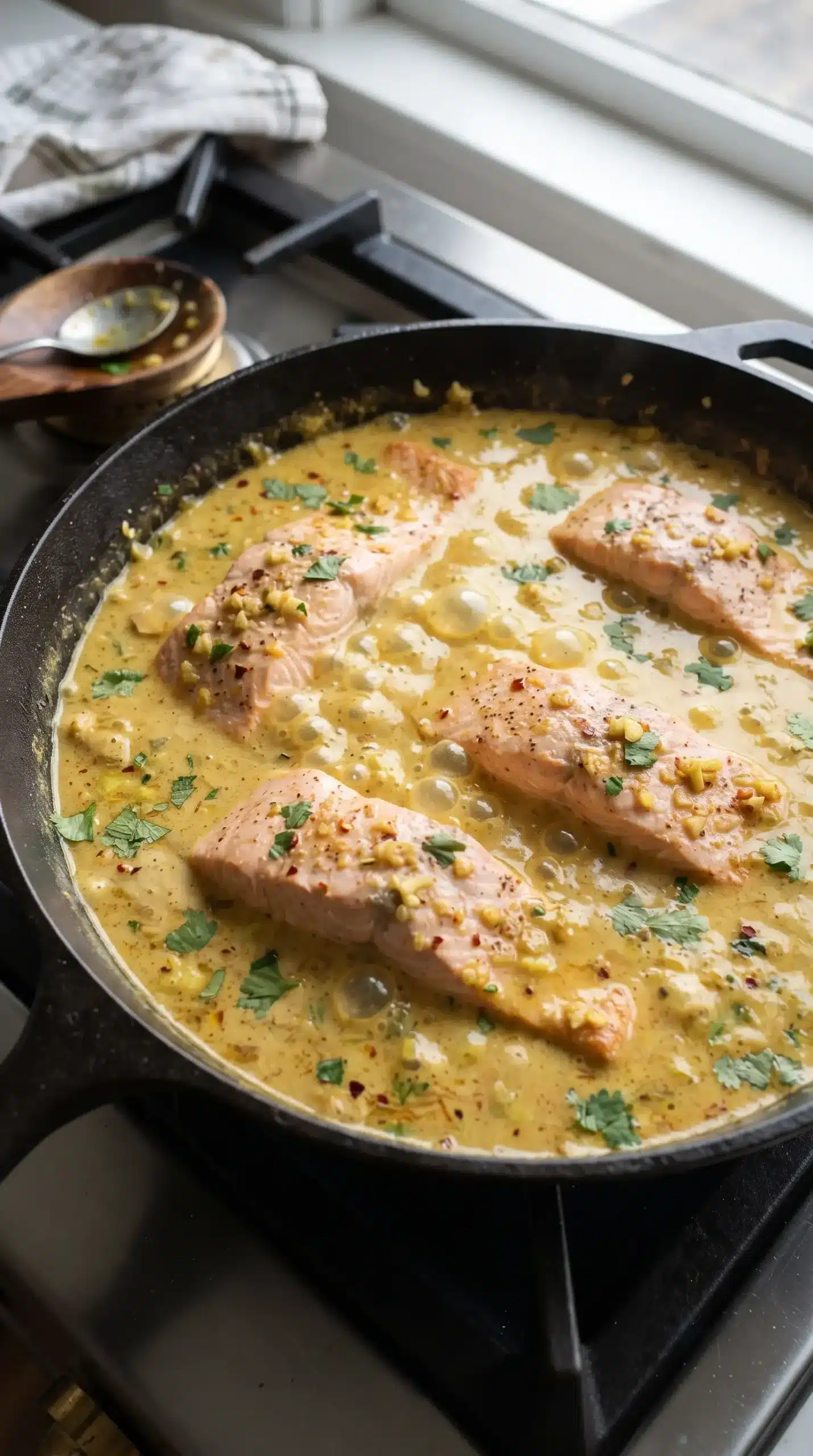
Cooking control matters most after the salmon enters the sauce. Keeping the heat moderate allows the fish to cook evenly while protecting the creamy consistency of the coconut base.
Strong boiling can change the texture of the salmon and may cause the coconut sauce to separate. A gentle simmer gives the fillets time to become tender while allowing the curry flavors to blend smoothly.
Checking the salmon near the end of cooking is important because fillet thickness affects how quickly it finishes. The ideal texture is soft, flaky, and moist instead of dry or firm.
Serving Ideas for Creamy Coconut Curry Salmon
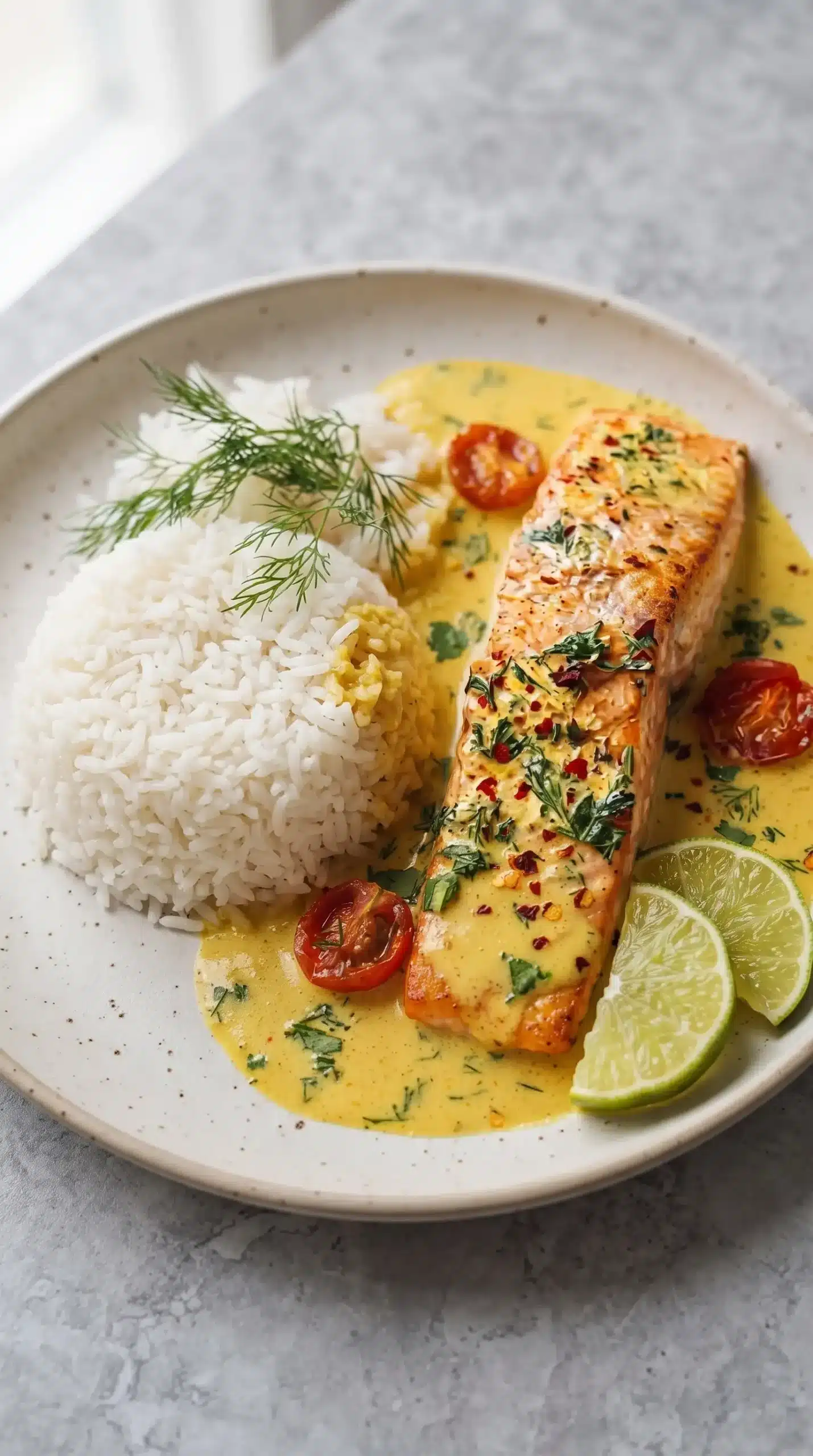
The creamy sauce pairs naturally with simple sides that absorb its flavor. Jasmine rice, basmati rice, warm naan, roasted vegetables, and fresh salads all complement the rich skillet sauce without competing with the salmon.
| Serving option | Texture contribution | Why it pairs well |
|---|---|---|
| Jasmine rice | Soft and fluffy | Catches the coconut curry sauce |
| Warm naan | Chewy and tender | Helps scoop the creamy sauce |
| Cucumber salad | Crisp and refreshing | Adds contrast to the rich flavors |
Custom Twists for One-Pan Coconut Curry Salmon
The base flavor works well with additions that change the texture, spice level, or overall style of the meal. Small adjustments can create a different experience while keeping the same creamy skillet foundation.
- Vegetable boost: Add spinach, mushrooms, peas, or bell peppers during the final minutes of cooking.
- Extra heat: Finish with chili flakes, chili oil, or Thai chili peppers.
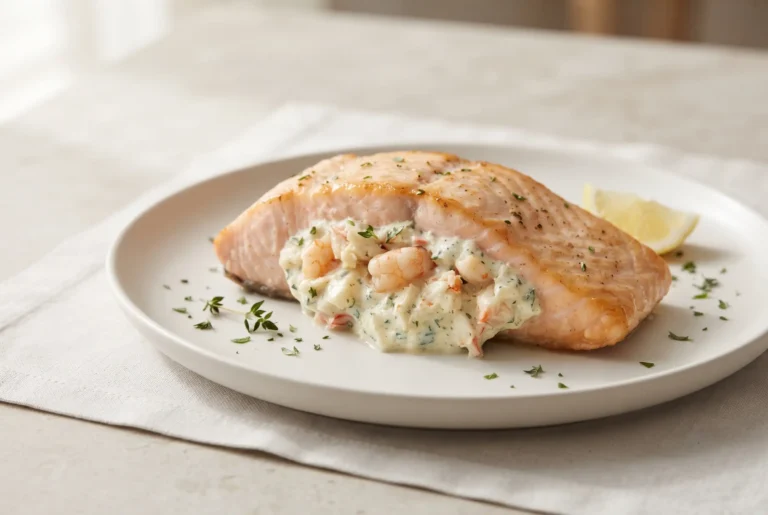
- Seafood variation: Add shrimp or scallops near the end for a richer seafood combination.
- Fish swap: Replace salmon with cod, trout, halibut, or tilapia.
Storage Decisions for Coconut Curry Salmon Leftovers
Proper storage helps preserve the creamy sauce and tender fish texture. Leftovers should be kept in airtight containers, and gentle reheating helps prevent the salmon from becoming dry.
| Storage method | Recommended handling | Texture consideration |
|---|---|---|
| Refrigerator | Keep leftovers chilled in airtight containers | Warm gently to protect the salmon |
| Freezer | Freeze portions for later meals | Sauce may separate slightly after thawing |
| Reheating | Use medium-low heat with extra liquid if needed | Avoid overheating the fish |
Mistakes That Can Ruin Coconut Curry Salmon Texture
Several small cooking choices have a noticeable effect on the finished dish. Avoiding these common problems helps maintain the smooth sauce and delicate salmon texture.
- Burning garlic: Cook minced garlic gently because burnt garlic can add bitterness throughout the sauce.
- Using thin coconut milk: Full-fat coconut milk creates the creamy consistency needed for the curry base.
- Boiling aggressively: Keep the sauce at a gentle simmer to protect both the fish and coconut texture.
- Overcooking salmon: Remove the fish once it flakes easily and remains moist inside.
Small corrections can make a major difference. If the sauce becomes too thick, a splash of water or broth can loosen it, while gentle reheating helps restore a smooth consistency after storage.
Family-Friendly Ways to Serve Coconut Curry Salmon
The creamy coconut sauce makes the dish approachable for different spice preferences. Serving the salmon over rice and keeping spicy toppings separate allows each person to adjust the heat level while enjoying the same meal.
Meal Prep Shortcuts for a 30 Minute Salmon Dinner
Preparation can be simplified by organizing the ingredients before cooking. Measuring spices ahead, preparing rice in advance, and chopping vegetables early make the skillet come together smoothly.
Frozen salmon can also be a convenient option when fresh fillets are not available. Once thawed and dried properly, the fish works well with the coconut curry sauce and provides an easy option for quick dinners.
Additional shortcuts include using prepared naan, frozen vegetables, or ready-made rice. These choices reduce kitchen time while allowing the creamy sauce and salmon to remain the focus of the meal.
Nutritional Balance in Coconut Curry Salmon
Coconut curry salmon combines protein-rich fish with satisfying fats and flavorful ingredients. Salmon contributes protein, omega-3 fatty acids, vitamin D, and B vitamins, while coconut milk creates a filling sauce that supports the comforting texture of the meal.
Coconut Curry Salmon Creates Reliable Skillet Comfort
Coconut curry salmon succeeds because gentle cooking protects the salmon while allowing garlic, curry spices, coconut milk, and lime to build a balanced sauce. The creamy texture comes from careful heat management and the right ingredient choices working together.
A skillet filled with tender salmon and smooth curry sauce delivers a practical dinner with layers of flavor, proving that a simple cooking approach can still create a memorable seafood meal.
Coconut Curry Salmon Questions About Storage and Preparation
Can I use another type of fish for coconut curry salmon?
Yes. Cod, trout, halibut, and tilapia are suitable alternatives because they can absorb the curry sauce while maintaining a tender texture during gentle simmering.
How can I make the curry flavor milder?
Choose a mild curry powder and reduce additional spicy toppings such as chili flakes or chili peppers. The coconut milk will continue to soften the overall flavor.
Can coconut curry salmon be frozen?
Yes. Store portions in freezer-safe containers for up to two months. After thawing, reheat slowly because the sauce may need gentle stirring to become smooth again.
What makes the sauce creamy without complicated steps?
Full-fat coconut milk combined with butter and gentle simmering creates the smooth texture. Whisking the curry spices into the coconut milk also helps maintain a consistent sauce.
What vegetables work best in this dish?
Spinach, mushrooms, peas, and bell peppers all pair well because they can cook directly in the sauce and add extra texture without overpowering the salmon.
Coconut Curry Salmon One-Pan with Coconut Sauce Recipe
Ingredients
Method
- Pat the salmon fillets dry with paper towels, then season both sides with salt and black pepper.
- Melt the unsalted butter in a large skillet over medium heat. Add the minced garlic and cook for about 1 minute, keeping it from browning.
- Add the coconut milk to the skillet and whisk in the curry powder, paprika, and onion powder until the sauce is evenly combined.
- Place the seasoned salmon fillets into the coconut curry sauce, lower the heat slightly, and bring the sauce to a gentle simmer.
- Loosely cover the skillet and simmer the salmon for 10–15 minutes, until it flakes easily with a fork.
- Add optional spinach or vegetables during the final few minutes of cooking, if using.
- Stir the lime juice into the sauce, then serve the coconut curry salmon over jasmine rice or with warm naan.
- Finish with fresh cilantro, lime wedges, and chili flakes if desired.